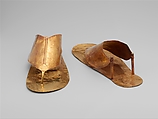
Sandals
Artwork Details
- Title: Sandals
- Period: New Kingdom
- Dynasty: Dynasty 18
- Reign: Thutmose III
- Date: ca. 1479–1425 BCE
- Geography: From Egypt, Upper Egypt, Thebes, Wadi Gabbanat el-Qurud, Wadi D, Tomb of the Three Foreign Wives of Thutmose III
- Medium: Gold sheet
- Dimensions: L. 25.5 cm (10 1/16 in); w. 9.5 cm (3 3/4 in); w. at heel 6.5 cm (2 9/16 in)
- Credit Line: Fletcher Fund, 1922
- Object Number: 26.8.146a, b
- Curatorial Department: Egyptian Art
Audio
3400. Jewelry of the Three Foreign Wives of Thutmose III
Gallery 118
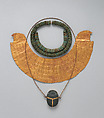
The jewelry in this gallery was found in one of the most romantically situated tombs in Egypt. It was cut into the floor of a small canyon, hidden in the cliffs of a huge system of dry riverbeds that drain the high desert south of the Valley of the Kings. Here, in almost total seclusion, three minor wives of the great eighteenth-dynasty pharaoh, Thutmose III, were buried. The women had foreign names. They probably came from western Asia, to bolster political ties between Egypt and some of the local rulers in what is now Syria.
The three mummies were fitted out with the golden sandals you see here. Look at them closely. The sheet gold has been incised to imitate leatherwork, mimicking the sandals worn in life. The mummies’ toes and fingers were covered by the finely incised gold stalls. Even the cuticles around the finger and toenails are indicated. Gold was believed to be the skin of the gods. In burials, it guaranteed eternal life to the deceased.
Listen to more about this artwork
More Artwork

Related Content
 Free to download
Research Resources
The Met provides unparalleled resources for research and welcomes an international community of students and scholars. The Met's Open Access API is where creators and researchers can connect to the The Met collection. Open Access data and public domain images are available for unrestricted commercial and noncommercial use without permission or fee.
To request images under copyright and other restrictions, please use this Image Request form.
Feedback
We continue to research and examine historical and cultural context for objects in The Met collection. If you have comments or questions about this object record, please contact us using the form below. The Museum looks forward to receiving your comments.
Content Notice
The Metropolitan Museum of Art presents over 5,000 years of art from around the world, and our online collection reflects ongoing work conducted over the course of our more than 150-year history. You may encounter objects or images that may be inappropriate for some viewers or information that may be outdated.