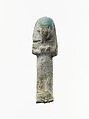
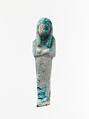
Shabti of Neferibresaneith, son of Shepenbastet
His name is formed on the prenomen Neferibre of Psamtik II, but the position of the burial points to a burial date in late Dynasty 26. His tomb was situated in the Userkaf pyramid complex at Saqqara. There he had been buried in a double tomb with Wahibremen (whose name is formed on the prenomen of Apries). Apparently Neferibresaneith was the second burial deposed, also pointing to a later date than his name might suggest.
Artwork Details
- Title: Shabti of Neferibresaneith, son of Shepenbastet
- Period: Late Period
- Dynasty: Dynasty 26
- Reign: reign of Amasis
- Date: 570–526 BCE
- Geography: From Egypt; Probably from Memphite Region, Saqqara, Userkaf Pyramid complex, Tomb of Neferibresaneith, Firth for the Service des Antiquités, 1928-29
- Medium: Faience
- Dimensions: H. 19.3 × W. 5.3 × D. 5 cm (7 5/8 × 2 1/16 × 1 15/16 in.)
- Credit Line: Rogers Fund, 1958
- Object Number: 58.4.2
- Curatorial Department: Egyptian Art
More Artwork
Press the down key to skip to the last item.
Research Resources
The Met provides unparalleled resources for research and welcomes an international community of students and scholars. The Met's Open Access API is where creators and researchers can connect to the The Met collection. Open Access data and public domain images are available for unrestricted commercial and noncommercial use without permission or fee.
To request images under copyright and other restrictions, please use this Image Request form.
Feedback
We continue to research and examine historical and cultural context for objects in The Met collection. If you have comments or questions about this object record, please contact us using the form below. The Museum looks forward to receiving your comments.
Content Notice
The Metropolitan Museum of Art presents over 5,000 years of art from around the world, and our online collection reflects ongoing work conducted over the course of our more than 150-year history. You may encounter objects or images that may be inappropriate for some viewers or information that may be outdated.