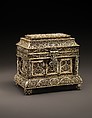
Goastein und Goldschatulle
Artwork Details
- Titel: Goastein und Goldschatulle
- Datum: Spätes 17.–frühes 18. Jhd.
- Geografie: Indien, Goa
- Medium: Behälter: Gold; durchstochen, Repoussé, mit gegossenen Beinen und Bekrönung; Goastein: Verbindung aus organischen und anorganischen Materialien
- Dimensionen: H: 6,7 cm, Durchm.: 14,4 cm
- Anerkennung: Rogers Fund, 2004
- Akzession Nr.: 2004.244a–d
- Curatorial Department: Islamic Art
Audio
1172. Kids: Goa Stone and Gold Case
NAVINA HAIDAR: Believe it or not, this gold case; yes! made out of real gold! - was not the most valuable part of this object! But let’s start by looking at it closely. On the very top is a bird. It’s a combination of a peacock and a hunting bird with a curving beak. Within the round parts of the case there are more animals. Look for monkeys and other kinds of animals. Maybe you’ll even spot a unicorn! The case was made to hold a large stone – which was considered extremely mysterious and powerful; and very, very valuable. The stone was made up of different kinds of materials put together. Some of them were ivory, crushed animal bones, and crushed jewels. It was believed that if you scraped off just the tiniest bit of the stone and ate it, or dissolved it in a drink, it would cure you from being poisoned. These kinds of Indian objects were often sent to from India to Europe. European Kings and Queens wanted examples of almost unbelievably fine Indian goldwork. And they really wanted the stones inside - to protect them from being poisoned by their enemies.
Listen to more about this artwork
More Artwork
Related Content


Research Resources
The Met provides unparalleled resources for research and welcomes an international community of students and scholars. The Met's Open Access API is where creators and researchers can connect to the The Met collection. Open Access data and public domain images are available for unrestricted commercial and noncommercial use without permission or fee.
To request images under copyright and other restrictions, please use this Image Request form.
Feedback
We continue to research and examine historical and cultural context for objects in The Met collection. If you have comments or questions about this object record, please contact us using the form below. The Museum looks forward to receiving your comments.
Content Notice
The Metropolitan Museum of Art presents over 5,000 years of art from around the world, and our online collection reflects ongoing work conducted over the course of our more than 150-year history. You may encounter objects or images that may be inappropriate for some viewers or information that may be outdated.