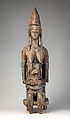
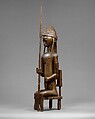
Ci wara headdress
Ci wara masquerades have evolved over many generations, accruing new sponsorship and interpretations. During the time of the Segu court (ca. 1712–1861), they were one of many theatrical performances and fell under the patronage of an all-male association charged with ensuring agricultural fertility. In later decades, the metaphysical and religious ideas once promulgated by ci wara faded as a result of Islamic reform movements and widespread socioeconomic change in the region. When Al-Hajj ʿUmar Tal conquered Segu in 1861, the city’s ci wara sanctuary was destroyed by his son Amadou and replaced with a mosque. Since the twentieth century, ci wara performances have continued as secular entertainment during communal gatherings, national holidays, and political events. The masquerade remains a cultural icon generally identified with values like a formidable work ethic and superior achievement.
Artwork Details
- Title: Ci wara headdress
- Artist: Bamana numu (blacksmith)
- Date: Late 19th–early 20th century
- Geography: Mali, south-central region
- Culture: Bamana peoples
- Medium: Wood
- Dimensions: H. 19 1/2 × W. 2 7/8 × D. 8 1/2 in. (49.5 × 7.3 × 21.6 cm)
Overall with mount: H. 20 7/8 × W. 3 1/8 × D. 8 1/2 in. (53 × 7.9 × 21.6 cm) - Classification: Wood-Sculpture
- Credit Line: Gift of Carol B. Kenney, in memory of Jerome P. Kenney, 2025
- Object Number: 2025.807.14
- Curatorial Department: The Michael C. Rockefeller Wing
More Artwork
Research Resources
The Met provides unparalleled resources for research and welcomes an international community of students and scholars. The Met's Open Access API is where creators and researchers can connect to the The Met collection. Open Access data and public domain images are available for unrestricted commercial and noncommercial use without permission or fee.
To request images under copyright and other restrictions, please use this Image Request form.
Feedback
We continue to research and examine historical and cultural context for objects in The Met collection. If you have comments or questions about this object record, please contact us using the form below. The Museum looks forward to receiving your comments.
Content Notice
The Metropolitan Museum of Art presents over 5,000 years of art from around the world, and our online collection reflects ongoing work conducted over the course of our more than 150-year history. You may encounter objects or images that may be inappropriate for some viewers or information that may be outdated.