
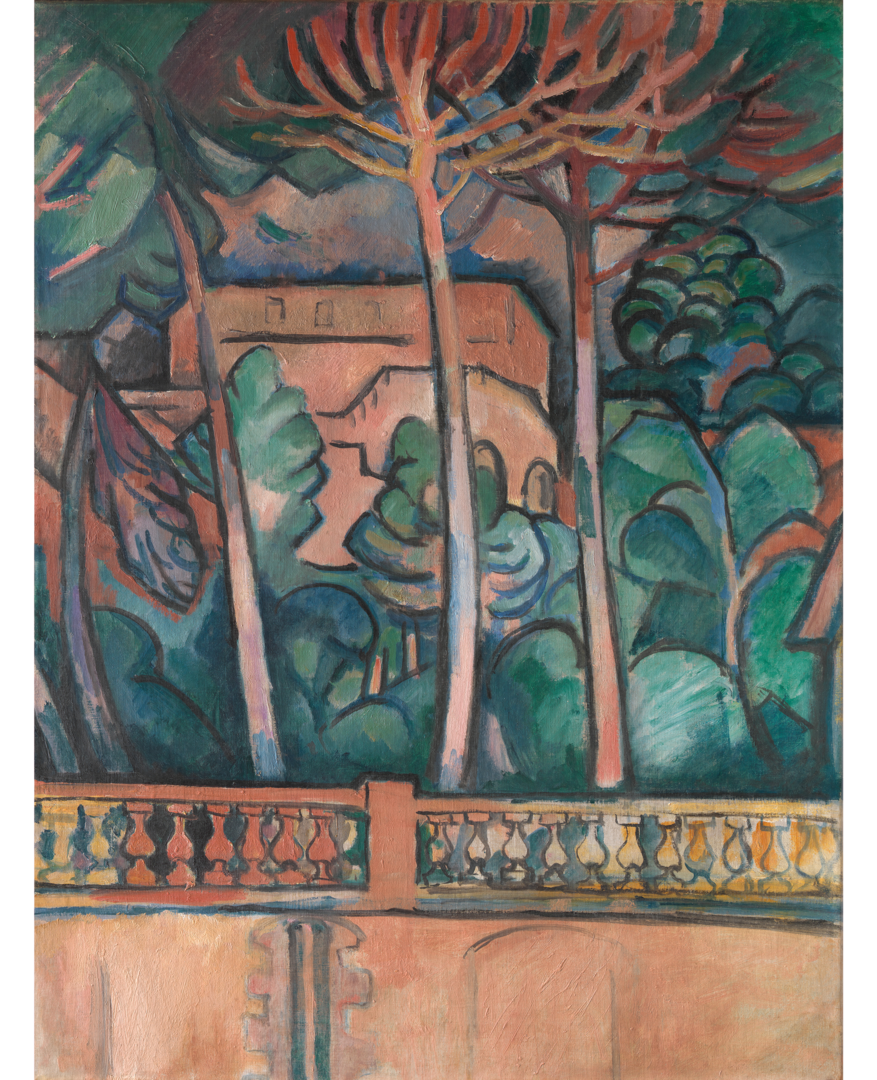
Georges Braque (French, 1882–1963). The Terrace at the Hôtel Mistral, 1907. Oil on canvas, 32 x 24 1/8 in. (81.3 x 61.3 cm). The Metropolitan Museum of Art, New York, Leonard A. Lauder Cubist Collection, Gift of Leonard A. Lauder, 2025 (2025.616.9) © 2026 Artists Rights Society (ARS), New York
A century ago, l'Estaque was a modest Mediterranean port to the northwest of the industrial city of Marseille. Of the many artists who spent time painting its scenic vistas, none was better known than Paul Cézanne (1839–1906). It was partly in homage to this revered and recently deceased artist that Braque traveled to l'Estaque in the summer 1907. The influence of Cézanne's art can be seen in Braque's The Terrace at the Hôtel Mistral (1907), with its increasingly subdued palette and use of geometric forms to render the terraced park. Braque's painting was titled simply La Terrasse when it was included in the artist's 1908 exhibition at Galerie Kahnweiler, Paris. Twelve-and-a-half years later when it was auctioned at the first Kahnweiler sequestration sale, it was listed as La Terrasse-L'Estaque. It was not until 1949 that the painting was first identified as a view from the Hôtel Mistral, a popular seaside establishment with a distinctive pedestrian bridge that connected it to a restaurant on the fishing port. However, Braque's painting was likely based not on the Mistral but on the more luxurious Grand Hotel Château Fallet, located just a bit further inland at 87, chemin de la Nerthe. Originally constructed in the seventeenth century as a manor house, the Château Fallet (which is extant although no longer a hotel) has views of the port and sea beyond. In the early twentieth century, the property included gardens and adjacent stands of pines. The hotel management permitted artists to set up their easels on the terraces, which may explain why its distinctive balustrade appears in paintings by not only Braque but also fellow-artists Raoul Dufy (private collection), Othon Friesz (private collection, Switzerland), and Albert Marquet (Musée des Beaux-Arts, Nantes).
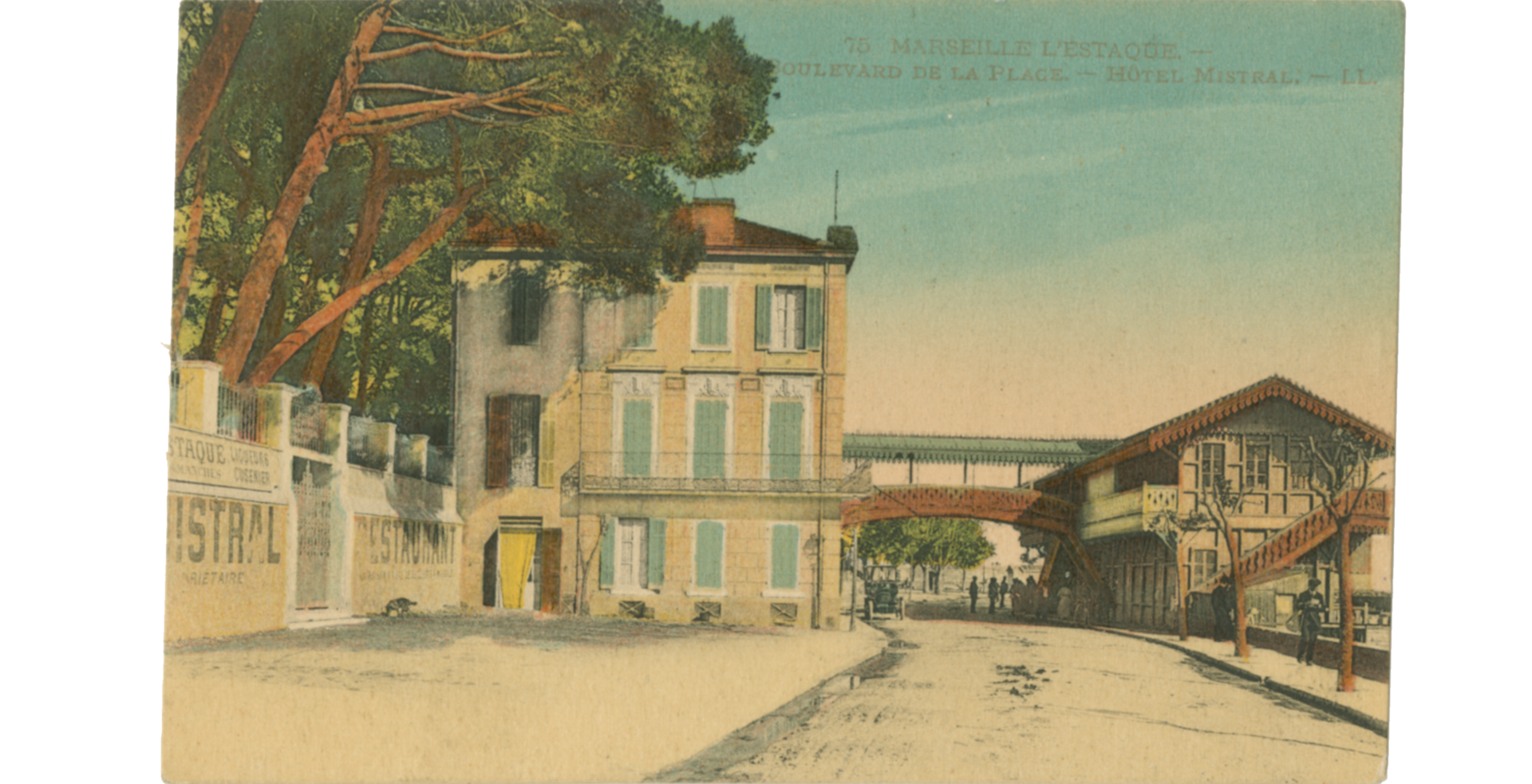
Postcard of the Hôtel Mistral, L'Estaque. Collection of Leonard A. Lauder
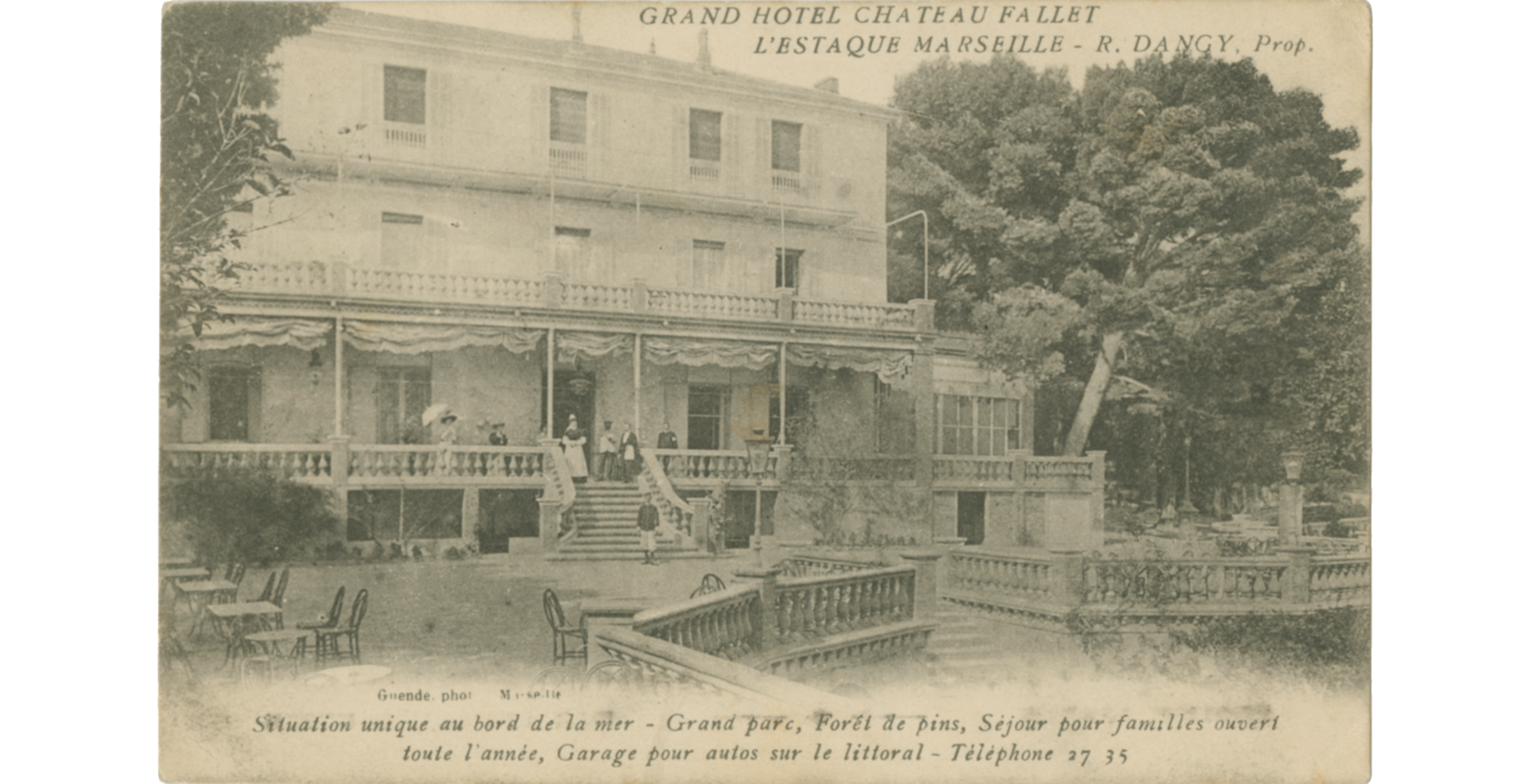
Postcard of Grand Hôtel Château Fallet, L'Estaque. Collection of Leonard A. Lauder


