The Finnish artist Helene Schjerfbeck's Self-Portrait in Profile (circa 1933)—the occluded view of a face in charcoal, chalk, and gouache on paper—is manifestly an image of the artist. Employing the obverse of a conventional three-quarter pose, the work hovers between a self-image and something curiously illegible as an individual portrayal.[1]
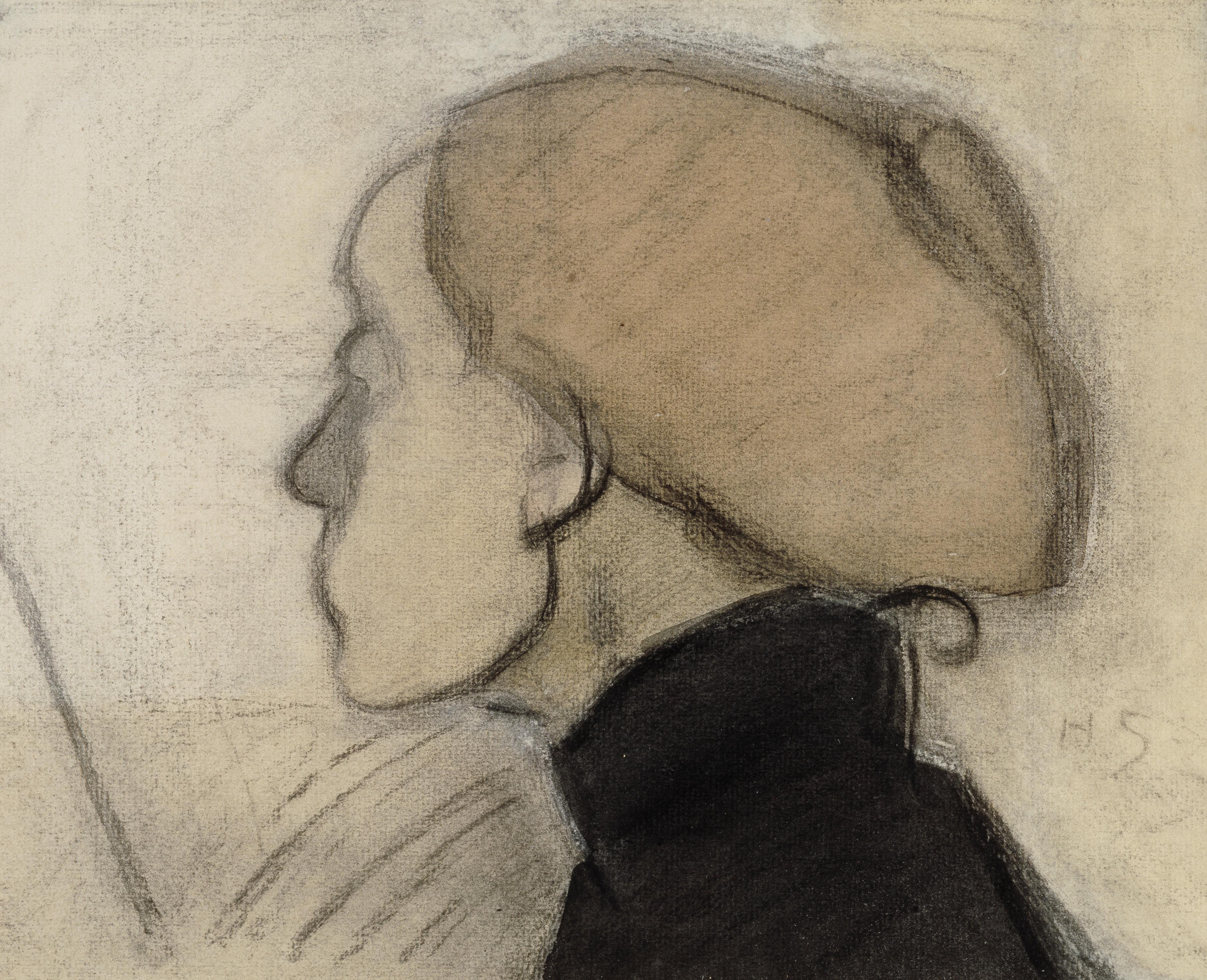
Helene Schjerfbeck (Finnish, 1862–1946). Self-Portrait in Profile, ca. 1933. Charcoal, chalk, and gouache on paper, 9 1/2 × 11 7/8 in. (24 × 30 cm). Private collection
Within that configuration, neither eye nor mouth can be seen; they are only alluded to, suppressing visual access to the primary expressive elements of a face. Dense, black lines circumscribe the head, separating the most subtle nuances of tone and distinguishing the flesh of the face from the surrounding space. The solid, ocher-tinted form that represents hair touches the lip of a high-necked black garment. Pentimenti and scrapings appear throughout the surface, particularly around the contours of the garment. Schjerfbeck informed her friend and supporter Gösta Stenman that she considered this work to be a failed experiment.[2] Yet it carries the hallmarks of the artist’s probing, and frequently subversive, approach to figuration.
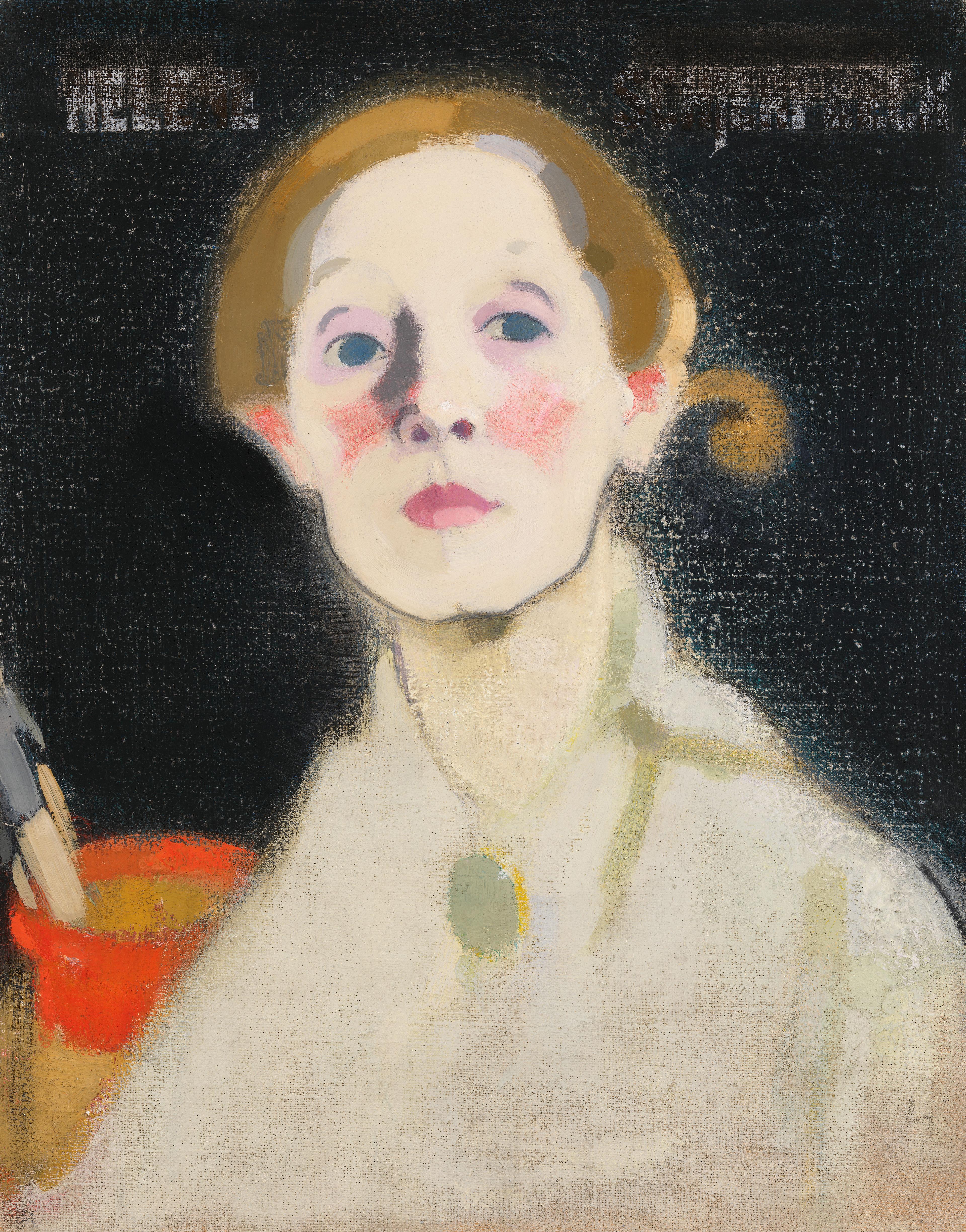
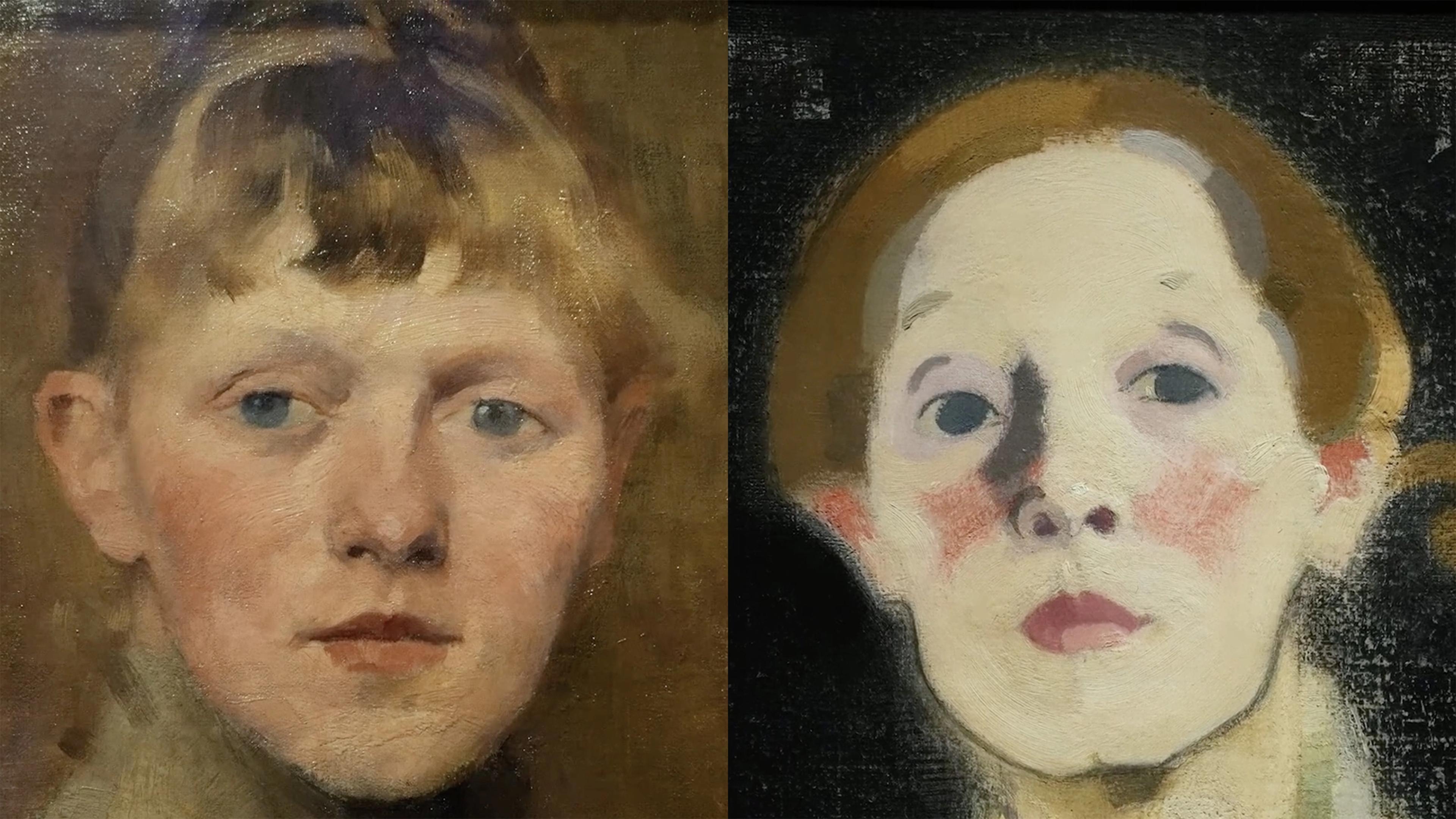
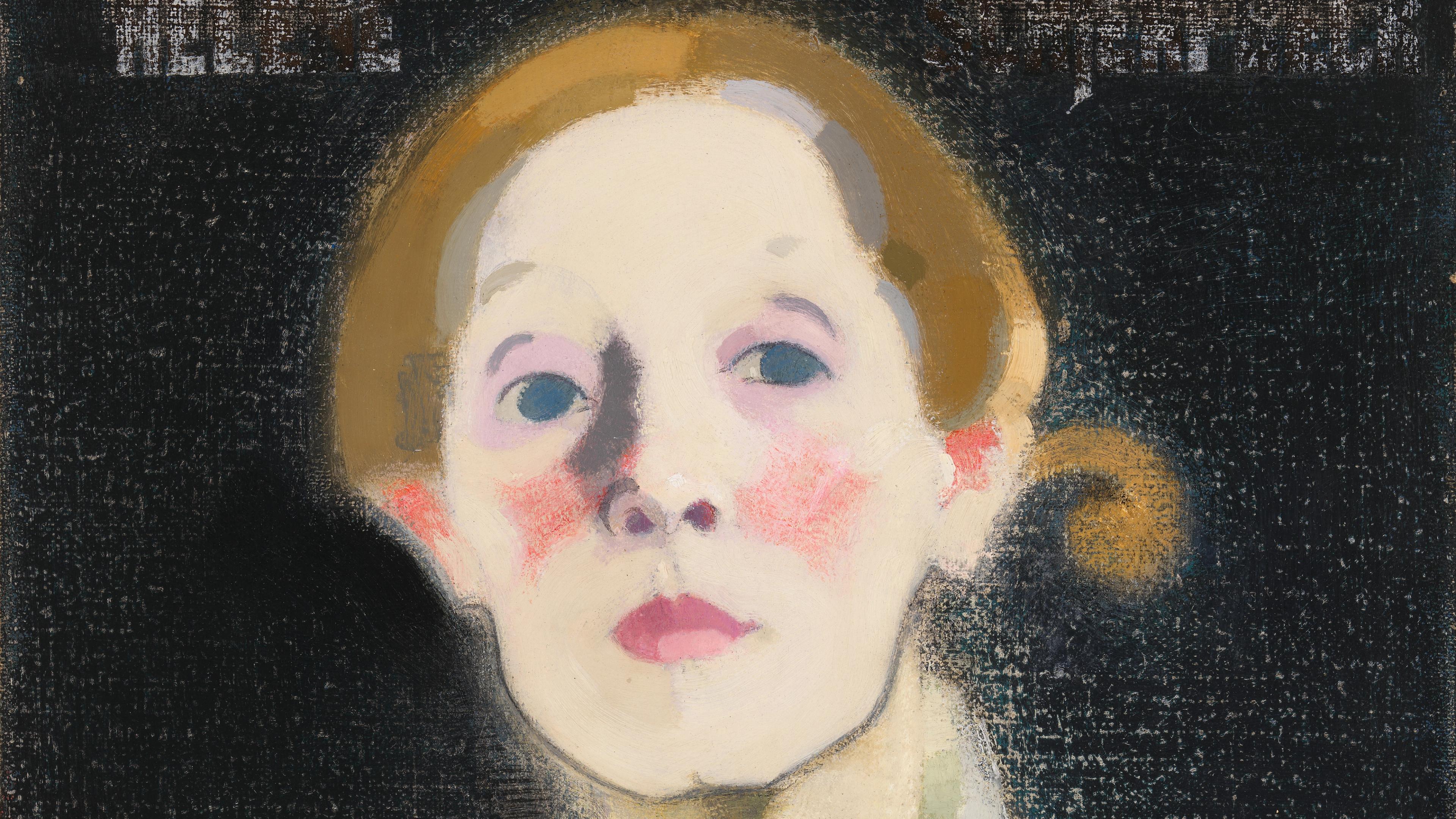
Helene Schjerfbeck (Finnish, 1862–1946). Self-Portrait, Black Background, 1915. Oil on canvas, 18 × 14 1/8 in. (45.5 × 36 cm). Finnish National Gallery Collection, Ateneum Art Museum, Herman and Elisabeth Hallonblad Collection
Questions of legibility and temporality were important to Schjerfbeck’s practice. Her figurative works are, on one level, discernible by subject and object. Yet viewing them with the same care with which she exercised her ideas and techniques reveals layers of creative misregistrations and refusals. In Self-Portrait in Profile, the artist turns her back on the audience and on time itself. If its dating to the 1930s is correct, Schjerfbeck pictured an astonishingly serene and untouched demiprofile as her seventy-year-old self.[3] Self-Portrait in Profile references earlier self-images by the artist: a curled tendril at the base of the hair, for example, repeats that dynamic detail in Self-Portrait, Black Background (1915), and the austere high collar revisits her self-portrait of 1912.[4] It also explores the compositional logic of her many images of models, facing away, whose unseen actions invite our speculation.
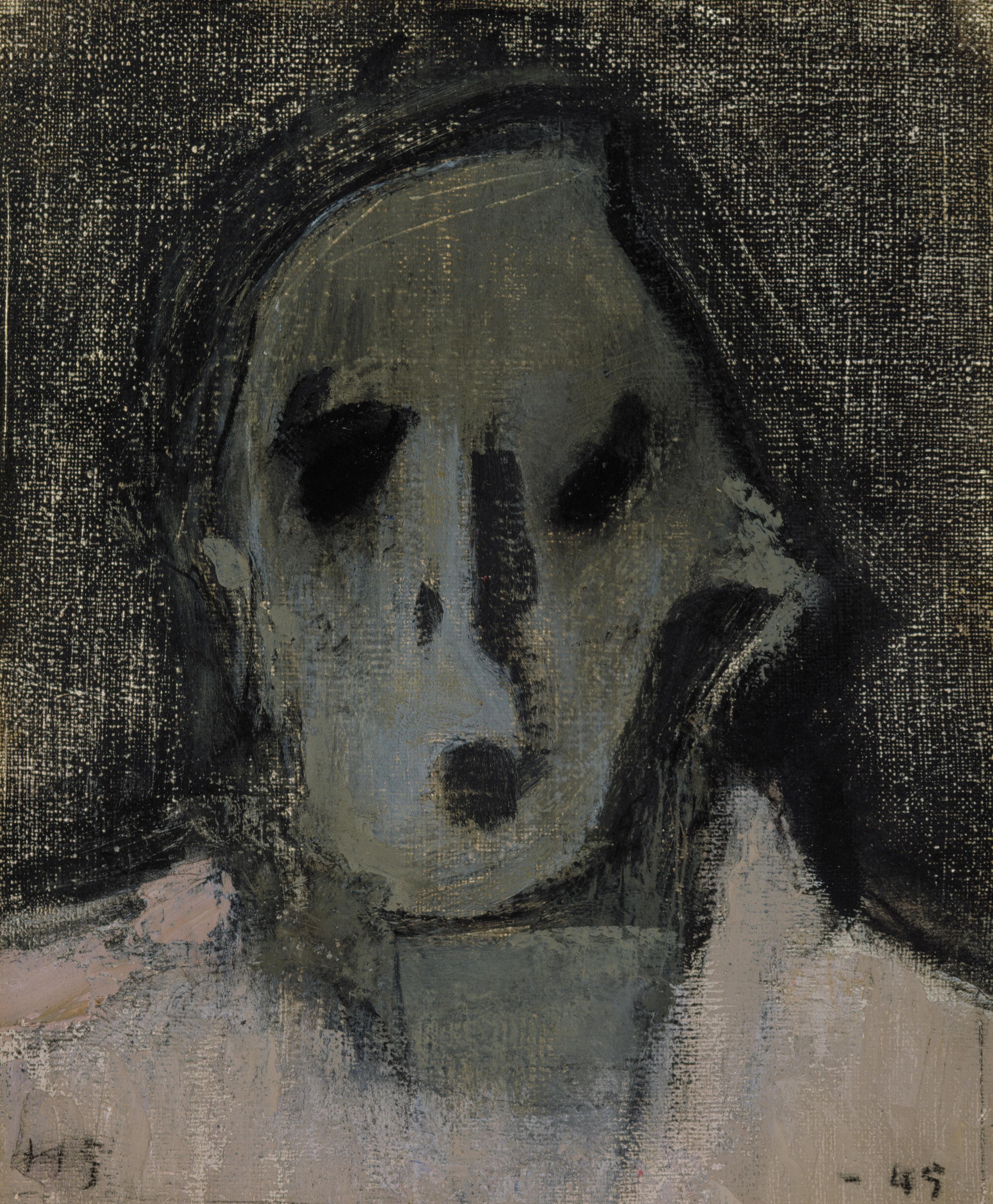
Helene Schjerfbeck (Finnish, 1862–1946). Self-Portrait (An Old Painter), 1945. Oil on canvas, 11 7/8 × 9 7/8 in. (30 × 25 cm). Private collection, Helsinki
Within the same decade, her self-representations began to take the form of a distilled haunting and haunted mask, almost appearing posthumous by the 1940s. Both the nuanced Self-Portrait in Profile and a work like Self-Portrait (An Old Painter) (1945) depart from what the art historian Harry Berger Jr. termed “physiognomic” portraiture: the anticipated recognition of character and identity that can be inferred from a portrayal.5 In terms of departures from the norm, the self as seen from behind is a playful gambit.
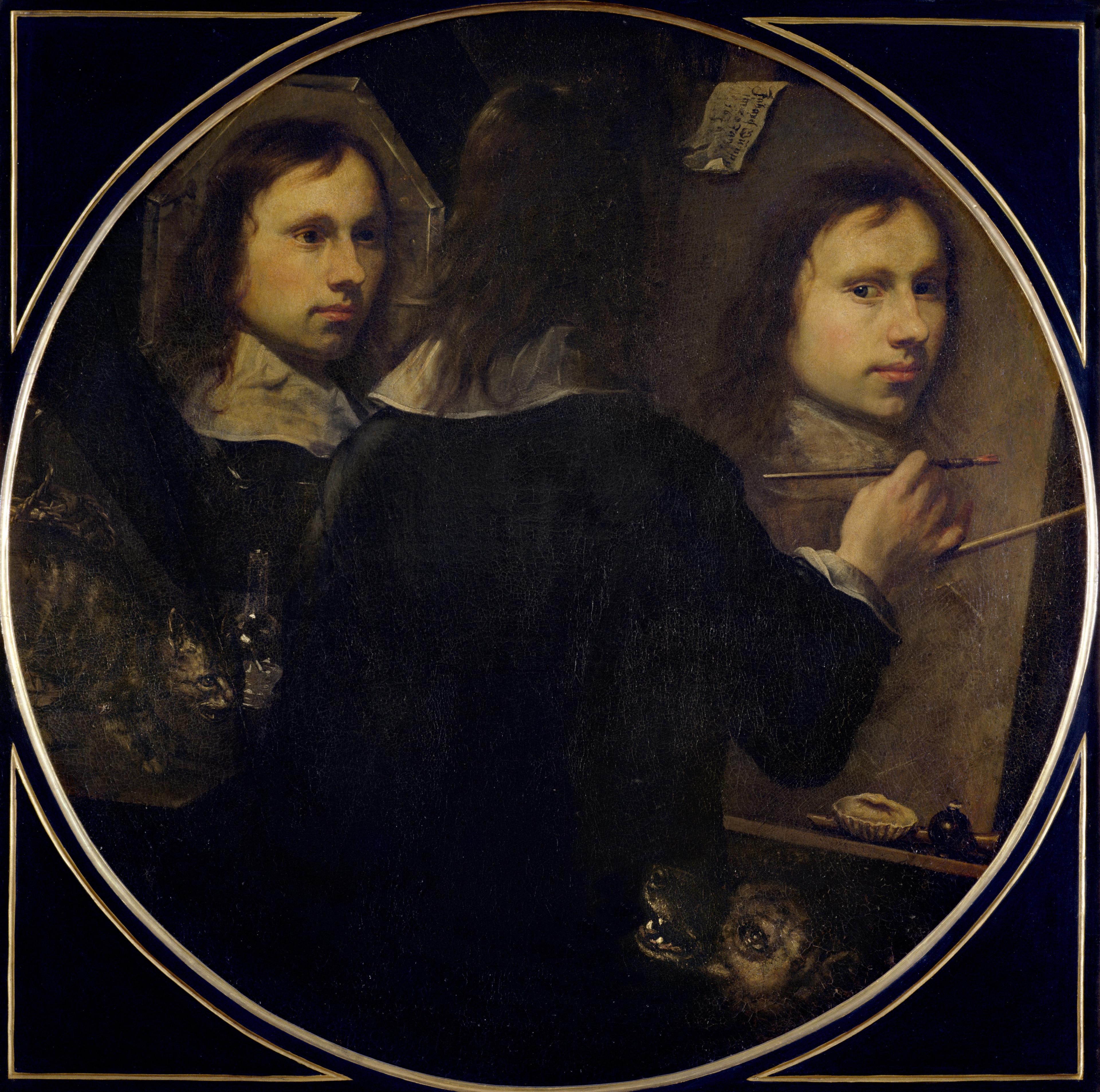
Johannes Gumpp (Austrian, b. 1626). Self- Portrait, 1646. Oil on canvas, 34 7/8 × 35 1/8 in. (88.5 × 89 cm). Uffizi Gallery, Florence
To picture from behind or from an acute angle, artists have long employed various dual- or right-angle mirror arrangements, first depicted in a painting by the Austrian artist Johannes Gumpp in the self-portrait collection of the Uffizi.[6] The strange disconnect between what the mirror reveals about Gumpp’s gaze and the eyes that meet the viewer may be seen as a commentary on the genre of self-portraiture as a fiction, a form of deliberate misrecognition.[7] Schjerfbeck’s practice of probing such areas of misrecognition is part of the radicalism of her lifelong project, from her paintings in France in the 1880s to her late entanglement with El Greco, with her studio mirror itself, and across genres—portraits and self-portraits, landscapes, and subject pictures.
Misrecognitions and subversions
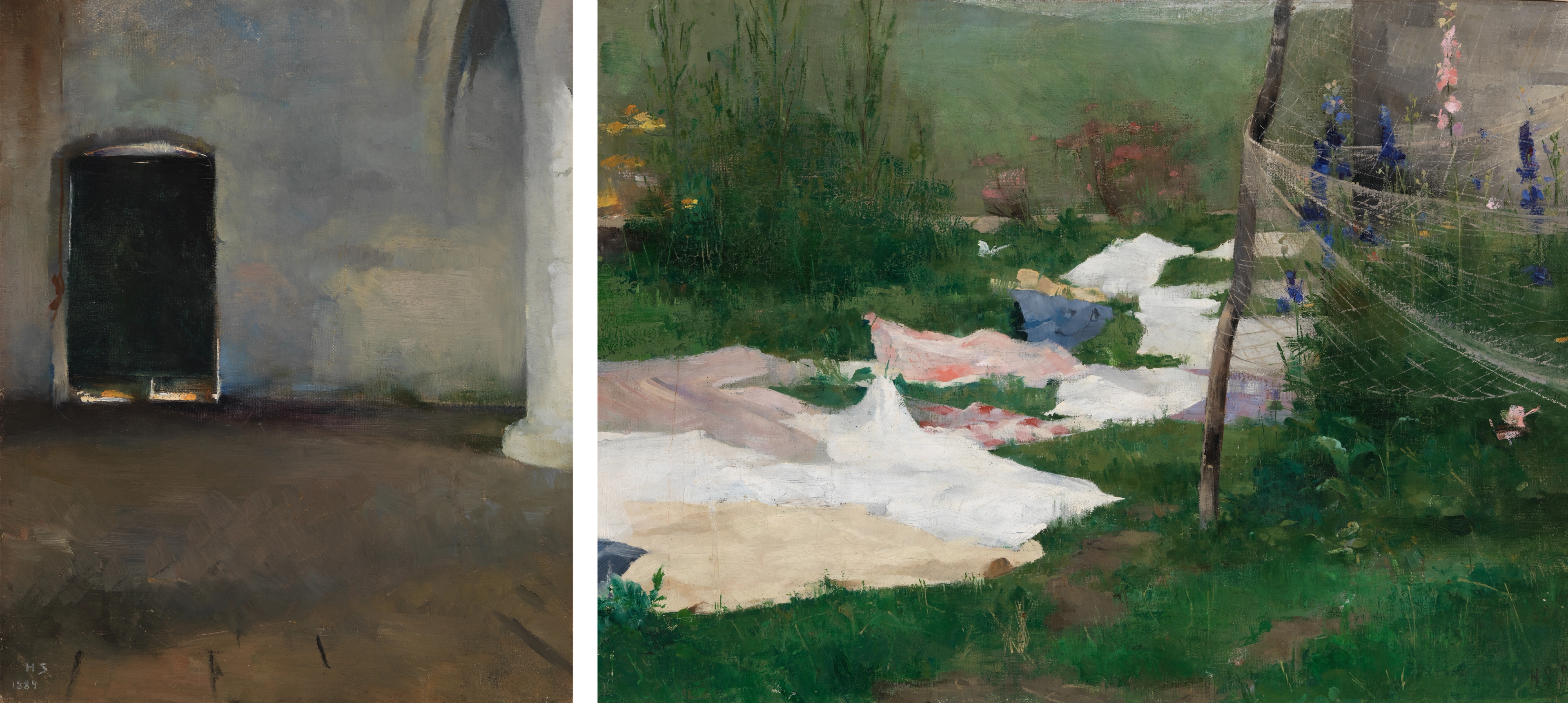
Left: Helene Schjerfbeck (Finnish, 1862–1946). The Door, 1884. Oil on canvas, 16 × 12 3/4 in. (40.5 × 32.5 cm). Finnish National Gallery Collection, Ateneum Art Museum. Right: Helene Schjerfbeck (Finnish, 1862–1946). Clothes Drying, 1883. Oil on canvas, 15 3/8 × 21 1/2 in. (39 × 54.5 cm). Finnish National Gallery Collection, Ateneum Art Museum
Despite the seeming abstraction of her later works, Schjerfbeck’s paintings never arose entirely from the imagination; according to the artist and her closest friends, she needed a model or physical object for close study. Her deviations from such tangible things, however, operated as the space of invention that often placed her work out of register with those models and with anticipated practices. Some of her works defied recognition even for her close colleagues; these include the paintings she created while living in Pont-Aven and Concarneau in the 1880s.[8] The Door (1884) and Clothes Drying (1883) are quietly subversive exercises, exploring places devoid of human presence yet resonant with use.
From early in her career, Schjerfbeck expressed impatience with canonical subjects and approaches: “I would like something other than the Italian heads we copy here,” she wrote in 1881 about her training in Paris.[9] Her community in Paris, a group of female students who would form a lifelong sounding board, shared her ambitions and encouraged her independent voice. At the Académie Colarossi, she and her sister students benefited from visits by some of the leading Naturalist painters in Paris. However, as her Finnish colleague Helena Westermarck recalled, the students received the greatest instruction from their more advanced peers.[10] Schjerfbeck later referred to Westermarck, along with Maria Wiik and Ada Thilén, among others, as her “sisters of the brush.”[11] In Paris, women of Finnish, Danish, Norwegian, and Swedish nationality enjoyed access to avant-garde art and faced far fewer social constraints than in their home countries.[12] In the words of Swedish painter Hanna Hirsch-Pauli, “You can do what you want without anyone noticing.”[13]
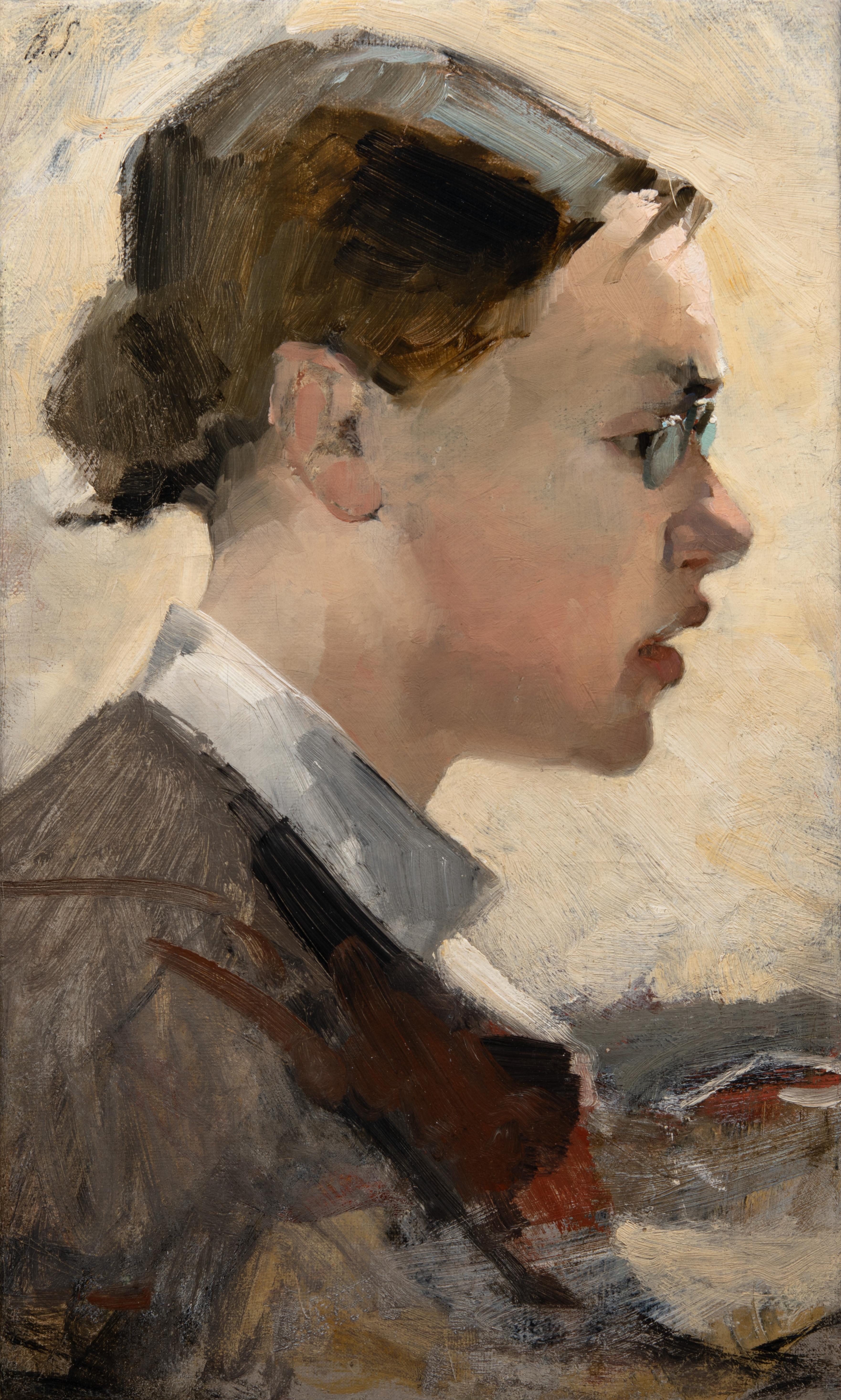
Helene Schjerfbeck (Finnish, 1862–1946). Portrait of Helena Westermarck, 1884. Oil on canvas, 14 3/4 × 8 7/8 in. (37.5 × 22.5 cm). Gösta Serlachius Fine Arts Foundation
Schjerfbeck’s portrait of Westermarck testifies to what the art historian Carina Rech terms the important practice of public self-fashioning: demonstrating professionalism and coalition building through portraiture. Schjerfbeck pictures Westermarck focused on what appears to be artistic labor, her mouth open in concentration, locks of hair escaping her practical, austere hairdo, and her right shoulder raised as if in action. The inclusion of a pince-nez emphasizes Westermarck’s seriousness of purpose and her literal focus, a sign of her emancipation.[14] In Paris, Schjerfbeck also portrayed Austrian painter Marianne Preindlsberger, with whom she made her first trip to Pont-Aven and Concarneau in 1881. Through its depiction of shared concentration, the double portrait, possibly including the Norwegian painter Annette (Annie) Anker, a fellow student at the Académie Colarossi, is emblematic of the professional sociality of the working artists.[15]
In 1887 Preindlsberger, who by then had married the British painter Adrian Scott Stokes, encouraged Schjerfbeck to visit the artists’ colony at St Ives, in Cornwall, England, where she would remain through the winter of 1888, inspired by the subjects she found there as well as the active community of artists. The most ambitious of her works made there, The Convalescent (1888), was exhibited at the Paris Salon under the title Première verdure (First Greening).[16] The young girl, her hair wildly tousled and her lips pursed in concentration, is entirely focused on the budding branch before her. With one delicate pinky raised, she probes the tiny stick and the container in which it sits, seeming to grasp the container with her barely visible left hand.
A pillow holds the impression of the girl’s body as she sits upright in her wicker chair. Even with the painting’s original title, suggestive of new growth, the pillow and textiles that swaddle the girl’s body are immediate signifiers of illness, part of an iconography of sick girlhood that was common in the art and popular culture of the Nordic countries in the late nineteenth century. Yet the child is robust—Schjerfbeck's focus on the girl's examination of a budding twig rather than pitiful enervation undermined the conventional sentimentality of such a scene.
Even in work that was commissioned for the purpose of bolstering national prestige, Schjerfbeck explored thematic ambiguity. In October 1914, Schjerfbeck was the only woman among ten artists who were each invited to submit a self-portrait to hang in the meeting room of the Finnish Art Society’s governing board.[17] The invited self-images were part of a pictorial campaign to legitimize Finnish painting as part of the greater sweep of European art displayed within the new Ateneum, the most important art institution in Finland.[18] The painting’s size was stipulated in the invitation, which also noted that the submission had to be approved by a committee. While it evidently met the requirements, the self-image she submitted held within its form and materiality subversive refusals and misregistrations of such a significant commission.
At the time, Finland was still a province of Imperial Russia, but during Schjerfbeck’s youth, it underwent a long process of increasing movement toward independence. With the rise of the Fennoman movement at mid-century, the promotion of a distinctive Finnish identity through folk collecting, archaeology, linguistic reforms, publishing, and other efforts of cultural nation-building constituted an increasingly visible part of the project to satisfy “the urgent need for an early history.”[19] Within this context, published narratives and the visual arts played an important role in making history visible and palpable.[20]
Schjerfbeck’s embrace of cosmopolitanism, her circulation among artists in Europe, her network of women pursuing independent careers, and her departure from Helsinki for good in 1902 all placed her at odds with the dominant Finnish art community. Her teaching post in the 1890s had been compromised by conflicts within the Finnish Art Society; she had been “bullied” by critics and fellow artists, and then her work was eclipsed by the movement for national efflorescence. Consequently, the 1914 commission accorded national honor to—and signaled a kind of resurrection for—Schjerfbeck. As the sole portrait solicited from a woman, her Self-Portrait, Black Background may be seen as a subversive image of triumph over, and not within, the national program.
Entirely legible as author and subject of Self-Portrait, Black Background, Schjerfbeck nonetheless undermined the sober, institutionalized form of self-imaging that populated the established national collections of artist-heroes such as the National Portrait Gallery in London and the Uffizi’s self-portrait collection in Florence. Portrayed from a subtly inferior angle, head tilted slightly to her right and eyebrows raised, her representation has an aspect of quizzical alertness, undermined by the hooded, asymmetrical, and pupilless eyes that gaze above and beyond the viewer. Informed by her love of fashion and her understanding of the symbolic power of clothing, Schjerfbeck feminized her image, draping herself in a pale blouse against which a large oval piece of jewelry is suspended and sporting the spiraling curl that shoots out from behind her left ear.[21] A vessel holding what appear to be the handles of paintbrushes signals her profession. Her name, meticulously written in a modified Art Nouveau typeface and then abraded into semi-legibility, literally advertises her identity.
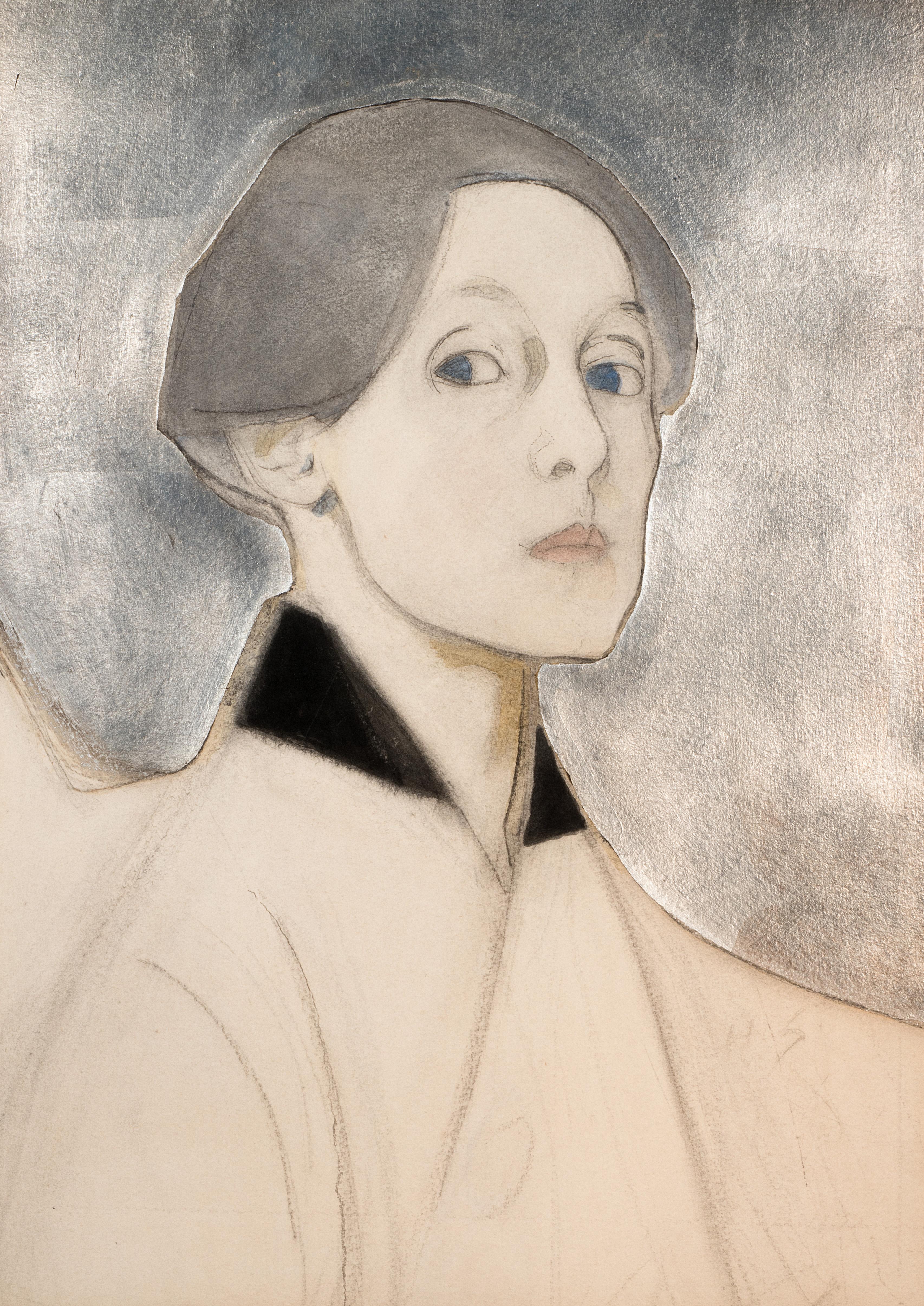
Helene Schjerfbeck (Finnish, 1862–1946). Self-Portrait with Silver Background, 1915. Pencil, watercolor, charcoal, and silver leaf on paper, 18 1/2 × 13 5/8 in. (47 × 34.5 cm). Turku Art Museum
For a commission so freighted with expectation, Schjerfbeck’s work proclaimed her ascendency following a long eclipse within the Helsinki art world.[22] It is generally understood that the society’s invitation first prompted her to create Self-Portrait with Silver Background (1915). In that work, the metallic background limns the mirror that the artist employed to render her reflection and, along with the hint of a raised arm at the right, suggests the artist at work as she views herself.[23] The flat, aqueous eyes, however, suggest the unknowable in terms of self-seeking as much as they register analytical self-regard. She retained the ambivalence of the figure’s gaze, along with the semi-effacement of the surface, in Self-Portrait, Black Background, asserting her material experimentation despite concerns that it may have constituted a brave misdirection: “I was told that I was accepted by acclamation at [Akseli] Gallen[-Kallela]’s suggestion, he was probably the one who saved me. . . . Now I am as good as free and go onto new anxiety and struggle.”[24] The painter’s remote gaze and the painting’s surface, weathered like an artifact from history, an anachronism, were fashioned to look down upon the assembled committee into the future.
Rapturous anachronism
Schjerfbeck’s experiments in anachronism—surface effects such as those in Self-Portrait, Black Background, both aged and contemporary—were a career-long practice. The artist was exceptionally and cannily receptive to confrontations with historical works of art, whether through direct study or via reproductions. While living in Paris in the 1880s, she, like many artists of her generation, was enthralled by Sandro Botticelli’s Tornabuoni frescoes, newly discovered at the Villa Lemmi outside of Florence and acquired by the Louvre in 1882. The act of copying from Botticelli introduced her to the softened tonalities and matte surfaces that she began to explore in her own work.[25] Her highly nuanced palette and veiled, rubbed, and abraded surfaces were effects adapted from Renaissance fresco painting that located her work outside of time and place.[26]
Schjerfbeck was not the only artist to move in this direction. Anna-Maria von Bonsdorff identifies this palette, explored throughout the generation of artists practicing in the 1890s, as “color ascetism,” a visual signature of nostalgia.[27] Such a doubling of aesthetics, of the ambition to intervene in the modern moment combined with a longing for lost time, was a central preoccupation of artists associated with the Symbolist movement. A commission from the Finnish Art Society directed her work toward an intimate material investigation of the historical collections of Europe’s great museums. In the 1890s, the Finnish Art Society tasked accomplished artists with rendering copies of historical paintings, as the original works were unavailable or financially out of reach.
Schjerfbeck was among the first artists to be hired. She took advantage of sojourns to Saint Petersburg, Vienna, and Florence to produce the commissioned paintings but, more importantly, to explore art collections.[28] The fresco cycle by Fra Angelico in the Convent of San Marco was particularly transformative. Studying the works of Fra Filippo Lippi and Fra Angelico, she reported to Wiik, “I was increasingly enraptured by the Old Masters. I experience a certain kind of revelation when I study their works for a long time, and this is done best by drawing them.”[29]
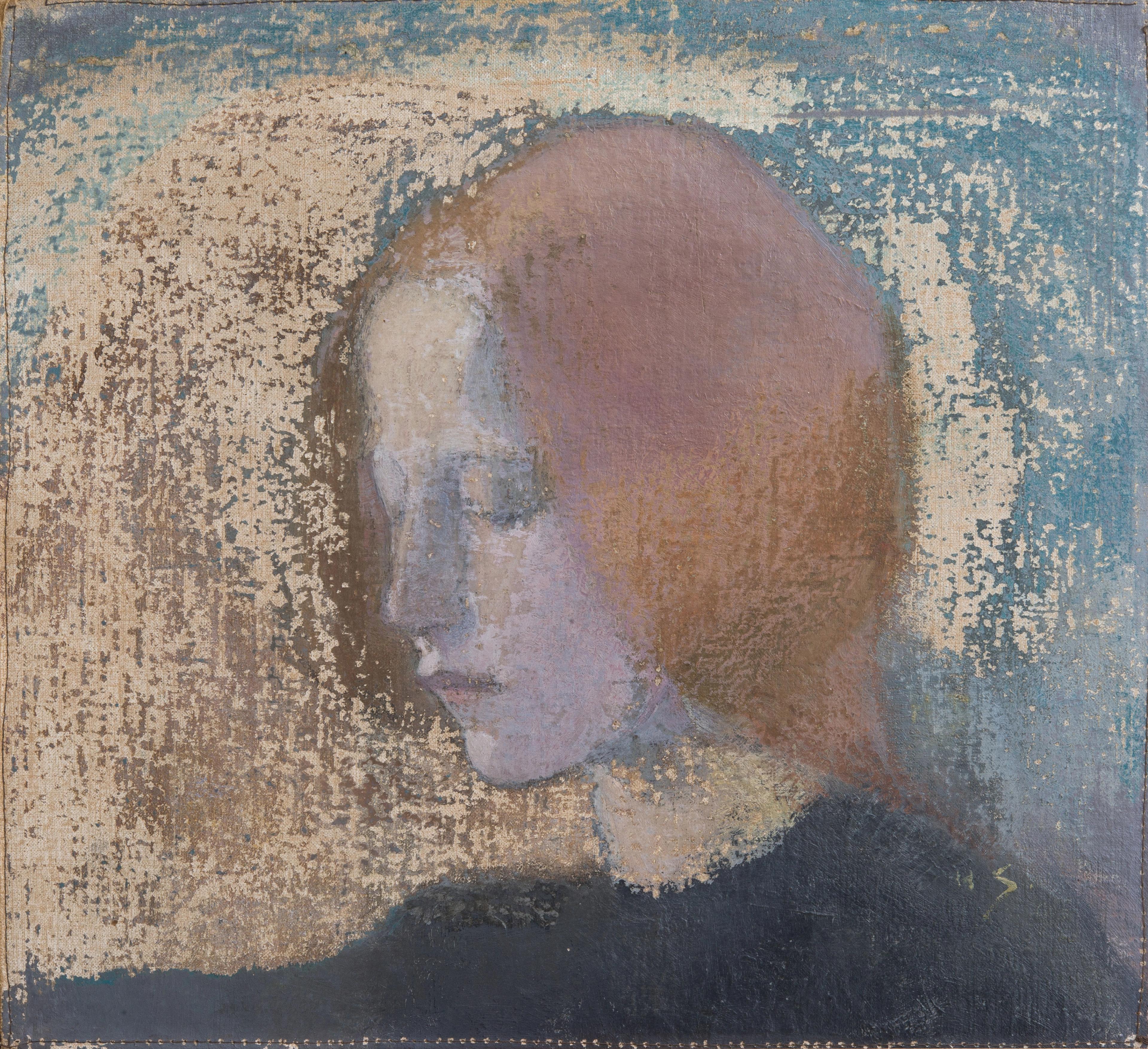
Helene Schjerfbeck (Finnish, 1862–1946). Fragment, 1904. Oil on canvas 12 3/8 × 13 3/8 in. (31.5 × 34 cm) Villa Gyllenberg, Signe and Ane Gyllenberg Foundation, Helsinki
Work as a copyist was often a gendered occupation, as women were generally considered to have artistic facility but not the “genius” of invention. An American connoisseur writing several decades earlier had denigrated copyists as “mere operatives who infest the galleries of Europe.”[30] Schjerfbeck’s insistence that she was not a copyist but rather an analytic inventor pushed back against such assumptions: “Regardless of all external influences, it is still I who create my own works,” she wrote to her friend and supporter Einar Reuter in 1918, adding that “all beauty serves to enrich us.”[31] Inspired by and digesting historical works, Schjerfbeck produced paintings that displayed the effects of age and decomposition. The abraded surface and golden penumbra surrounding the closed eyes and austere fashioning of the head in Fragment (1904), as well as the title, allude to the object seemingly taken out of time. Scraped and scrubbed by the hand of the artist as part of her method of production, the object is consonant with an artifact: in her words, “a relic from a bygone era” that produces an aura of otherworldliness.[32]
Past/Present: Work in two registers
To create motifs that mediated between the present and “a bygone time,” Schjerfbeck used reproductions in books and magazines as models, exploring the paradoxical freedom of black-and-white illustrations as agents in her own picture making.[33] She mused on the aesthetic possibilities of such achromatic images, writing to Wiik in 1896 about exhibitions she viewed while in Florence: “I liked most the matte-in-tone photographs by [Edward] Burne-Jones, really large in size. All lies in lines and in the expressions, probably if I saw the paintings in color that would change.”[34] Achromatic reproductions seemed to offer the artist the opportunity to apply her need for models—in this case objects of reproduction—to her anachronistic reinventions. From the late 1920s to the 1940s, a lengthy dialogue with reproductions of El Greco’s work provided a rich opportunity in this vein.
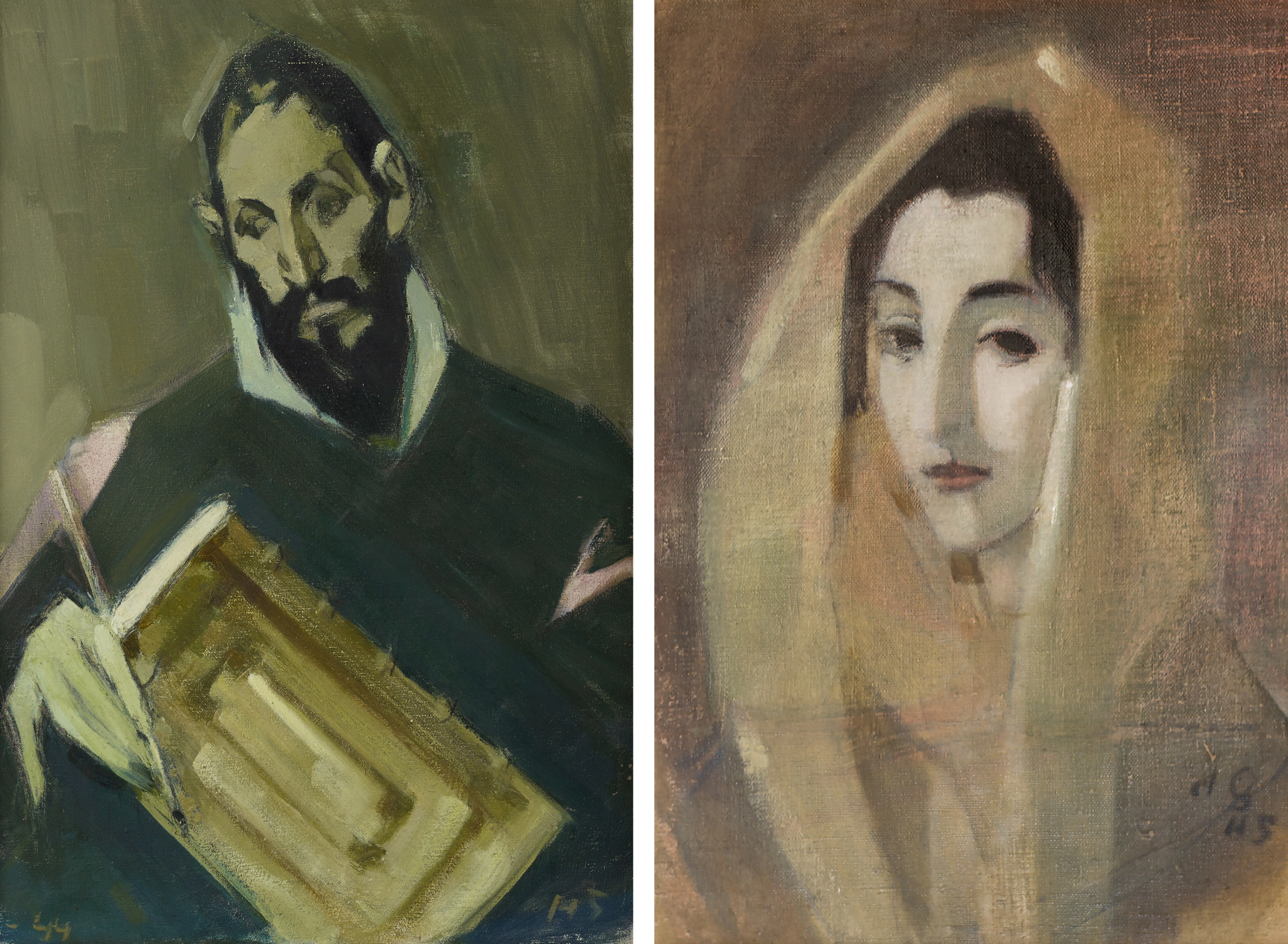
Left: Helene Schjerfbeck (Finnish, 1862–1946). Self-portrait of El Greco, 1944. Oil on canvas, 28 3/8 × 19 3/8 in. (72 × 49 cm). Sara Hildén Foundation / Sara Hildén Art Museum, Tampere, Finland. Right: Helene Schjerfbeck (Finnish, 1862–1946). Spanish Woman after El Greco, ca. 1928. Oil on canvas, 19 3/8 × 13 3/8 in. (49 × 34 cm). Private collection, Stockholm
Schjerfbeck’s first direct mention of El Greco dates to 1912, the year in which the Danish painter Jens Ferdinand Willumsen published a massive two-volume biographical study of the artist.[35] A few years later, when she embarked on Self-Portrait, Black Background, Schjerfbeck mused that she “would like to take up El Greco’s palette: white, black, yellow ochre and cinnabar.”[36] In 1931 Schjerfbeck reported to Reuter that she had read in the journal L’Amour de l’Art that El Greco invested spirituality into art.[37]
In those years, El Greco, whose reputation had languished until the mid-nineteenth century, underwent an astonishing revival as a modernist: Because so little was known about his life at the time, he was an ideal screen for the projection of madness, iconoclasm, and religiosity.[38] When he was brought into critical focus, it was often as an anachronism, an artist of the past and future—in the words of the German artist Franz Marc, “brothers in spirit” with the contemporary generation.[39] An El Greco “effect,” the adoption of the Old Master as a new rebel, anachronistically standing side by side with contemporary artists, swept through the Nordic art world.[40]
Like so many of her contemporaries who did not view his works directly or had seen only a few of them, Schjerfbeck’s conception of El Greco was derived from ekphrastic writing and all-too-often poor reproductions: “It is odd,” she wrote, “to enthuse about pictures one has never seen.”[41]
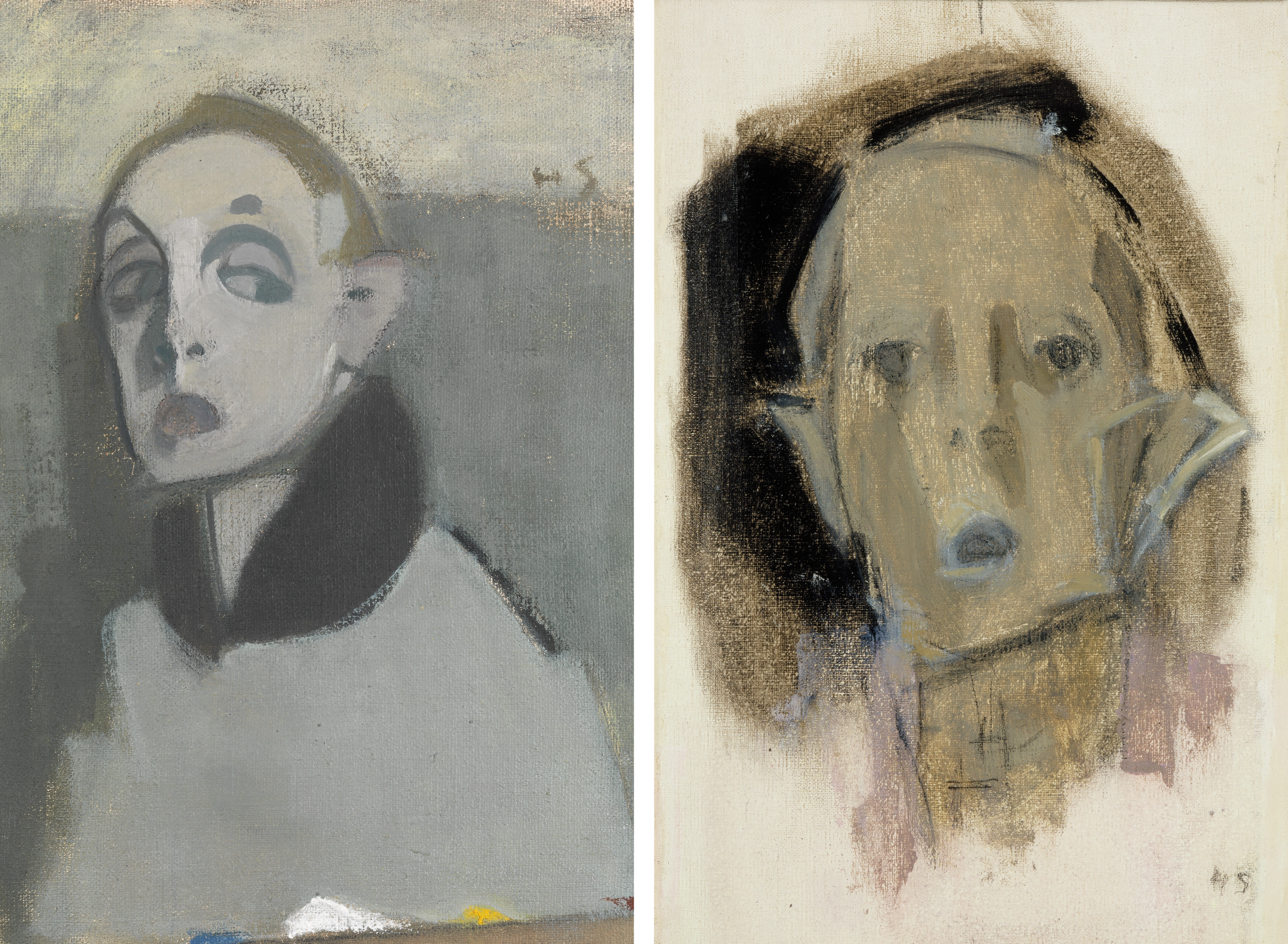
Left: Helene Schjerfbeck (Finnish, 1862–1946). Self-Portrait with Palette I, 1937. Oil on canvas, 21 1/2 × 16 1/8 in. (54.5 × 41 cm). Moderna Museet, Stockholm. Right: Helene Schjerfbeck (Finnish, 1862–1946). Self-Portrait in Black and Pink, 1945. Oil on canvas, 13 3/4 × 9 in. (35 × 23 cm). Private collection
In her final years, Schjerfbeck produced the electrifying, pared down self-images whose poignant shadows, asymmetries, and exaggerations were intertwined with her conversation with El Greco. The variations she produced from El Greco’s work are often fragments excised from larger compositions in which faces look up, down, or askance—gestures and gazes that replicate works from models that Schjerfbeck had produced over many decades.[42] Many of Schjerfbeck’s adaptations are titled “after El Greco.”
In a few, she made a different sort of claim. In My Worldly Madonna (1944; National Museum, Oslo), drawn from El Greco’s Baptism of Christ (1608–14; Hospital de Tavera, Toledo), the artist’s possessive “my” in the title and the flattened, raked lighting, tight coloration, effaced surface, and asymmetrical treatment of the downcast eyes effectively make of El Greco her signature work. Her Self-Portrait of El Greco (1944), a composition based on El Greco’s Saint Luke (1590; Museo Nacional de Escultura de Valladolid), makes a specific pictorial argument about authorship. In rendering the painting as a self-portrait (during her lifetime, many of El Greco’s works were imagined to be self-images), Schjerfbeck implicated herself in the other’s creation. The evangelist, with his cascading features, high collar, and pink flourishes, encompasses the doubled effect of the artist El Greco painting himself and Schjerfbeck creating him.
The Portrait out of register
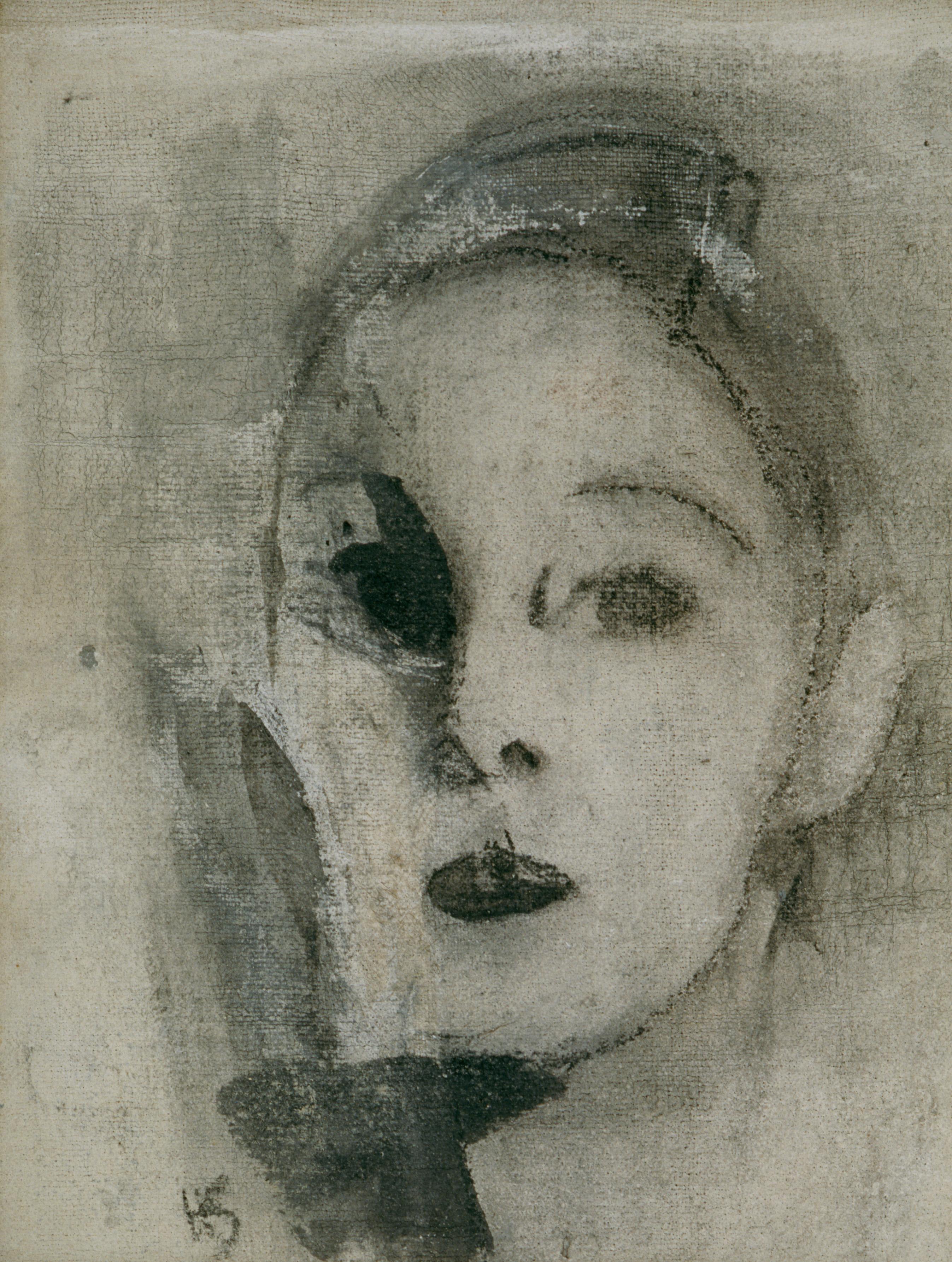
Helene Schjerfbeck (Finnish, 1862–1946). Self-Portrait, 1913–26. Charcoal, watercolor, and oil on canvas, 12 5/8 × 9 1/2 in. (32 × 24 cm). Maire Gullichsen Art Foundation, Pori Art Museum
The freedom Schjerfbeck claimed to have found in reproductions extended to the detours she took from reflections in her own studio mirror. Schjerfbeck exploited mirror reflections in the same way she did achromatic reproductions, as objects of inquiry. She often revisited her earlier works—the art historian Abigail Solomon-Godeau identifies the procession of Schjerfbeck’s self-portraits as variations on a “prototype,” revisitations of a protagonist over time.[43] Writing to Einar Reuter in 1926, Schjerfbeck reported her temporal play with a ten-year-old self-portrait: “I’m completing a picture of my young self by sticking my old mouth on it—now I’m free.”[44] The modification moves the portrait out of register. As noted by Uwe M. Schneede, this makes the work depart from a descriptive function and disaggregates the depicted face from that of the artist.[45]
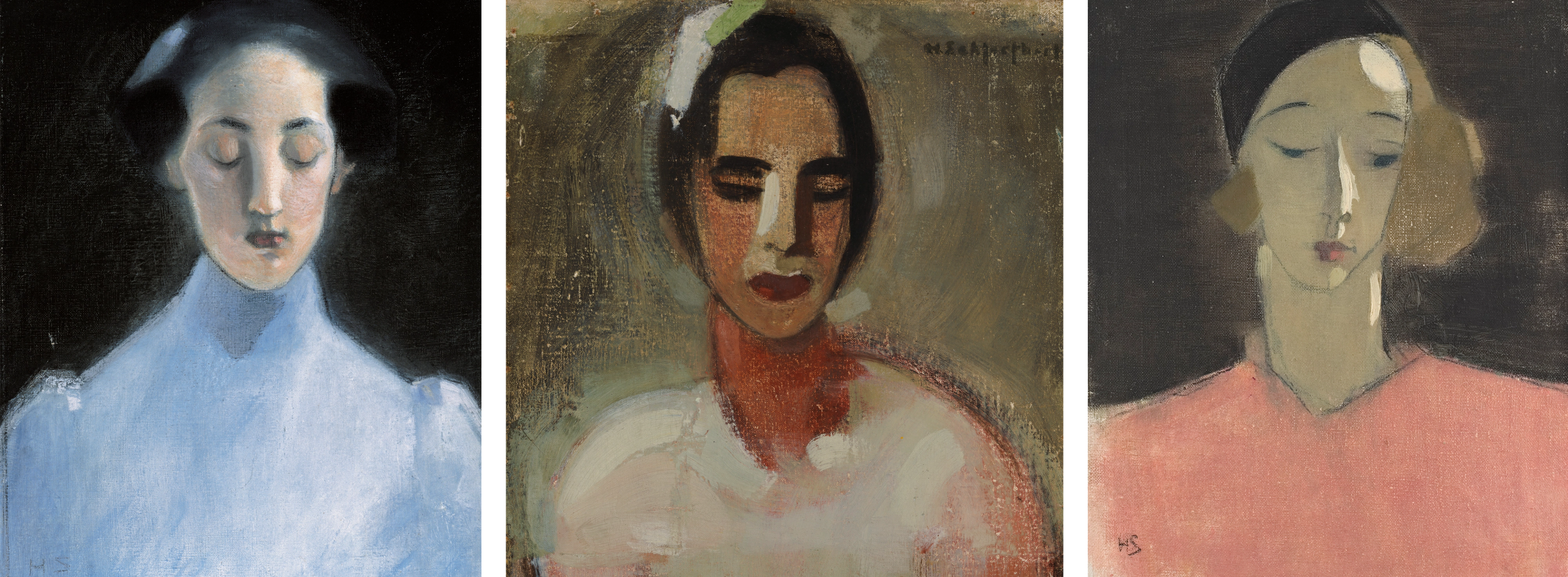
Left: Helene Schjerfbeck (Finnish, 1862–1946). Silence, 1907. Tempera and oil on canvas, 18 × 14 1/8 in. (45.5 × 36 cm). Nordea Art Foundation Finland. Middle: Helene Schjerfbeck (Finnish, 1862–1946). Girl from California I, 1919. Oil on canvas, 15 1/2 × 15 1/8 in. (39.5 × 38.5 cm). Finnish National Gallery Collection, Ateneum Art Museum, Yrjö and Nanny Kaunisto Collection. Right: Helene Schjerfbeck (Finnish, 1862–1946). Girl in Beret, 1935. Oil on canvas, 17 1/2 × 13 1/2 in. (44.5 × 34.2 cm). Private collection
The subjects in many of Schjerfbeck’s self-portraits and portraits of others, like the motifs she adapted from El Greco, look away from the viewer. They face away, or their eyes are closed or significantly deflected.[46] Schjerfbeck’s self-images promise some sort of intrasubjective engagement through their close framing of the subject—precisely the fallacy of the self-portrait genre—and then thwart intimacy through the deflected gaze.[47] That is also the fallacy of the mirror, or of a defined genre, or of a reproduction, or of a painting: the arenas in which Schjerfbeck exercised her exceptionally astute disaffinities and misregistrations. Her “failed” Self-Portrait in Profile, and especially her astonishing last self-portraits, encapsulate them all:
This essay is adapted from the catalogue Seeing Silence: The Paintings of Helene Schjerfbeck, which accompanies an exhibition on view through April 5, 2026.
Notes
[1] Here I make a distinction between a “self-portrayal” as a physiognomic likeness and a “self-image” as a more overtly mediated representation. See Harry Berger Jr., “Fictions of the Pose: Facing the Gaze of Early Modern Portraiture,” Representations 46 (Spring 1994), pp. 87–120.
[2] Helene Schjerfbeck to Gösta Stenman, December 23, 1933, Gösta Stenman Archive, Finnish National Gallery, Helsinki, cited in Marja Lahelma, Helene Schjerfbeck: An Artist’s Life (Helsinki: Finnish National Gallery / Ateneum Art Museum, 2023), p. 156, https://research.fng.fi/2023/04/03/ helene-schjerfbeck-an-artists-life.
[3] On the question of the dating of this work, see Lena Holger, ed., Helene Schjerfbeck: Naisia, miehiä, omakuvia, maisemia, asetelmia (Helsinki: Otava, 1997), p. 90.
[4] Holger, Helena Schjerfbeck (1997), p. 90.
[5] Berger, “Fictions of the Pose,” p. 87.
[6] Anna Reynolds and Lucy Peter, “Producing and Collecting Portraits of Artists,” in Anna Reynolds, Lucy Peter, and Martin Clayton, Portrait of the Artist (London: Royal Collection Trust, 2016), p. 22.
[7] Nicole Lawrence, “Johannes Gumpp (?),” in Self-Portrait: Renaissance to Contemporary, ed. Antony Bond and Joanna Woodall, exh. cat. (London: National Portrait Gallery, 2005), p. 123.
[8] Schjerfbeck’s testimony quoted in Riitta Konttinen, Totuus enemmän kuin kauneus: Naistaiteilija, realismismi ja naturalismi 1880-luvulla; Amélie Lundhl [Lundahl], Maria Wiik, Helena Westermarck, Helena Schjerfbeck ja Elin Danielson (Helsinki: Otava, 1991), pp. 126–27, translated in Lahelma, Helene Schjerfbeck, p. 50.
[9] Helene Schjerfbeck to B. O. Schaumann, December 1881, University of Helsinki Library, quoted in Konttinen, “Helene Schjerfbeck in the 1880s,” p. 41.
[10] Helene Westermarck, Mina Levnadsminnen (Turku, Finland: Åbo tidnings och tryckeri, 1941), p. 109, translated in Carina Rech, Becoming Artists: Self-Portraits, Friendship Images and Studio Scenes by Nordic Women Painters in the 1880s (Gothenburg, Sweden: Makadam, 2021), p. 110.
[11] Lahelma, Helene Schjerfbeck, p. 22.
[12] Marianne Saabye, “Silent Sources: Nordic Communities in Paris and Brittany, 1880–85,” in Against All Odds: Historical Women and New Algorithms, ed. Cecilie Hogsbro Østergaard, exh. cat. (Copenhagen: National Gallery of Denmark, 2024), p. 44.
[13] Carina Rech, “A City of One’s Own: The Parisian Letters of the Swedish Painter Hanna Hirsch-Pauli,” Nineteenth-Century Art Worldwide 23, no. 1 (Spring 2024), https://doi. org/10.29411/ncaw.2024.23.1.4.
[14] Ibid.
[15] Lahelma, Helene Schjerfbeck, p. 38.
[16] Marjatta Levanto, Konstnären är känslans arbetare: Helene Schjerfbeck onom kunsten och livet (Helsinki: Söderström, 1992), p. 47.
[17] The others were Väinö Blomstedt, Magnus Enckell, Antti Favén, A. W. Finch, Akseli Gallen-Kallela, Pekka Halonen, Juho Rissanen, Hugo Simberg, and Verner Thomé.
[18] Paul Wilson, “Picturing Self and Nation: The Finnish Art Society Self-Portrait Commissions,” Journal of Finnish Studies 7, no. 2 (December 2003), p. 11.
[19] Derek Fewster, Visions of Past Glory: Nationalism and the Construction of Early Finnish History (Helsinki: Finnish Literature Society, 2006), p. 16.
[20] This arena was initially productive for the ambitious Schjerfbeck, who illustrated Rafaël Hertzberg’s Finska Folksagor (Helsinki: J. C. Frenckell, 1880). In 1881 Schjerfbeck stated that her greatest wish was to paint historical subjects. Helene Schjerfbeck to B. O. Schauman, December 1881, University of Helsinki Library, cited in Riitta Konttinen, Oma Tie: Helene Schjerfbeck elämä (Helsinki: Otava, 2004), p. 88.
[21] Marja Lahelma has done extensive work on this dimension of Schjerfbeck’s oeuvre, recognizing the importance of the artist’s regard for French style, her use of fashion magazines and patterns as the basis of her clothing and her painting, and her ways of signaling modern women’s identity through the semiotics of dress. See Lahelma, “Art, Fashion, and Modernity: Helene Schjerfbeck’s Portraits of Modern Women,” in Helene Schjerfbeck, ed. Carolin Köchling and Max Hollein (Frankfurt: Schirn Kunsthall, 2014), pp. 113–20.
[22] Annika Landmann, Helene Schjerfbecks Selbstbildnisse—an den Grenzen des Ich: Eine hermeneutische Studie zum Porträt im 19. und 20. Jahrhundert (Hamburg: Hamburg University Press, 2018), 52ff., esp. 62; and Leena Ahtola-Moorhouse, And Nobody Knows What I’m Like: Helene Schjerfbeck’s Portraits 1878–1945, exh. cat. (Helsinki: Finnish National Gallery / Ateneum Art Museum, 2002), pp. 26–36.
[23] These aspects of the painting are noted in Landmann, Helene Schjerfbecks Selbstbildnisse, pp. 59–60.
[24] Helene Schjerfbeck to Maria Wiik, October 15, 1915, Åbo Akademi University Library, cited in Lena Holger, ed., Helene Schjerfbeck: Och jag målar ändå. Brev till Maria Wiik 1907–1928 (Helsinki: Svenska Litteratursällskapet i Finland, 2011), p. 92. My translation.
[25] Anna-Maria von Bonsdorff, “Color Ascetism: Helene Schjerfbeck and the ‘Path to the Synthetic,’” in Köchling and Hollein, Helene Schjerfbeck, p. 57.
[26] Anna-Maria von Bonsdorff, “Colour Ascetism and Synthetist Colour: Colour Concepts in Turn-of-the- Century Finnish and European Art” (PhD diss., University of Helsinki, 2012), pp. 195–97, 265–92; Lahelma, Helene Schjerfbeck, p. 62.
[27] Ibid., pp. 49–80, 265.
[28] Leena Ahtola-Moorhouse, “Regardless of All External Influences, It Is Still I Who Create My Own Works,” in Helene Schjerfbeck: 150 Years, ed. Leena Ahtola-Moorhouse and Anu Utriainen, exh. cat. (Helsinki: Finnish National Gallery / Ateneum Art Museum, 2012), p. 47.
[29] Helene Schjerfbeck to Maria Wiik, 1894, in Riitta Konttinen, “A Biographical Sketch,” in Köchling and Hollein, Helene Schjerfbeck, p. 140.
[30] James Jackson Jarves, Parisian Sights and French Principles, Seen Through American Spectacles (New York: Harper and Bros., 1855), pp. 150–51, quoted in Jacqueline Marie Musacchio, “Infesting the Galleries of Europe: The Copyist Emma Conant Church in Paris and Rome,” Nineteenth-Century Art Worldwide 10, no. 2 (Autumn 2011). I am grateful to Dr. Musacchio for information about the culture of women’s labor and museum copying.
[31] Helene Schjerfbeck to Einar Reuter, September 21, 1918, translated in Ahtola-Moorhouse, “Regardless of All External Influences,” p. 58.
[32] “En svunnen tid” (my translation); Nina Zilliacus and Sue Cedercreutz Suhonen, eds., Helene Schjerfbeck: Henkisyys taiteessa / Om det andliga i konsten, exh. cat. (Helsinki: Villa Gyllenberg, 2012), pp. 88–89. See also Marja Lahelma, “Art About Life and Death: Spirituality and Esotericism in the Art of Helene Schjerfbeck and Ellen Thesleff,” in Spiritual Treasures: Esotericism in the Finnish Art World 1890–1950, ed. Nina Kokkinen and Lotta Nylund (Helsinki: Parvs, 2020), pp. 87–90.
[33] The expansive photographic reproduction industry of the late nineteenth century enabled museums, galleries, calendar producers, and a whole panorama of actors to reproduce works of art in halftone images. Because of the high cost of reproduction, color photography was uncommon in the early twentieth century. On this, see Anne Higonnet, “Manet and the Multiple,” in “Multiplying the Visual: Image and Object in the Nineteenth Century,” ed. Emerson Bowyer, Grey Room 48 (Summer 2012), pp. 102–16.
[34] Helene Schjerfbeck to Maria Wiik, March 29, 1894, Åbo Akademi University Library, cited in von Bonsdorff, “Fine Things Alongside Fierce Things,” p. 18.
[35] Anna-Maria von Bonsdorff, “Helene Schjerfbeck and El Greco,” in El Greco and Nordic Modernism: Cut and Paste, ed. Anne Gregersen, exh. cat. (Berlin: Hatje Cantz, 2023), p. 226. Schjerfbeck’s first encounter with El Greco seems to have been through a series of articles by Miguel Utrillo in L’Art et les Artistes in 1905. See Jeremy Lewison, “The Mask and the Mirror,” in Lewison, Helene Schjerfbeck, p. 34.
[36] Ibid., p. 229.
[37] Helene Schjerfbeck to Einar Reuter, February 20, 1931, Åbo Akademi University Library, translated in Ahtola-Moorhouse, “Regardless of All External Influences,” p. 57.
[38] Beat Wismer and Michael Scholz-Hänsel, eds., El Greco und die Moderne, exh cat. (Düsseldorf: Museum Kunstpalast, 2012); and Eric Storm, The Discovery of El Greco: The Nationalization of Culture Versus the Rise of Modern Art, trans. Marjolijn de Jager (Liverpool: Liverpool University Press, 2016).
[39] Franz Marc, “Spiritual Treasures,” in The Blue Rider Almanac, ed. Klaus Lankheit (1912; repr. New York: Viking, 1974), p. 59.
[40] See Gregersen, El Greco and Nordic Modernism.
[41] Görgen and Gassner, Helene Schjerfbeck, pp. 8–9, cited in Carolin Köchling, “Sur/Faces: People as Projection Surfaces—Images as Models,” in Köchling and Hollein, Helene Schjerfbeck, p. 19.
[42] See also Two Heads, After El Greco (undated; Moderna Museet, Stockholm)
[43] Abigail Solomon-Godeau, “The Tain of the Mirror: Helene Schjerfbeck’s Self-Portraits,” in Köchling and Hollein, Helene Schjerfbeck, p. 159.
[44] Helene Schjerfbeck to Einar Reuter, October 3, 1926, quoted in Marie Christine Tams, “Silent Stir Within: On the Phenomena of Mood and Emotion in the Art of Helene Schjerfbeck,” in Ahtola-Moorhouse and Utriainen, Helene Schjerfbeck: 150 Years, p. 70.
[45] Uwe M. Schneede, “ ‘Thus the Painter Reveals the Soul’: The Self-Portraits” [in German], in Görgen and Gassner, Helene Schjerfbeck, p. 34.
[46] In the later nineteenth century, within Symbolist practice, the motif of closed eyes or the suggestion of blindness were tropes for inner visionary experience, signs for the rejection of the material world. On this, see Marja Lahelma, “The Open-Ended Artwork and the Symbolist Self,” in The Symbolist Roots of Modern Art, ed. Michelle Facos and Thor Mednick (Burlington, VT: Ashgate, 2015), pp. 59–70.
[47] Solomon-Godeau, “Tain of the Mirror,” pp. 81–111, esp. pp. 86–89; and Annika Landmann, “Die Vitalität des Verschwindens: Helene Schjerfbecks ‘Selbstporträt mit rotem Punkt,’” in Hermenetik des Geschichts: Das Bildnes im Blick aktueller Forschung, ed. Uwe Fleckner and Titia Hensel (Berlin: De Gruyter, 2016), p. 422.
[48] Helene Schjerfbeck to Einar Reuter, April 8, 1945, Åbo Akademi University Library, translated in Ahtola-Moorhouse, “Helene Schjerfbeck’s Self-Portraits,” p. 78.