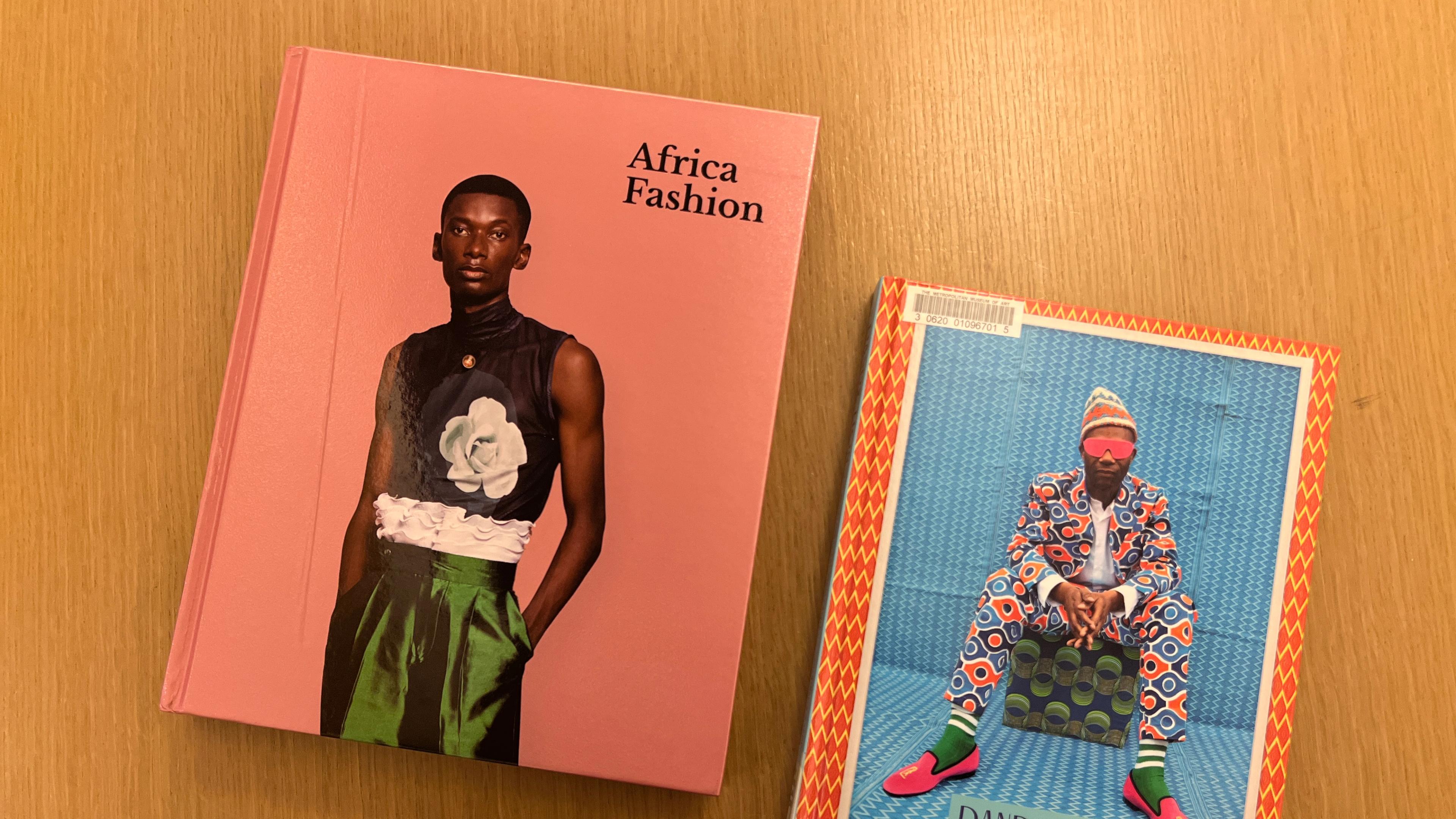
Last October, in conjunction with The Costume Institute’s spring 2025 exhibition Superfine: Tailoring Black Style, we published “Behind the Seams,” in which we highlighted key resources within The Costume Institute Library’s collection that explored Black dandyism and Black style. Though Superfine has now closed, this post presents a continued and expanded conversation, highlighting even more library offerings related to the exhibition’s key themes with a focus on continental Africa. While Superfine primarily explores designers of the African diaspora—principally in the United States, the United Kingdom, France, and the Caribbean—Black dandyism is a global conversation. These books explore how Black fashion and self-expression are shaped, interpreted, and celebrated across diverse cultures and regions.
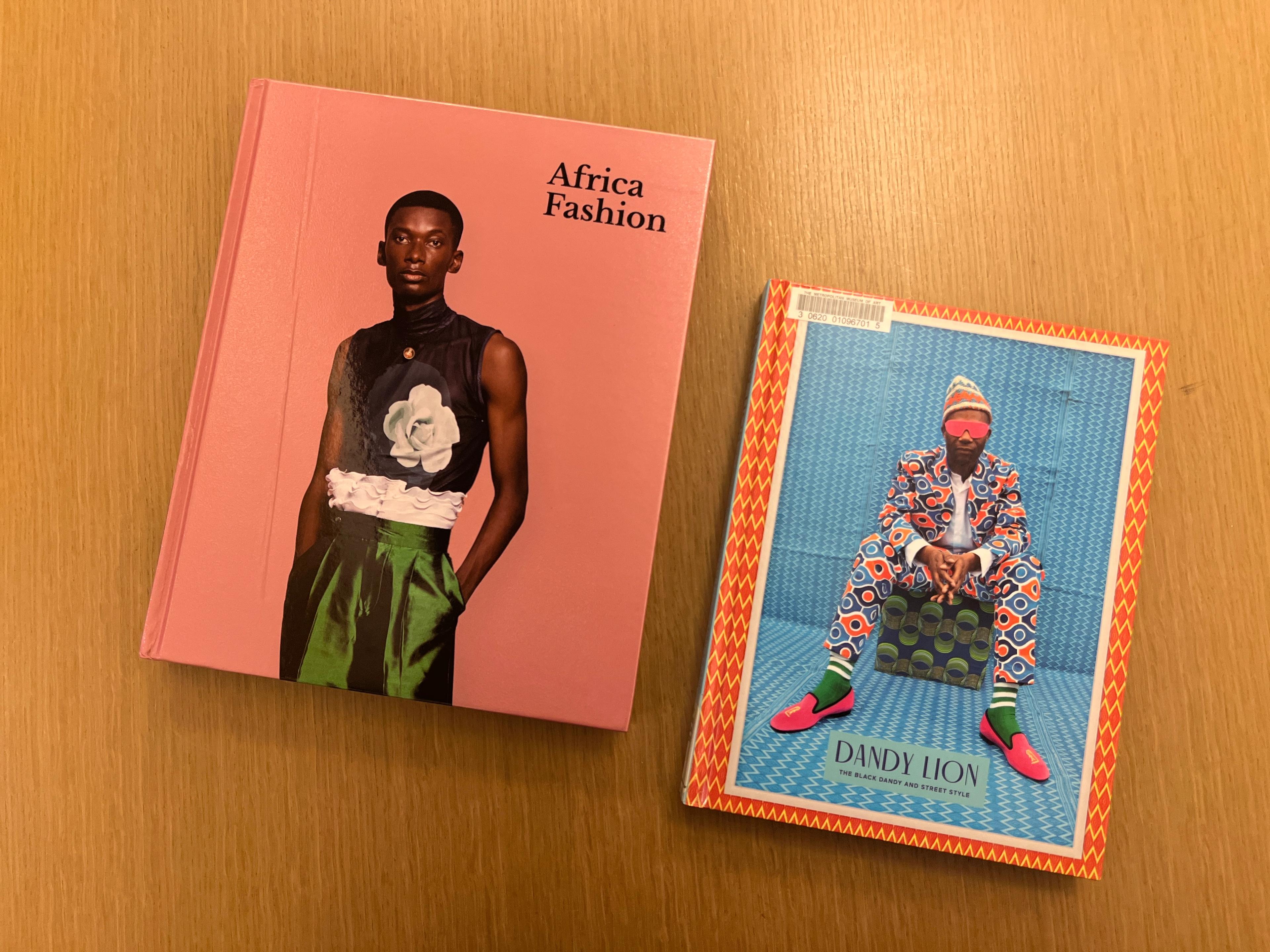
Left: Africa Fashion (London : V&A Publishing, 2022). Right: Shantrelle P. Lewis. Dandy Lion: The Black Dandy and Street Style (New York: Aperture, 2017)
Africa Fashion was published to accompany the acclaimed exhibition of the same name curated by Dr. Christine Checinska at the Victoria and Albert Museum in London, which later traveled to the Brooklyn Museum in 2022–23. Both the book and the exhibition explore how fashion in Africa has long influenced and shaped global style, from the 1950s to the present. The book spotlights pioneering designers such as Shade Thomas-Fahm, Chris Seydou, Kofi Ansah, and Nina Gessous, while also celebrating a new generation of African creatives, including Lisa Folawiyo, Gouled Ahmed, AAKS, and Ami Doshi Shah. Filled with insights from designers, historians, and cultural experts, Africa Fashion offers a vibrant and nuanced portrait of today’s most dynamic and forward-thinking fashion scenes on the African continent and its diaspora. Checinska also served on Superfine's advisory board.
Dandy Lion: The Black Dandy and Street Style by Shantrelle P. Lewis was published in 2017 and celebrates the individuals, designers, tailors, and photographers interpreting, defining, and documenting the vibrant subculture of Black dandyism in contemporary art and fashion. The book examines how this movement is reshaping ideas of Black masculinity and fashion on its own terms, a follow-up to Lewis’s Dandy Lion: (Re)Articulating Black Masculine Identity exhibition at the Museum of Contemporary Photography in Chicago in 2015. Organized into four sections—Movements, Destinations, and Happenings; People and Personalities; Designers and Tailors; and Photographers—the volume presents a beautifully curated collection of photographs that highlight the dazzling patterns, bold poses, and fearless self-expression that make Black dandyism a powerful global statement of style and identity. Lewis explains, “What makes a Black dandy a Dandy Lion is his subtle and not-so-subtle resistance to the status quo, his desire to set himself apart—not to place himself above his sagging-pants peers, but to defy the limiting expectations imposed by media stereotypes.”
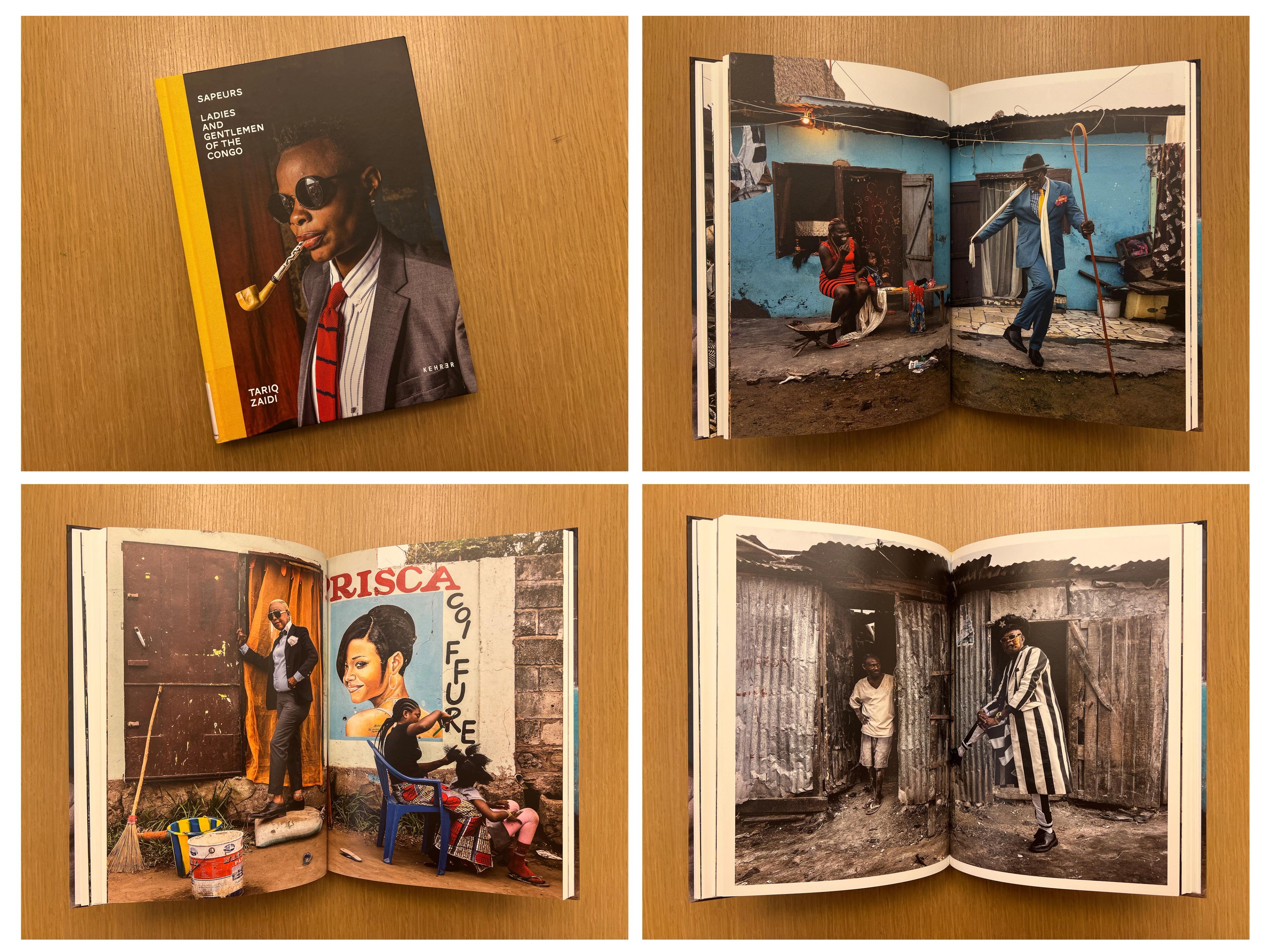
Tariq Zaidi. Sapeurs: Ladies and Gentlemen of the Congo (Heidelberg: Kehrer Verlag, [2020])
Sapeurs: Ladies and Gentlemen of the Congo (2020) by British photographer Tariq Zaidi documents the vibrant fashion subculture of the “Sapeurs” and their female counterparts, the “Sapeuses,” in the Congo. Zaidi juxtaposes their impeccable style with the landscapes of their low-income communities, highlighting “their defiance of circumstance through the stark contrast between the elegance of their dress and the harsh backdrop of their surroundings.” These striking style icons transform from their everyday roles—taxi drivers, housewives, and other ordinary professionals—into immaculately dressed dandies after work. Although the movement has traditionally been male-dominated, a growing number of Congolese women and children (often called “mini sapes in training”) are embracing the culture, frequently wearing custom or designer suits. Families of Sapeurs are celebrated like local celebrities, admired for bringing joy and inspiration through fashion accessible to all. Each photograph includes a credit line noting the subject’s name, background, years as a Sapeur, and the brands featured in their ensemble.
For the production of the mannequins featured in Superfine, we engaged the expertise of contemporary artist Tanda Francis, from whom we commissioned a bespoke mannequin head design. Her visionary sculptures of monumental African faces that adorn public spaces across New York and beyond address untold histories and the absence of Black people in public art. Our collaboration produced fruitful opportunities to further weave the themes of embodiment and representation into the very design of the exhibition itself. Drawn to the long history of La Sape, Francis found inspiration in the face of Congolese anti-colonial activist André Matswa. Matswa, who in the early twentieth century coupled his political activism with a wardrobe of fashionable French dress from time spent in Paris, is considered by many to be a forefather of the Sapeur movement. Grounded by this history, Francis imbued an abstracted likeness of Matswa into the face of the Superfine mannequins. The result was a design with a distinct yet universal quality. Three heads that appear in the exhibition have the added component of two-dimensional planes, faces in profile, that radiate outwards in a 360° formation (as seen in the artist’s 2021 work RockIt Black). According to Francis, this detail is representative of the multiplicity of Black diasporic identity and the open pages of a book. While Superfine focuses mainly on designers and objects from the African diaspora, Francis’s layered design subtly interpolates the legacy and culture of the Sapeur movement into the world of the exhibition.
Studio Volta Photo (2018) is a limited-edition book, produced in a run of just five hundred copies with risograph-printed pages. The special version we have in our collection also includes a signed and numbered gelatin print and is housed in a slipcase. Created to accompany Sanlé Sory’s debut gallery exhibition at Yossi Milo Gallery in New York, the book features never-before-seen images from Sory’s archive of vintage studio portraits taken between the 1960s and 1980s. It’s a rare view into the photographer’s intimate and powerful body of work.
The books discussed here offer just a small glimpse into the wealth of resources within The Costume Institute Library that center perspectives about Black fashion and style on the African continent and beyond. To explore our holdings further, do a keyword search for “Superfine” in Watsonline, view the digitized exhibition checklist (PDF), and the suggested catalog reading list (PDF). Materials from our fashion library collection can be requested and viewed in the Thomas J. Watson Library. Please check out our website for additional information about The Costume Institute’s Irene Lewisohn Costume Reference Library, archives, and special collections. For more updates on new acquisitions and examples of our fashion library collection, please follow us on Instagram at @costumeinstitutelibrary and @metcostumeinstitute.


