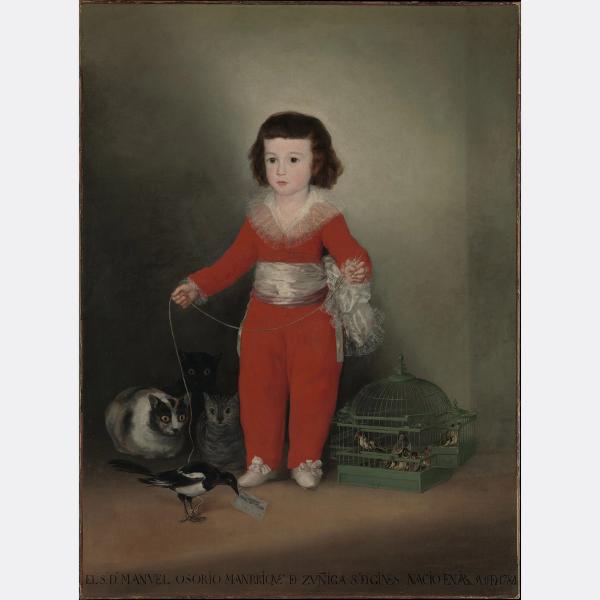
Manuel Osorio Manrique de Zúñiga (1784–1792)
Artwork Details
- Título: Manuel Osorio Manrique de Zúñiga (1784–1792)
- Artista: Goya (Francisco de Goya y Lucientes), español, 1746–1828
- Fecha: Posiblemente después de 1792
- Material: Óleo sobre lienzo
- Dimensiones: 127 x 101,6 cm
- Crédito: Colección Jules Bache, 1949
- Número de inventario: 49.7.41
- Curatorial Department: European Paintings
Audio
5236. Manuel Osorio Manrique de Zuñiga (1784–1792)
Goya, 1787-88
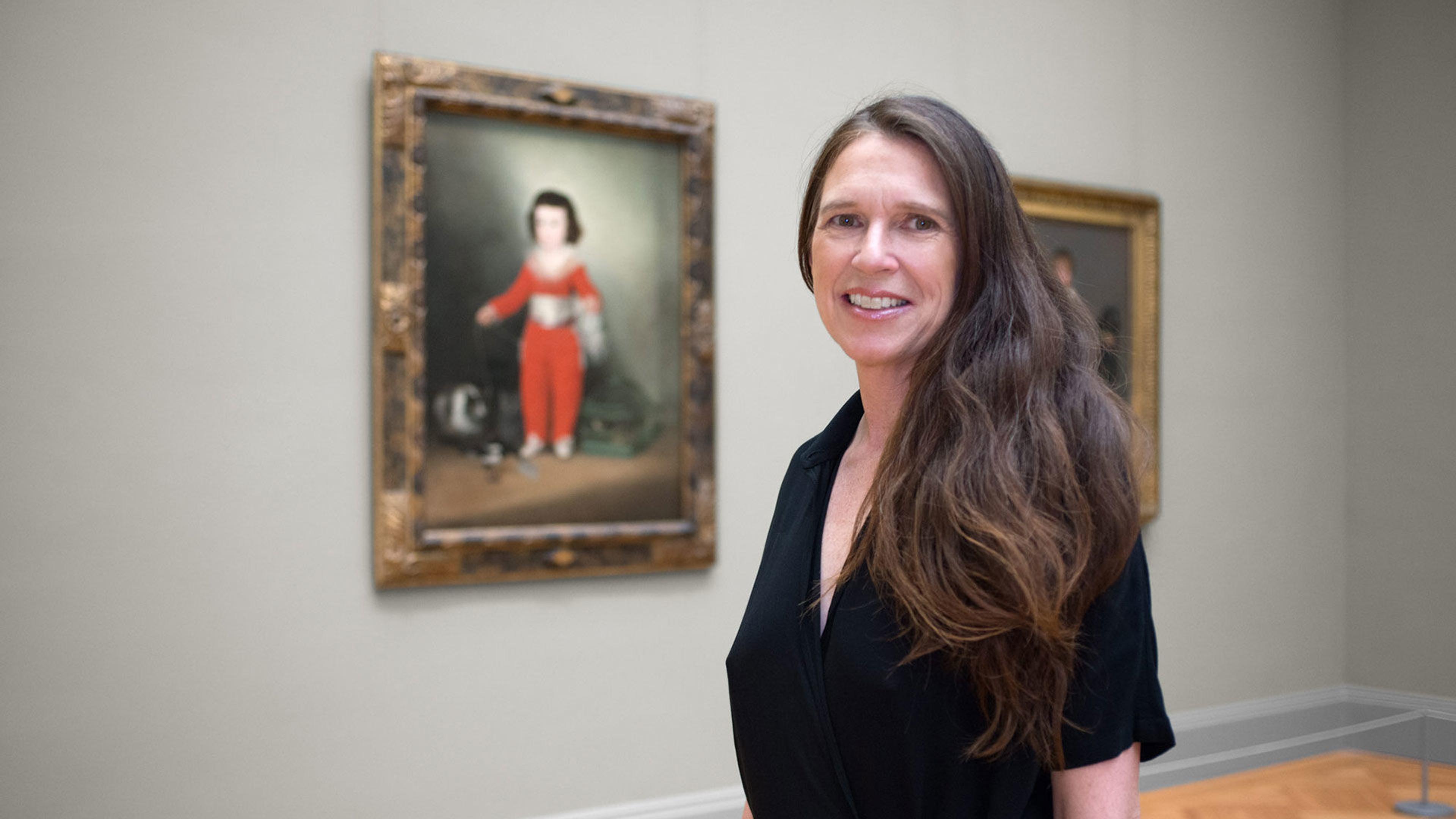
ANNETTE LAREAU: I'm struck that this beautiful little boy is portrayed as being very fragile. His skin is virtually white, suggesting he's not playing in the sun and getting tanned.
Hi, I'm Annette Lareau. I'm a professor at the University of Pennsylvania, and I study social class and children's daily lives.
There's tremendous attention to his clothing. The clothing is beautiful, but it’s not the sort of outfit where the boy could run around and get dirty.
NARRATOR: The formality of this boy’s clothing is typical of many eighteenth-century portraits of upper-class children. So, what makes this portrait extraordinary? For Associate Curator David Pullins, part of it is the animals that surround the boy—each telling a kind of hidden story—in symbols. On the right, for example, are pet finches in a cage.
DAVID PULLINS: Songbirds in the 18th century often are seen as a sign of the gilded cage, is usually one easy way to understand it. They're both safe, and privileged, and precious, but they also were trapped.
NARRATOR: Much more ominous are the cats on the left side.
DAVID PULLINS: And cats in the eighteenth century in painting are rarely a straightforwardly good thing. Dogs, on the whole, you can count on to be faithful, friendly, et cetera, but cats usually introduce something that's not totally domesticated. So there's this sense of threat.
NARRATOR: The cats stare at the magpie on the string…are they about to pounce?
This sense of foreboding is heightened when we learn that this little boy died at the age of eight, a few years after this was painted.
DAVID PULLINS: Goya is someone who usually embeds into his paintings a sense of unease, a sense of threat or something destabilizing, and so the fact that this child will die has kind of only brought that to our attention further. Goya builds in that sense of instability and tension from the get-go, which allows for these kind of ambivalent readings, including looking back through the lens of the knowledge that the child will die.
Listen to more about this artwork
More Artwork

Related Content
Research Resources
The Met provides unparalleled resources for research and welcomes an international community of students and scholars. The Met's Open Access API is where creators and researchers can connect to the The Met collection. Open Access data and public domain images are available for unrestricted commercial and noncommercial use without permission or fee.
To request images under copyright and other restrictions, please use this Image Request form.
Feedback
We continue to research and examine historical and cultural context for objects in The Met collection. If you have comments or questions about this object record, please contact us using the form below. The Museum looks forward to receiving your comments.
Content Notice
The Metropolitan Museum of Art presents over 5,000 years of art from around the world, and our online collection reflects ongoing work conducted over the course of our more than 150-year history. You may encounter objects or images that may be inappropriate for some viewers or information that may be outdated.