Claustro
Artwork Details
- Título: Claustro
- Fecha: Finales del siglo XII–principios del siglo XIII
- Geografía: Francia, procedente del monasterio benedictino de Saint-Guilhem-le-Désert, cerca de Montpellier
- Cultura: Francia
- Material: Piedra caliza
- Dimensiones: 9,2 x 7,3 m
- Crédito: Colección de Los Claustros, 1925
- Número de inventario: 25.120.1–.134
- Curatorial Department: Medieval Art and The Cloisters
Audio
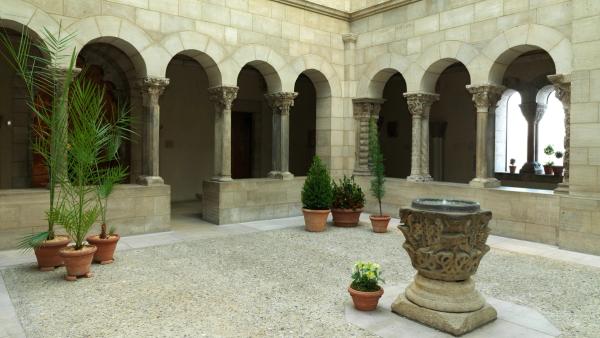
Saint-Guilhem Cloister
Gallery 3
NARRATOR: The screen of columns in this room comes from a monastery in France called Saint-Guilhem-le-Désert. Turn to your left and walk along the row. You'll notice that the shafts of the columns take a variety of shapes: cylindrical, faceted, and wave-like. They offer a fine introduction to medieval sculpture. To see what I mean, continue through the arcade to the place where you can pass between the columns, and look at the pair immediately on the left. *
Look at the inverted bell shape that crowns these columns: it’s called a capital. The leaf decoration is just what you might find on an ancient Roman capital, carved a thousand years before these. But if you look above the leaves at the rectangular block, you'll find features without ancient precedent: the curling vine resembles a grapevine, but instead of grapes, there are human heads, each with its own hairstyle and facial expression. The twelfth-century sculptor responsible could have completed his commission without this level of inventiveness; and yet he produced this variety, it would seem, out of pure creativity. It's worth noting too that nature was his springboard: the capitals of many columns in this cloister show foliage of some kind. Most of the leaves and vines are not botanically recognizable, but one is: it's hops, the basic ingredient in beer, and an essential commodity in the medieval economy.
Listen to more about this artwork
More Artwork
Related Content

Research Resources
The Met provides unparalleled resources for research and welcomes an international community of students and scholars. The Met's Open Access API is where creators and researchers can connect to the The Met collection. Open Access data and public domain images are available for unrestricted commercial and noncommercial use without permission or fee.
To request images under copyright and other restrictions, please use this Image Request form.
Feedback
We continue to research and examine historical and cultural context for objects in The Met collection. If you have comments or questions about this object record, please contact us using the form below. The Museum looks forward to receiving your comments.
Content Notice
The Metropolitan Museum of Art presents over 5,000 years of art from around the world, and our online collection reflects ongoing work conducted over the course of our more than 150-year history. You may encounter objects or images that may be inappropriate for some viewers or information that may be outdated.