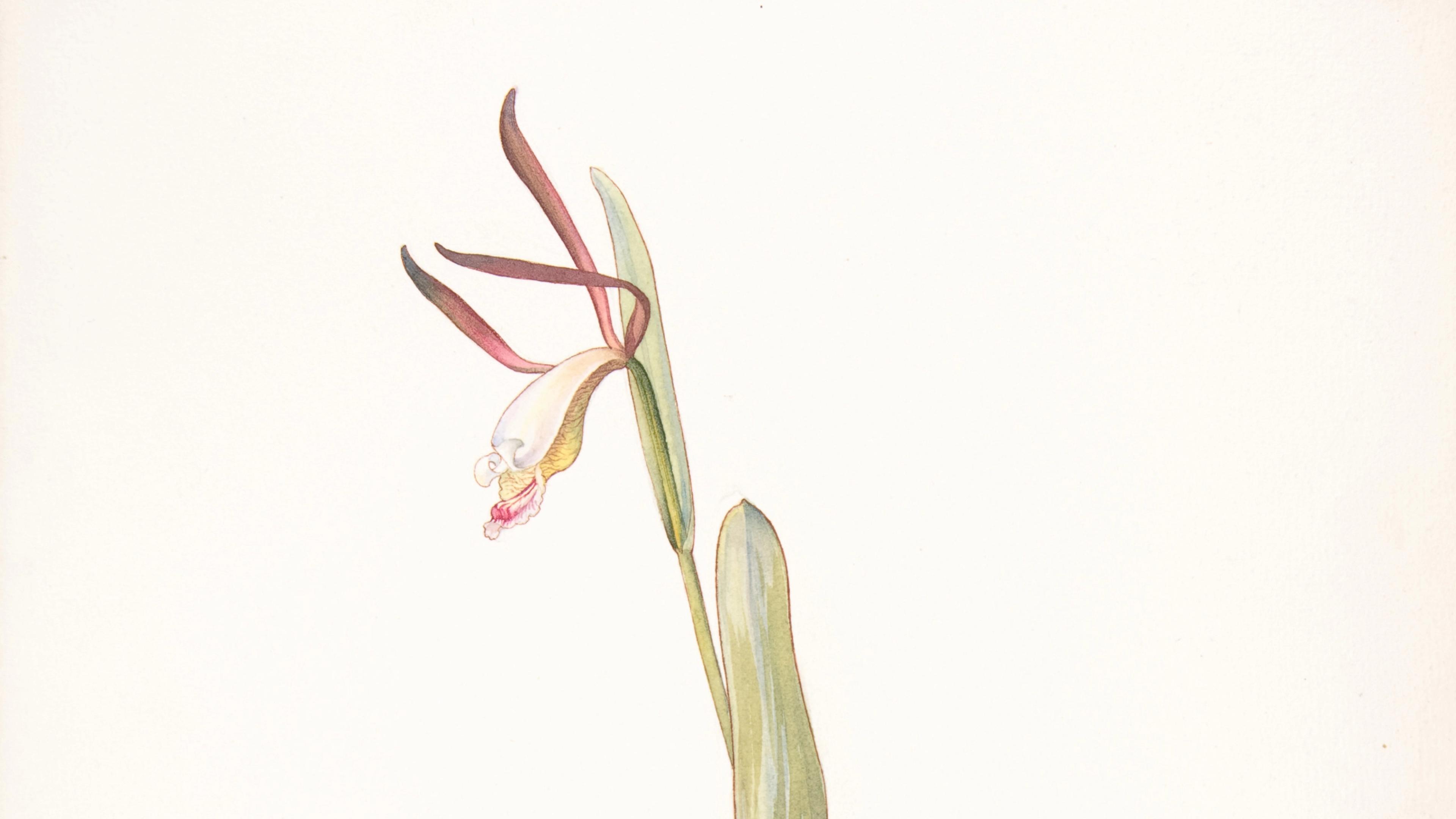
An orchid blooms. Three spindly sepals perk up from the base of the flower, its lip opening into a fringe of magenta that diffuses into a veined underbelly. The curl of a petal casts a shadow onto itself.
Spreading Pogonia (Cleistesiopsis), drawn in 1918 by artist Margaret Armstrong (1867–1944), represents the Cleistesiopsis divaricata, a terrestrial orchid associated with the longleaf pine ecosystem of the southeastern United States, commonly called the spreading pogonia, rosebud orchid, or dragonhead pogonia. The work is an act of intimate observation, more a portrait than a specimen with parts exposed for analysis as plants often appear in conventional botanical illustrations. Here, Armstrong has memorialized the spreading pogonia, presenting it in visual respite from the habitat destruction intensifying in early-twentieth-century America. Today, it is listed as endangered in the state of Florida.
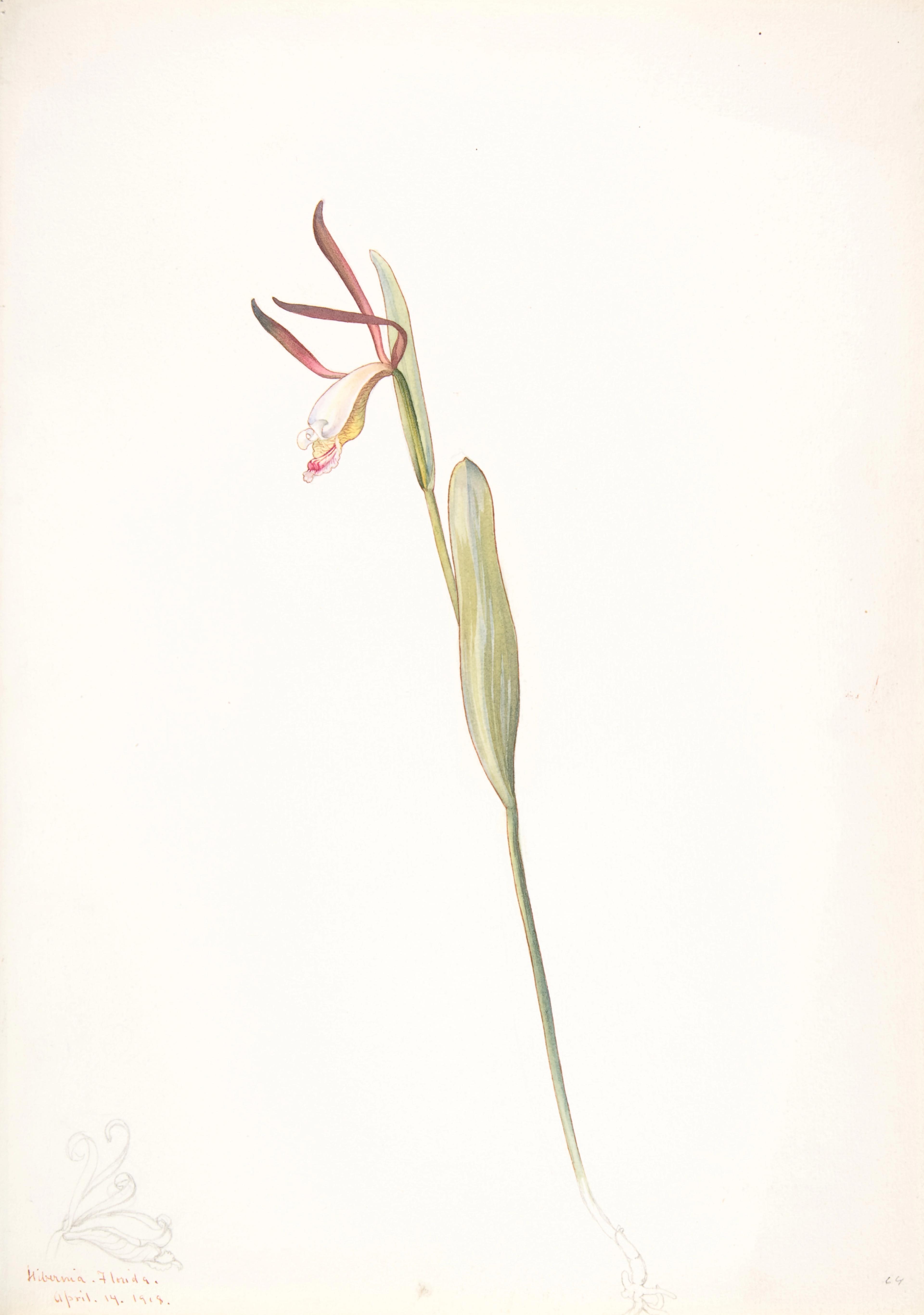
Margaret Neilson Armstrong (American, 1867–1944). Spreading Pogonia (Cleistesiopsis), April 14, 1918. Watercolor and brown ink over graphite, with detail in graphite; 13 3/4 × 10 in. (34.8 × 25.2 cm). The Metropolitan Museum of Art, New York, Gift of Helena Bienstock, Cynthia MacKay Keegan and Frank E. Johnson, 2010 (2010.341.2(64))
This watercolor is part of a bound album featuring seventy-three botanical watercolors by Margaret Armstrong donated to The Met by her family descendants in 2010. Armstrong began her professional career in the 1880s, designing Art Nouveau botanical covers for more than three hundred books in the following decades before shifting towards botanical illustration in the 1900s. She began compiling ink sketches and watercolors in 1909 to illustrate her Field Book of Western Wildflowers, published by G. P. Putnam’s Sons in 1915. Armstrong’s book represents the first circulated guide to the western flora of America and occupies a niche of women-led field book production in North America in the early twentieth century.
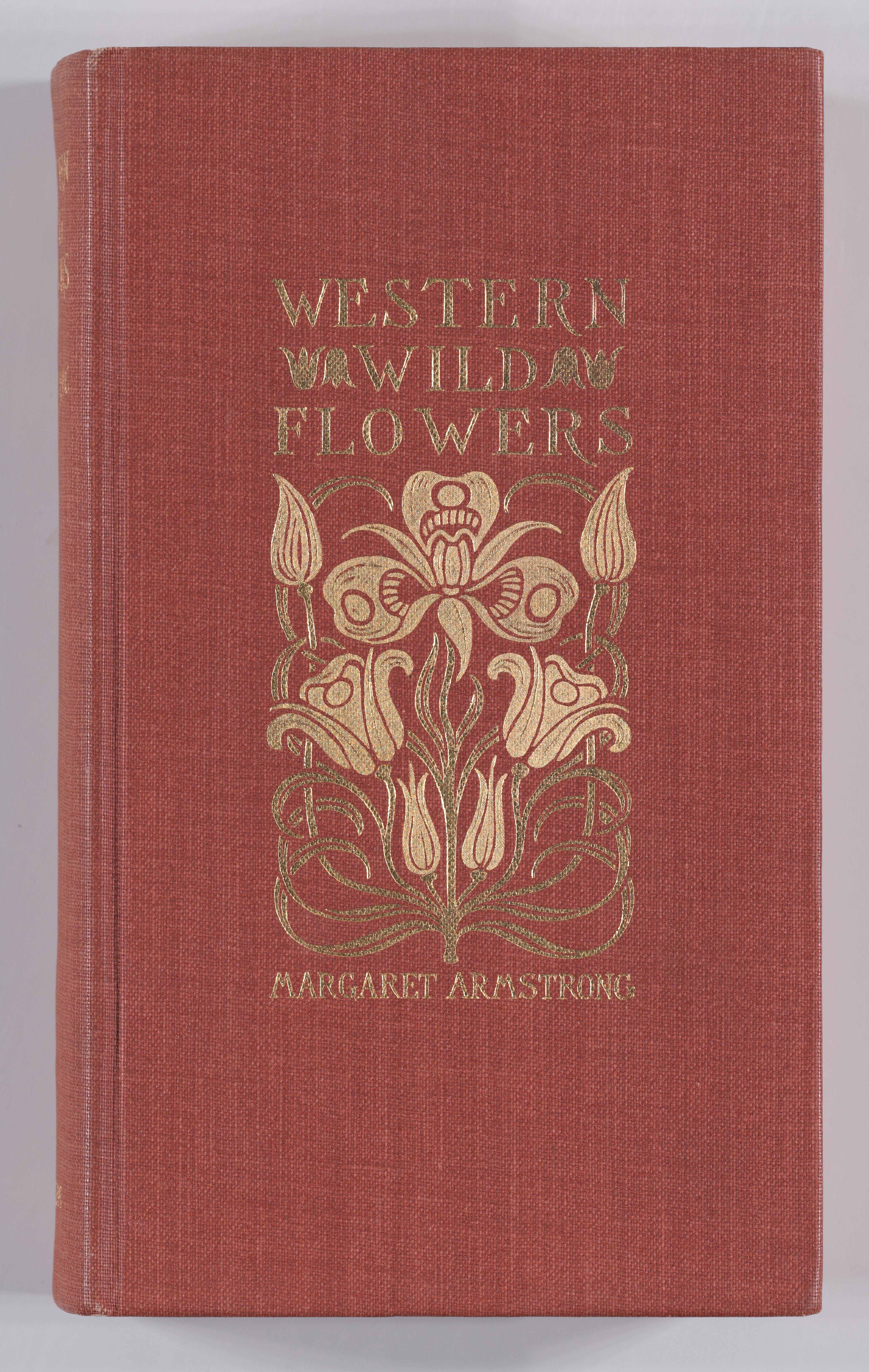
Publisher: G. P. Putnam's Sons, New York. Author: John James Thornber (American, 1872–1962). Artist: Margaret Neilson Armstrong (American, 1867–1944). Field Book of Western Wild Flowers, 1915. Illustrated book, 596 pp., 6 7/8 × 4 × 1 3/8 in. (17.5 × 10 × 3.4 cm). The Metropolitan Museum of Art, New York, Watson Library, Gift of Friends of the Thomas J. Watson Library (Publishers Bindings 747)
The album mostly features drafts for Armstrong’s Field Book, many of which are marked with notes, graphite frame lines for printing, and calligraphic inscriptions of the common and Latin names of species. Bound in at the end of the volume, however, are thirteen unpublished watercolors made in 1911 and 1918 that serve a different purpose, among them Spreading Pogonia (Cleistesiopsis). They are the only works in the album that Armstrong produced in the eastern United States and are absent of most intelligible inscription, with the exception of a date and tidy ink marking: Hibernia.
Hibernia, Florida, is a cozy riverfront property located on Fleming Island along the St. Johns River. Armstrong’s thirteen Hibernia watercolors show her responding to the changing landscape of the southeastern United States in the early twentieth century, projecting an anthropogenic blueprint of Hibernia: threatened species at the periphery of development, native plants cultivated for the property grounds, and invasive flora introduced through colonial settlement.
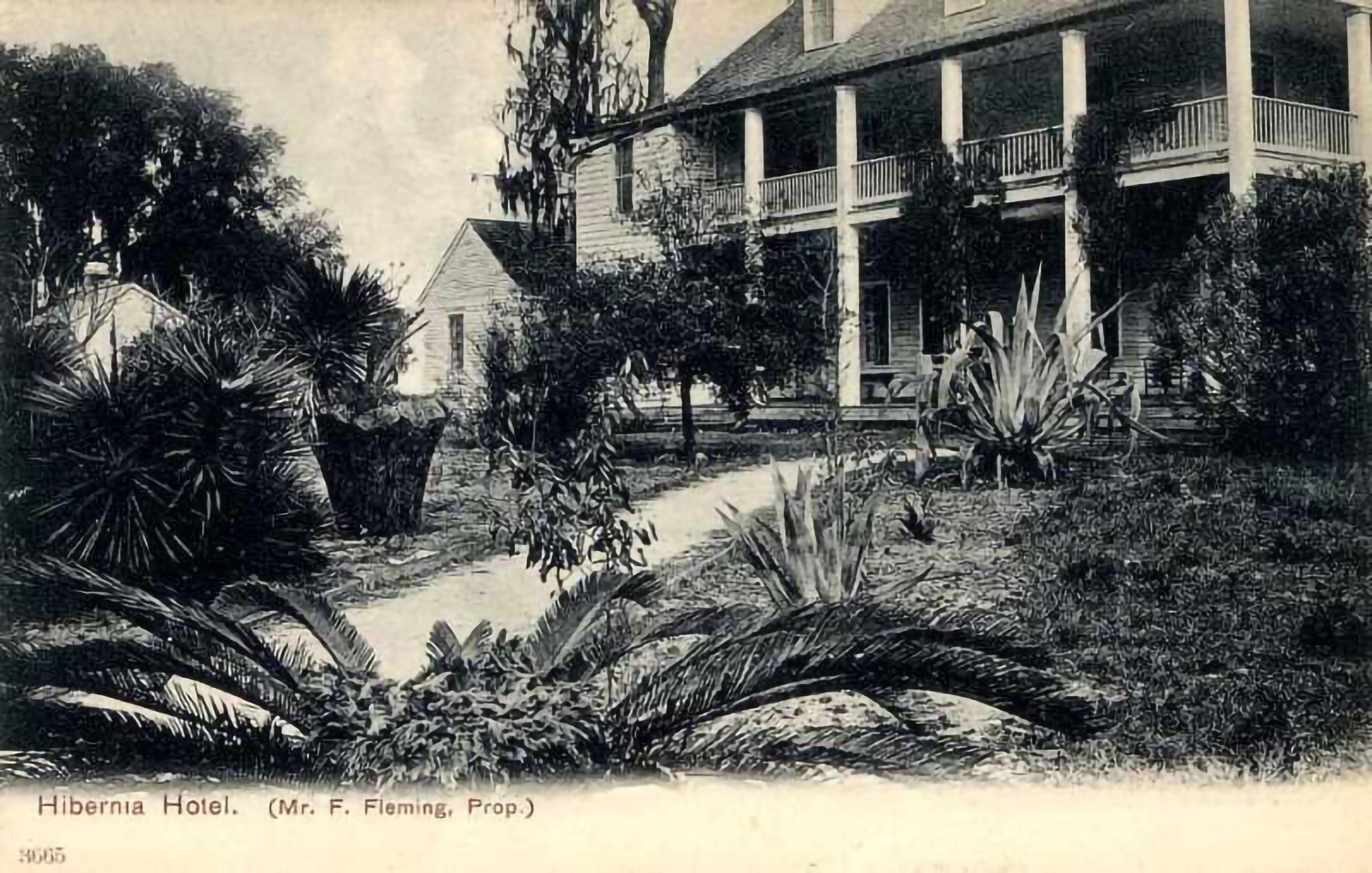
Postcard of Hibernia Hotel. Courtesy of Clay County Archives
Hibernia was established in 1790 from a land grant of one thousand acres given by the Spanish Crown to the Irish immigrant George Fleming (1760–1821), who served as a captain for the Spanish Urban Militia. To honor his heritage, Fleming chose the name Hibernia, which is a Latin name for Ireland. The descendants of the Fleming family started a winter accommodation for visitors at Hibernia after the Second Seminole War (1835–1842), which was revamped after the Civil War (1861–1865) and started accepting visitors once again. By the twentieth century, the Hibernia Hotel, also known as the Hibernia Winter Resort or Fleming House Hotel, was established as an attractive getaway and reflected the popular emergence of riverfront hotels, with several other hotels opened in the vicinity of Hibernia that tourists would visit along steamboat cruises down the St. Johns River.
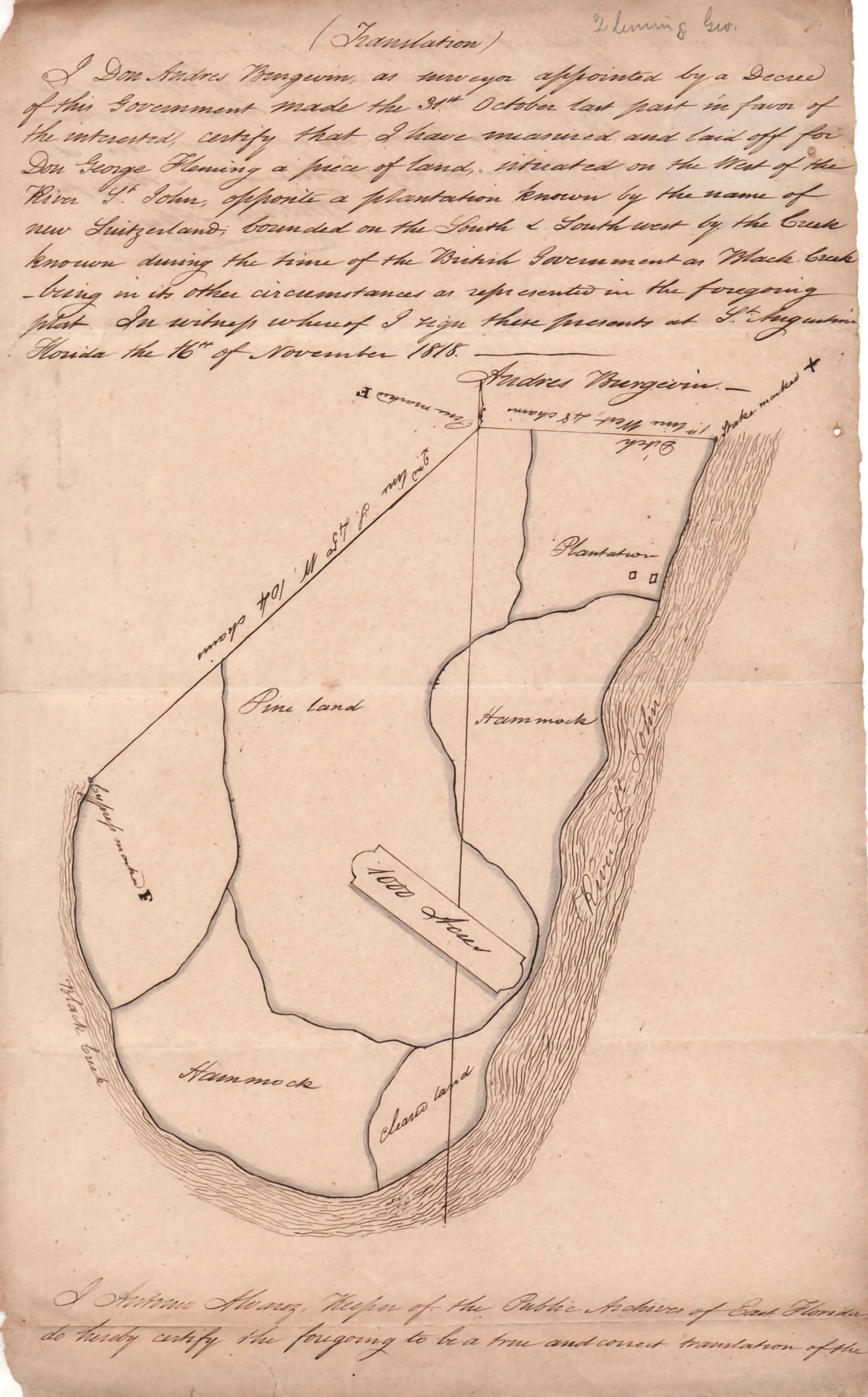
Fleming, George, 1821–45. United States Board of Land Commissioners. State Archives of Florida, Florida Memory, Series S990
Fleming Island was once covered in native longleaf pine that spanned much of the coastal southeastern United States prior to the nineteenth century. The longleaf pine ecosystem is fire-dependent, relying on routine fire to stimulate the growth of its plant species and maintain biodiversity. It was historically inhabited by various Indigenous groups who managed the land for thousands of years through controlled burning. However, unregulated logging and the upheaval of Indigenous people led to the lack of proper fire practices, resulting in the decline of the longleaf pine ecosystem in the last three centuries. As of 2013, the longleaf pine is designated as globally endangered.
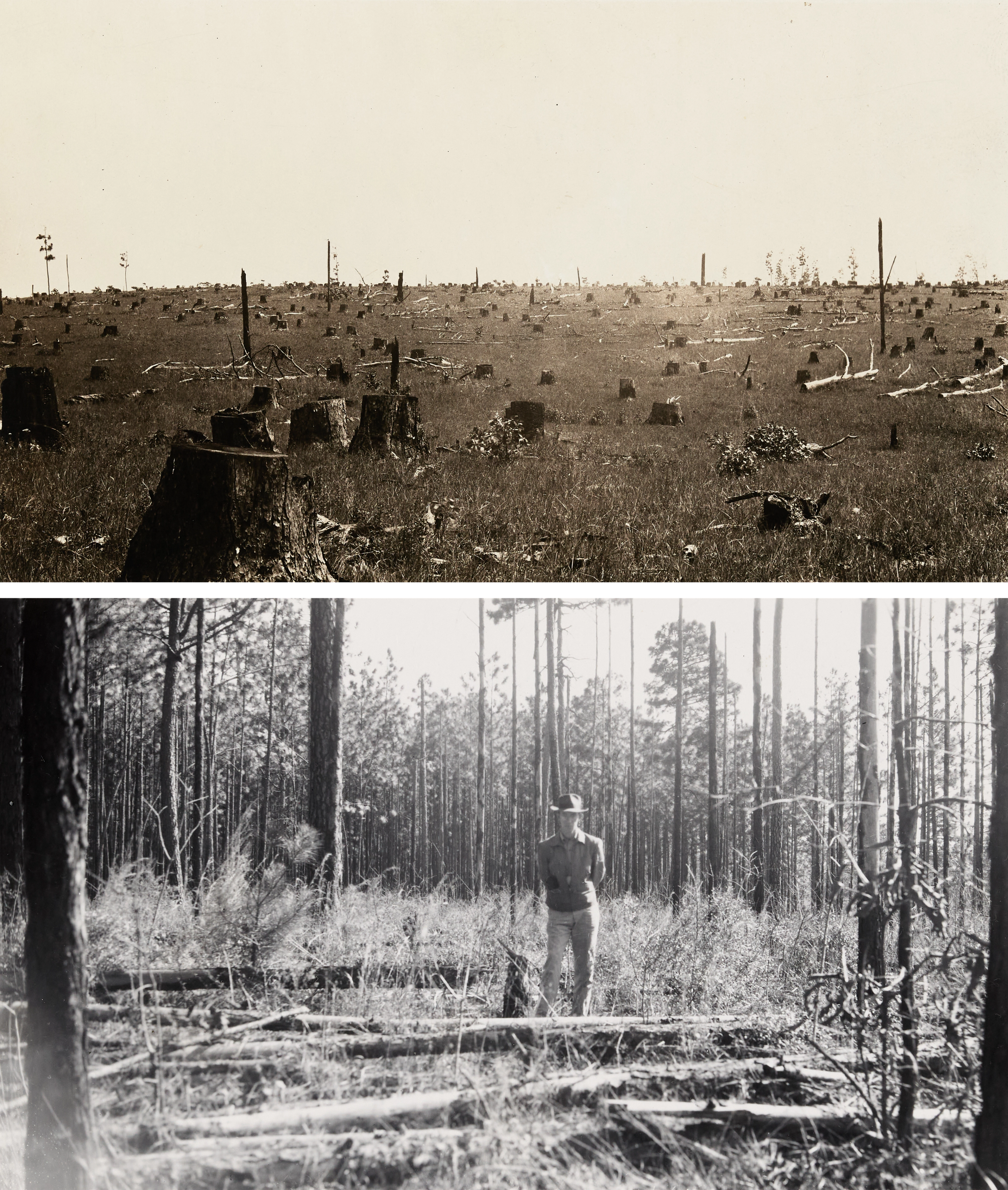
Top: Herman Haupt Chapman. 1921, Longleaf pine, clear cut; Bottom: Herman Haupt Chapman. 1913 crop destroyed fall fire due to leaving it unburned too long. Courtesy of Yale Library, Beinecke and Rare Manuscript Library, Manuscripts and Archives, Herman Haupt Chapman Papers
In the nineteenth century, the longleaf pines once surrounding Hibernia were remarked on as rising “seventy, eighty, and a hundred feet in the air” and became a notable attraction for many of its visitors, including Margaret Armstrong. Although Armstrong grew up in New York, she visited Hibernia periodically after her uncle Gouverneur (Gouv) Armstrong purchased a parcel of land on Fleming Island in 1876. After Gouv’s passing in 1893, the artist’s father, the well-known, New-York based, stained glass artist Maitland Armstrong (1836–1918) inherited the property and bought additional parcels, expanding it into a few-hundred-acre property by 1905.
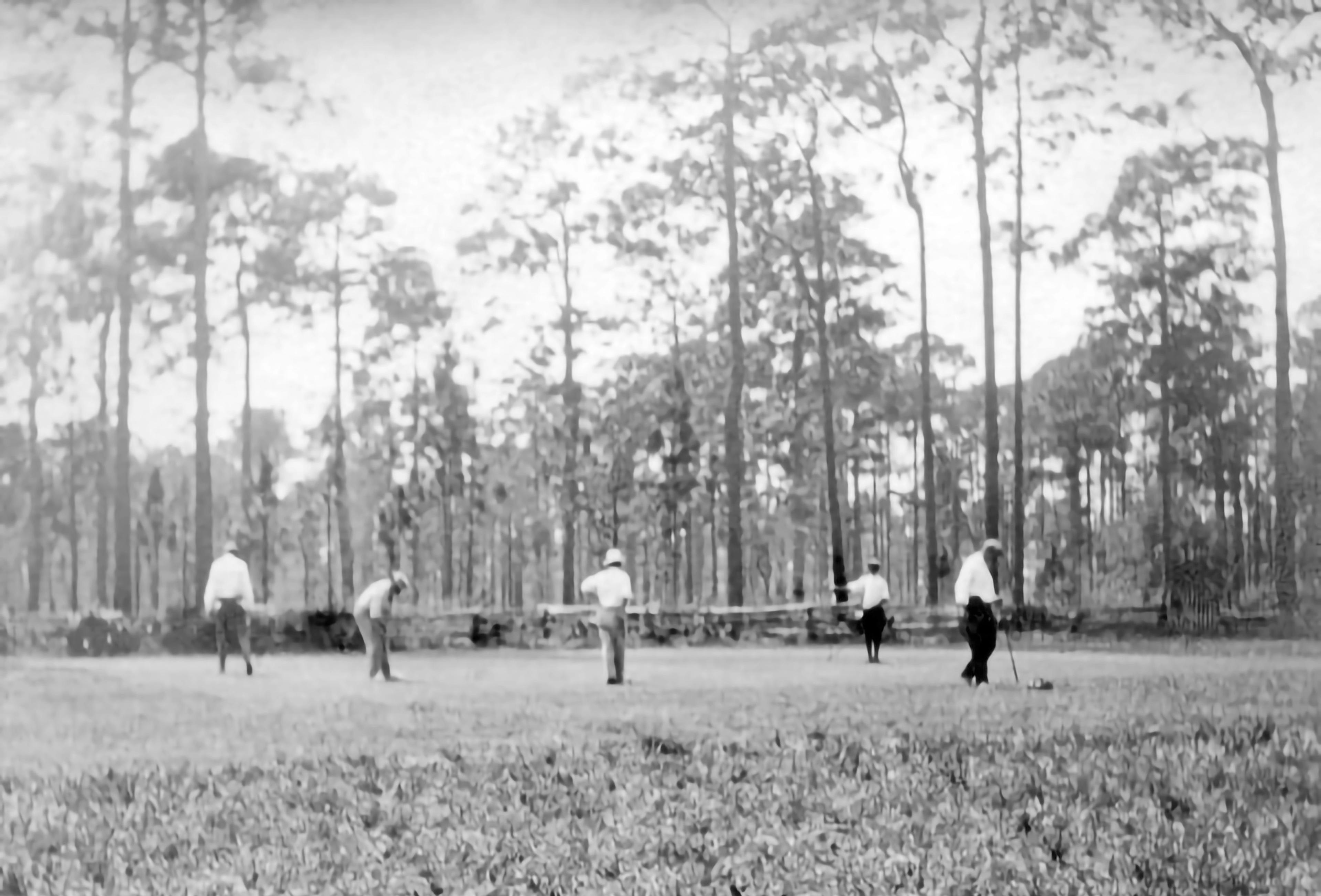
Men golfing in Hibernia, 1909. State Archives of Florida, Florida Memory (PR78394)
Armstrong painted the spreading pogonia at age fifty-one, her last drawing in the album, during her family’s visit to Hibernia in the winter of 1917–18 to escape freezing temperatures and a coal shortage in New York caused by World War I rationing. She stayed on through the early spring when the orchid blooms. In graphite, she sketched the side profile of a spreading pogonia with tightly curled sepals at the bottom right of the page, indicating either her close study of one plant over time or her observation of two different flowers. Armstrong created her botanical illustrations from life, likely taking cart rides through the longleaf pine barrens surrounding Hibernia to observe its flora and revisiting populations for extended study.
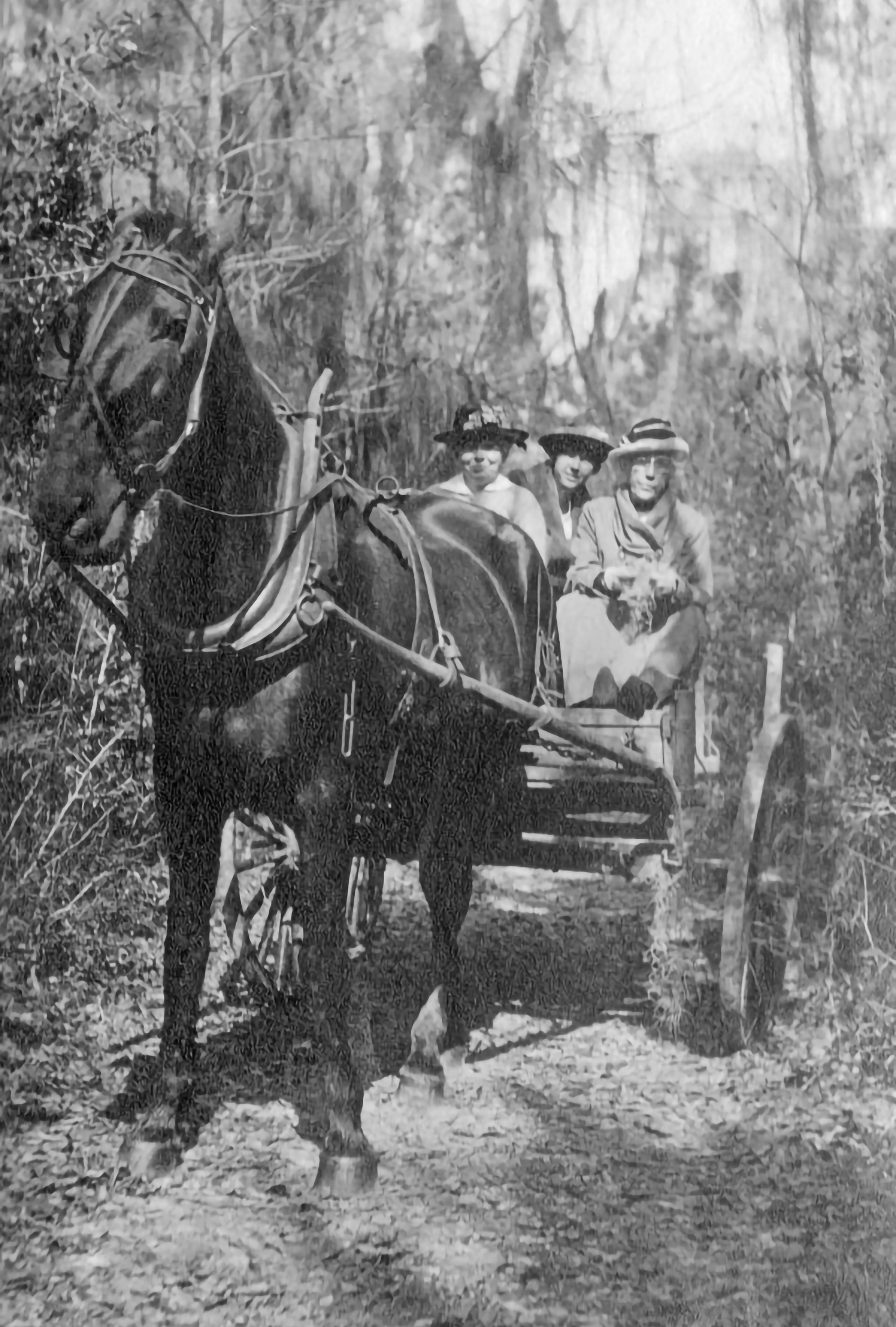
Women driving a horse-drawn cart in Hibernia, 1920. State Archives of Florida, Florida Memory (PR78492)
Armstrong was unfamiliar with the species she encountered in Hibernia and did not seek to determine their names, prioritizing observation over identification. Some illustrations are accompanied by faint graphite notes that indicate her speculation about their names, yet no species are identified in full. The watercolor Hooded Pitcher Plant (Sarracenia minor) is scrawled with the genus name “Sarracenia?” and Blue Butterwort (Pinguicula caerulea) with “Pinguicula?” Armstrong was primarily interested in each plant for its role within the larger environment, a dynamic she observed recalibrating in response to ecological change.
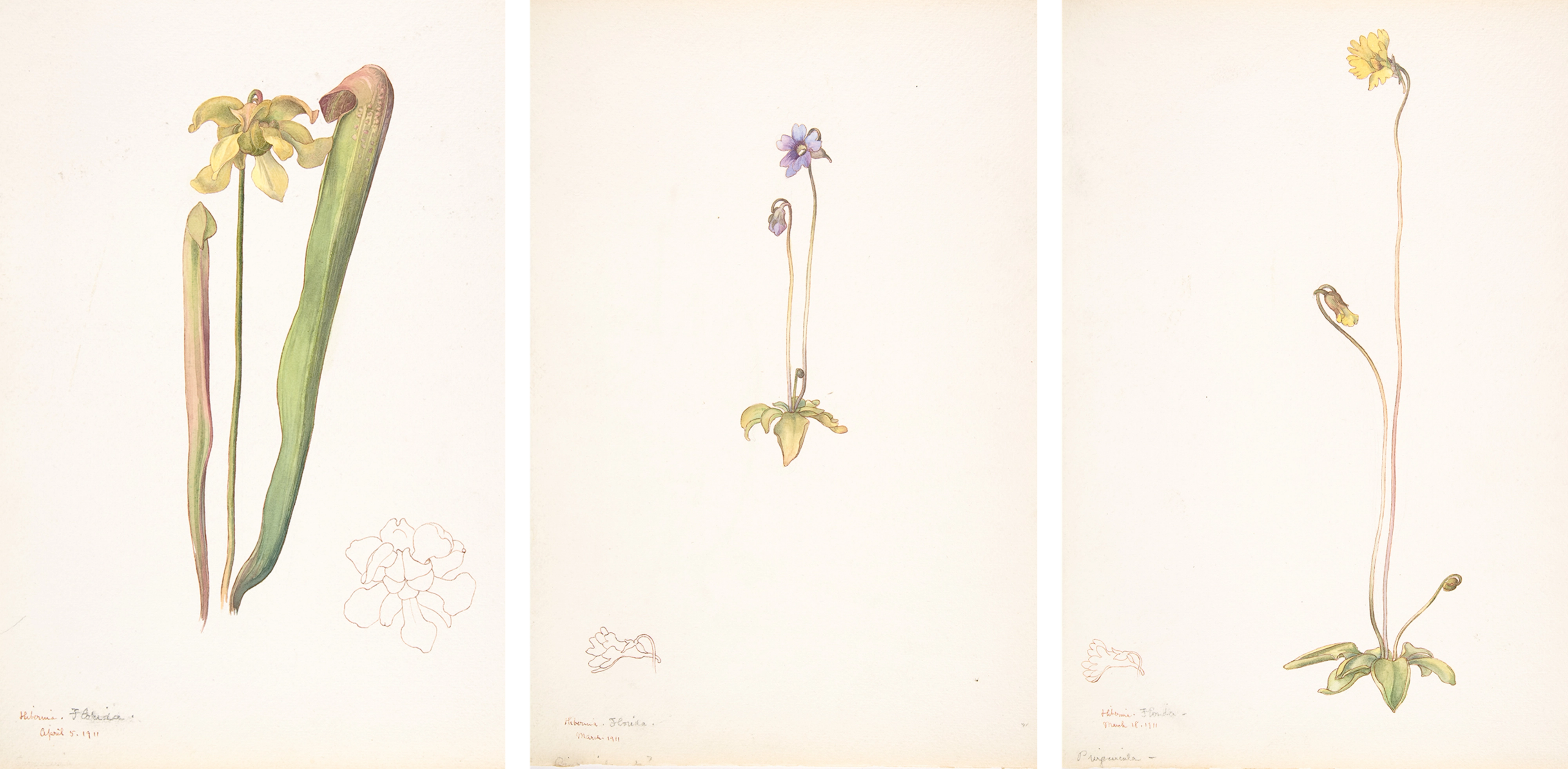
Left: Hooded Pitcher Plant (Sarracenia Minor), April 5, 1911 (2010.341.2(62)); Center: Blue Butterwort (Pinguicula Caerulea), March, 1911 (2010.341.2(70)); Right: Yellow Butterwort (Pinguicula Lutea), March 18, 1911 (2010.341.2(69)). All by Margaret Neilson Armstrong (American, 1867–1944). Watercolor and brown ink over graphite, with detail in graphite, 13 3/4 × 10 in. (34.8 × 25.2 cm). The Metropolitan Museum of Art, New York, Gift of Helena Bienstock, Cynthia MacKay Keegan and Frank E. Johnson, 2010
In addition to the spreading pogonia, Armstrong depicted seven other fire-dependent species associated with the longleaf pine ecosystem and currently imperiled to varying degrees due to habitat destruction. These include three carnivorous species: the hooded pitcher plant, the blue butterwort, and the yellow butterwort; two terrestrial orchids: the tuberous grasspink and bearded grasspink; and the atamasco lily and orange milkwort.
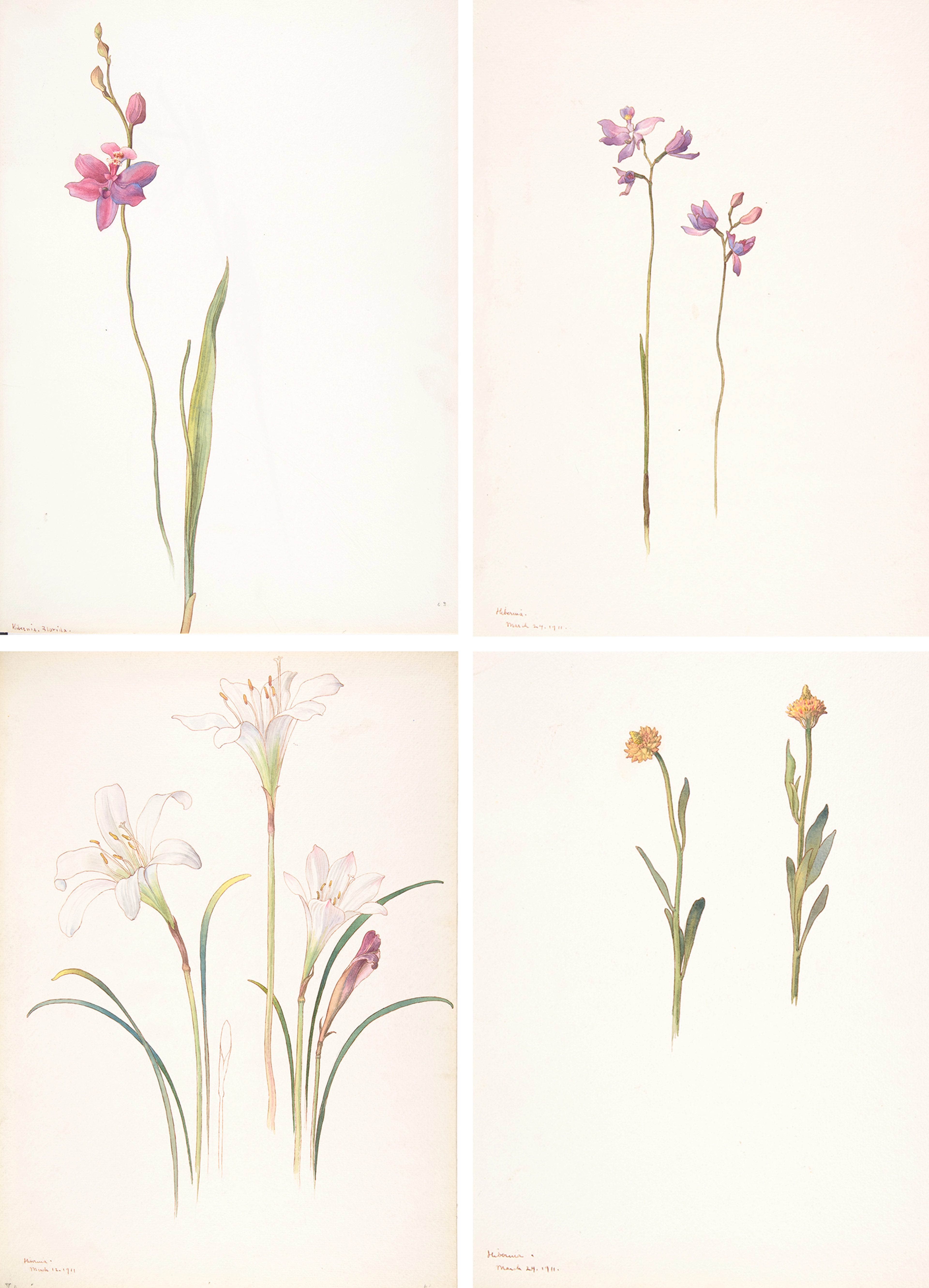
Clockwise from top left: Tuberous Grasspink (Calopogon Tuberosus), ca. 1911 (2010.341.2(63)); Bearded Grasspink (Calopogon Barbatus), March 24, 1918 (2010.341.2(71)); Orange Milkwort (Polygala Lutea), March 24, 1911 (2010.341.2(68)); Atamasco Lily (Zephyranthes Atamasco), March 12, 1911 (2010.341.2(61)). All by Margaret Neilson Armstrong (American, 1867–1944). Watercolor and brown ink over graphite, 13 3/4 × 10 in. (34.8 × 25.2 cm). The Metropolitan Museum of Art, New York, Gift of Helena Bienstock, Cynthia MacKay Keegan and Frank E. Johnson, 2010
Armstrong considered how plants existed in the face of increasing human interaction with the environment, studying the American snowbell, a native tree popularized for cultivation. Several native trees and shrubs dotted the manicured grounds of Hibernia. Armstrong also depicted native vines curated for the walkways around the property, such as the archway at the entrance to the Fleming House Hotel, which was decorated with bursting Cherokee rose flowers, beneath which tourists would often pose for pictures to remember their visit.
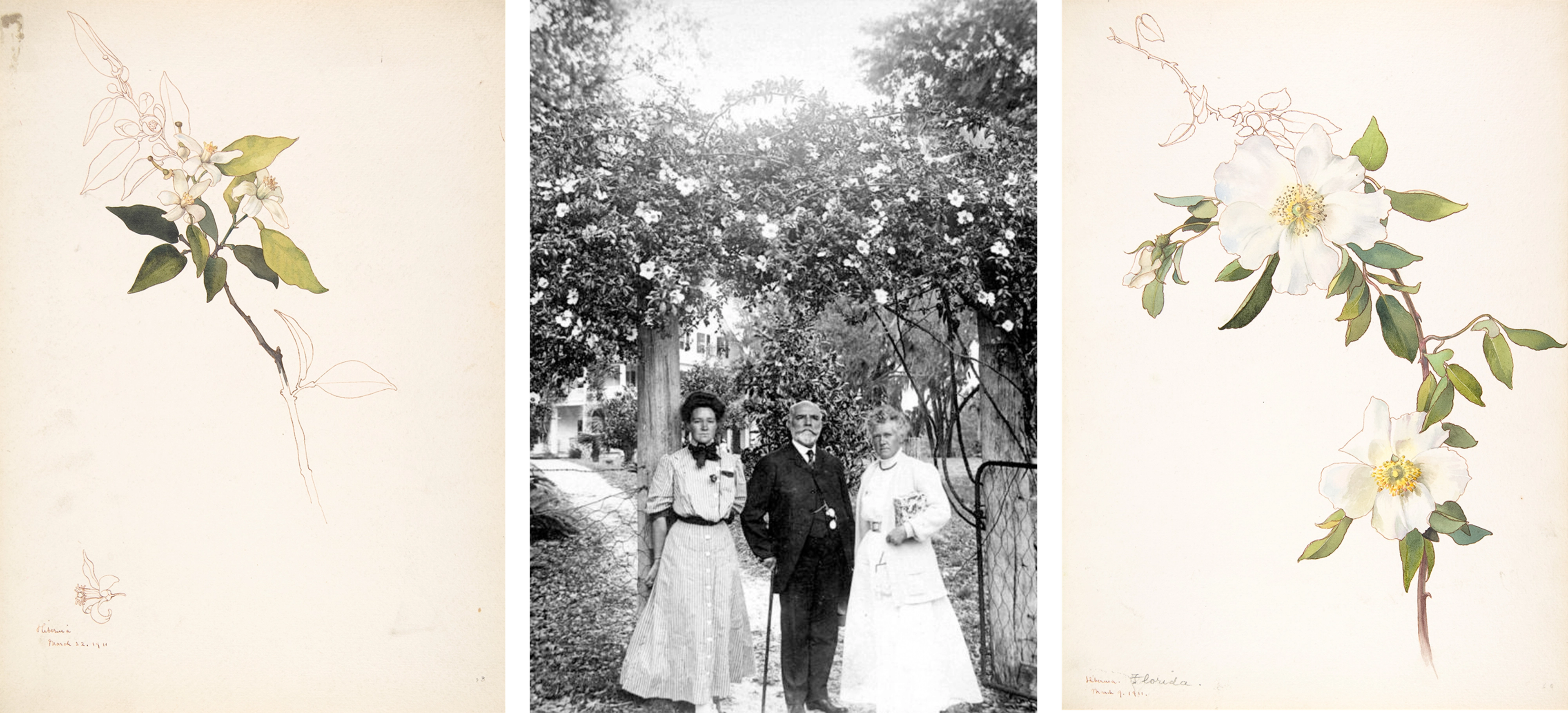
Left: Margaret Neilson Armstrong (American, 1867–1944). American Snowbell (Styrax Americanus), March 22, 1911. Watercolor and brown ink over graphite, with detail in graphite, 13 3/4 × 10 in. (34.8 × 25.2 cm). The Metropolitan Museum of Art, New York, Gift of Helena Bienstock, Cynthia MacKay Keegan and Frank E. Johnson, 2010 (2010.341.2(73)); Center: Visitors to Fleming House, ca. 1912. State Archives of Florida, Florida Memory (PR04216); Right: Margaret Neilson Armstrong (American, 1867–1944). Cherokee Rose (Rosa Laevigata), March 9, 1911. Watercolor and brown ink over graphite, with detail in graphite, 13 3/4 × 10 in. (34.8 × 25.2 cm). The Metropolitan Museum of Art, New York, Gift of Helena Bienstock, Cynthia MacKay Keegan and Frank E. Johnson, 2010 (2010.341.2(66))
The popular “Myrtle Avenue,” one of the main walkways of Hibernia, featured myrtle trees with garlands of yellow jessamine. Despite their cultivation, Armstrong did not attempt to tame the plant in her watercolor Yellow Jessamine (Gelsemium sempervirens), which winds from one corner of the page to the other. The watercolor is bound upside down in the album; whoever compiled the book was evidently confused by the direction of the rowdy creeper.
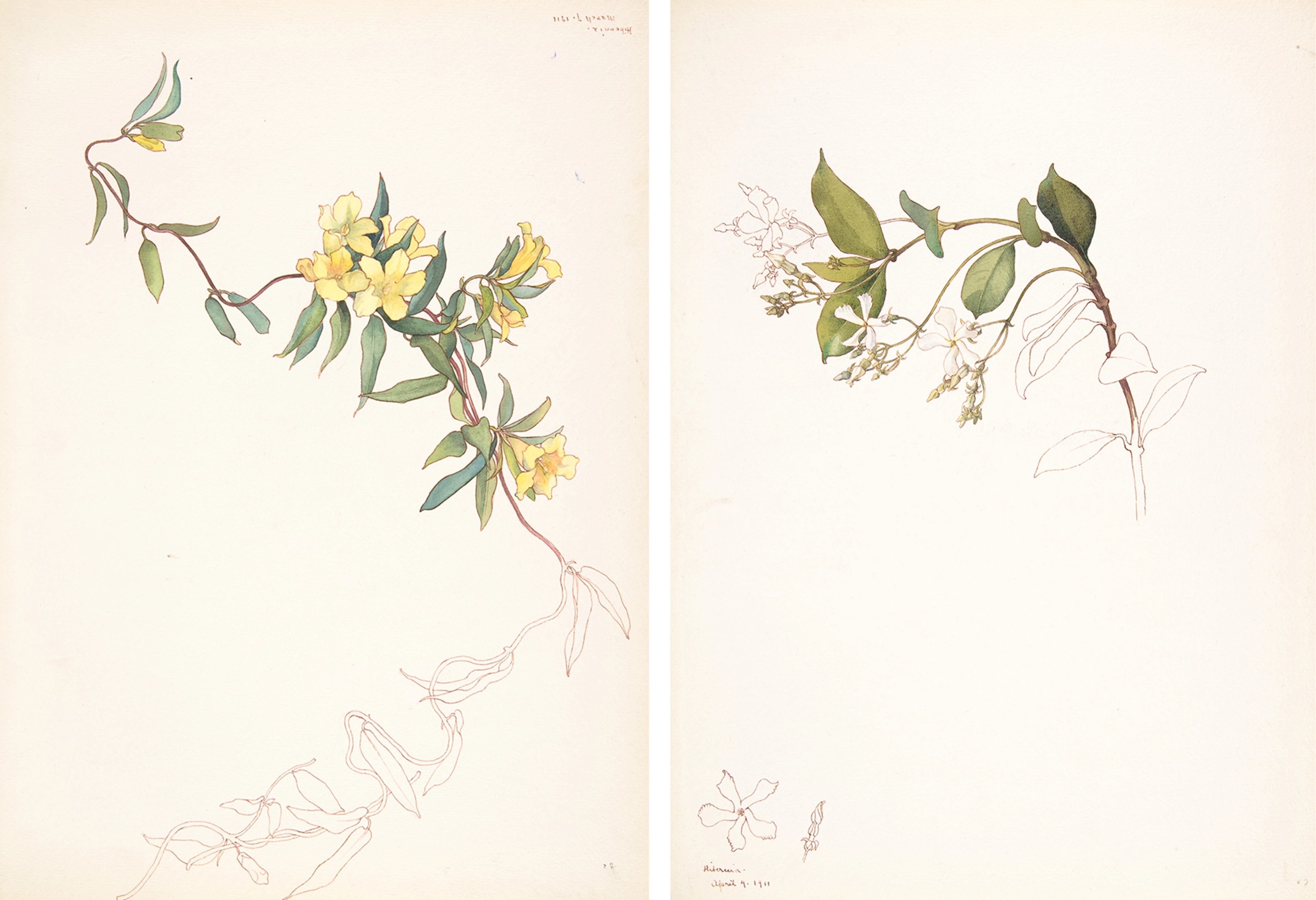
Left: Yellow Jessamine (Gelsemium Sempervirens), March 7, 1911 (2010.341.2(72)); Right: Star Jasmine (Trachelospermum Jasminoides), March 9, 1911 (2010.341.2(67)). Both by Margaret Neilson Armstrong (American, 1867–1944). Watercolor and brown ink over graphite, with detail in graphite, 13 3/4 × 10 in. (34.8 × 25.2 cm). The Metropolitan Museum of Art, New York, Gift of Helena Bienstock, Cynthia MacKay Keegan and Frank E. Johnson, 2010
Armstrong also illustrated star jasmine, an invasive species that grew robustly along the veranda of the Fleming House Hotel. Star jasmine was imported from China and popularized in gardens in the American South in the mid-nineteenth century, where it was known as Confederate jasmine. Visitors would sit in rocking chairs under the shade of the dense jasmine creeper, its scent pervading the property.
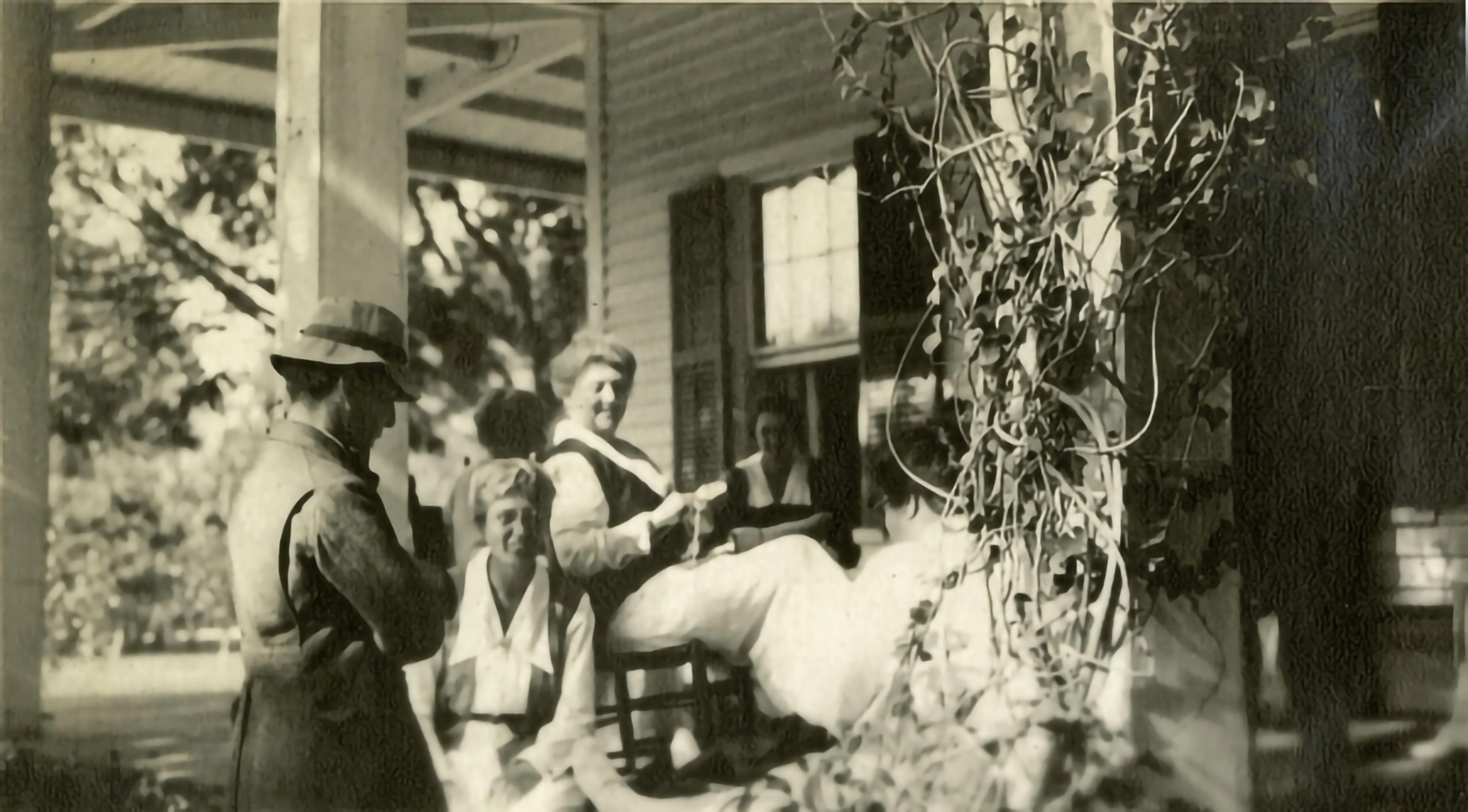
Guests on the porch at the Fleming House Hotel in Hibernia, ca. 1909. State Archives of Florida, Florida Memory (PR78360)
Outspoken in her criticism of habitat destruction occurring in America, Armstrong sent a note to The New York Times in 1913 calling for public attention around the destruction of Hetch Hetchy Valley in California. She was likely aware of the decline of the longleaf pine ecosystem, observing Hibernia amid its demise. In the same decade, more than one million acres of land were put up for sale in Jacksonville and surrounding towns like Hibernia, pitched as “the home seeker’s greatest opportunity.” The longleaf pine was progressively chopped down, and the land was developed, zoned for commercial and residential properties. By the 1920s, less than twenty percent of the original range of the longleaf pine ecosystem remained.
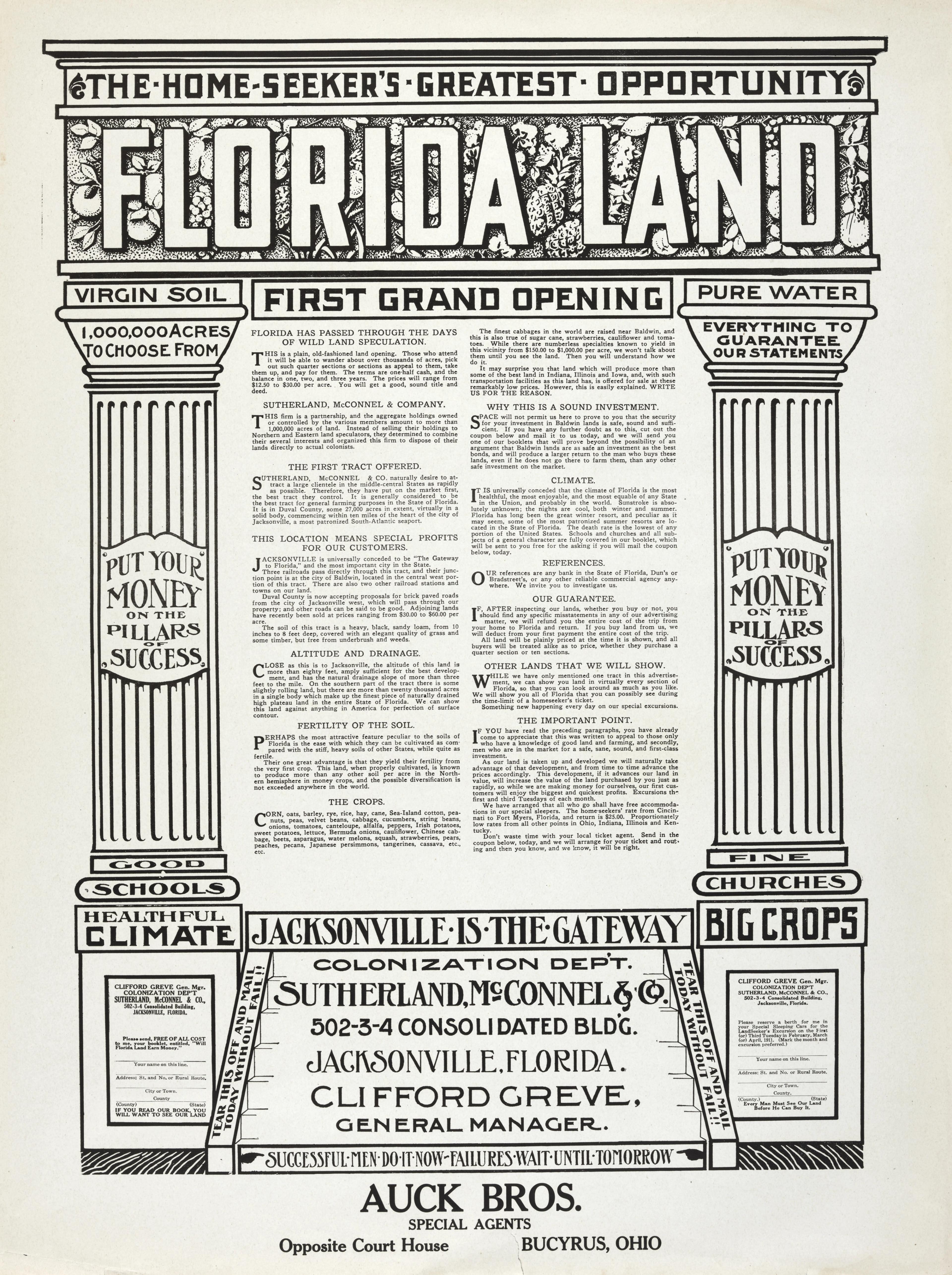
Sutherland, McConnel & Co. Florida Land, ca. 1911. State Archives of Florida, Florida Memory, Federal Documents Collection
Armstrong captured the identity of Hibernia through botanical illustration. She illustrated Hibernia in a critical moment of change, documenting the spreading pogonia at the cusp of its extirpation. Her compositions represent the precarious coexistence of species amid human encroachment into the landscape and the imminent ecological collapse it heralded. The physical binding together of the watercolors echoes the pressures of Hibernia’s environment: plants endemic, cultivated, and invasive, in close contact.
Only slivers of the once prevalent longleaf pine remain in Hibernia, starved of fire with a few trees hugging the backyards of houses and lining picket fences. They are the last struggling indicators of the longleaf pine ecosystem, now almost entirely lost; at present, less than three percent of the original ecosystem still exists. Armstrong’s watercolors preserve the memory of the longleaf pine ecosystem in Hibernia, serving as a testament to what has disappeared and a vital call to protect what remains.
Notes
R. P. Wunderlin et al., Atlas of Florida Plants (Institute for Systematic Botany, University of South Florida, 2025), http://florida.plantatlas.usf.edu/.
Lowell Thing, Cover Treasure: The Life and Art of Margaret Armstrong (Black Dome Press, 2022), 64–89.
Scott Ritchie, The Flemings of Fleming Island: An Historic Florida Family (Florida Historical Society Press, 2019), 6–195.
Brice B. Hanbury et al., “Documenting Two Centuries of Change in Longleaf Pine (Pinus palustris) Forests of the Coastal Plain Province, Southeastern USA,” Forests 14, no. 10 (2023): article 1938.
Ritchie, The Flemings of Fleming Island: An Historic Florida Family, 150.
Robert O. D. Jones, Maitland Armstrong: American Stained Glass Master (Sentry Press, 1999), 207–244.
Thing, Cover Treasure: The Life and Art of Margaret Armstrong, 91.
Ritchie, The Flemings of Fleming Island: An Historic Florida Family, 150–151.
Gary L. Wade, “Madison Takes Confederate Jasmine to North Georgia,” CAES Field Report, University of Georgia College of Agricultural and Environmental Sciences, February 22, 2007, https://fieldreport.caes.uga.edu/news/madison-takes-confederate-jasmine-to-north-georgia/.
Eugenia Price, Margaret's Story: A Novel (Lippincott & Crowell, 1980), 302.
Margaret Armstrong, “San Francisco Pottage,” New York Times, December 1, 1913, 14.
Florida Land (Colonization Department, Sutherland, McConnel & Co., 1911).
Hanbury et al., “Documenting Two Centuries of Change in Longleaf Pine (Pinus palustris) Forests of the Coastal Plain Province, Southeastern USA.”


