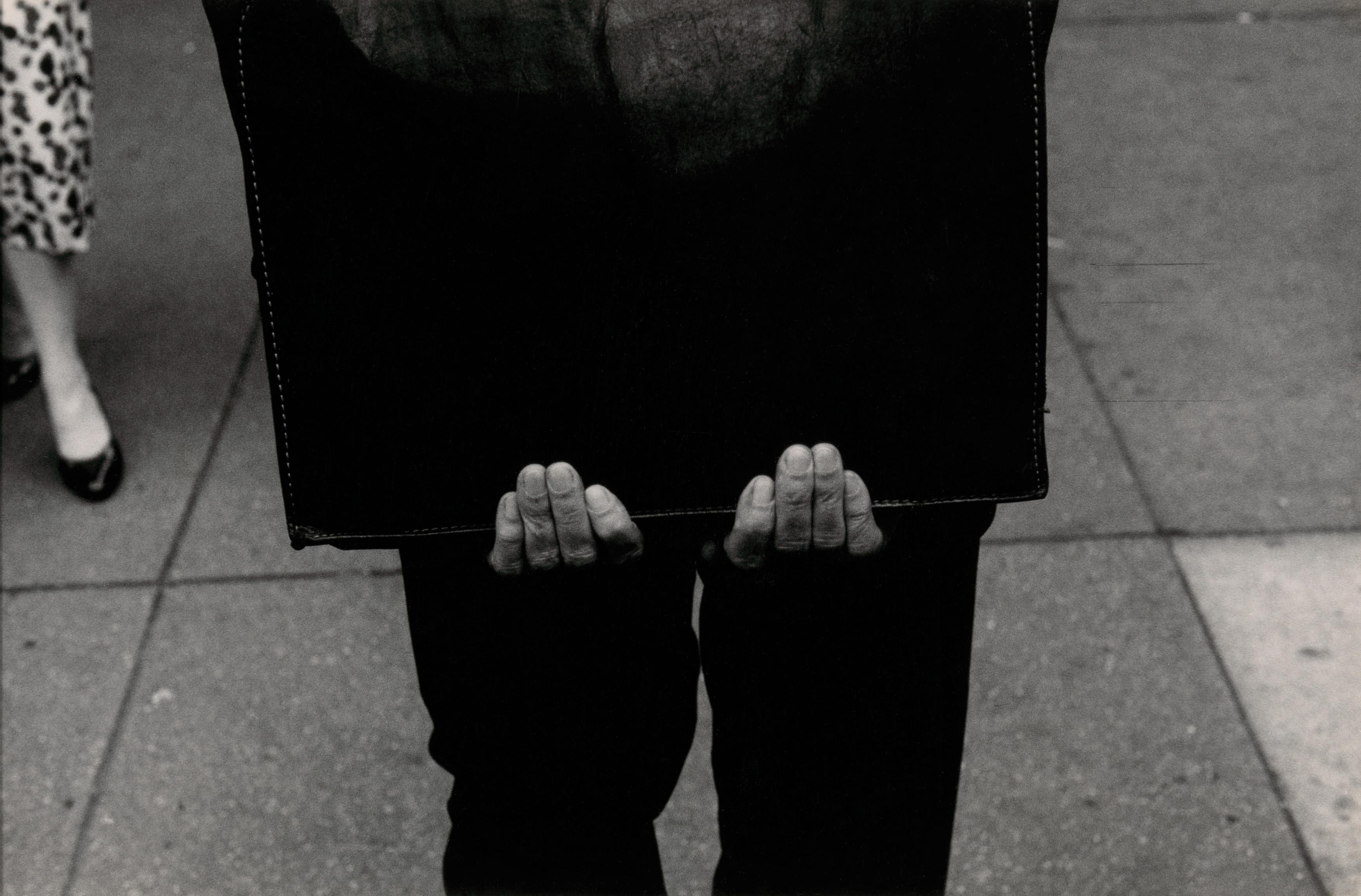
Roy DeCarava (American, 1919–2009). Man with Portfolio, 1959. Gelatin silver print, 9 x 13 1/2 in. (22.8 x 34.1 cm). The Metropolitan Museum of Art, New York, Purchase, Funds from various donors and matching funds from the National Endowment for the Arts, 1981 (1981.1078)
My name is Dawoud Bey and I'm an artist.
For me, Roy DeCarava was the first African-American artist working within the medium of photography that I could look to as an inspiration. All of his photographs are made in the course of the ongoing movement and flow of everyday life: the people and places that he encountered in the course of living.
This man coming up out of the subway: his sleeves are not buttoned, the shirt is rumpled, the hat is kind of crushed. He looks like he's willing himself up the subway stairs into that patch of glorious light. DeCarava was there waiting—hoping—for something exactly like that to happen.
As a printmaker, Roy enhanced all of those narrative elements. When you look at the print of Billie Holiday, it's printed very soft, and the way that she's engaging with him, it's a very soft and tender moment. They clearly know each other.
There's a deep formal underpinning to DeCarava's work. The Mott Avenue photograph is a very minimal photograph. It's devoid of the human subject, although in that advertisement there is a suggestion. Certainly, the man with the briefcase, you know, there's a lot of tension in that man's firm grip which is then kind of offset by the woman's leg that appears to be coming into the frame. But ultimately it's what he chose to wrap that formal structure around which is the deeper meaning of the photographs.
His photographs were not only of African-American subjects, but his deeper contribution was as an African-American artist who took that piece of himself out into the world and brought that into his work. He understood that his own particular racial subjectivity was a deeply embedded part of the meaning of the work—that who he was was very much apart of what he was seeing and why he was seeing it and how he was seeing it and how ultimately he came to make the photographs that came out of those experiences.