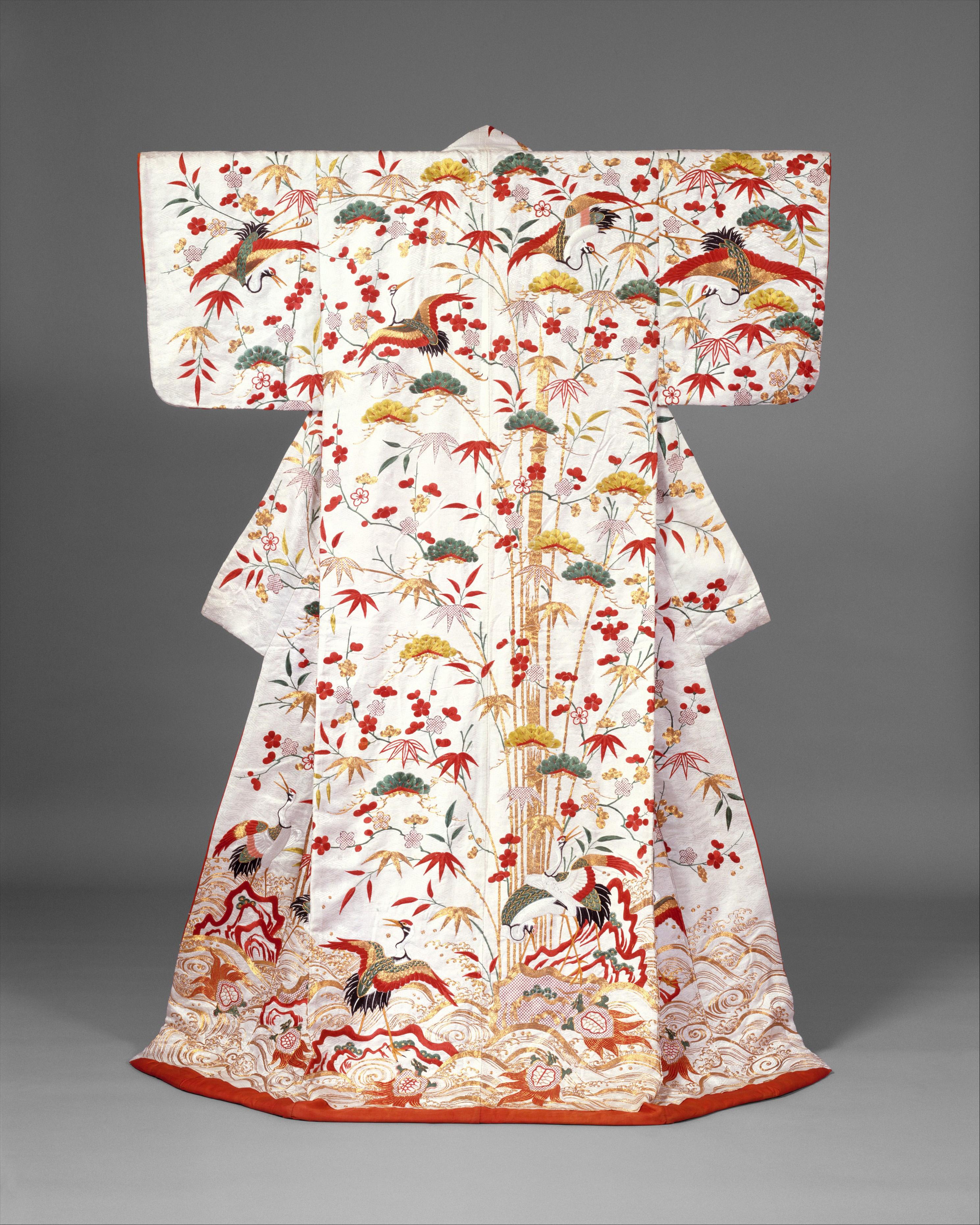
Over Robe (Uchikake) with Mount Hōrai, late 18th century–first half 19th century. Japanese, Edo period (1615–1868). Figured satin-weave silk (rinzu) with paste-resist dyeing, stencil-dyed dots, and silk- and gold-thread embroidery, 73 x 48 in. (185.4 x 121.9 cm). The Metropolitan Museum of Art, New York, Gift of Dr. and Mrs. Jonas M. Goldstone, 1970 (1970.296.1)
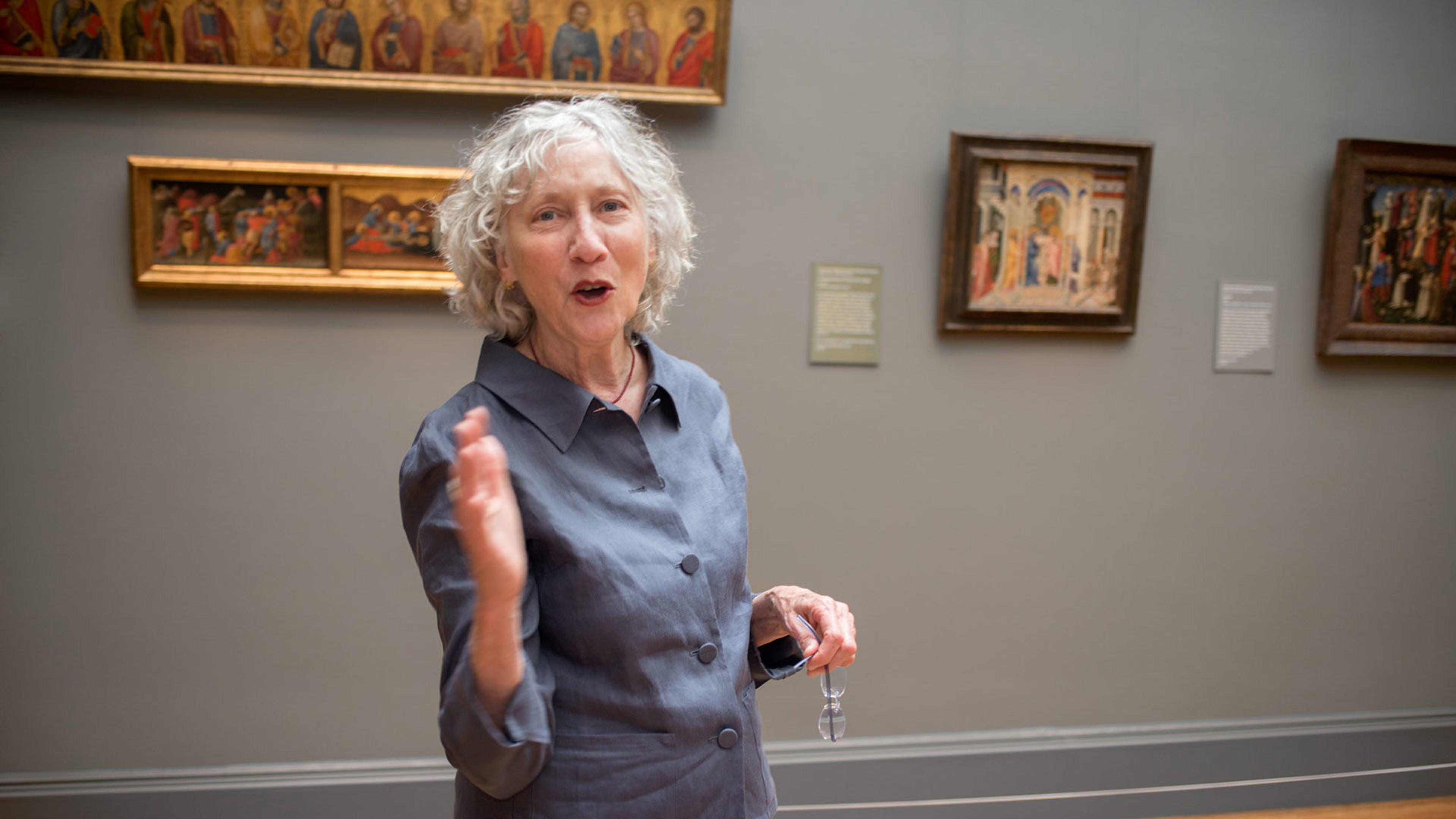
I'm Petah Coyne and I'm an artist.
I'm the biggest haunter of the museum, and when I'm in my studio working all these pieces that I see filter in and they become part of the patina of everything I make. This wedding kimono is absolutely beauty personified. It's almost a painting: the whole painting is made by thread. And the thread is not flat but it's actually 3D. Each thing that's done—the birds, the plum trees, the bamboo—each one is sewn differently. You just can't imagine the quality unless you get to really inspect it and that, to me, is what is so exquisite about it.
And it shows this whole fantasy island. You couldn't get there as a human, but the Daoist masters could fly there on the back of these birds. The bride is everything that island represents. She takes to that family all those things: like the pine represents strength, bamboo represents flexibility, and the plums bloom under the snow which shows amazing fortitude and shows fertility. And this island is longevity.
Some brides could have a plum tree, or some brides could have a bamboo tree, or some could have the pine trees, but she has all of them. So she was the most privileged bride. And she puts this thing on and she moves around and it probably occurred at night under candlelight, so that gold thread—which is real gold—it would shimmer as she's moving. This thing is like performance art, and it just meant everything to them. She is now leaving her family; if she comes back she comes back as a guest. There's a horror to it and a sadness, a great sadness. That's why I think it was a terribly emotional day to leave everything you've known and to enter into something you know nothing of. That's a pretty scary thing.
This was definitely a ritual—it was an incredible ritual—of leaving one family and joining another. And it's a very different ritual than I know. Our culture is kind of turned upside down right now, and the one thing that's kind of gluing us together is our rituals.