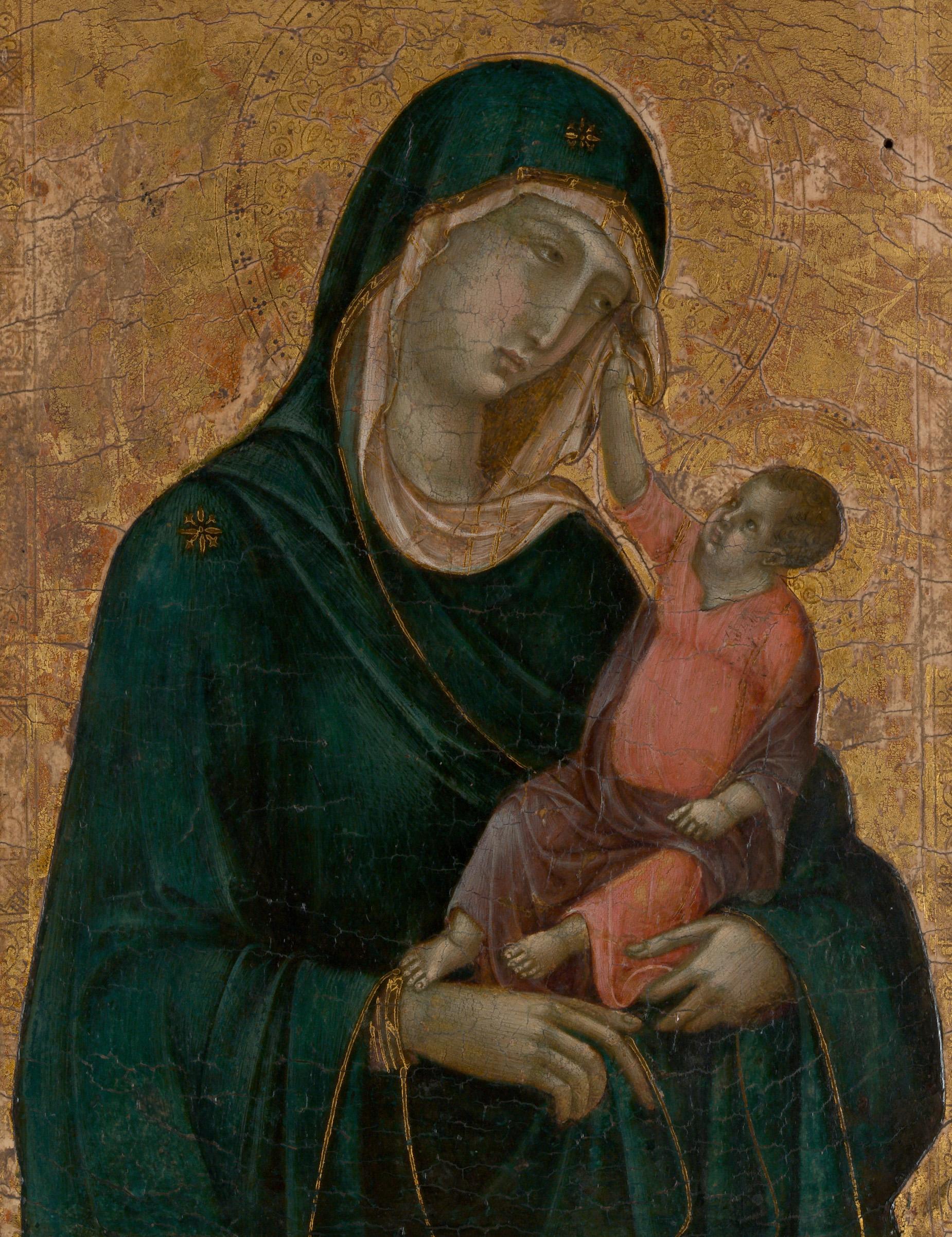
Duccio di Buoninsegna (Italian, active by 1278–died 1318 Siena). Madonna and Child (detail), ca. 1290–1300. Tempera and gold on wood, overall, with engaged frame, 11 x 8 1/4 in. (27.9 x 21 cm); painted surface 9 3/8 x 6 1/2 in. (23.8 x 16.5 cm). The Metropolitan Museum of Art, New York, Purchase, Rogers Fund, Walter and Leonore Annenberg and The Annenberg Foundation Gift, Lila Acheson Wallace Gift, Annette de la Renta Gift, Harris Brisbane Dick, Fletcher, Louis V. Bell, and Dodge Funds, Joseph Pulitzer Bequest, several members of The Chairman's Council Gifts, Elaine L. Rosenberg and Stephenson Family Foundation Gifts, 2003 Benefit Fund, and other gifts and funds from various donors, 2004 (2004.442)
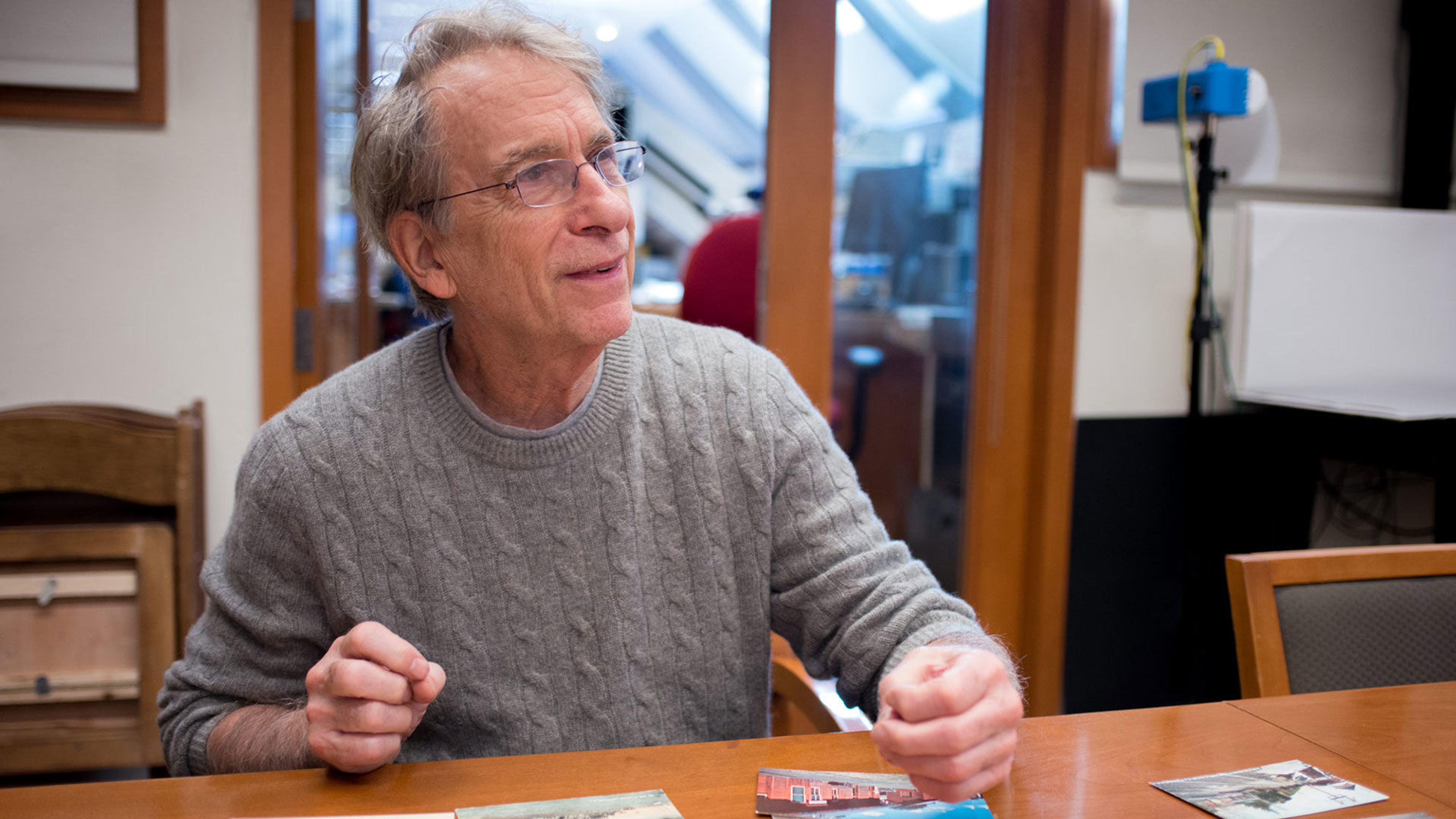
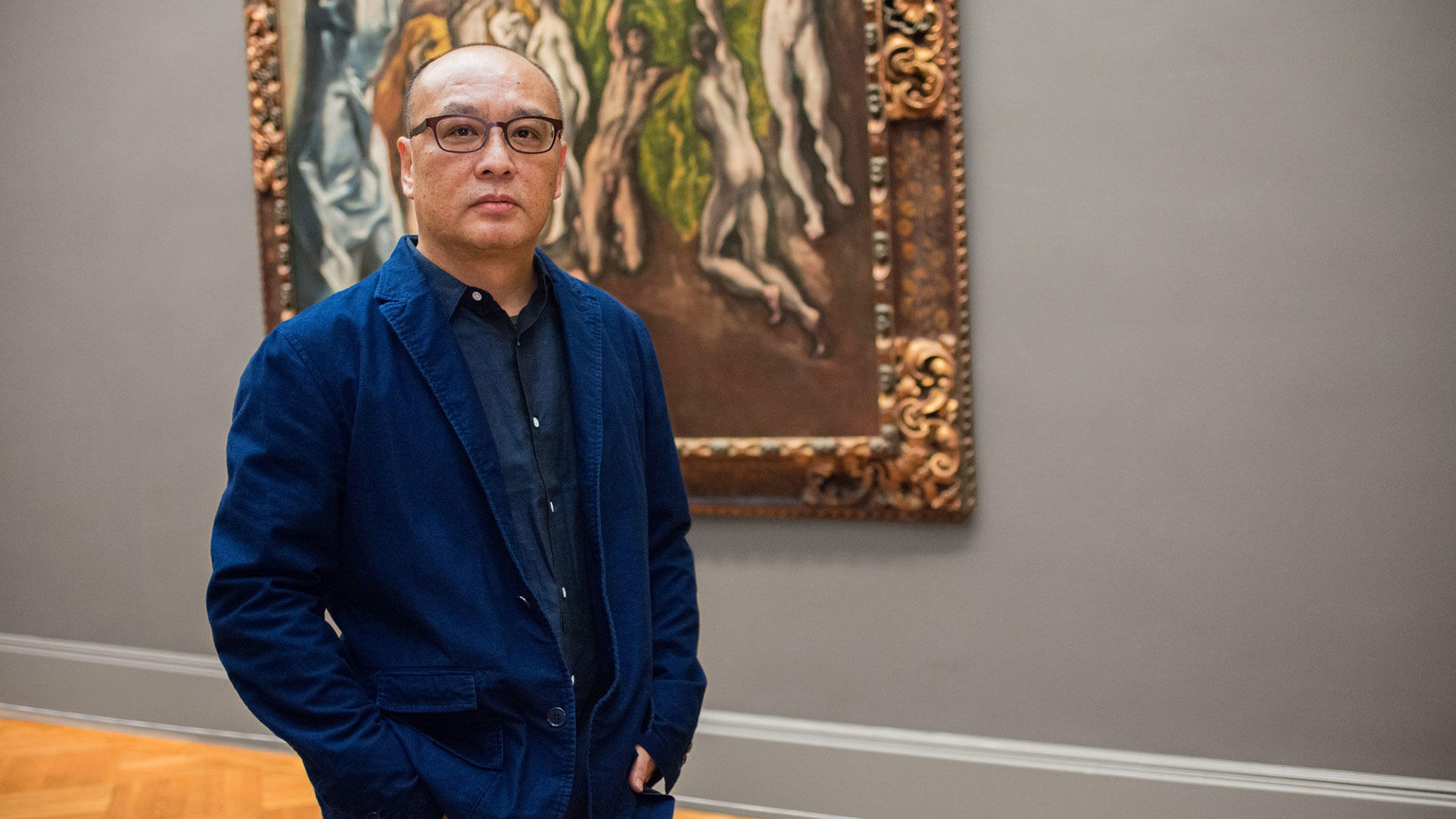
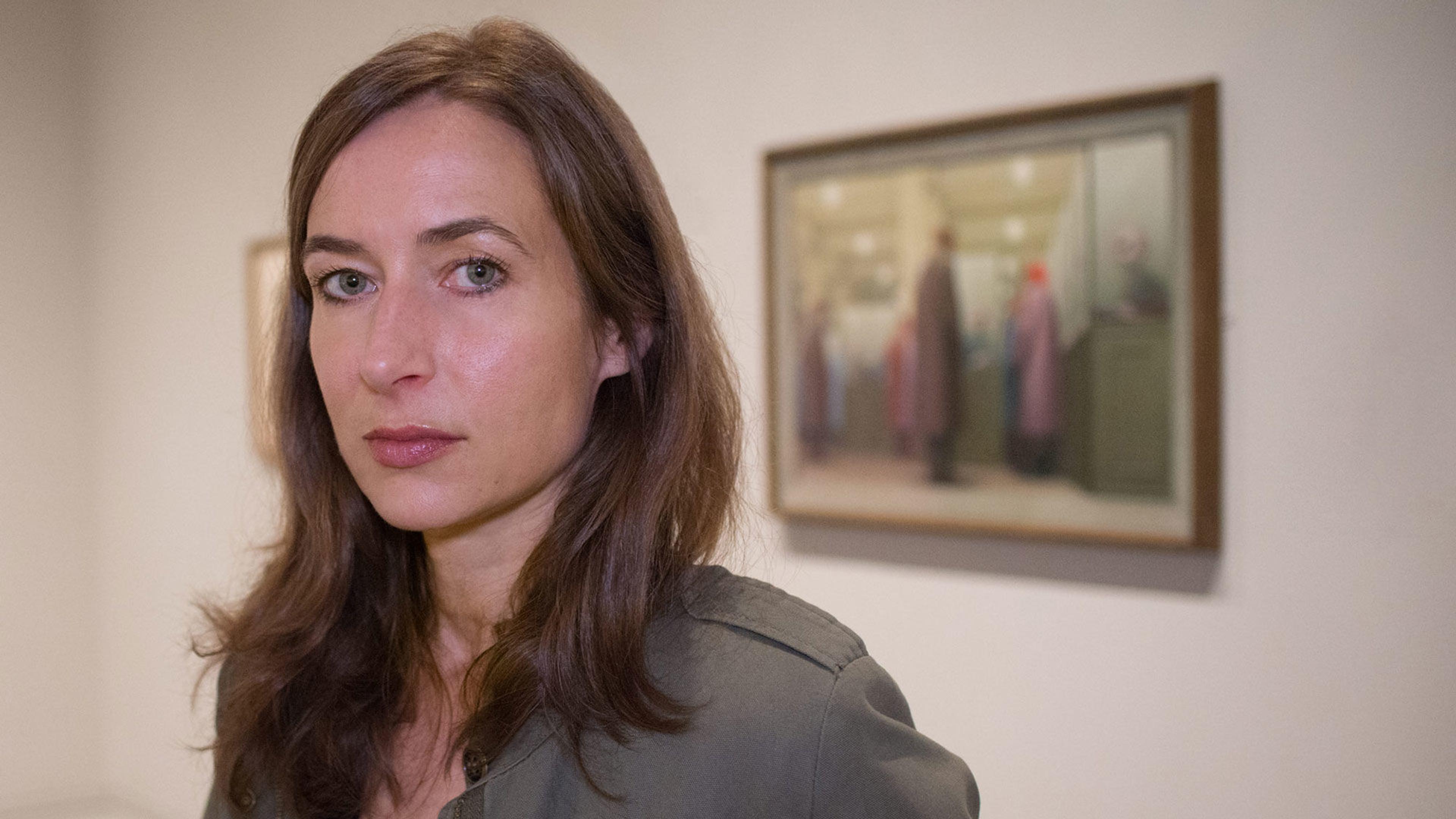
My name is Suzan Frecon and I'm an abstract painter.
I've seen this painting many times and every time I see it I'm so taken by its power that I'm alone with it. This painting is very small, but when you walk into the room it's very compelling to see it from afar. It's almost like a miracle that this painting has survived seven centuries. It ages beautifully because it's such a good painting.
I'm a painter so I find that if a bad artist paints the Madonna and Child you don't really stay with it; it doesn't last looking over and over and over again. But Duccio knew how to compose.
I consider Duccio a great colorist. For me, the more colors I put into a painting, the more complex and difficult it becomes. So I am in admiration of how he made all these colors and lights and darks work in the painting. I think color is... it's light and it's life: her blue robe, the delicate pink of the veil, the earth green under the flesh tones that gives an enigmatic quality to the figure that keeps it beyond your reach.
I actually do love the subject of the mother with the child. I don't want to get sentimental, but it's something that we all relate to. And she knows that her son is going to be crucified: she has a sorrow that the artist portrays in her features.
This painting, I believe, was done for a private patron as a devotional painting that he or she could come and pray and be moved by it. And the gold was symbolic of what you were suppose to feel: you were being illuminated by this painting. The gold is also incised—it's not a plane of gold—and that was to create almost like an explosion of light. It's almost magical or mystical.
The painting is always in a state of suspension that was orchestrated by Duccio to give this painting to the viewer. Duccio gave the mystery of art to us. You're in the reality of the painting and it has infinite dimensions that it's broadcasting to you and connecting with your sight and your mind.
It takes me out of myself. I get lost in it and I think that's the wonderful experience of art: that you are no longer there. You're in a place that you haven't been before, and it can happen over and over and over with a good work of art.