Robe (Kosode) with Bamboo and Plum

second half 18th century
Not on view
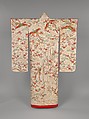
This modern-looking kosode (a robe with small sleeve openings that was the predecessor of the modern kimono) from the 18th century has a surprisingly individual design. The off-white ground fabric is figured satin silk (rinzu), with a complex pattern of peonies, snowflakes, and scrolling vines combined with lozenge (sayagata) motives. The combination of peony and snowflakes (botanyuki) is a reference to the type of large, beautiful snowflakes that recall the delicate petals of white peonies, the “king of flowers.” This pattern is typically associated with the beginning or the end of winter. New spears of flowering plum and shoots of bamboo with new leaves in green and older ones in gold are depicted in a highly stylized form on this rich ground, arrayed in straight, almost geometric formations. The crisscrossing diagonals of flowering plum and bamboo create an abstract pattern that evokes a garden in the early spring, when fragrant plum blossoms, the first flowers to bloom in the new year, are in full bloom. The refined design is complex and conveys auspicious meanings. The plum is the harbinger of new beginnings, while bamboo is a symbol of perseverance and resilience, hope and determination – regularly featured in poetry and literature. However, this kosode features these well-known patterns in a strikingly abstracted form. The plum branches are executed in a dark brownish purple color, while the delicate flowers are pink, the petals elegantly graduated from dark to light, and the centers are created with fine lines in paste-resist reserve (shiro-age, or itome-nori white-reserve). One row of bamboo is green, and the one behind is a combination of green with gold thread couching (komadori-nui). This kosode represents the unique traditions of Kaga yūzen, paste-resist dyed fabrics made in Kanazawa during the Edo period.

Artwork Details

Object Information
  • Title: Robe (Kosode) with Bamboo and Plum
  • Period: Edo period (1615–1868)
  • Date: second half 18th century
  • Culture: Japan
  • Medium: Figured satin-weave silk (rinzu) with paste-resist dyeing (yūzen) and couched gold thread
  • Dimensions: 62 1/2 × 48 1/2 in. (158.8 × 123.2 cm)
  • Classification: Textiles-Costumes
  • Credit Line: Mary Livingston Griggs and Mary Griggs Burke Foundation Fund, 2025
  • Object Number: 2025.326
  • Curatorial Department: Asian Art

More Artwork
Research Resources

The Met provides unparalleled resources for research and welcomes an international community of students and scholars. The Met's Open Access API is where creators and researchers can connect to the The Met collection. Open Access data and public domain images are available for unrestricted commercial and noncommercial use without permission or fee.

To request images under copyright and other restrictions, please use this Image Request form.

Feedback

We continue to research and examine historical and cultural context for objects in The Met collection. If you have comments or questions about this object record, please contact us using the form below. The Museum looks forward to receiving your comments.

Send feedback