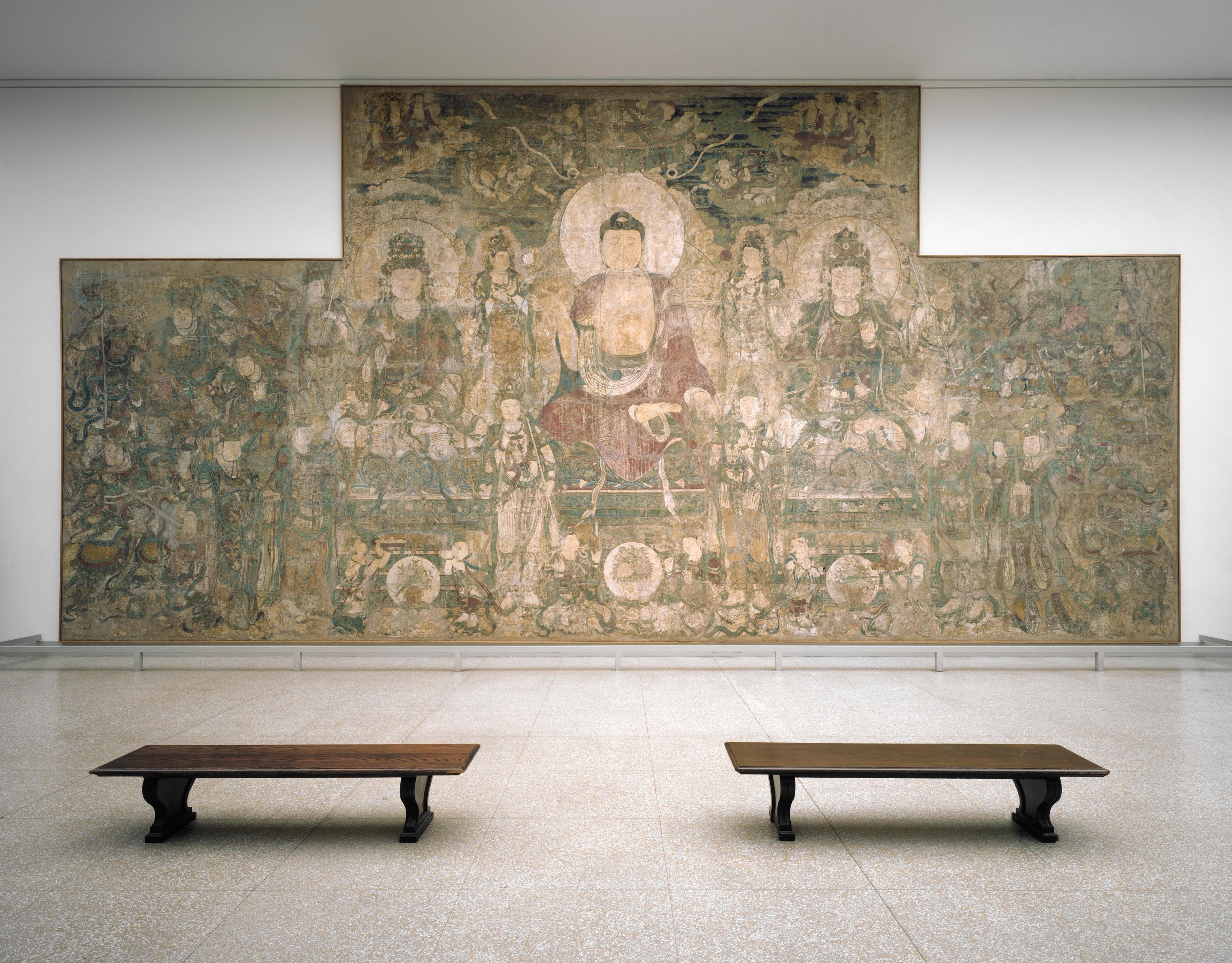
Buddha of Medicine Bhaishajyaguru (Yaoshi fo), ca. 1319. Chinese, Yuan dynasty (1271–1368). Water-based pigment over foundation of clay mixed with straw, 24 ft. 8 in. x 49 ft. 7 in. (751.8 x 1511.3 cm). The Metropolitan Museum of Art, New York, Gift of Arthur M. Sackler, in honor of his parents, Isaac and Sophie Sackler, 1965 (65.29.2)
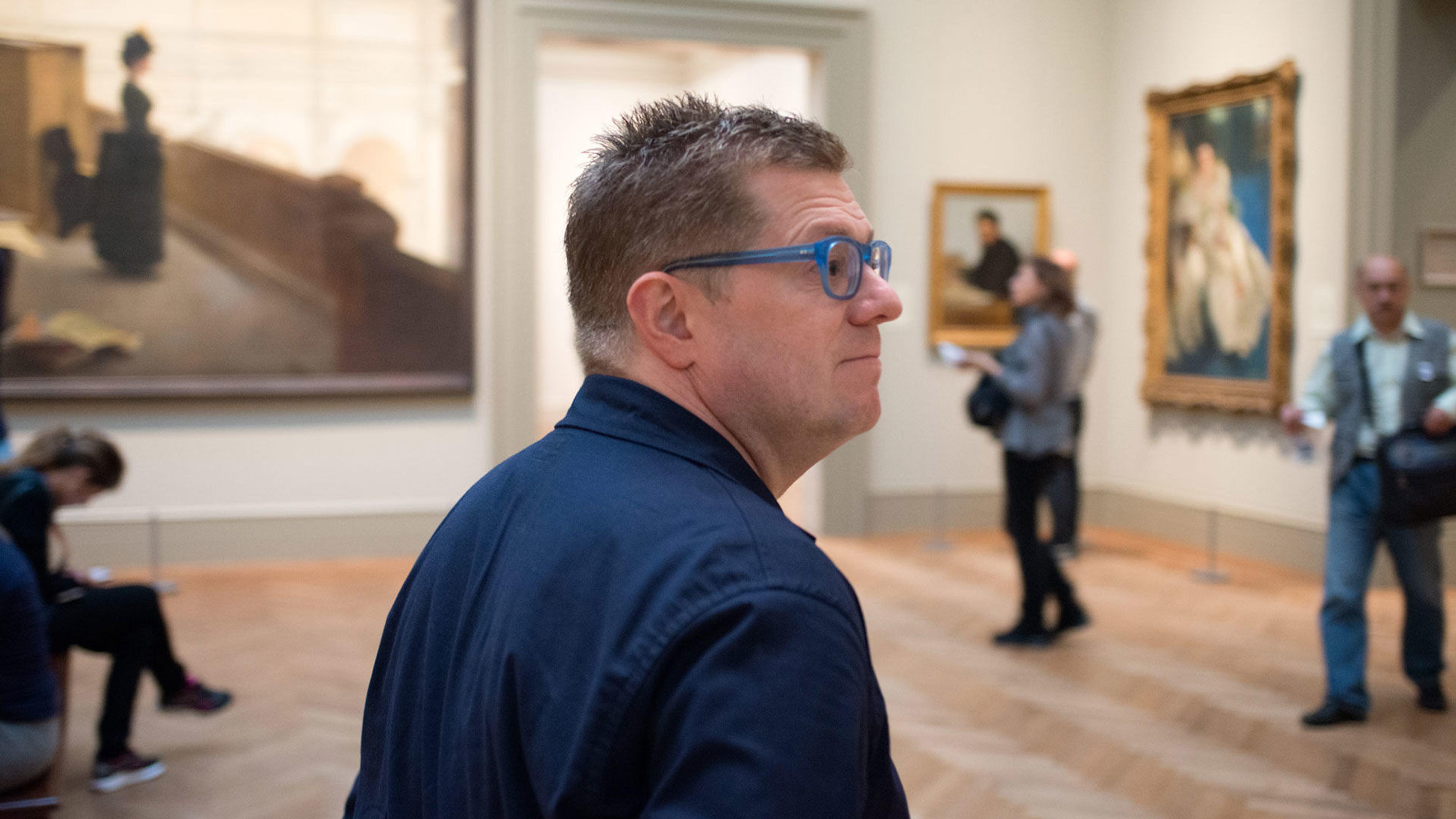
My name is James Siena and I’m an artist.
When I was a little rapscallion young artist, I used to think Jackson Pollock paintings were too big: he's just taking up too much real estate, you know? But none of them seem to have made anything as outrageously deserving of being large as this.
My work is small. Even my big work is small—postage-stamp-sized next to this. I think it blows away some of this pretentious work in our contemporary art world. The ambition behind this is tremendous, and we sort of take it for granted because of its religious nature.
This painting was in a temple and served a function, and you see that it had to be disassembled and then put back together. It feels like it's traveled a long way, not just physically from China to here, but temporally.
It challenges me to really look hard. It's got a kind of pageant composition, so you really can't take the whole thing in. You can look at some characters and see their relationship to the central figure, the Buddha of Medicine.
The different scales are remarkable. At human level the figures are human-size, and as you cast your eye upward they get larger and larger. I think that whoever painted it expressly intended to make you feel like you were a part of the tableau.
Art can be a time machine. To have an experience of the past that's so direct is a very moving thing. The past doesn't feel like it's that far away.
I don’t consider myself a spiritual person at all, and it's not because of cynicism or anything. I'm struck by the expressions on the faces of these personages, this kind of calm and forbearance in their gaze. It has a kind of physical effect: your heart rate slows down or something. So I may not believe spirituality exists, but they did, and more power to 'em, you know.
Do I wish I could feel that? I guess, sometimes, I do, but I wouldn't be me if I did. I think I'm a secular humanist: I believe in science, and I think the mysteries of existence are as thrilling as any faith-based perceptions of the world. I think, in this case, the change of context works. What is a museum? A museum is a temple of the human condition. To me, it's just as close to the sacred as I can ever get.
The idea of visiting a work and looking at it again and again... That's a really important kind of viewing, I think. It's one of the things I live for. There's something new that I see every time I look at this. But I change, you know? I travel through time too.