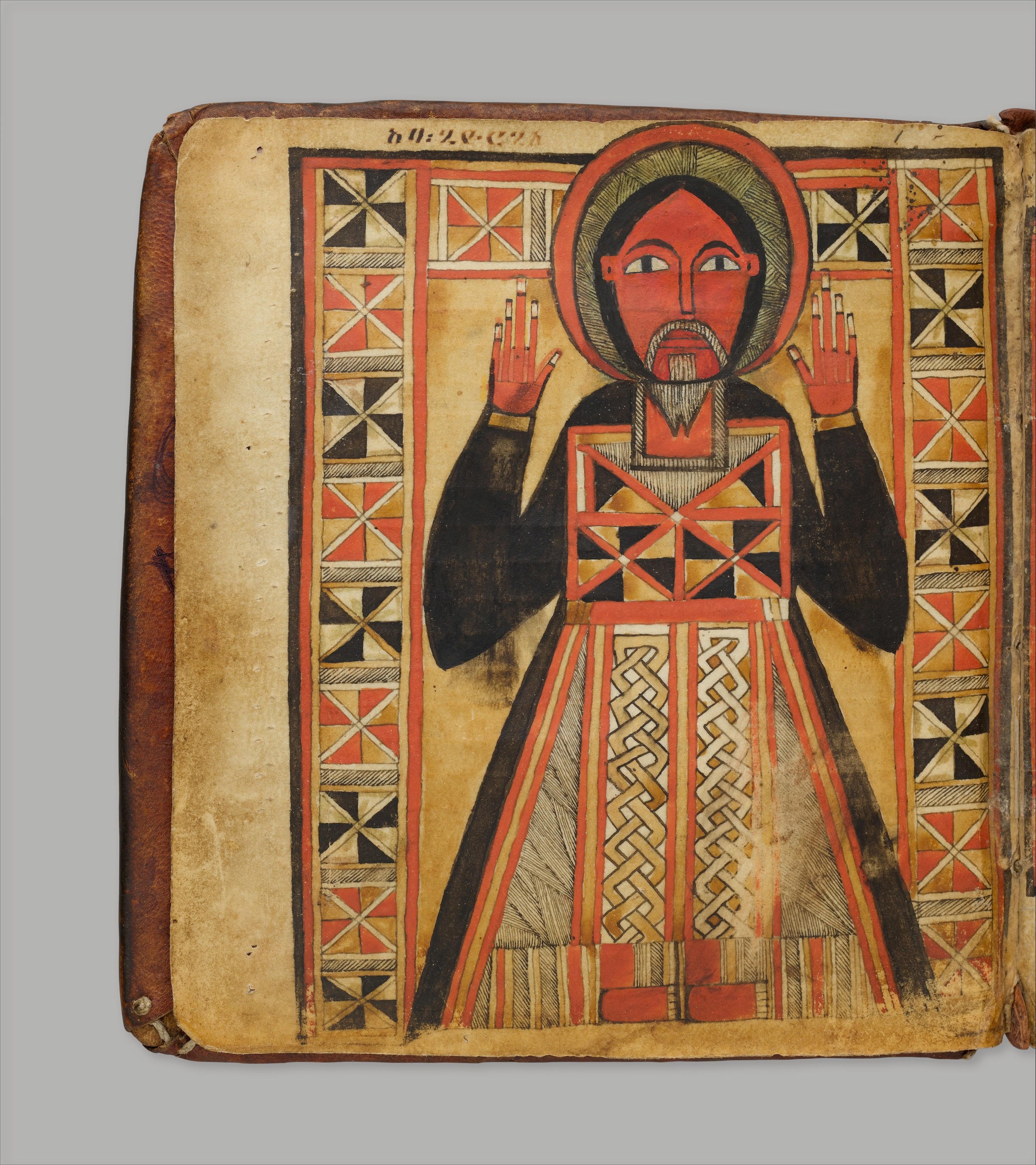
Attributed to Baselyos, also known as "The Ground Hornbill Master" (active late 17th century, Lasta region, Ethiopia). Arganonä Maryam (The Organ of Mary) prayer book (detail), late 17th century. Parchment, pigment ink, wood, leather, fiber, 6 1/2 x 6 1/8 in. (16.5 x 15.5 cm). The Metropolitan Museum of Art, New York, Louis V. Bell Fund, 2006 (2006.99)
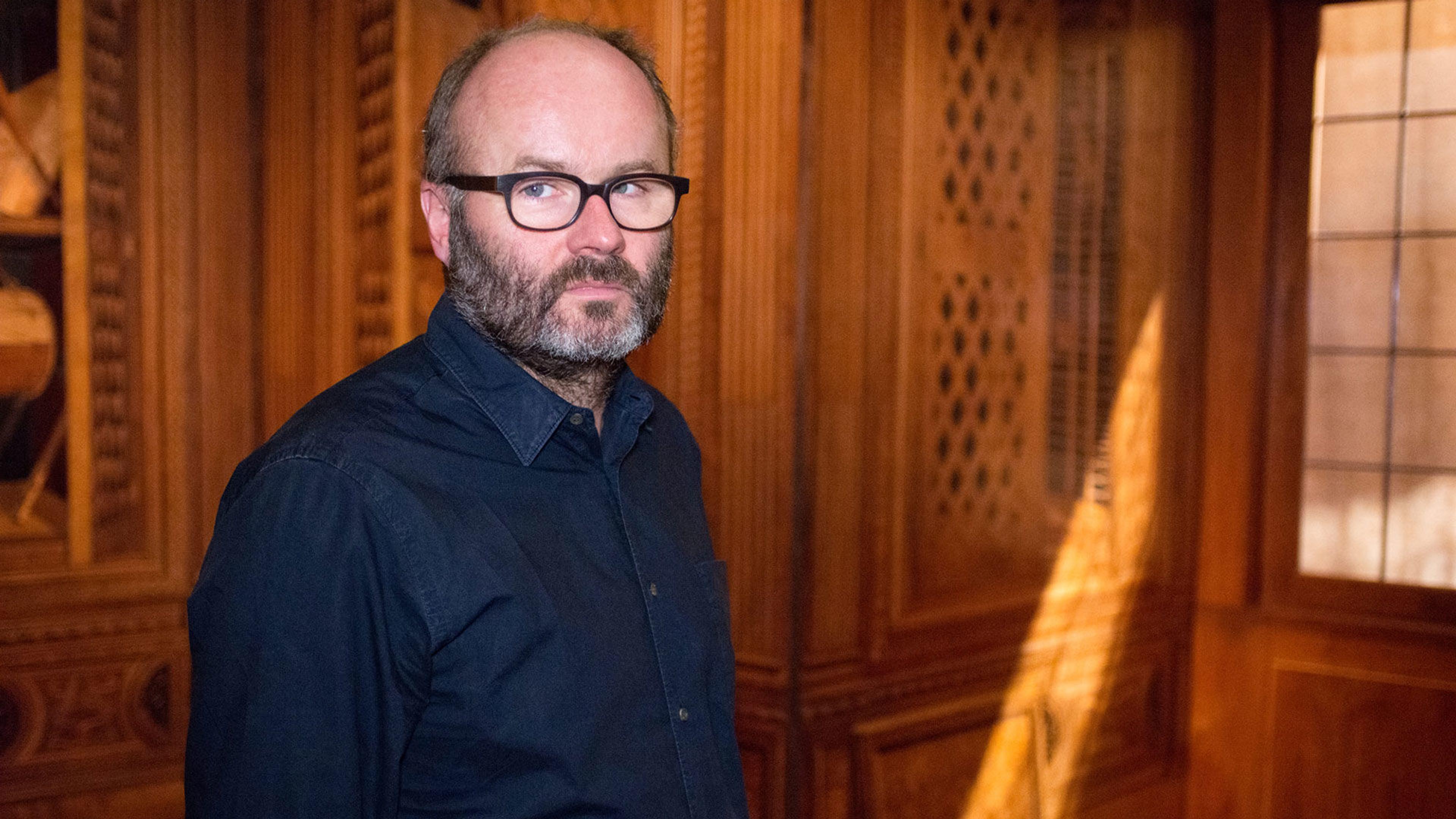
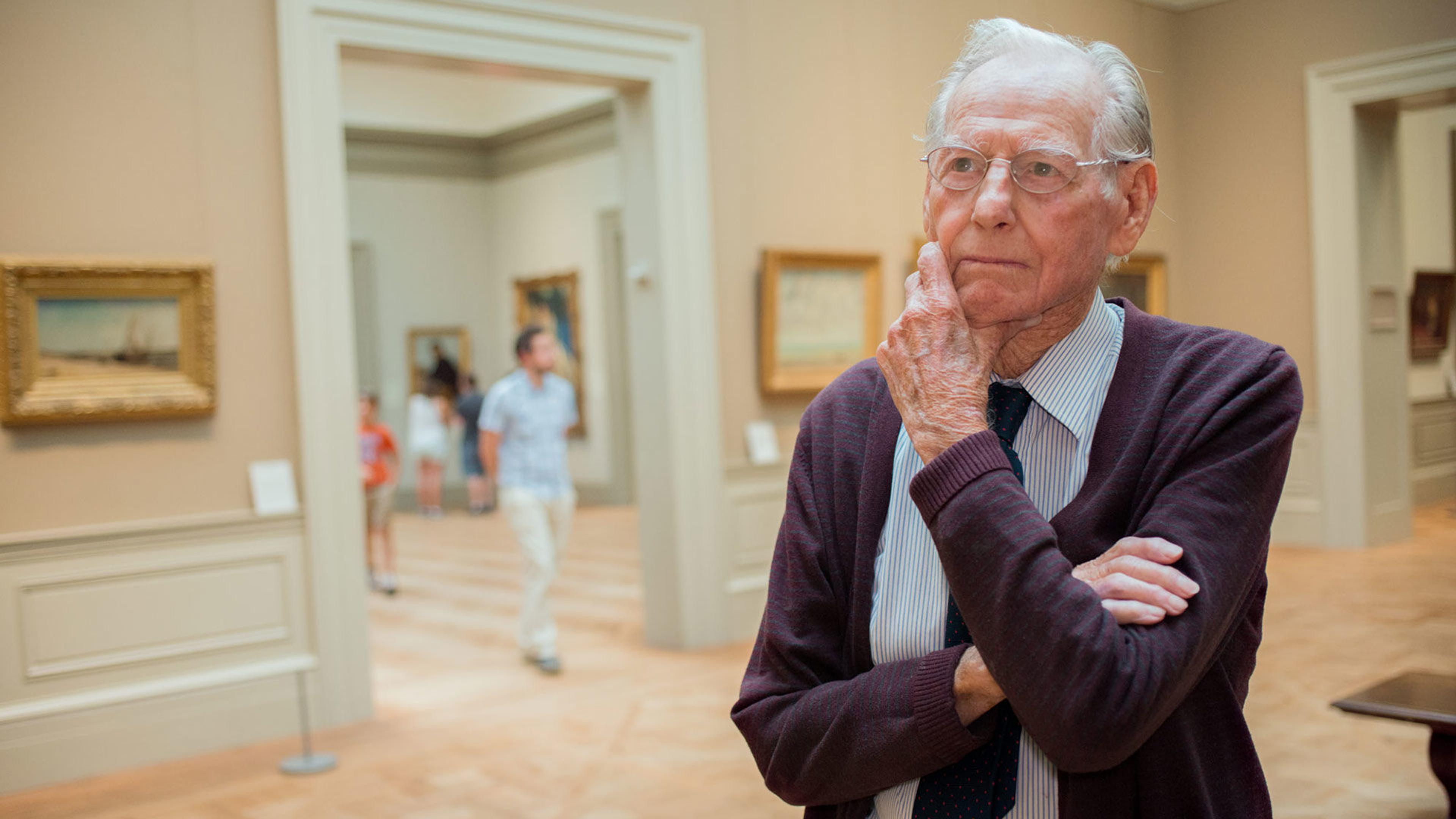
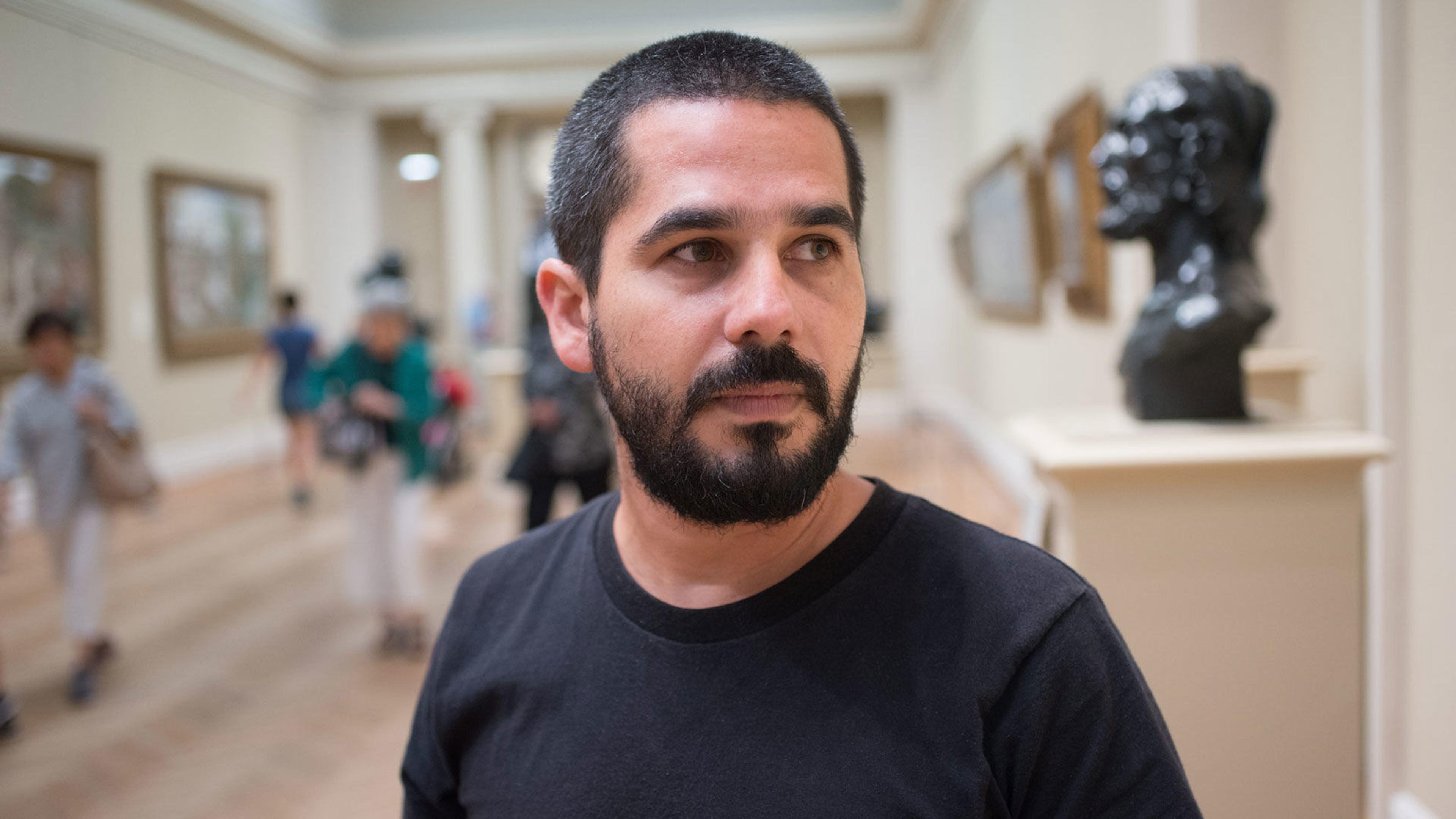
My name is Sheila Hicks. I’m an artist.
I’ve always been an artist, ever since I was able to walk and look and think and see and touch. I don’t consider it a profession. I consider it a way of living. I weave on a small frame that’s about the size of my hands. I hand-pick line by line with thread, and it becomes almost like a text or calligraphy, and almost becomes like a prayer.
I was attracted to the case where I saw a little book the size of my little loom. It was an Ethiopian prayer book. I had never seen anything like this before. It’s art as an extension of your body. You can hold it in your hands. You can possess it. At the same time, it embarks the imagination on a trip that’s monumental, because graphically it’s so powerful. The pages could almost be architectural drawings for doors, windows, temples.
Each little line is handwritten. It has a sense of solidity. It’s not this thick-and-thin, sinuous calligraphy. They’re all in bold. To me it’s almost carved. And turning a page is like going around a corner. Each page is different: total surprise.
These pages are not in either realm of figurative or abstract art, so the priest with the upraised hands leads me then to look at the breastplate, the abstract halo. It has a humorous aspect to it—very friendly, very approachable. It’s not a horrific religious depiction. It’s enticing. You see that endearing little bird walking across the page? It makes you start thinking maybe all these little symbols in the borders are just little footprints of birds.
You can’t walk past this little book and not stop. It has powerful staying power. You don’t just glance and glaze over it. You want to penetrate and go into it. And the fact that it’s so intimate, this is the kind of art you take home with you, metaphorically. You take it into your life; it becomes yours.
It has so many ideas. For me it’s just an immediate, strong way of thinking about line, of thinking about blocks, of thinking about texture, of thinking about composition. The next step is just to sit down and start working. I don’t have to go through the whole understanding of how it fits into art history.
I’m used to this because I’ve lived and worked in many places and many cultures. I don’t see myself as a tourist, I see myself as an infiltrator into other places, other times, other cultures. So I’m an infiltration artist. This may be ethnographically very far from your world. So what? Just be brave and jump in, and relate to it in a way that it's just in the first degree, without worrying about which century it is. It becomes universal.