Seated Figure with Vessel
Large, ceremonial feasts of maize, beans, and seafood would have been a vital part of developing community relations within the region. Depictions of feasting often include the ritualized drinking of pulque, a traditional Mexican alcoholic beverage made from fermented maguey or agave sap. These can be found on several West Mexican ceramic vessels, house models, and scenes illustrating the Mesoamerican ballgame (see MMA 2015.306). Archaeologists have hypothesized that local elites sponsored large feasts and the exchange of precious resources including obsidian, maguey, and spondylus as a negotiation of social, religious, and economic authority over neighboring territories (Butterwick 1998: 104–105).
Colima ceramics are often produced using a local clay of orange and brown hues with applied deep-red paint or slip. This figure would have been modeled by hand, using techniques of coiling and beating of malleable clay to produce its features. The artist would have used a stylus to cut into the surface, revealing the contrasting grey colored clay to accentuate the facial features, hands, and details of the serving vessel. Like many Colima figures, this example is highly burnished, in which clay sculptors carefully rubbed the surface with a smooth stone or other abrasive materials to produce its luminous luster. Figures like this one were part of funerary assemblages placed in shaft tombs, deep burial structures consisting of a series of cavernous tunnels and adjacent chambers for several interred individuals. They were likely multigenerational, with ceramic and other offerings representing vital vignettes to accompany the deceased into the afterlife. This clay figure reflects the vital role of providing nourishment to a large ceremonial gathering in maintaining healthy social and economic relations along the Pacific coast. To render this activity in clay is itself a potent act, a memorialization of these pivotal communal events and a sign of their continuation into the afterlife.
Brandon Agosto, 2026
Further reading:
Beekman, Christopher S., and Robert S. Pickering. Shaft Tombs and Figures in West Mexican Society: A Reassessment. Edited by Christopher S. Beekman, and Robert S. Pickering. Tulsa: Thomas Gilcrease Institute of American History and Art, 2016.
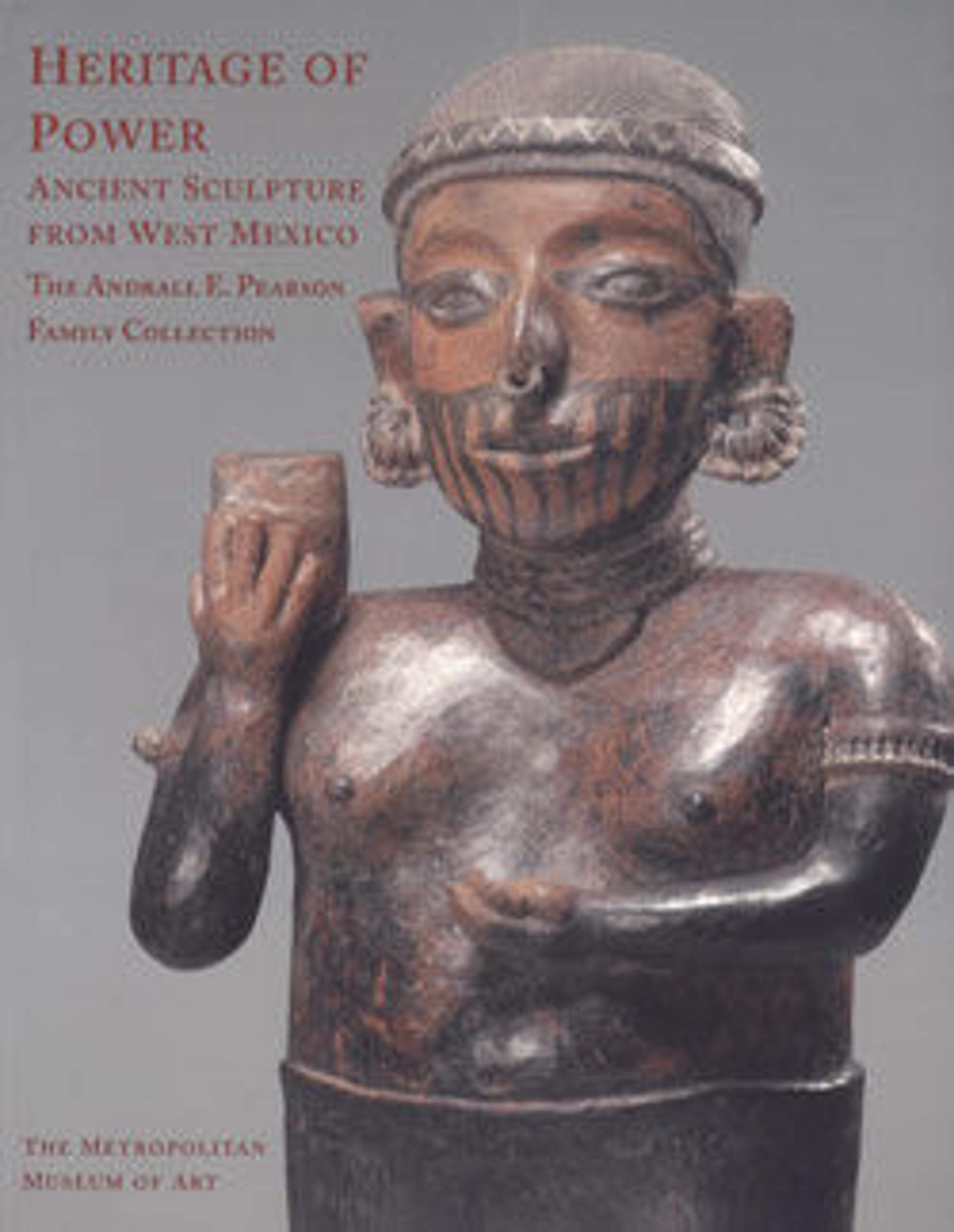
Butterwick, Kristi. Heritage of Power: Ancient Sculpture From West Mexico: The Andrall E. Pearson Family Collection. New York, New Haven, London: The Metropolitan Museum of Art, 2004.
Butterwick, Kristi. "Food for the Dead: The West Mexican Art of Feasting," In: Ancient West Mexico: Art and Archaeology of the Unknown Past, edited by Richard Townsend, pp. 89–105, Chicago: Art Institute of Chicago, 1998.
Hernández Díaz, Verónica. "Muerte y vida en la cultura tumbas de tiro", in Miradas renovadas al Occidente indígena de México, edited by Marie Areti Hers, pp. 79–131. Mexico: Mexico Instituto de Investigaciones Estéticas, UNAM, 2013.
Meighan, Clement W., and H.B. Nicholson. "The Ceramic Mortuary Offerings of Prehistoric West Mexico: An Archaeological Perspective." In: Sculpture of Ancient West Mexico. Nayarit, Jalisco, Colima. A Catalogue of the Proctor Stafford Collection at the Los Angeles County Museum of Art, Revised edition, by Michael Kan, Clement Meighan, and H. B. Nicholson, pp. 29-67. Los Angeles: Los Angeles County Museum of Art, 1989.
Olay Barrientos, María de los Ángeles, and Andrés Saúl Alcántara Salinas. "La tumba de las Fuentes, Colima. Notas sobre los contextos funerarios de las élites hacia el fin de la fase Comala. In Memoria I Foro Colima y su Región Arqueología, Antropología e Historia, edited by Juan Carlos Reyes G., pp. 1-34, Mexico: Secretaría de Cultura, Gobierno, del Estado de Colima.
Pickering Robert B., Cheryl Smallwood-Roberts and Thomas Gilcrease Institute of American History and Art. West Mexico. Ritual and Identity. Tulsa, Oklahoma: Thomas Gilcrease Institute of American History and Art, 2016.
Townsend, Richard, ed. Ancient West Mexico: Art and Archaeology of the Unknown Past. Chicago: Art Institute of Chicago, 1998.
Zavaleta Lucido, Marcos Trinidad and Rosa María Flores Ramírez. "The shaft tombs of Parcelas 12, 19, and 25 and their inhabitants: Funerary considerations on recent archaeological finds in Colima," in: Shaft Tombs and Figures in West Mexican Society: A Reassessment. Edited by Christopher S. Beekman and Robert S. Pickering, pp. 55–72 Tulsa: Thomas Gilcrease Institute of American History and Art, 2016.
Artwork Details
- Title: Seated Figure with Vessel
- Artist: Colima artist(s)
- Date: 200 BCE–300 CE
- Geography: Mexico, West Mexico, Colima
- Culture: Colima
- Medium: Ceramic, slip
- Dimensions: H. 18 3/4 × W. 12 7/8 × D. 15 3/8 in. (47.6 × 32.7 × 39.1 cm)
- Classification: Ceramics-Sculpture
- Credit Line: Gift of Joanne P. Pearson, in memory of Andrall E. Pearson, 2007
- Object Number: 2007.345.3
- Curatorial Department: The Michael C. Rockefeller Wing
More Artwork
Related Content
 Free to download
Research Resources
The Met provides unparalleled resources for research and welcomes an international community of students and scholars. The Met's Open Access API is where creators and researchers can connect to the The Met collection. Open Access data and public domain images are available for unrestricted commercial and noncommercial use without permission or fee.
To request images under copyright and other restrictions, please use this Image Request form.
Feedback
We continue to research and examine historical and cultural context for objects in The Met collection. If you have comments or questions about this object record, please contact us using the form below. The Museum looks forward to receiving your comments.
Content Notice
The Metropolitan Museum of Art presents over 5,000 years of art from around the world, and our online collection reflects ongoing work conducted over the course of our more than 150-year history. You may encounter objects or images that may be inappropriate for some viewers or information that may be outdated.