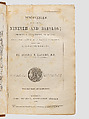
Nineveh and Persepolis: An Historical Sketch of Ancient Assyria and Persia with an Account of the Recent Discoveries in Those Countries
The antiquarian and numismatist William Vaux, at that time an assistant keeper (curator) in the Department of Antiquities at the British Museum, wrote this popular book, intended as an accessible account, when the discoveries were still very recent: the excavators’ own first major publications had appeared only the previous year, 1849, while the first major translation of a cuneiform inscription, the Old Persian version of Darius I’s monumental inscription at Bisitun in western Iran, was published in two parts in 1846 and 1849. In Nineveh and Persepolis, Vaux aimed to summarize not only the new discoveries but also the accounts of previous travelers in Mesopotamia such as Claudius Rich and Robert Ker Porter, and to consider these alongside long familiar biblical and classical sources. From Vaux’s perspective, it appeared that the antiquarian discoveries served only to support the biblical text; later, divergences in the sources would lead to religious disputes, but at the time this view was both prevalent and a major factor in public interest in the discoveries.
Artwork Details
- Title: Nineveh and Persepolis: An Historical Sketch of Ancient Assyria and Persia with an Account of the Recent Discoveries in Those Countries
- Period: Victorian
- Date: 1850
- Culture: British
- Medium: Paper, board, cloth
- Dimensions: H. 7 7/16 × W. 5 1/8 × D. 1 7/16 in. (18.9 × 13 × 3.7 cm)
- Credit Line: Henrietta and Christopher McCall Collection, Purchase, Henrie Jo Barth Bequest, and Museum Acquisitions and Josephine Lois Berger-Nadler Endowment Funds, 2023
- Object Number: 2023.714
- Curatorial Department: Ancient West Asian Art
More Artwork

Research Resources
The Met provides unparalleled resources for research and welcomes an international community of students and scholars. The Met's Open Access API is where creators and researchers can connect to the The Met collection. Open Access data and public domain images are available for unrestricted commercial and noncommercial use without permission or fee.
To request images under copyright and other restrictions, please use this Image Request form.
Feedback
We continue to research and examine historical and cultural context for objects in The Met collection. If you have comments or questions about this object record, please contact us using the form below. The Museum looks forward to receiving your comments.
Content Notice
The Metropolitan Museum of Art presents over 5,000 years of art from around the world, and our online collection reflects ongoing work conducted over the course of our more than 150-year history. You may encounter objects or images that may be inappropriate for some viewers or information that may be outdated.