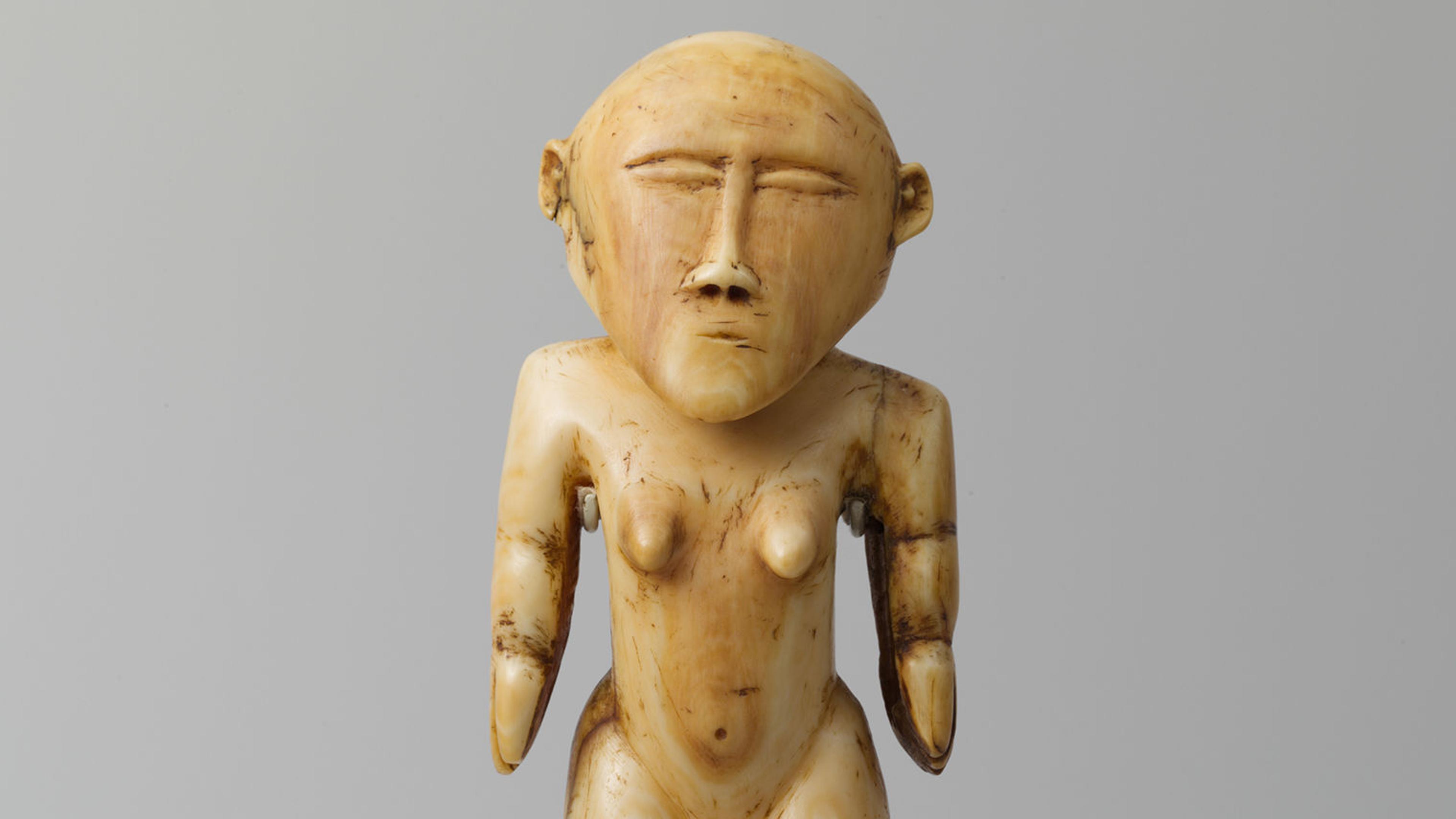
In these poems, Karlo Mila speaks to the power of acknowledging one’s ancestral lineage. Drawing on metaphors of bone and blood, she explores the cosmological foundations that connect many generations and island cultures of Oceania across space and time. “Inside us the Dead (The New Zealand-born Version)” is a response to the eponymous poem written by senior statesman for the culture, Albert Wendt, and it honors the groundbreaking foundations he laid for future generations of young Pacific poets like herself. The poem is paired with this female image carved from the creamy core of a single polished whale tooth. These sacred objects were kept in specially constructed shrines or “god houses.” Almost exclusively female, the images represent female deities for whom the figures served as vaka, or vessels, in which the power of the divinity resided.
Inside Us the Dead (The New Zealand-born Version)
Excerpt from “Inside Us The Dead (The New Zealand-born Version)” by Karlo Mila
This blood
is a ripple
in an ocean
of our blood.
I am
the next wave
of a tide that has been coming
for a long time.
This vein
leads back to my bones.
“Poem for Winnie Laban” by Karlo Mila
It is a conversation
between ocean and history,
genealogy and bone.
It is a thin umbilical line through time that pulls us.
Reaching between destiny and memory.
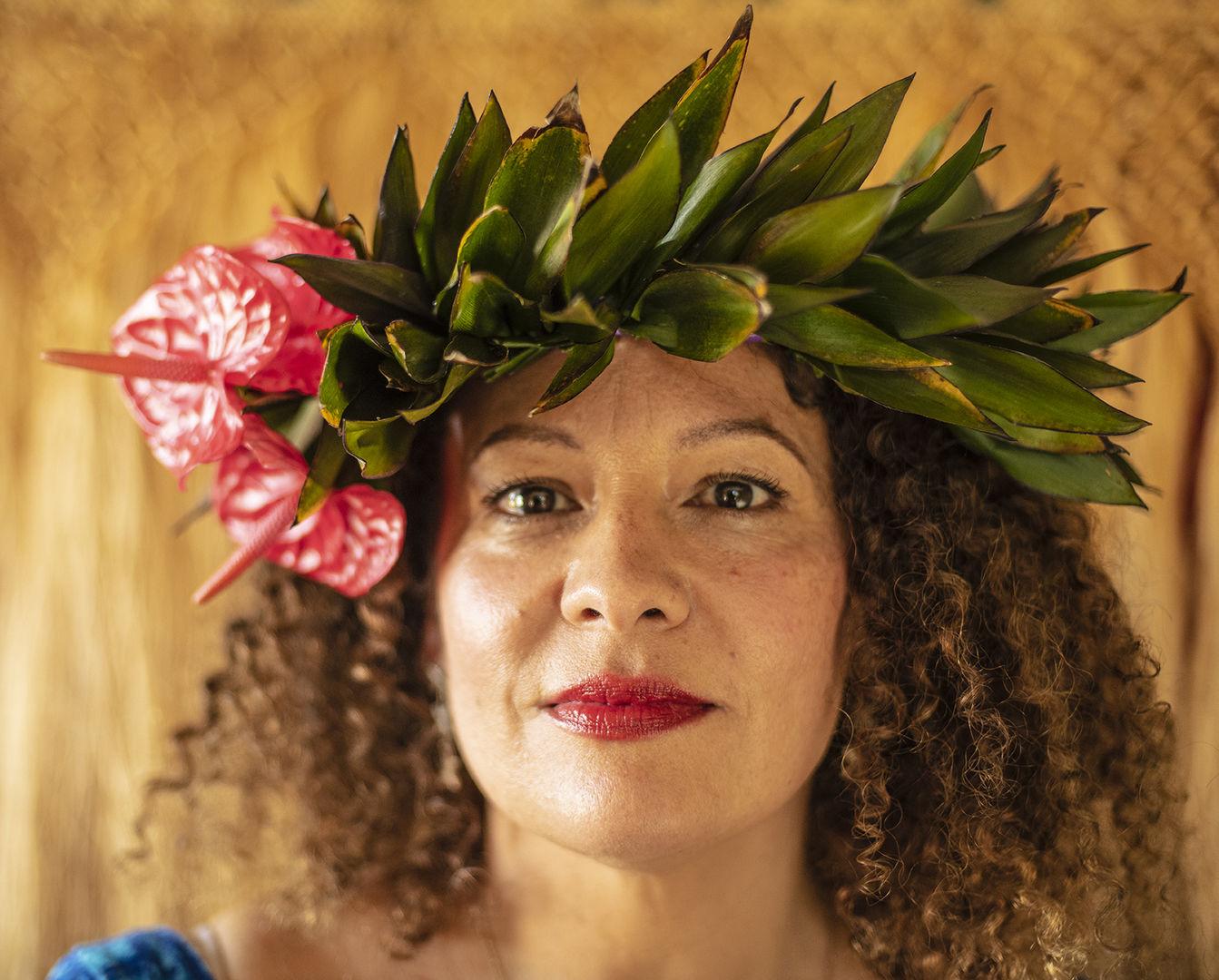
Karlo Mila
Writer, Poet
Karlo Mila is a New Zealand writer and poet of Tongan, Pālagi, and Samoan descent. She is a Member of the Order of New Zealand Merit, an honor bestowed upon her by HM Queen Elizabeth II for services to the Pacific community. Her award-winning poetry and scholarship focus on the personal and political realities of Pasifika identity. She is Program Director of the Mana Moana Experience at Leadership New Zealand which seeks to invigorate and prioritize Pasifika ancestral knowledge in contemporary contexts. Mila represented Tonga at the Poetry Parnassus Festival as part of the Cultural Olympiad that took place at the London Olympics in 2012. In 2016, she was awarded the Contemporary Pacific Art Award at the Creative New Zealand Arts Pasifka Awards.


