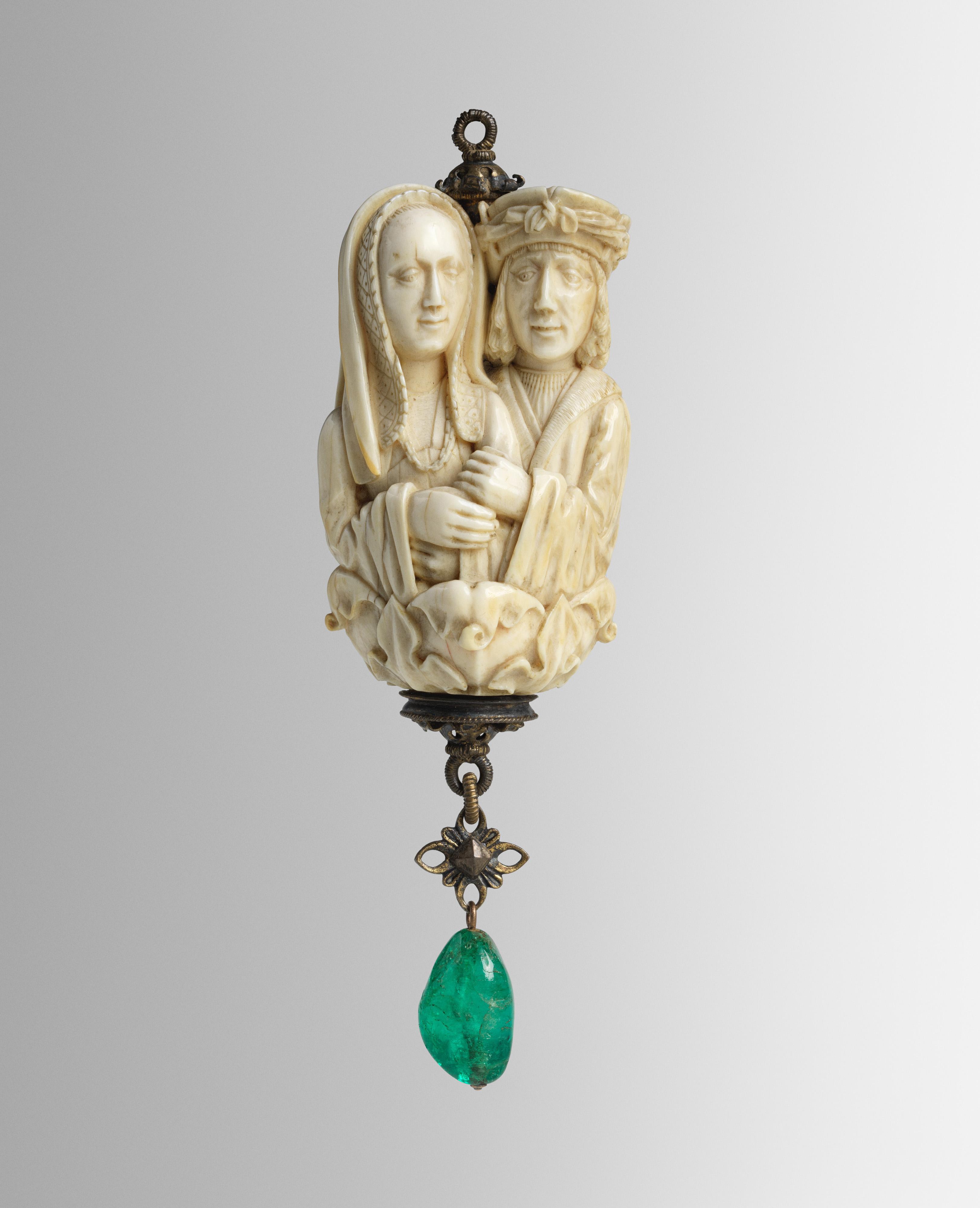
Rosary Terminal Bead with Lovers and Death's Head, ca. 1500–1525. North French or South Netherlandish. Elephant ivory, with emerald pendant, silver-gilt mount, overall: 5 3/8 x 1 5/8 x 1 3/4 in. (13.6 x 4 x 4.3 cm), ivory only: 2 7/8 x 1 5/8 x 1 3/4 in. (7.2 x 4 x 4.3 cm). The Metropolitan Museum of Art, New York, Gift of J. Pierpont Morgan, 1917 (17.190.305)
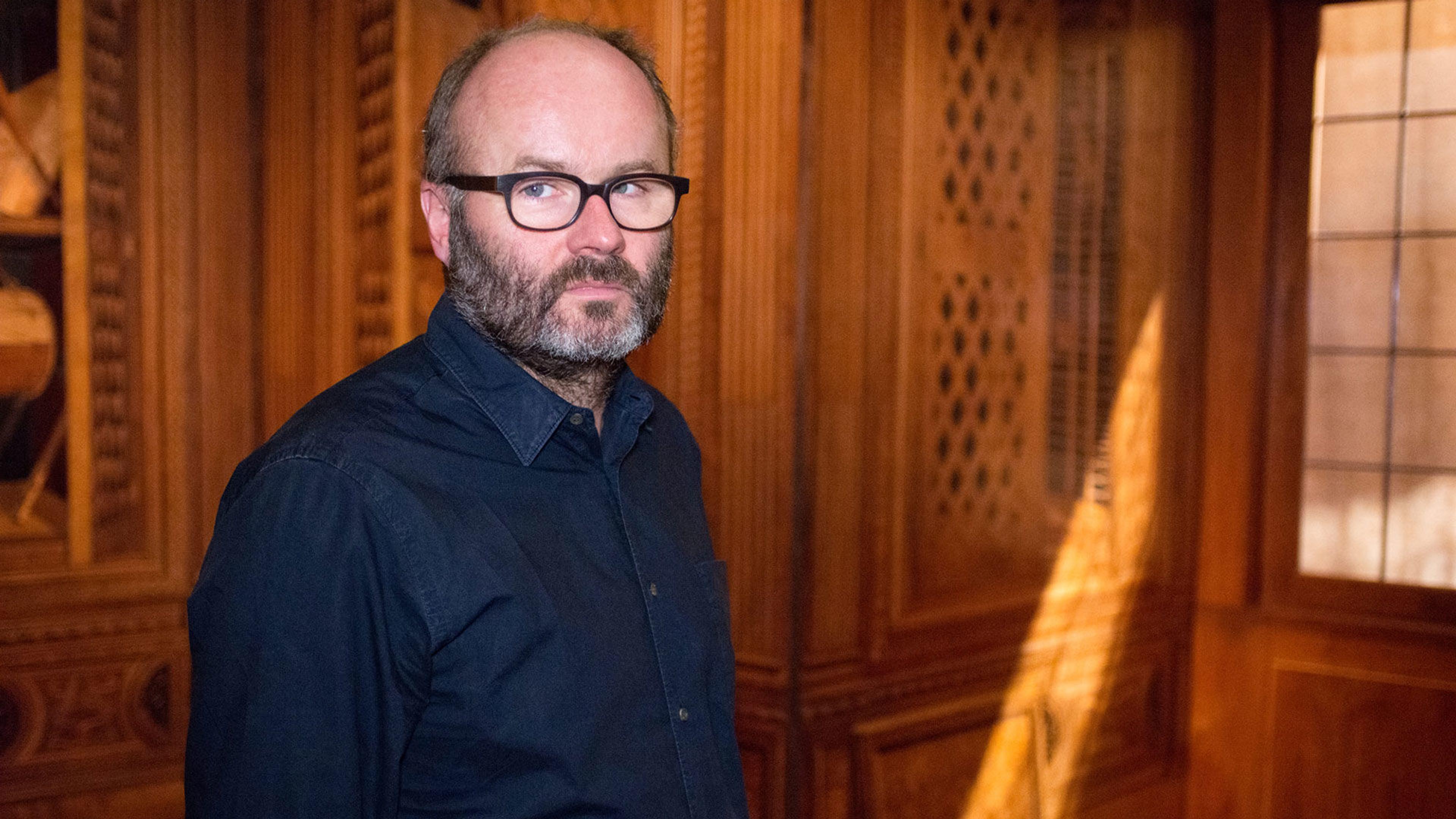
My name is Moyra Davey. I'm an artist and I make photographs and videos.
I personally believe that most humans are obsessed with death, because it's the one thing that we just... we can't know anything about. I find myself coming back to these themes over and over again.
I was really struck by this little ivory carving. It's a rosary bead about two-and-a-half inches. What you see initially is a young couple in love. It's funny because to my eye they don't look young. They actually look kind of tired. Their eyes are droopy, but they have tiny smiles on their faces. As you circle around the object, there's a skeleton. It actually has a drapery over it's shoulder, but if you look closely you'll see that it's got a salamander crawling into the skull and coming out the mouth. This is death rotting in the ground—a reminder: this is the destiny of all humans.
The ways that the artist connected the three figures using the drapery and the gesture of the hands, you know, that kind of mirroring. He's holding his hand above hers and then you have the death figure in the back has his bony skeletal hands in pretty much the same positions, but completely alone. It's another way of reinforcing this idea of mortality.
Another thing I noticed about it is this kind of plant motif at the base. It's stylized and abstracted but it still suggests something unfolding. The emerald also might represent fertility and nature. We have life and we have decay.
The idea of holding it takes death and it's miniaturizing it. I can almost see a kind of sense of humor. It's literalizing, you know, what happens to the body. There's something almost comic book about it—each of those little worms and caterpillars on the skull.
It doesn't freak me out. There's something kind of beautiful about it, in the same way that cemeteries are beautiful. They're gardens, you know, and we can go to these places and enjoy them. It's a reminder of death but at the same time you can be in denial because the exquisite nature of this takes over and you can lose yourself in that.