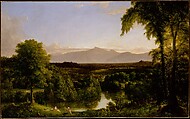
Vista do monte Holyoke, Northampton, Massachusetts, depois de uma tempestade (O meandro)
Artwork Details
- Título: Vista do monte Holyoke, Northampton, Massachusetts, depois de uma tempestade (O meandro)
- Artista: Thomas Cole, americano, 1801–1848
- Data: 1836
- Meio: Óleo sobre tela
- Dimensões: 130,8 x 193 cm
- Linha de créditos: Doação da Sra. de Russell Sage, 1908
- Número de acesso: 08.228
- Curatorial Department: The American Wing
Audio
4026. Thomas Cole, View from Mount Holyoke, Northampton, Massachusetts, after a Thunderstorm—The Oxbow, 1836
XIYE BASTIDA: I see this dichotomy between wilderness and development.
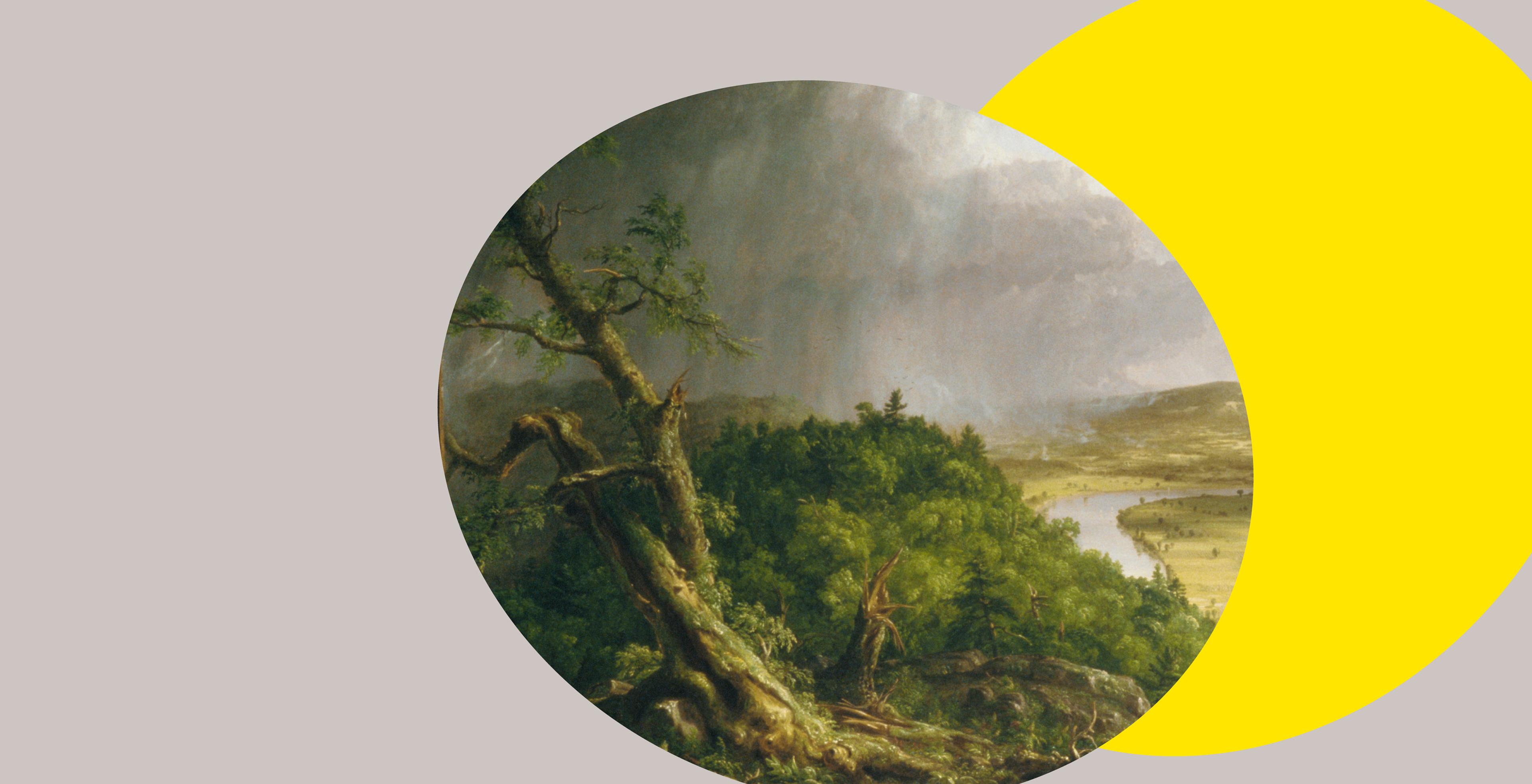
NARRATOR: On one side of Thomas Cole’s masterwork, storm clouds roll in over untamed wilderness. On the other, a pastoral landscape is bathed in sunlight. This dramatic contrast has been interpreted in numerous ways, representing both a hopeful vision for America’s future and a manifesto for wilderness preservation.
But seen through a contemporary lens, a more ominous metaphor takes shape.
XIYE BASTIDA: My name is Xiye Bastida. I'm a climate activist.
I think that Cole is really calling out the fact that our way of developing, our way of improving the land or making it profitable was pushing nature out, Indigenous people out.
Obviously, at this time, the Indian Removal Act was happening and this act caused a lot of suffering, caused a lot of pain. It pushed Indigenous peoples into reservations that were areas that they had no knowledge of, no connection to.
NARRATOR: Development not only forced Indigenous peoples from their ancestral lands, but also contributed to another threat: climate change. Today, Bastida’s town in Mexico experiences severe flooding. From this vantage point, maybe Cole’s painting offers us more than a magnificent landscape; it also casts shadows over the legacy of our interconnected worlds and histories.
XIYE BASTIDA: There is this really beautiful saying that my dad taught me, which is common to Indigenous communities all around the world, that says “we need to look at the wisdom of the past seven generations to ensure the stability of the future.”
Listen to more about this artwork
More Artwork
Related Content
Perspectives
Articles, audio, and video from The Met's online magazine.
Timeline of Art History
Entries and chronologies from The Met's art encyclopedia.
Publications
Books, guides, and catalogues published by The Met.
Research Resources
The Met provides unparalleled resources for research and welcomes an international community of students and scholars. The Met's Open Access API is where creators and researchers can connect to the The Met collection. Open Access data and public domain images are available for unrestricted commercial and noncommercial use without permission or fee.
To request images under copyright and other restrictions, please use this Image Request form.
Feedback
We continue to research and examine historical and cultural context for objects in The Met collection. If you have comments or questions about this object record, please contact us using the form below. The Museum looks forward to receiving your comments.
Content Notice
The Metropolitan Museum of Art presents over 5,000 years of art from around the world, and our online collection reflects ongoing work conducted over the course of our more than 150-year history. You may encounter objects or images that may be inappropriate for some viewers or information that may be outdated.