Cabeça do imperador Constantino I
Artwork Details
- Título: Cabeça do imperador Constantino I
- Período: Final do período imperial
- Data: ca. 325–70 d.C.
- Geografia: Roma
- Meio: Mármore
- Dimensões: 95,3 cm de altura
- Linha de créditos: Legado de Mary Clark Thompson, 1923
- Número de acesso: 26.229
- Curatorial Department: Greek and Roman Art
Audio
1203. Marble portrait head of the Emperor Constantine I
Here is Constantine the Great, the first Christian emperor of Rome. He reigned from A.D. 305 to 337, and has rightly been called the most important emperor of Late Antiquity. Constantine reunified the Roman Empire, established a new dynasty, and founded a new capital at Constantinople, modern-day Istanbul.
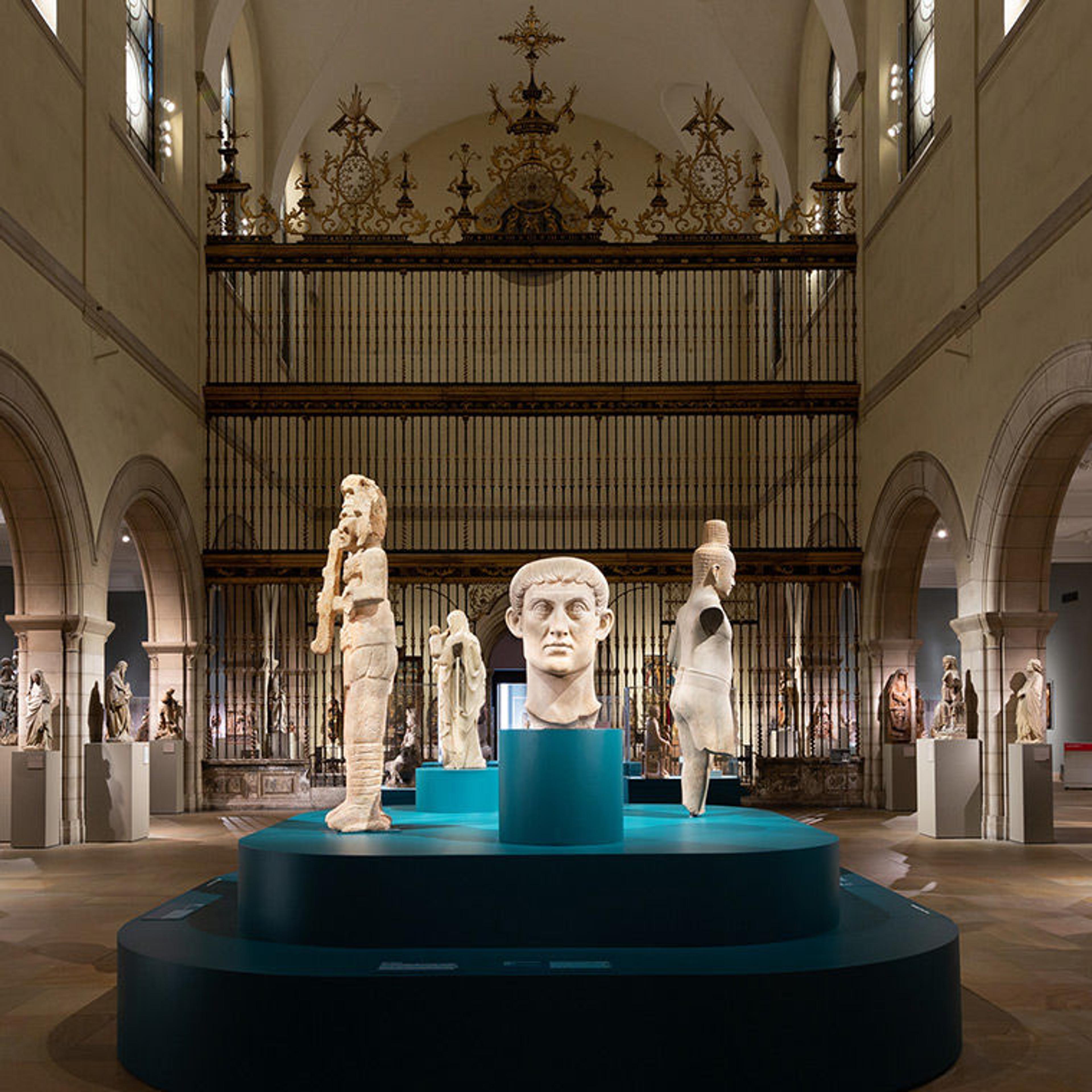
This colossal head probably surmounted an enormous statue of the emperor. Constantine carefully constructed his official portrait to evoke memories of the past, good Roman emperors. Notice the emperor’s long face, neatly arranged hairstyle, and clean-shaven appearance.
These features deliberately call to mind portraits of the Emperor Trajan, who ruled between A.D. 98 and 117. In the fourth century, Trajan was revered as the ideal, good emperor whom Constantine and his successors hoped to emulate.
You’ve probably noticed that the Emperor Constantine does not look straight at us. Rather, like most of his portraits in stone and on coins, he gazes up to heaven. In this way, he signifies himself as a subordinate to God. Christianity played an essential role in Constantine’s personal life and achievements. His reign laid the foundation for the transformation of the ancient, pagan world into the Christian Middle Ages.
Listen to more about this artwork
More Artwork
Related Content

Research Resources
The Met provides unparalleled resources for research and welcomes an international community of students and scholars. The Met's Open Access API is where creators and researchers can connect to the The Met collection. Open Access data and public domain images are available for unrestricted commercial and noncommercial use without permission or fee.
To request images under copyright and other restrictions, please use this Image Request form.
Feedback
We continue to research and examine historical and cultural context for objects in The Met collection. If you have comments or questions about this object record, please contact us using the form below. The Museum looks forward to receiving your comments.
Content Notice
The Metropolitan Museum of Art presents over 5,000 years of art from around the world, and our online collection reflects ongoing work conducted over the course of our more than 150-year history. You may encounter objects or images that may be inappropriate for some viewers or information that may be outdated.