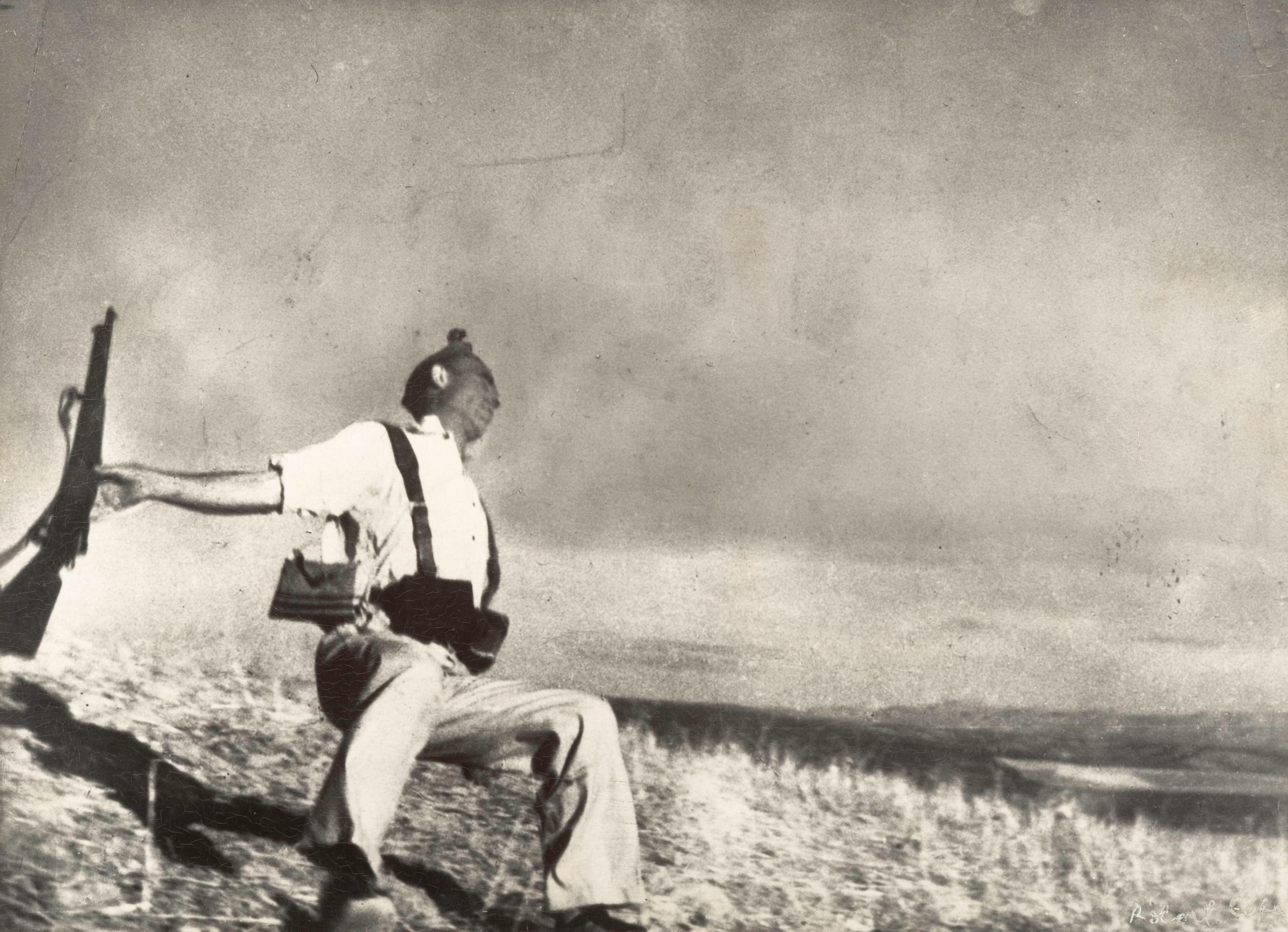
Robert Capa (American (born Hungary), Budapest 1913–1954 Thai Binh). The Falling Soldier, 1936, printed later. Gelatin silver print, 9 3/4 x 13 3/8 in. (24.7 x 34 cm). The Metropolitan Museum of Art, New York, Gilman Collection, Purchase, Alfred Stieglitz Society Gifts, 2005 (2005.100.166). © International Center of Photography / Magnum Photos
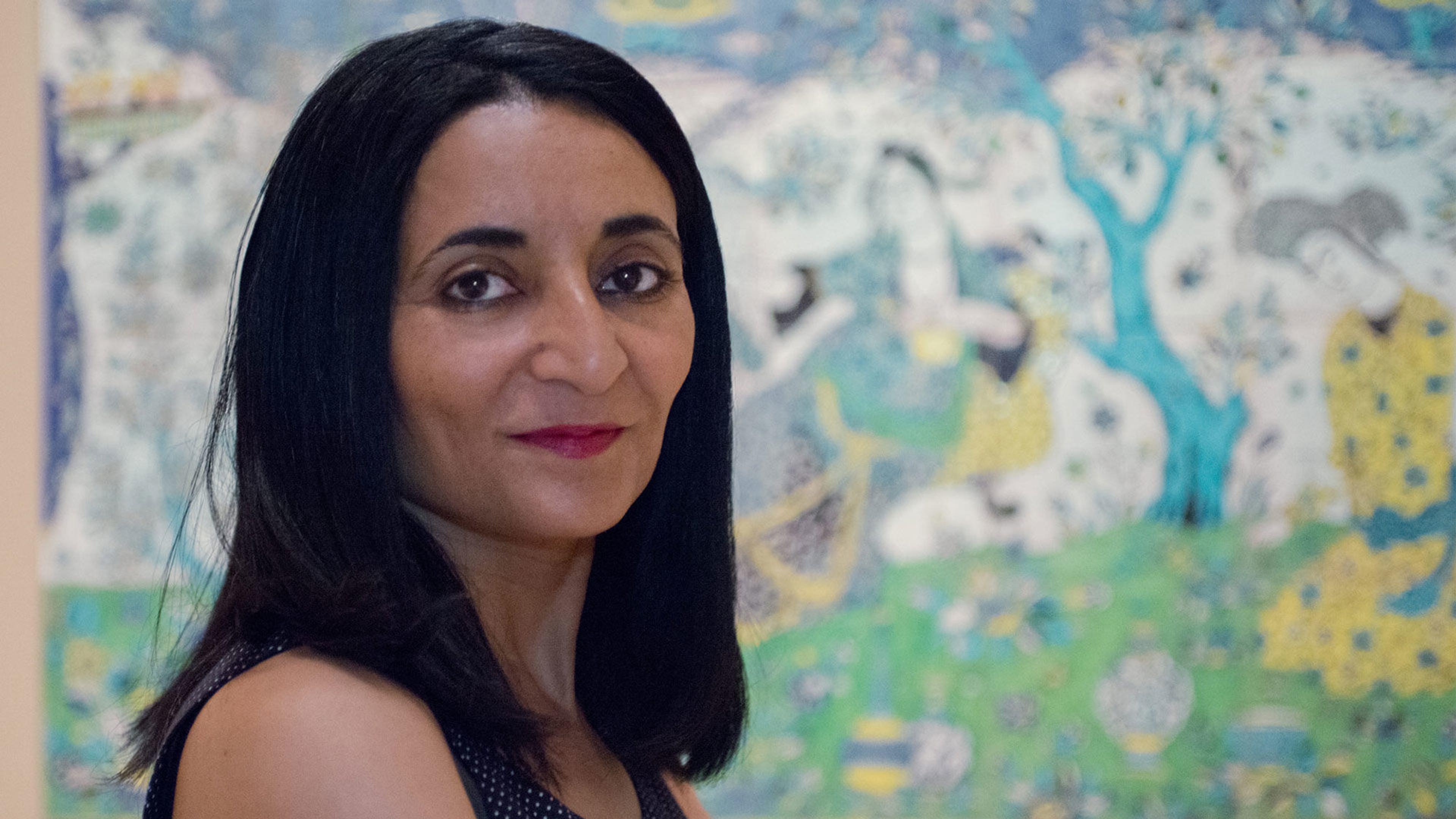
My name is Cornelia Parker. I'm an English artist. I live in London.
I think something that's very important to me in my work is the idea of suspension—putting back something that's met a death in some kind of way, and then it's been resurrected. And Robert Capa does what I'm trying to do in my own work. I revisit this moment over and over again.
War photography is incredibly brave and pioneering, especially in the Spanish Civil War. People were not really necessarily commissioned—they'd go out speculatively and just be working alongside the soldiers. In this case a Republican soldier who is not in uniform, but he's almost in everyday dress. And to the right of the photograph is a big empty space—the empty countryside. You know, he's almost at peace—you know, his face, it isn't anguished. It's almost like looking into the distance, but he's got his eyes closed. His arms are open. He's defenseless. He's not in any way protective. He's been caught unawares. You know, he's been caught mid-flight.
There's very, very few images of people still upright who are dead. But there's no blood; there's not very much viscera. It's almost like if you could rewind the film and a second later he'd be alive again. But how he died we don't know. Was he in battle? Or was he posing for Capa and then got struck by a sniper? For me, the more I know about it, the more fascinating it becomes, the more elusive it is. You can't really pin it down.
I've always been drawn to images of war since my childhood just because of this mystery that's been attached to it. I was born in 1956—10 or 11 years after the Second World War. My mom had fled Germany. After the war there was nothing there. Stuff she couldn't talk about, although I knew she had suffered quite badly. I suppose it's synonymous with things from my childhood.
I think photography allows us to examine that moment over a long period of time. We remember the frozen moment more than we do the moving footage—he's falling but he's never going to land—and how much more powerful that is. The idea of taking violence but making a quiet place out of it.
So this, for me, is what drew me to this photograph—it is this kind of limbo between life and death. Is he dead yet or is he about to be dead or...? It's almost utterly contemporary too, because, you know, this is still going on. It's become iconic. This man stands in for all the people who have fallen before and all the people who are falling since. This could be a monument to war. It could be a monument to death. It could be a monument to futility or the futility of death on the battlefield. You know, people are prepared to risk their lives to defend something.
I think gravity only gets us in the end when we're dead.