English
DonateMembershipTickets

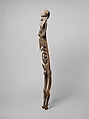
Figure (Yipwon)

19th century or earlier
On view at The Met Fifth Avenue in Gallery 354
Throughout the ranges of hills south of the middle Sepik River in northeast Papua New Guinea, a number of peoples worked in what is known as the opposed-hooks style, in which curved and pointed hooks are arranged on a vertical axis around a central design element. Among the most elegant are the remarkable stylized anthropomorphic hook figures of the Alamblak people that are known as yipwon. Local oral tradition describes the origin of these distinctive images. When the spirit of the Sun, who formerly inhabited the earth, was carving the first slit gong (a large musical instrument), the pieces of wood chipped from the carving came to life as spirits who lived with the Sun in the men's ceremonial house. One day these spirits killed one of the Sun's male relatives and drank his blood, after which they stretched themselves out against the wall of the house and turned back into wood. Angered by their act, the Sun ascended into the sky while the yipwon remained on earth as patron spirits of warfare and hunting. Large yipwon images such as this one were owned collectively by clans, while smaller portable examples were individually owned and served as amulets, carried in net bags by their owners to bring success in hunting and battle.

Artwork Details

Object Information
  • Title: Figure (Yipwon)
  • Date: 19th century or earlier
  • Geography: Papua New Guinea, East Sepik Province, Korewori River
  • Culture: Yimam people
  • Medium: Wood
  • Dimensions: H. 86 × W. 19 × D. 7 in. (218.4 × 48.3 × 17.8 cm)
    Other: 18 in. × 5 3/4 in. (45.7 × 14.6 cm)
  • Classification: Wood-Sculpture
  • Credit Line: The Michael C. Rockefeller Memorial Collection, Purchase, Nelson A. Rockefeller Gift, 1965
  • Object Number: 1978.412.854
  • Curatorial Department: The Michael C. Rockefeller Wing

Audio

Cover Image for 1717. Figure (Yipwon)

1717. Figure (Yipwon)

0:00
0:00
We're sorry, the transcript for this audio track is not available at this time. Please email info@metmuseum.org to request a transcript for this track.
More Artwork
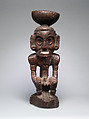
Female Figure, Wood, Inyai-Ewa people
Inyai-Ewa people
16th–19th century
Zemí cohoba stand, Taíno artist(s), Guaiacum wood, shell, Taíno
Taíno artist(s)
ca. 1000 CE
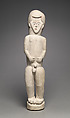
Funerary Figure (Kulap), Chalk, paint, Southern New Ireland
Southern New Ireland
late 19th century
Male Figure, Wood, Inyai-Ewa people
Inyai-Ewa people
16th–19th century
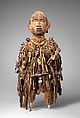
Nkisi (power figure), Kongo artist and nganga (ritual specialist), Wood, pigment, resin, iron, brass, tin, cloth, plant fiber cord, beads, cowrie shells, bone or ivory, arrows, leather, seeds, animal horn, Kongo peoples
Kongo artist and nganga (ritual specialist)
19th–first half of 20th century

Research Resources

The Met provides unparalleled resources for research and welcomes an international community of students and scholars. The Met's Open Access API is where creators and researchers can connect to the The Met collection. Open Access data and public domain images are available for unrestricted commercial and noncommercial use without permission or fee.

To request images under copyright and other restrictions, please use this Image Request form.

Feedback

We continue to research and examine historical and cultural context for objects in The Met collection. If you have comments or questions about this object record, please contact us using the form below. The Museum looks forward to receiving your comments.

Send feedback

Content Notice

The Metropolitan Museum of Art presents over 5,000 years of art from around the world, and our online collection reflects ongoing work conducted over the course of our more than 150-year history. You may encounter objects or images that may be inappropriate for some viewers or information that may be outdated.