English
DonateMembershipTickets

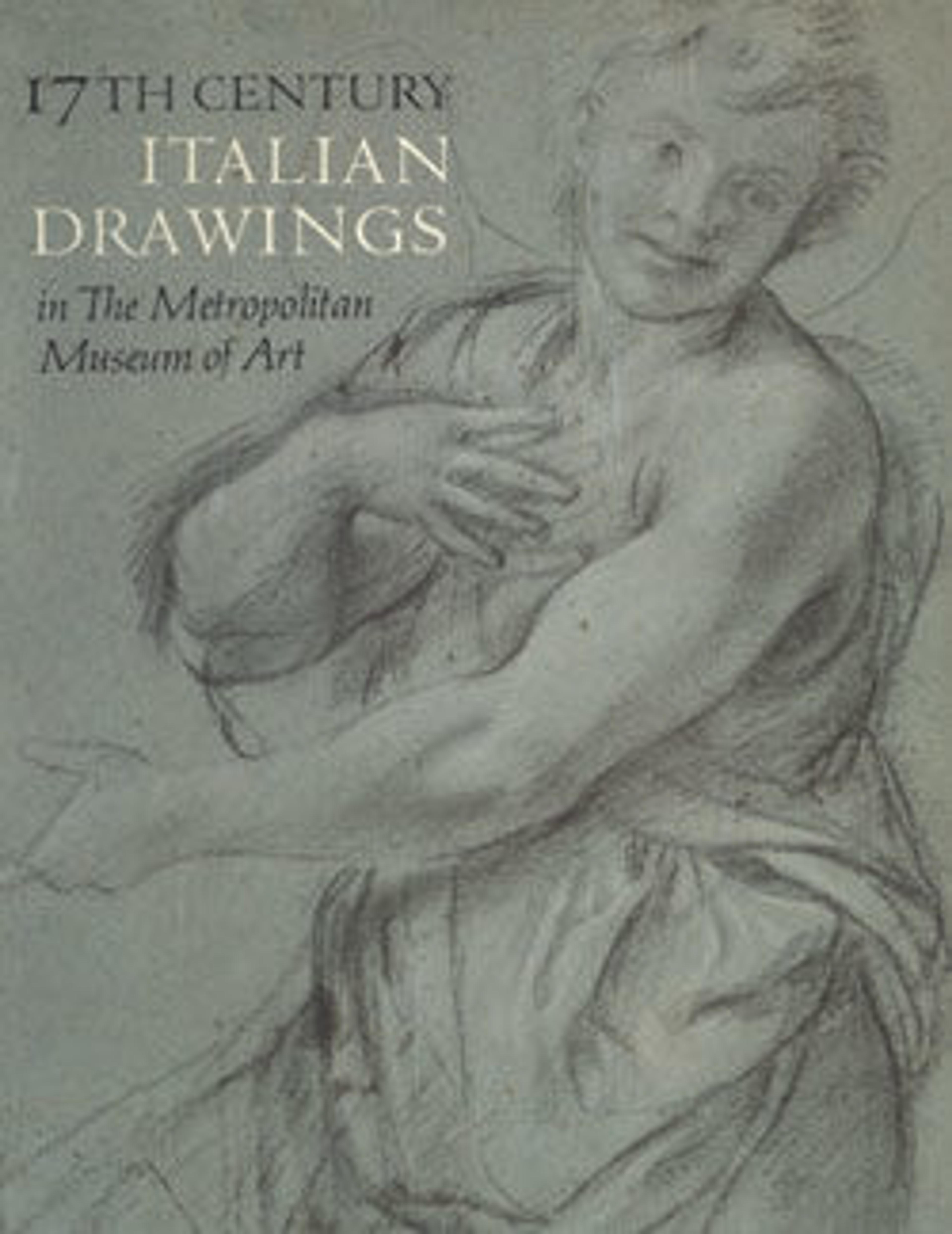
Study of a Seated Youth for the Age of Gold

In June 1637, Pietro da Cortona, the leading Italian Baroque painter of his time, arrived in Florence and immediately began a fresco cycle commissioned by the Grand Duke of Tuscany, Ferdinando II (1610-1670) and his wife Vittoria della Rovere (1622-1694), for the Camera della Stufa in the Pitti Palace. The subject was the "Four Ages of the World" as recounted at the beginning of Ovid's Metamorphoses, a classical literary source. Together with another sheet in the Museum's collection (inv. 1972.118.250), this drawing is a study for a youth seated at the left in the "Age of Gold". In this fresco a young woman crowns the seated youth with a laurel of victory, an allusion to the name Vittoria, while putti, laden with branches of oak (rovere), advance without disturbing a docile lion, these are references to the Medici - Della Rovere marriage symbolized by the youthful couple. Comparing the two drawings, here the position of the youth's right arm is closer in to the solution adopted in the fresco, but in both figure studies his left arm (here only lightly indicated) is raised, while in the fresco it rests across his chest. A further study for the same seated figure is in Rome (Istituto Centrale per la Grafica, Corsini Collection inv. 124324).

Artwork Details

Object Information
  • Title: Study of a Seated Youth for the Age of Gold
  • Artist: Pietro da Cortona (Pietro Berrettini) (Italian, Cortona 1596–1669 Rome)
  • Date: 1637
  • Medium: Black chalk
  • Dimensions: 11-1/4 x 10-1/4 in. (28.6 x 26 cm)
  • Classification: Drawings
  • Credit Line: Bequest of Walter C. Baker, 1971
  • Object Number: 1972.118.249
  • Curatorial Department: Drawings and Prints
More Artwork
St. Michael Expurging Heresy, Pietro da Cortona (Pietro Berrettini)  Italian, Pen and brown ink, brush and brown wash over traces of black chalk
Attributed to Pietro da Cortona (Pietro Berrettini)
1596–1669
Lobster-Tail Burgonet, Steel, leather, gold, North Italian
North Italian
ca. 1610
Cottage near the Entrance to a Wood, Rembrandt (Rembrandt van Rijn)  Dutch, Pen and inks ranging from light to dark brown, brown washes, corrected in white (oxidized, partially abraded), and touches of red chalk (in added structures to the left of the main cottage).
Rembrandt (Rembrandt van Rijn)
1644
The Triumph of Nature Over Art (design for an engraving of 'De Florum Cultura'), Pietro da Cortona (Pietro Berrettini)  Italian, Pen and brown ink, brush and brown wash, over black chalk
Pietro da Cortona (Pietro Berrettini)
ca. 1633
Armor, Steel, copper alloy, textile, leather, Italian
Italian
ca. 1400–1450 and later

Research Resources

The Met provides unparalleled resources for research and welcomes an international community of students and scholars. The Met's Open Access API is where creators and researchers can connect to the The Met collection. Open Access data and public domain images are available for unrestricted commercial and noncommercial use without permission or fee.

To request images under copyright and other restrictions, please use this Image Request form.

Feedback

We continue to research and examine historical and cultural context for objects in The Met collection. If you have comments or questions about this object record, please contact us using the form below. The Museum looks forward to receiving your comments.

Send feedback

Content Notice

The Metropolitan Museum of Art presents over 5,000 years of art from around the world, and our online collection reflects ongoing work conducted over the course of our more than 150-year history. You may encounter objects or images that may be inappropriate for some viewers or information that may be outdated.