Large Kneeling Statue of Hatshepsut
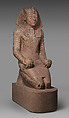
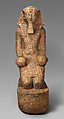
This statue represents Hatshepsut wearing the white crown of Upper Egypt (the south), so it may have been placed on the southern side of the processional way. On the base, Hatshepsut is said to be offering fresh plants to Amun. On the back pillar, she is identified by her Horus name, Wosretkau, which is written in a rectangular device called a serekh. One also finds fragments of her throne name, Maatkare, and her personal name, Hatshepsut, both of which are written inside oval cartouches.
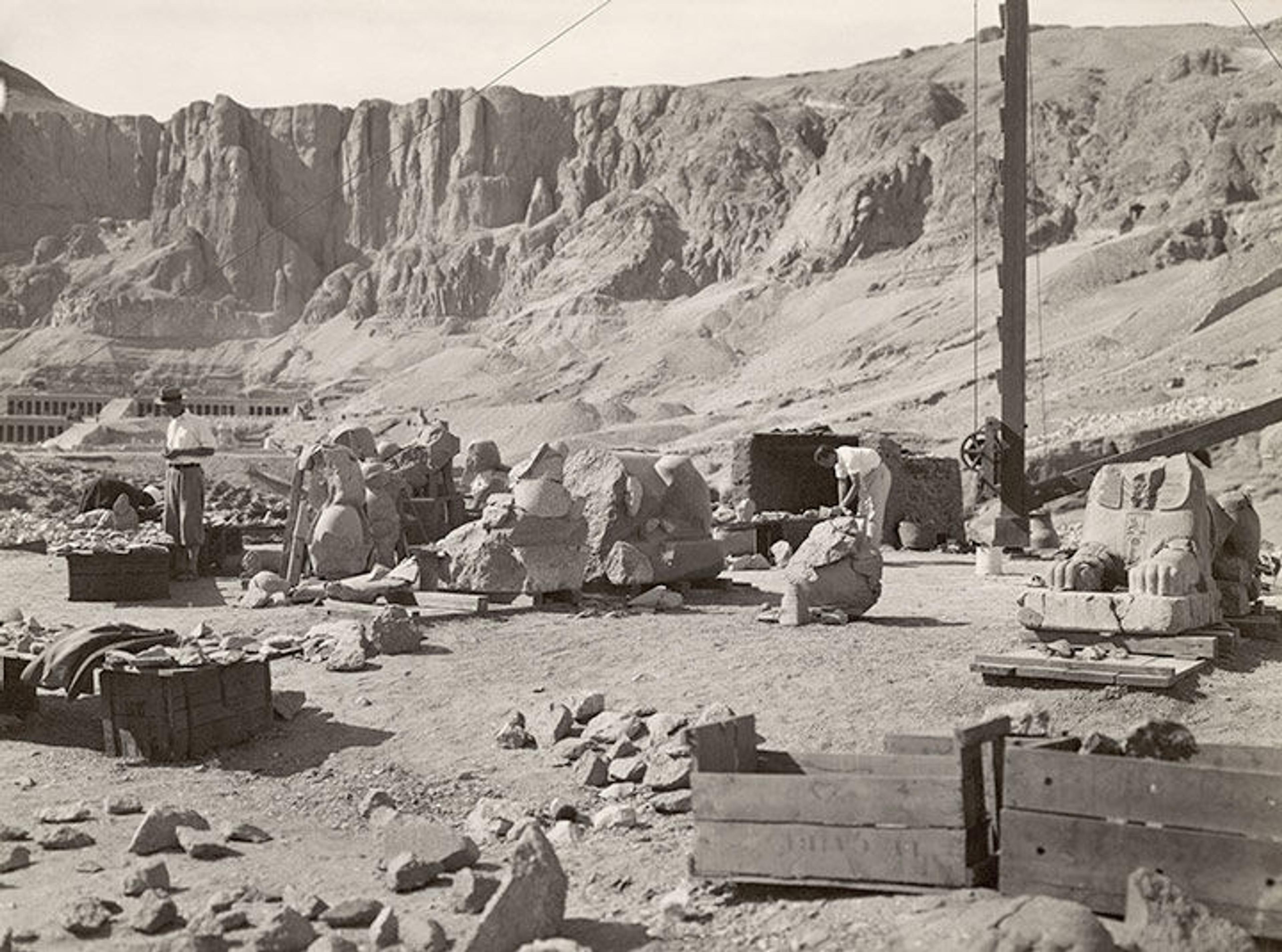
In 1930, the Museum's Egyptian Expedition found the body fragments of this statue buried in an area called the "Hatshepsut Hole." Some eighty years earlier, the head had been found and taken to Berlin by Egyptologist Richard Lepsius. The pieces of the statue were reunited in an exchange organized by Herbert Winlock, director of the Museum's excavations at Thebes. This and other exchanges were made possible by the generosity of the Egyptian Antiquities Service, which ceded many fragmentary statues to the Metropolitan Museum in the division of finds.
Artwork Details
- Title: Large Kneeling Statue of Hatshepsut
- Period: New Kingdom
- Dynasty: Dynasty 18
- Reign: Joint reign of Hatshepsut and Thutmose III
- Date: ca. 1473–1458 BCE
- Geography: From Egypt, Upper Egypt, Thebes, Deir el-Bahri, Senenmut Quarry, MMA excavations, 1927–28
- Medium: Granite
- Dimensions: H. 295.9 cm (116 1/2 in); w. of base 81.3 cm (32 in); d. of base 145.4 cm (57 1/4 in)
shipping weight in 2006, 3175.2 kg. (7000 lbs) - Credit Line: Rogers Fund, 1930
- Object Number: 30.3.1
- Curatorial Department: Egyptian Art
More Artwork
Related Content
 Free to download
Research Resources
The Met provides unparalleled resources for research and welcomes an international community of students and scholars. The Met's Open Access API is where creators and researchers can connect to the The Met collection. Open Access data and public domain images are available for unrestricted commercial and noncommercial use without permission or fee.
To request images under copyright and other restrictions, please use this Image Request form.
Feedback
We continue to research and examine historical and cultural context for objects in The Met collection. If you have comments or questions about this object record, please contact us using the form below. The Museum looks forward to receiving your comments.
Content Notice
The Metropolitan Museum of Art presents over 5,000 years of art from around the world, and our online collection reflects ongoing work conducted over the course of our more than 150-year history. You may encounter objects or images that may be inappropriate for some viewers or information that may be outdated.