兰斯当宅第的餐厅
Artwork Details
- 标题: 兰斯当宅第的餐厅
- 艺术家: 以罗伯特·亚当的设计为原型,英国,1728–1792年
- 创作日期: 1766–69年
- 地域: 伦敦
- 尺寸: 17英尺11英寸 x 24英尺6英寸 x 47英尺 (5.46 x 7.47 x 14.33米)
- 来源信息: 罗杰斯基金,1931年
- 藏品编号: 32.12
- Curatorial Department: European Sculpture and Decorative Arts
Audio
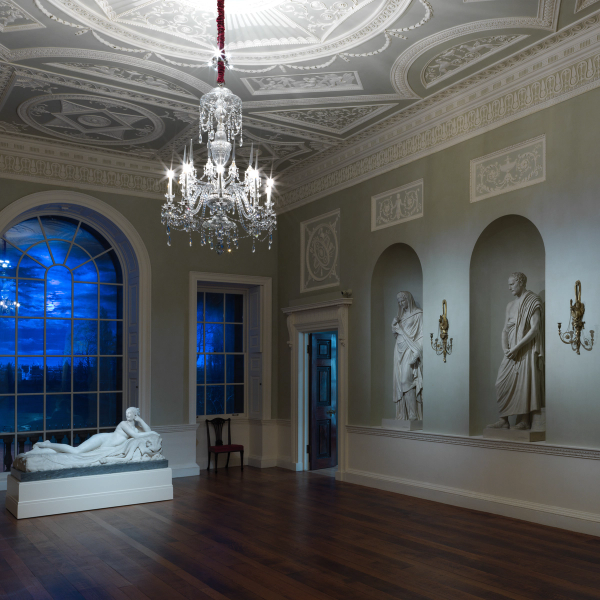
414. Dining Room from Lansdowne House
Gallery 515
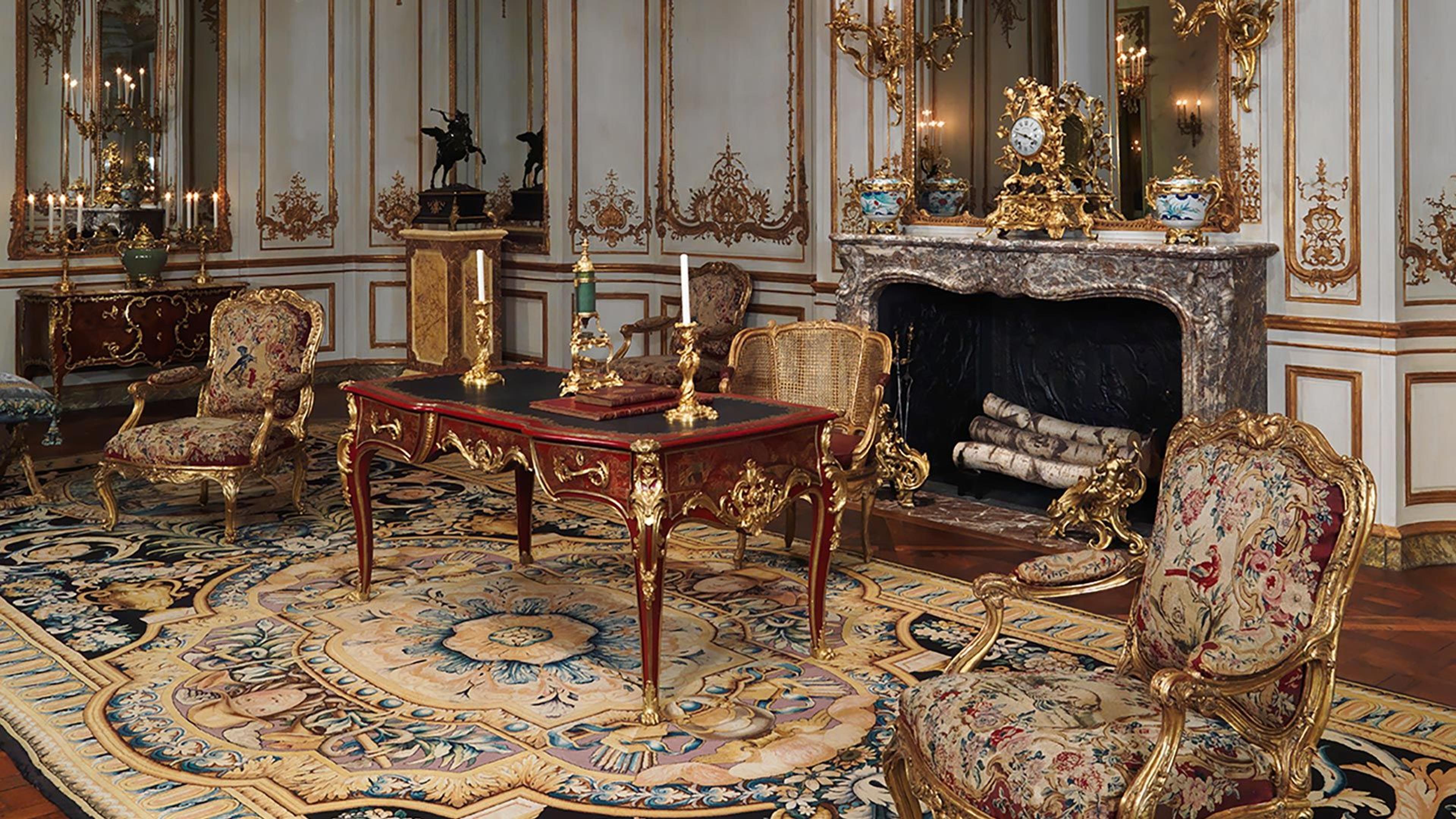
NARRATOR: Welcome to the Dining Room from Lansdowne House, reassembled here from its original location in London where it was conceived as a “country house in a town.” In designing this room, architect Robert Adam had an agenda: to create a beautiful room, yes, but also to inspire respect for the high ideals of classical civilizations in Greece and Rome. On the left side of the room are four neo-classical ionic columns. And lining the walls are sculptures inspired by ancient mythical figures. Two are the work of Italian sculptor Antonio Canova (popular among British aristocrats): one, the goddess of love and victory, Venus, and the other of a reclining Naiad, a water spirit.
A born micromanager, Adam hand-selected craftsmen for the project. There were plasterers for the ceilings, carvers for the doors, and sculptors for the marble mantlepiece. He also worked closely with the firm of famed cabinet-maker Thomas Chippendale to produce chairs, two of which you see here. But why was it so important for the owner’s dining room to reflect images from the history of democracy? Because this was the dining room of the Earl of Shelburne, a prime minister, with strong views on the topic.
SHELBURNE: I have exerted every effort to preserve America to this country. It is better that a part should suffer, rather than the whole empire perish.
NARRATOR: Shelburne was a vocal advocate for American Independence, the one to help negotiate an end to the very war that created the United States of America. This room, constructed steps away from Parliament, was a hive of consequential debate by exalted and controversial thinkers, including the novelist Charles Dickens, poet Thomas Moore, and the radical political philosopher Jeremy Bentham.
If Shelburne wanted to honor liberal and democratic values in this space, the catalyst might lie in the Earl’s foreign adventures: what was known as “The Grand Tour.” For Britain’s elite, studying the art and architecture of southern Europe was considered a social responsibility, a life-changing education. Visiting Rome in particular: there were newly-excavated artifacts from the Roman empire on view that offered a deeper understanding of the classical world and it’s democratic philosophy. Travelers returned home with inspiration—and sometimes, actual artifacts!—whether for government, or for how to design and decorate their dining room.
More Artwork
Related Content

 Free to download
Research Resources
The Met provides unparalleled resources for research and welcomes an international community of students and scholars. The Met's Open Access API is where creators and researchers can connect to the The Met collection. Open Access data and public domain images are available for unrestricted commercial and noncommercial use without permission or fee.
To request images under copyright and other restrictions, please use this Image Request form.
Feedback
We continue to research and examine historical and cultural context for objects in The Met collection. If you have comments or questions about this object record, please contact us using the form below. The Museum looks forward to receiving your comments.
Content Notice
The Metropolitan Museum of Art presents over 5,000 years of art from around the world, and our online collection reflects ongoing work conducted over the course of our more than 150-year history. You may encounter objects or images that may be inappropriate for some viewers or information that may be outdated.