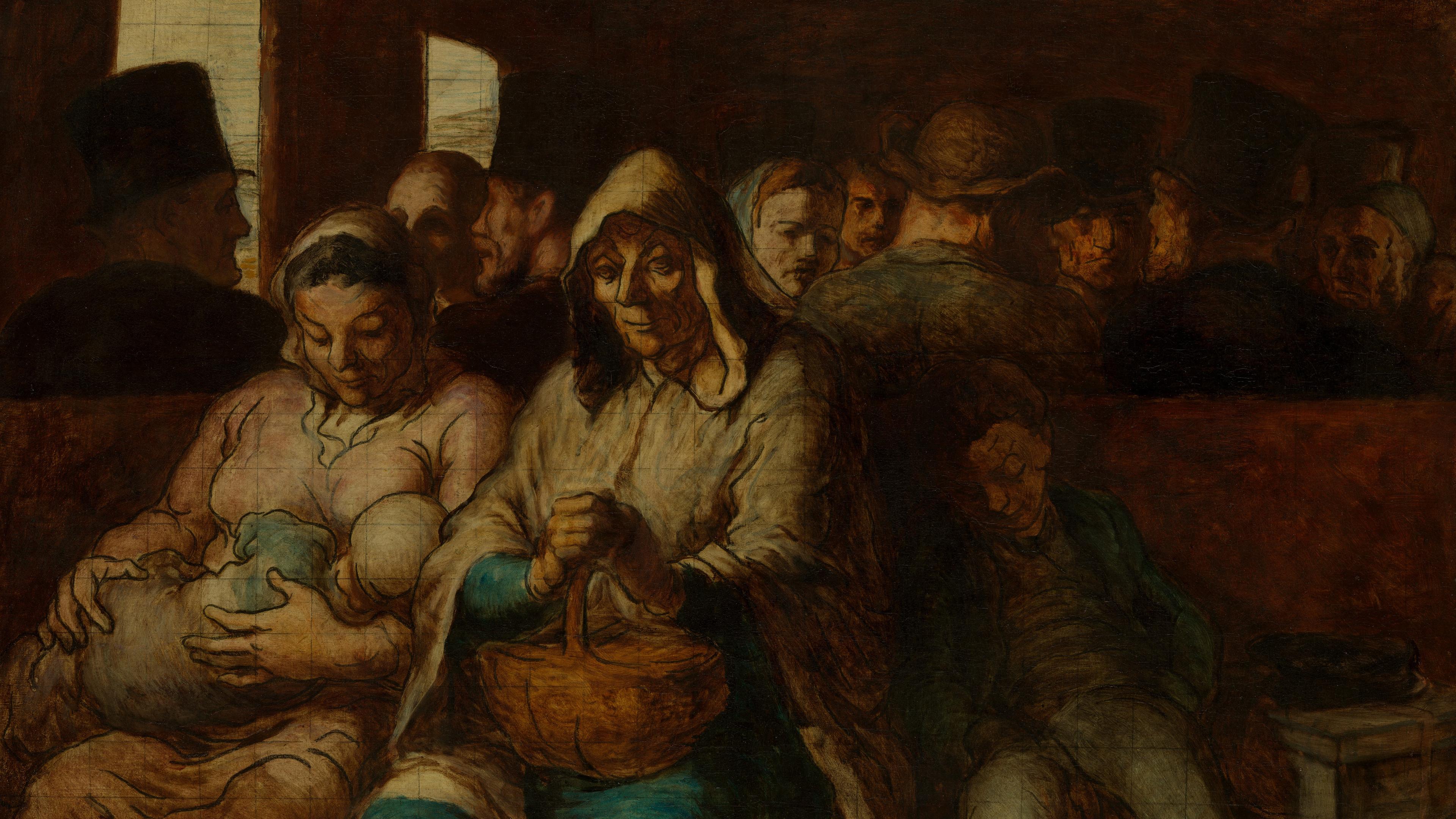
三等车厢
Artwork Details
- 标题: 三等车厢
- 艺术家: 奥诺雷·杜米埃,法国,1808–1879年
- 创作日期: 约1862–64年
- 材料: 布面油画
- 尺寸: 253⁄4 x 351⁄2 英寸(65.4 x 90.2厘米)
- 来源信息: H·O·哈弗梅耶收藏,H·O·哈弗梅耶夫人遗赠,1929年
- 藏品编号: 29.100.129
- Curatorial Department: European Paintings
Audio
6088. The Third-Class Carriage
ALISON HOKANSON: I am Alison Hokanson and I work in the Department of European Paintings here at the Museum. This is Honoré Daumier's “The Third-Class Carriage.” Daumier has constructed the view in this painting so that we seem to be sitting in a third-class railcar. Across from us we see a nursing mother and her baby, an old woman and a sleeping young boy. Daumier really embraced the possibilities that mass transit offered for portraying a mix of classes and social types crammed into close contact. This particular painting is unfinished. You can see the grid of squaring lines that Daumier used to transfer the composition. But it is still a really excellent example of his style. Daumier has used a very fluid line to describe the women's wrinkled clothes, their battered faces, their swollen hands, but at the same time, this is not a demeaning picture. The main figures are dignified. They’re calm and introverted and their bodies have a monumental weight to them. And beyond this, the two women are bathed in light, silhouetted against this frieze of dark heads, almost as if they have halos. Finally, the mood is solemn and restrained, which is not necessarily what you might expect from a third-class carriage. And this mood and this dignity are significant because unlike many other artists of his era, Daumier is eliciting our interest in these passengers without trivializing or sentimentalizing them.
More Artwork
Related Content
Research Resources
The Met provides unparalleled resources for research and welcomes an international community of students and scholars. The Met's Open Access API is where creators and researchers can connect to the The Met collection. Open Access data and public domain images are available for unrestricted commercial and noncommercial use without permission or fee.
To request images under copyright and other restrictions, please use this Image Request form.
Feedback
We continue to research and examine historical and cultural context for objects in The Met collection. If you have comments or questions about this object record, please contact us using the form below. The Museum looks forward to receiving your comments.
Content Notice
The Metropolitan Museum of Art presents over 5,000 years of art from around the world, and our online collection reflects ongoing work conducted over the course of our more than 150-year history. You may encounter objects or images that may be inappropriate for some viewers or information that may be outdated.