算命者
Artwork Details
- 标题: 算命者
- 艺术家: 乔治·德·拉图尔,法国,1593–1653年
- 创作日期: 可能作于1630年代
- 材料: 布面油画
- 尺寸: 401⁄8 x 485⁄8 英寸(101.9 x 123.5厘米)
- 来源信息: 罗杰斯基金,1960年
- 藏品编号: 60.3
- Curatorial Department: European Paintings
Audio
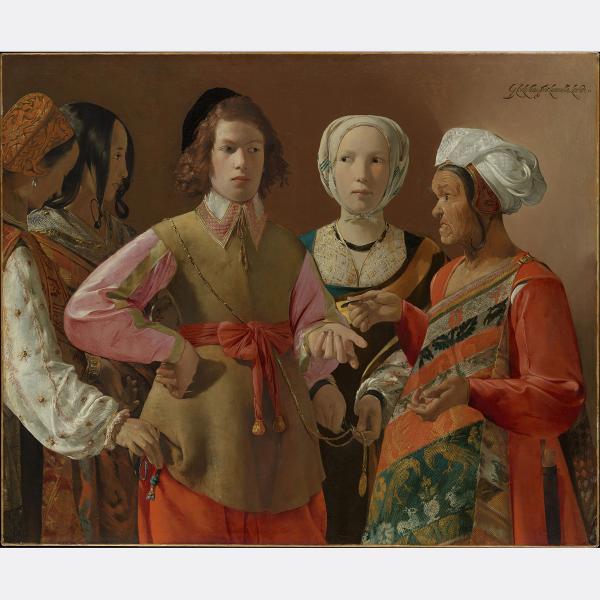
5104. The Fortune Teller
La Tour, 1630s
DAVID PULLINS: One of the really wonderful things about this painting is the way that it has layers as you start to understand what's going on, because it's not obvious at first glance.
NARRATOR: Take the young man at the center. He’s handing the older woman a coin: paying her to read his fortune.
DAVID PULLINS: And once you think you've got that, you realize that's only yet another layer in the onion.
NARRATOR: While he’s distracted, the other women pick his pockets. Associate Curator David Pullins.
DAVID PULLINS: It was a common trope for this kind of genre painting, to show a fortune teller reading usually a privileged person's fortune and often, in the process being robbed.
NARRATOR: One question we might ask is - why was this subject matter so popular?
RABBI SAMANTHA FRANK: I think that it might have sold easily or quickly, because it's an image that maybe reinforces stereotypes, and it ... it doesn't challenge you.
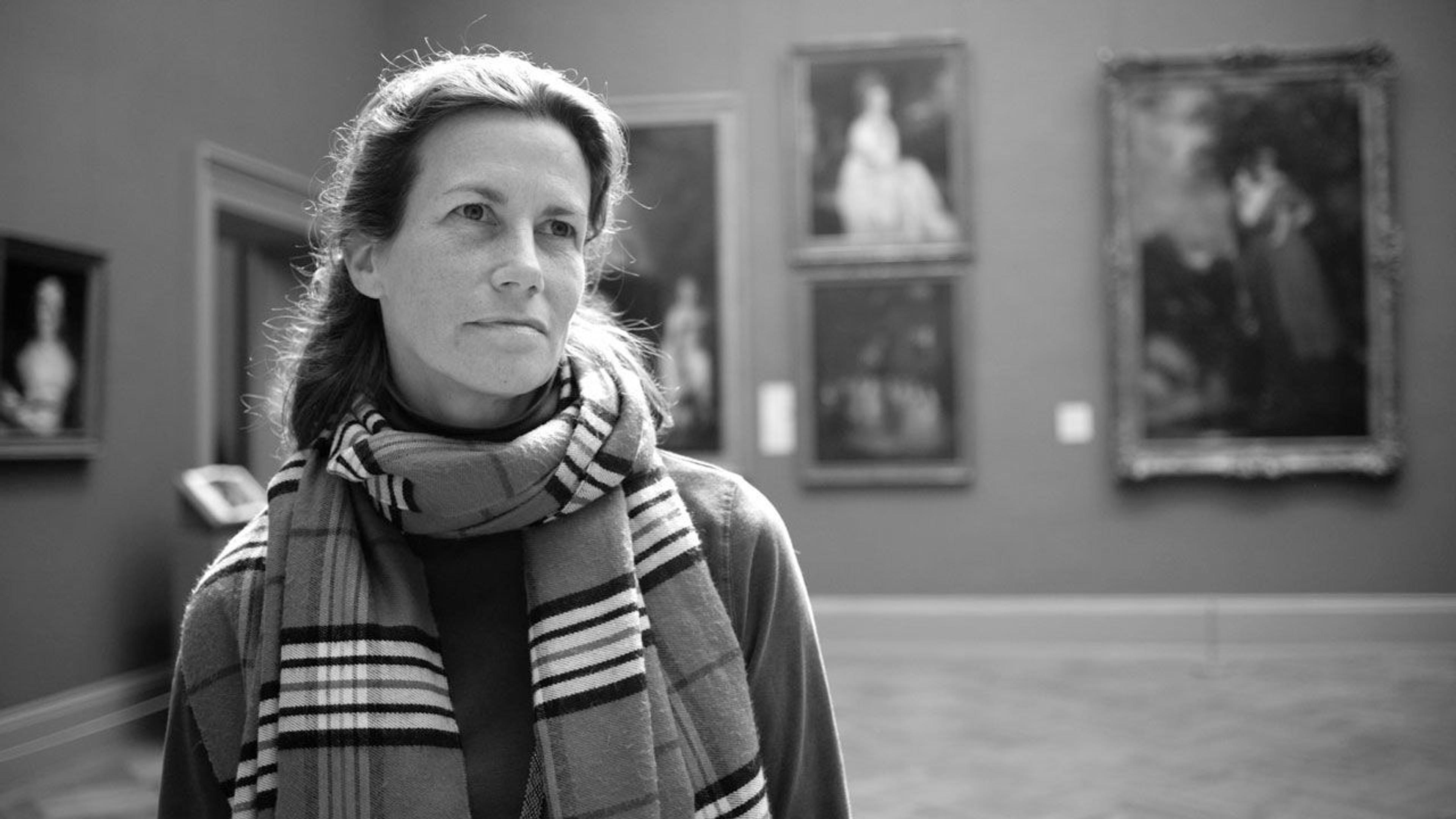
I'm Rabbi Samantha Frank.
I'm just thinking about the bigger picture. Most people who, if they are actually stealing from others, it's not their first choice of activity.
NARRATOR: The fortune teller’s darker skin suggests that she is from an ethnic group called the Roma people who were itinerant, traveling from place to place.
DAVID PULLINS: So these are individuals who are moving throughout Europe, and in that way, they were often seen with a lot of suspicion because they were passing through town.
RABBI SAMANTHA FRANK: I'm thinking about how different populations throughout time are forced into certain trades, or maybe prevented from joining other trades or activities. And just thinking about how discrimination can lead to stereotypes and sort of a cycle can begin.
NARRATOR: In this painting, it’s not just the fortune teller’s skin tone that stereotypes her. It’s also her somewhat gaudy clothing.
DAVID PULLINS: It's intended to be somewhat exoticizing. It's really over the top in a way.
RABBI SAMANTHA FRANK: I also just like his pink sleeves. I'll say for me, that's sometimes a way into some of this art that is challenging. One of the things I try to do is find a detail that I can admire. And I think in this one it's the pink, and maybe the gold of the…the very pale woman next to him, on the top of her dress.
Listen to more about this artwork
More Artwork

Related Content

Research Resources
The Met provides unparalleled resources for research and welcomes an international community of students and scholars. The Met's Open Access API is where creators and researchers can connect to the The Met collection. Open Access data and public domain images are available for unrestricted commercial and noncommercial use without permission or fee.
To request images under copyright and other restrictions, please use this Image Request form.
Feedback
We continue to research and examine historical and cultural context for objects in The Met collection. If you have comments or questions about this object record, please contact us using the form below. The Museum looks forward to receiving your comments.
Content Notice
The Metropolitan Museum of Art presents over 5,000 years of art from around the world, and our online collection reflects ongoing work conducted over the course of our more than 150-year history. You may encounter objects or images that may be inappropriate for some viewers or information that may be outdated.