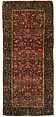
Alfombra «Simonetti»
Artwork Details
- Título: Alfombra «Simonetti»
- Fecha: ca. 1500
- Geografía: Egipto, probablemente El Cairo
- Material: Urdimbre, trama y nudos de lana; nudos asimétricos
- Dimensiones: 8,97 x 2,39 m
- Crédito: Fondo Fletcher, 1970
- Número de inventario: 1970.105
- Curatorial Department: Islamic Art
Audio
6649. The 'Simonetti' Carpet
WALTER DENNY: One of the most celebrated carpets at the Metropolitan… is the so-called Simonetti Mamluk, named after a former owner; of the Simonetti family.
NARRATOR: “Mamluk” refers to a dynasty that ruled Egypt from the 13th through early 16th centuries. The word is also used to describe the carpets made in Egypt during that period. Move around the platform to get a sense of the progression of the design.
WALTER DENNY: The designs are largely geometric with smaller motifs, such as the papyrus motif, taken from indigenous Egyptian sources. The Simonetti carpet, in its… five colors – red, green, blue, a very small amount of white, and a small amount of dark brown outlining – is one of the most spectacular and best-known of early Mamluk carpets to have survived into our time.
NARRATOR: And how to describe what it is that makes this carpet so special?
WALTER DENNY: It's the fluency of the design, the perfection of the way that it articulates in every corner of the border, the careful planning… and above all, the beautiful lustrous wool which even in its worn state gives us a very strong impression of these glowing colors, almost all of them in the same intensity but in different hues, that create the undeniable and unique visual impression that Mamluk carpets give us, of great luxury, and at the same time great restraint.
Listen to more about this artwork
More Artwork
Related Content
Research Resources
The Met provides unparalleled resources for research and welcomes an international community of students and scholars. The Met's Open Access API is where creators and researchers can connect to the The Met collection. Open Access data and public domain images are available for unrestricted commercial and noncommercial use without permission or fee.
To request images under copyright and other restrictions, please use this Image Request form.
Feedback
We continue to research and examine historical and cultural context for objects in The Met collection. If you have comments or questions about this object record, please contact us using the form below. The Museum looks forward to receiving your comments.
Content Notice
The Metropolitan Museum of Art presents over 5,000 years of art from around the world, and our online collection reflects ongoing work conducted over the course of our more than 150-year history. You may encounter objects or images that may be inappropriate for some viewers or information that may be outdated.