Search the collection

Filter By

Object Type / Material
Geographic Location
Department
Date
Show Only:
  • As part of the Met's Open Access policy, you can freely copy, modify and distribute this image, even for commercial purposes.
    APIPublic domain data for this object can also be accessed using the Met's Open Access API
Showing 387 results for Ono no Ozū (Ono no Tsū)
Sort by:
Hotei with a Child, Ono no Ozū (Ono no Tsū)  Japanese, Hanging scroll; ink on paper, Japan
Ono no Ozū (Ono no Tsū)
1624
Hotei and a Child

, Ono no Ozū (Ono no Tsū)  Japanese, Hanging scroll; ink on paper, Japan
Ono no Ozū (Ono no Tsū)
dated 1624 (Genna 10)
Scenes and Calligraphic Excerpts from The Tale of Genji, Tosa School  Japanese, Shikishi (poetry cards) mounted in an orihon album; calligraphies: ink on decorated paper; paintings: ink, color, and gold on paper, Japan
Tosa School
Ono no Ozū (Ono no Tsū)
early 17th century
Nifato‑fato (neck ornament), Ono Niha artist, Gold alloy, Ono Niha people
Ono Niha artist
late 19th–early 20th century
Ear ornaments, Ono Niha artist, Gold alloy, Ono Niha people
Ono Niha artist
19th–early 20th century
Osa’osa (ritual seat for a noble), Ono Niha artist, Stone, Ono Niha people
Ono Niha artist
19th century
Tea Scoop (Chashaku), Sen no Rikyū  Japanese, Bent and carved bamboo, Japan
Sen no Rikyū
1580s
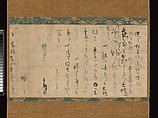
Letter about Sake, Sen no Rikyū  Japanese, Hanging scroll; ink on paper, Japan
Sen no Rikyū
ca. 1583
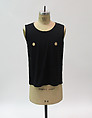
Shirt, Yoko Ono  Japanese-American, bamboo, synthetic, American
Yoko Ono
Opening Ceremony
2012
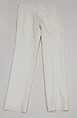
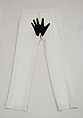
Trousers, Yoko Ono  Japanese-American, wool, synthetic, metal, American
Yoko Ono
Opening Ceremony
2012
Shirt, Yoko Ono  Japanese-American, bamboo, synthetic, American
Yoko Ono
Opening Ceremony
2012
Trousers, Yoko Ono  Japanese-American, wool, synthetic, American
Yoko Ono
Opening Ceremony
2012
"One Titty Dress (OTD)", No Sesso  American, nylon, metal, plastic, American
Multiple artists/makers
fall/winter 2022–23
Shōsōin fragment, Kochi-no-Tanushi  Japanese, Silk tabby, Japan
Kochi-no-Tanushi
dated 756
Tea Scoop (chashaku), Sen no Rikyū  Japanese, Wood, Japan
Sen no Rikyū
probably early 17th century
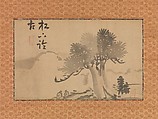
Two Poems from the Collection of Ancient and Modern Poems (Kokin wakashū), Ike no Taiga  Japanese, Hanging scroll; ink on paper, Japan
Ike no Taiga
1734
Pine Tree and Calligraphy, Ike no Taiga  Japanese, Album leaves mounted as hanging scrolls; ink on paper, Japan
Ike no Taiga
Minagawa Kien
late 18th–early 19th century
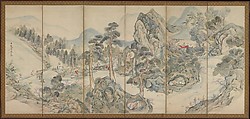
Orchid Pavilion Gathering; Autumn Harvest Festival, Ike no Taiga  Japanese, Pair of six-panel folding screens; ink and color on paper, Japan
Ike no Taiga
ca. 1763
Three poems from the Collection of Poems Ancient and Modern (Kokin wakashū), known as the “Imaki Fragment” (Imaki-gire), Fujiwara no Norinaga  Japanese, Page from a booklet, mounted as hanging scroll; ink on paper, Japan
Fujiwara no Norinaga
12th century
Three poems from the “Later Collection of Japanese Poems” (Gosen wakashū), known as the “Karasumaru Fragment” (Karasumaru-gire), Fujiwara no Sadayori  Japanese, Page from book, mounted as hanging scroll; ink on paper, Japan
Fujiwara no Sadayori
early 12th century
“Paintings by Taigadō with Colophons”, Ike no Taiga , colophons by eight calligraphers Japanese, Album, Japan
Ike no Taiga
late 18th–early 19th century
Wintry Landscape, in the Style of Guo Zhongshu, Ike no Taiga  Japanese, Hanging scroll; ink and color on paper, Japan
Ike no Taiga
late 18th century
Page from Illustrations and Explanations of the Three Jewels (Sanbō e-kotoba), one of the “Tōdaiji Fragments” (Tōdaiji-gire)

, Minamoto no Toshiyori  Japanese, Page from a book; ink on decorated paper, Japan
Minamoto no Toshiyori
1120
"Maple Bridge Night Mooring", Ike no Taiga  Japanese, Two-panel folding screen; ink on paper, Japan
Ike no Taiga
ca. 1770
Taiga Hall Painting Album (Taigadō gafu), Ike no Taiga  Japanese, Woodblock printed book (orihon, accordion-style); ink and color on paper, Japan
Ike no Taiga
Murase Kotei
1803
Heart Sutra (Hannya Shingyō) and Landscape, Ike no Taiga  Japanese, Hanging scroll; ink on paper, Japan
Ike no Taiga
Spring Clouds Arising from the Gorge, Ike no Taiga  Japanese, Hanging scroll; ink on paper, Japan
Ike no Taiga
1770
Landscape and Couplet of Chinese Verse, Ike no Taiga  Japanese, Pair of hanging scrolls; ink on paper, Japan
Ike no Taiga
late 18th century
Page from the Illustrations and Explanations of the Three Jewels  (Sanbō ekotoba), known as the Tōdaiji Fragment (Tōdaiji-gire), Minamoto no Toshiyori  Japanese, Detached page from a book mounted as a hanging scroll; ink on mica paper, Japan
Minamoto no Toshiyori
1120
Three poems from the Collection of Poems Ancient and Modern (Kokin wakashū)

, Fujiwara no Tameyori  Japanese, Page from a booklet mounted as a hanging scroll; ink on paper, Japan
Fujiwara no Tameyori
13th century
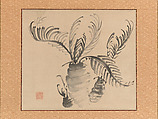
Cycad, Ike no Taiga  Japanese, Hanging scroll; ink on paper, Japan
Ike no Taiga
mid-18th century
Thousand Character Classic, Ike no Taiga  Japanese, Hanging scroll; ink on paper, Japan
Ike no Taiga
18th century
Letter Addressed to Yo Shōemon, Ike no Taiga  Japanese, Hanging scroll; ink on paper, Japan
Ike no Taiga
18th century
Letter Addressed to Aoki Shukuya, Ike no Taiga  Japanese, Hanging scroll; ink on paper, Japan
Ike no Taiga
18th century
Letter Addressed to Itō Kakō, Ike no Taiga  Japanese, Hanging scroll; ink on paper, Japan
Ike no Taiga
1759
Mountain and Calligraphy, Ike no Taiga  Japanese, Album leaves mounted as hanging scrolls; ink on paper, Japan
Multiple artists/makers
18th–19th century
Fishing Boat on Reed Covered Bank and Calligraphy, Ike no Taiga  Japanese, Album leaves mounted as hanging scrolls; ink on paper, Japan
Ike no Taiga
Kameda Bōsai
18th–19th century
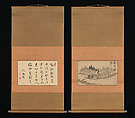
Evening Glow in a Mountain Village and Calligraphy, Ike no Taiga  Japanese, Album leaves mounted as hanging scrolls; ink on paper, Japan
Ike no Taiga
Rokunyo
late 18th–early 19th century
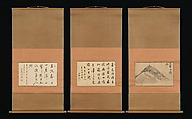
Poems about Plum Blossoms, from the “Sekido-bon Version of Collection of Poems Ancient and Modern”, Fujiwara no Yukinari  Japanese, Page from a bound booklet mounted as a hanging scroll; ink on dyed paper, Japan
Fujiwara no Yukinari
mid- to late 11th century
Two Poems about Palace Gossip, one of the “Ōe Fragments” (Ōe-gire), Fujiwara no Sadayori  Japanese, Page from a bound booklet mounted as a hanging scroll; ink on mica paper with gold flecks, Japan
Fujiwara no Sadayori
early 12th century