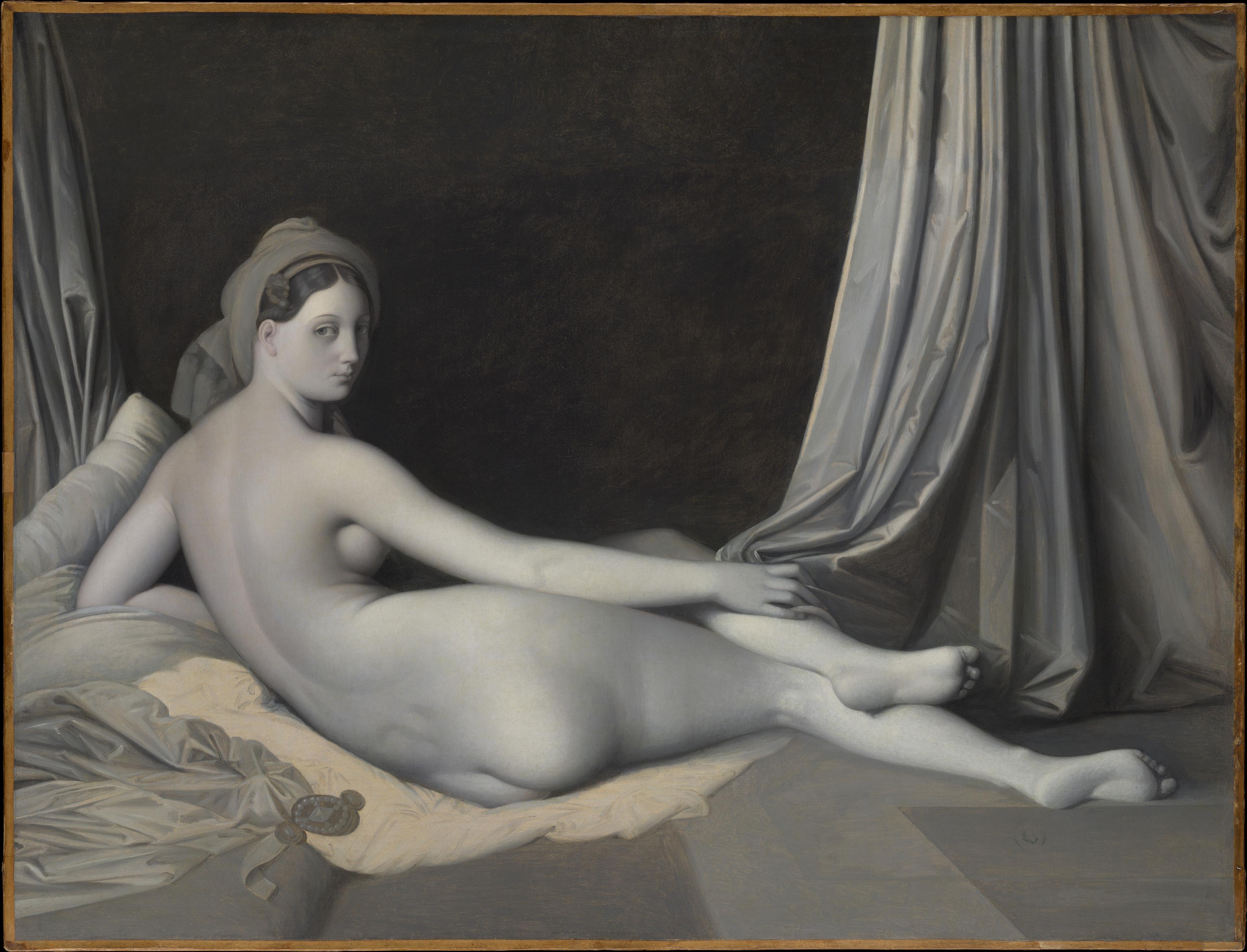
Jean Auguste Dominique Ingres (French, Montauban 1780–1867 Paris) and Workshop. Odalisque in Grisaille, ca. 1824–34. Oil on canvas, 32 3/4 x 43 in. (83.2 x 109.2 cm). The Metropolitan Museum of Art, New York, Catharine Lorillard Wolfe Collection, Wolfe Fund, 1938 (38.65)
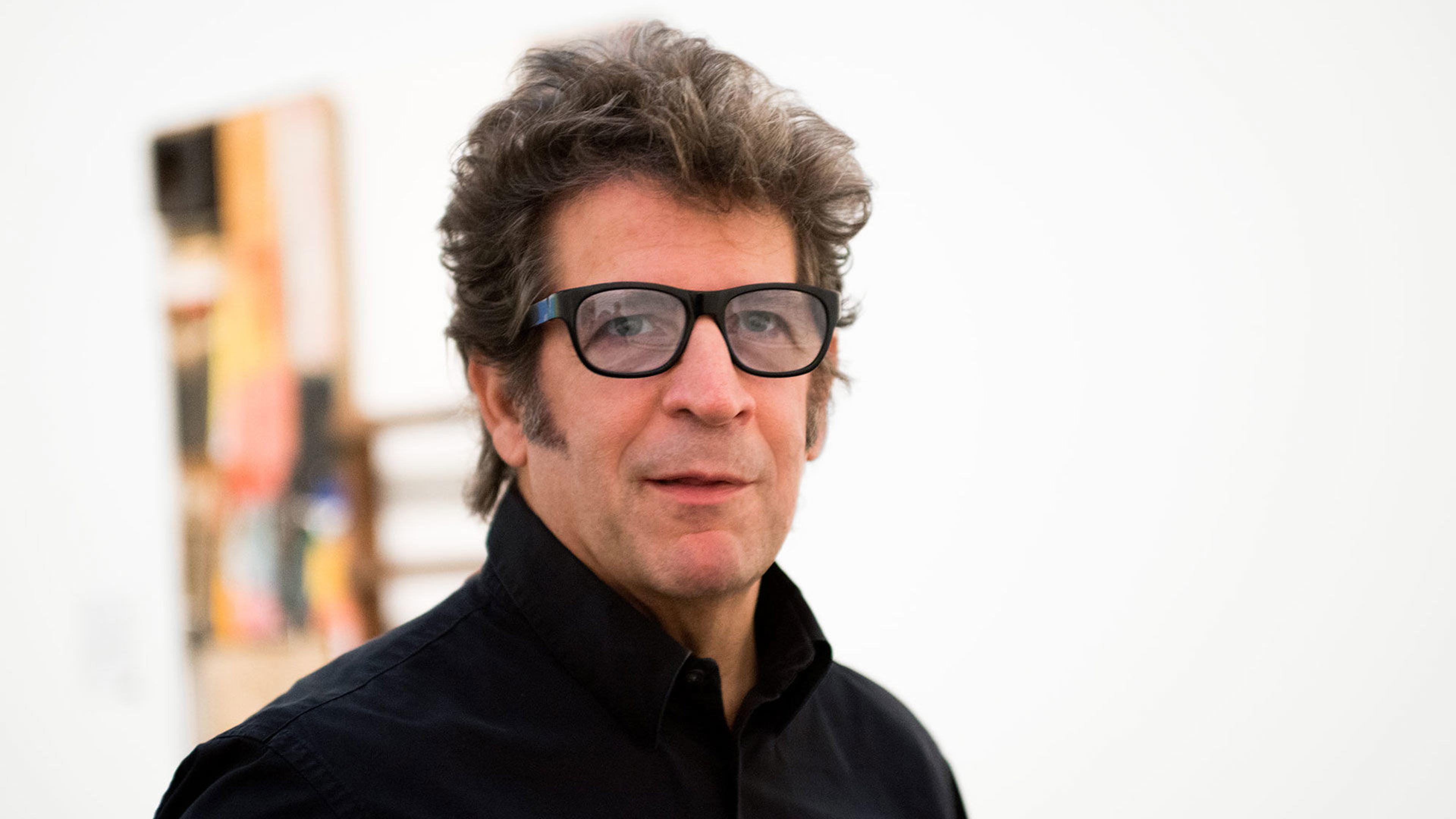
My name is Kerry James Marshall and I am a painter.
I’m a fan of Ingres as a painter, but the best is the portraiture. It’s stunning in its picture-ness, 'cause we don’t know any of those people—don’t care, in some ways, who they are—but they look beautiful in a picture. I’m interested in the artifice of it all.
This particular picture strikes me as ultra-modern, because it exists as a pure image. This strikes me as conceptual art. I mean, we don’t see the world in the tonal register like that. In grisaille (the gray scale) it remains completely locked into the domain of picture-ness.
There’s a spectacular precision in the way the picture is made. There are two different ways of thinking about precision. One is accuracy of line, or accuracy of form, accuracy of shape, but the other is that precision means choice. The level of detail, the treatment in the drapery, the flatness of that black space behind: these are decisions that got made. This is not something that just happened. I don’t think anything is more important than having two options. This is where I think the expression of true freedom exists.
In my work I’m really interested in the idea of how pictures are made. And the only way I can make that explicit is to have multiple approaches in the same picture. And so when I paint a figure that has a crisp outline and I make a gestural mark, I want people to know that that was a choice.
The image has been stylized to produce an effect. That body is built to be in a picture, because there are things that are happening in that body that wouldn’t happen in a real person’s body, if you were just trying to be accurate about it. The way the upper part of the torso is turned, that breast under her arm is in a mighty awkward place—it’s like right on the side of her body almost, as opposed to where it’s supposed to be. If you follow the curve of that woman’s back, up her thigh and then down across her knee and to the foot that’s at the bottom, that keeps a very nice rhythmic curve going all the way from the left side of the picture to the right. In order for that to work, though, the foot down at the bottom is smaller than it should be for the place it is in space. It’s smaller than the foot that's on top that’s further away. He did that on purpose, because I know he knew better, you know? Because if he made that foot as big as it should have been, then it would have projected forward. He needed to keep the flatness of that plane so that the figure remains decorative.
I think we underestimate the level of interest in the art of abstraction for artists who are outside of modernist philosophy. This is really what abstract is, because you have to deal with it against the recognition of something that you think you know.