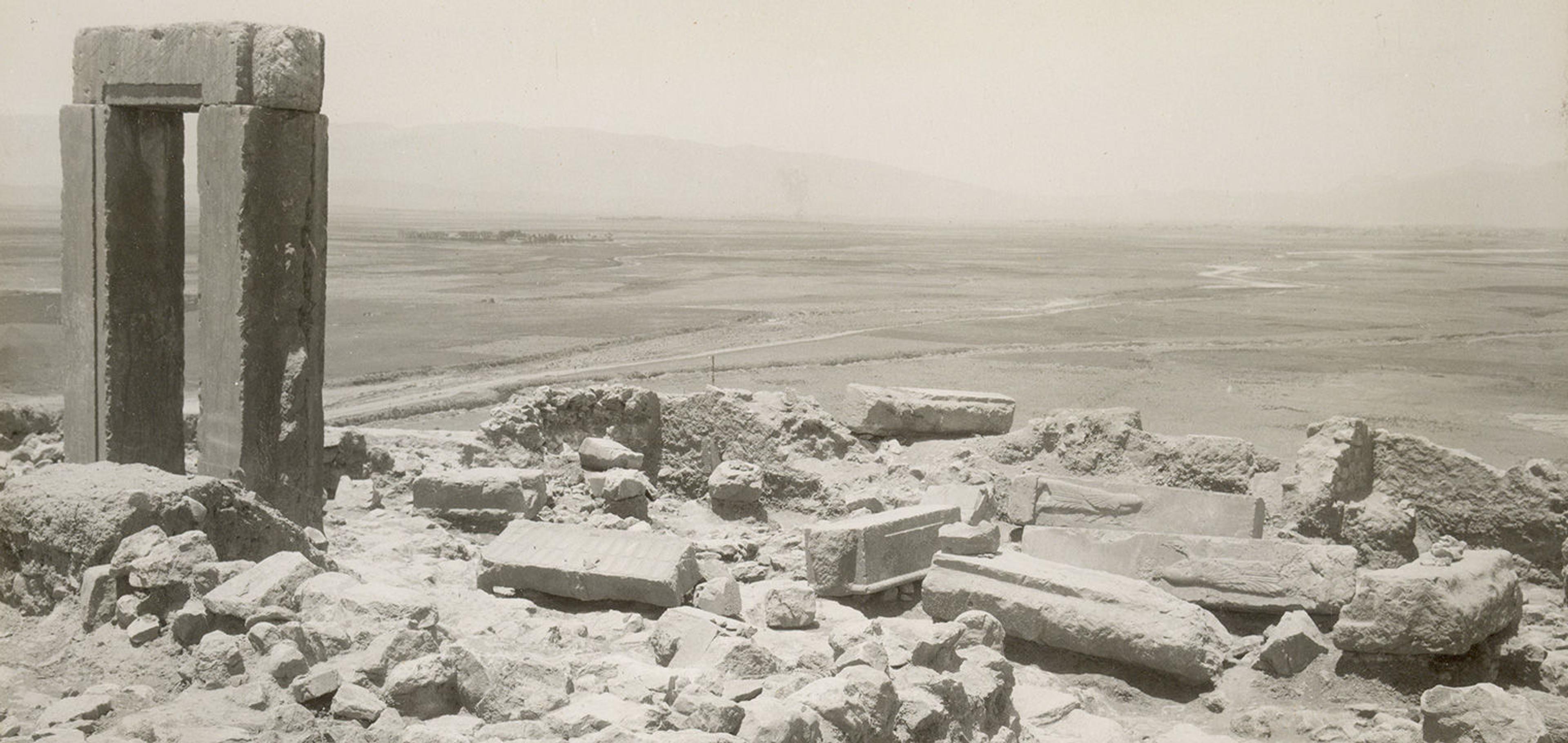
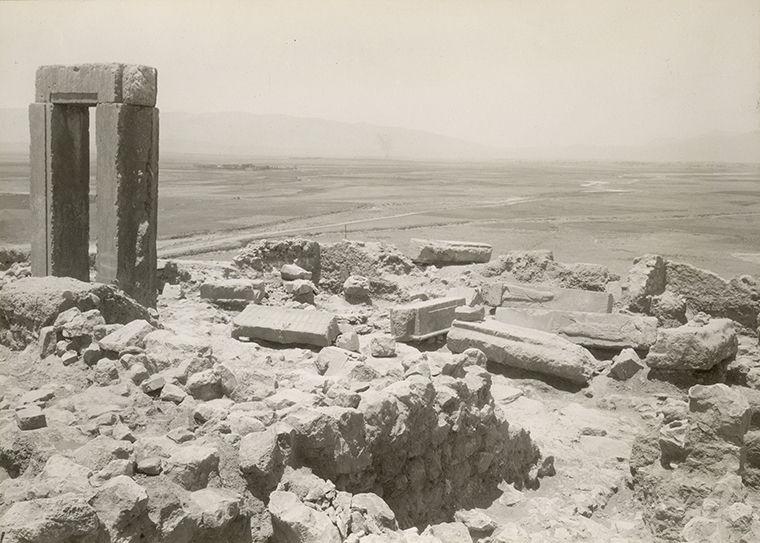
An excavation site in Qasr-i Abu Nasr in southern Iran, 1932–35. Achaemenid-style stones initially enticed excavators surveying the area as a potential site for exploration.
The Persian Expedition of The Metropolitan Museum of Art was first reported in the November 1932 issue of The Metropolitan Museum of Art Bulletin, one month before work began. At the time, the Museum had recently finished a joint excavation to Ctesiphon and was in search of a site it could explore on its own.
The ruins at Qasr-i Abu Nasr in southern Iran were promising. They appeared to contain materials from as far back as the Achaemenid empire (550–330 B.C.) and as late as the Sasanian empire (224–651 A.D.). As Gisela M. A. Richter and Bryson Burroughs noted in the Bulletin: "It is the hope of the Museum that the excavations will not only enrich its collections but will provide valuable archaeological information to help in reconstructing the cultural background of those little-known periods."[1]
A new Timeline of Art History essay by Caitlin Chaves Yates, a former Mellon Curatorial Fellow in the Department of Ancient Near Eastern Art, explores the Museum's excavation and what researchers learned. "Before the Persian Expedition, very few Sasanian sites had been excavated, and the publication of the seals, ceramics, and coins provided valuable comparanda for future work." she writes, adding that around six hundred objects were brought to the Museum of the thousands that were uncovered.
The entirety of Chaves Yates's essay, along with more than one thousand others spanning the full range of the Museum's collection, is available on our Heilbrunn Timeline of Art History.
Note
[1] Gisela M. A. Richter and Bryson Burroughs, "Notes," The Metropolitan Museum of Art Bulletin 27, no. 11 (1932): 244.


