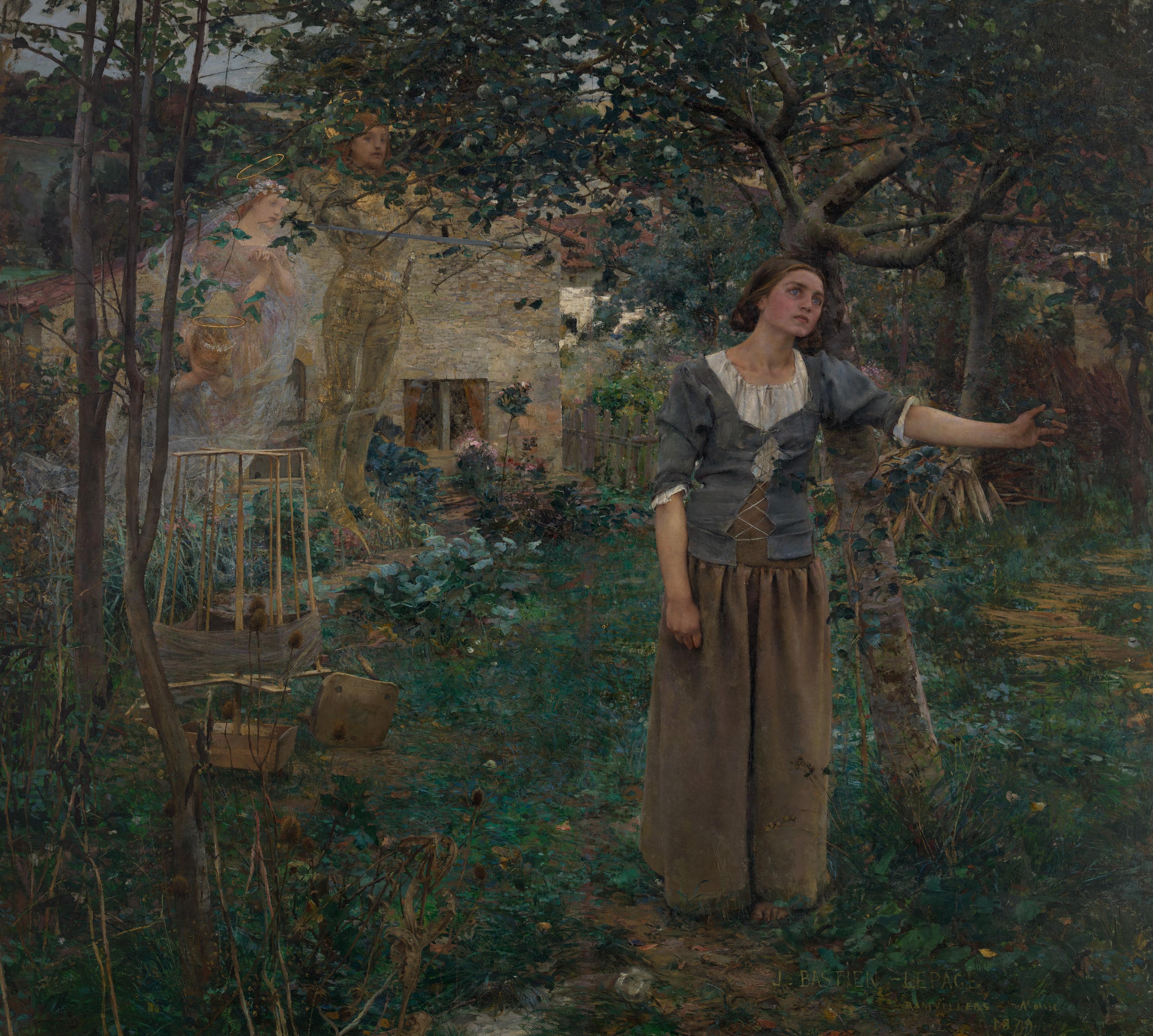
Jules Bastien-Lepage (French, 1848–1884.) Joan of Arc, 1879. Oil on canvas, 100 x 110 in. (254 x 279.4 cm). The Metropolitan Museum of Art, New York, Gift of Erwin Davis, 1889 (89.21.1)
My name is Robert Polidori. I'm a photographer and filmmaker.
People say I photograph empty rooms, but I think of them as portraits of the people who may inhabit or at least use the space without them being there. I'm interested in, you know, the super-ego: how people want to project who they are, who they think they are, who they want to be.
This painting first really caught my attention in late August or early September of 1969, just a few weeks after Woodstock. And I came to The Met high on acid and I was drawn towards her face. It's fitting 'cause she's in an altered state herself. Even though she's looking outwards, she's actually looking inside of herself, like inner visions, subjective states. It's about looking beyond.
I used to look at that painting and smile; I'll always have that memory of my initial beholding of it, and, you know, over time I've taken it much more seriously. The first time I saw the painting, I never even paid much attention that it was the historical figure of Joan of Arc. I was just taken by her eyes.
She claimed to have visions of saints that she identified with. The transparent saints and angels in the back—these are literal illusions that the painter made. She's holding a leaf. Her mind is not really on corporal or material things, but she's holding on just to stay on Earth or she'll levitate out.
Most of the monotheistic religions look at nature as something to be tamed: one of the arrogances of monotheism that science has corrected. I see it as an affirmation that the chaos of nature is greater than man.
The best portraits, when you look at them, you either see love in their face or you fall in love with that face. His faces are not about that. Here, when you gaze in her face it unlocks your own internal gaze of looking into your own soul. That's what I love about this painting. This work reinforced the way that I saw the world. He was looking for an inner truth.