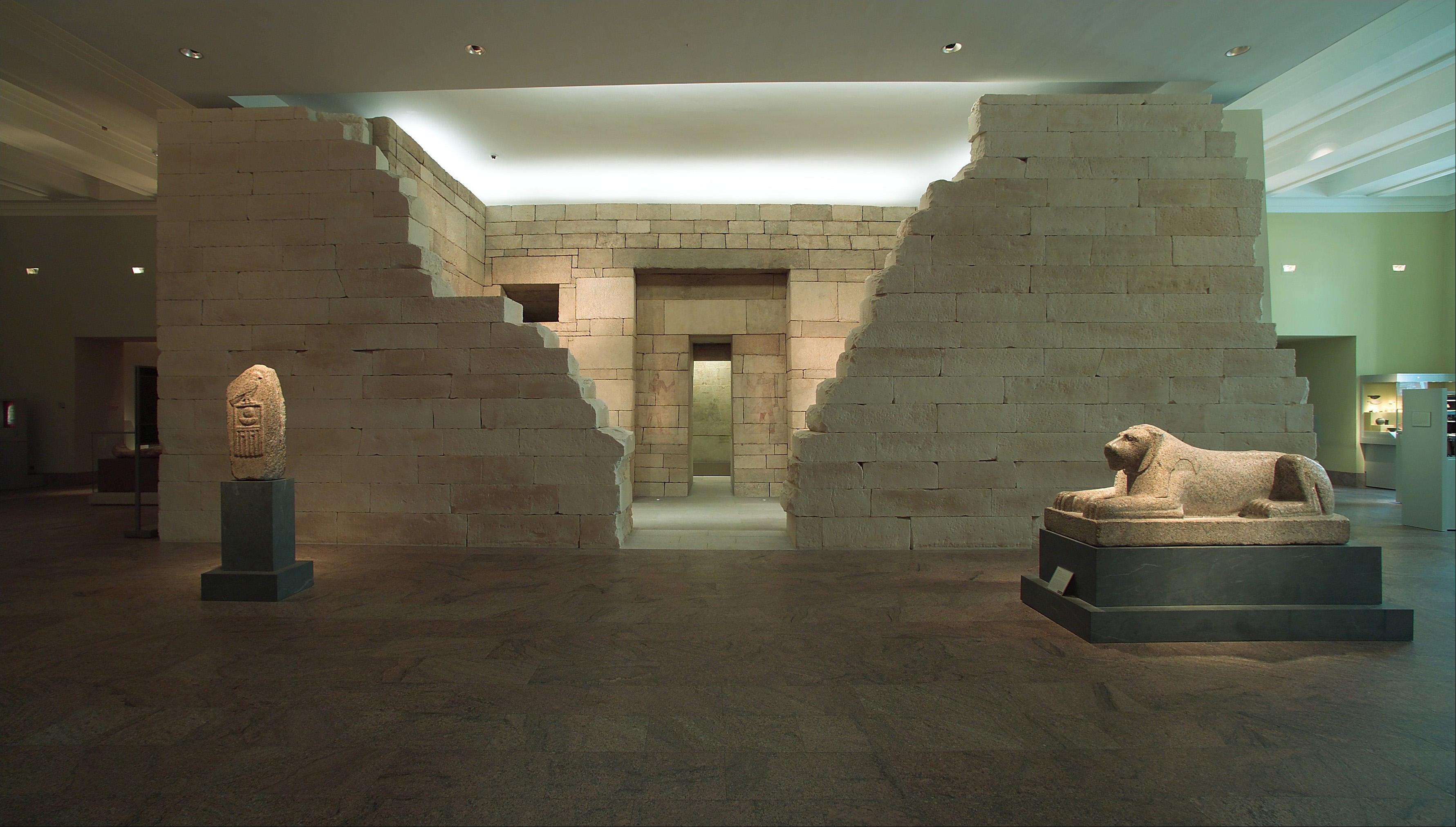
Mastaba Tomb of Perneb, ca. 2381–2323 BCE. From Egypt, Memphite Region, Saqqara. Limestone, paint, 15 ft. 9 7/8 in.(482.2 cm). The Metropolitan Museum of Art, New York, Gift of Edward S. Harkness, 1913 (13.183.3)
My name is Sarah Sze and I'm an artist.
I'm always thinking about how an inanimate object can be live somehow—how you can breathe life into an inanimate object—which is a very old sculptural idea. I always think of my works as being graves: they're dead but remind you of being alive.
Perneb's tomb is this completely inanimate stone telling you how to act; it's instructions.
When you walk in you see Perneb, and then you have the people giving him objects. There's a list on the wall in hieroglyphics of all of the offerings, so it's almost like an Excel sheet of what to bring. Above you see an abundance of pheasants and bulls and bread, piled right up to the ceiling. So it's this packed room.
It's like an animated film conjuring what happened on that very site, in between those walls. And then you go into the next hallway: all of a sudden there's this bizarre window and this figurative sculpture enclosed, that you can't get to. It’s a shock.
The one vitrine that's there has things that were found on that site. One of the things that's very beautiful about these bowls is how pedestrian they are. They were the Styrofoam coffee cup of the time, but they talk so much about a hand holding them, a mouth drinking from them.
And there's one little necklace. It's not even particularly valuable or beautiful or important. It's so close to the neck of a woman. The juxtaposition of that fragility versus this majestic architectural structure with these incredible stones that have lasted... It makes you feel the fragility of you even standing there, knowing that you won't be standing there soon enough.
People come in and then they leave quite quickly. I think a lot of people panic, and it's not just the claustrophobia: it is the intensity of that experience. You feel something alive there. That's why you leave it.
The architecture's so tight. You're very aware that you are filling the negative space, that you are somehow the object that’s being watched or is supposed to perform.
Because it’s a grave, everything is self-consciously trying to incite a conversation with a different place and a different time through the act of offering. That's something that I think is very beautiful about seeing this in the context of a museum. Because this idea of an offering is also, I think, very essential to any work of art. All of the works are really sort of offerings of artists to try and contribute to a conversation beyond their own lives.