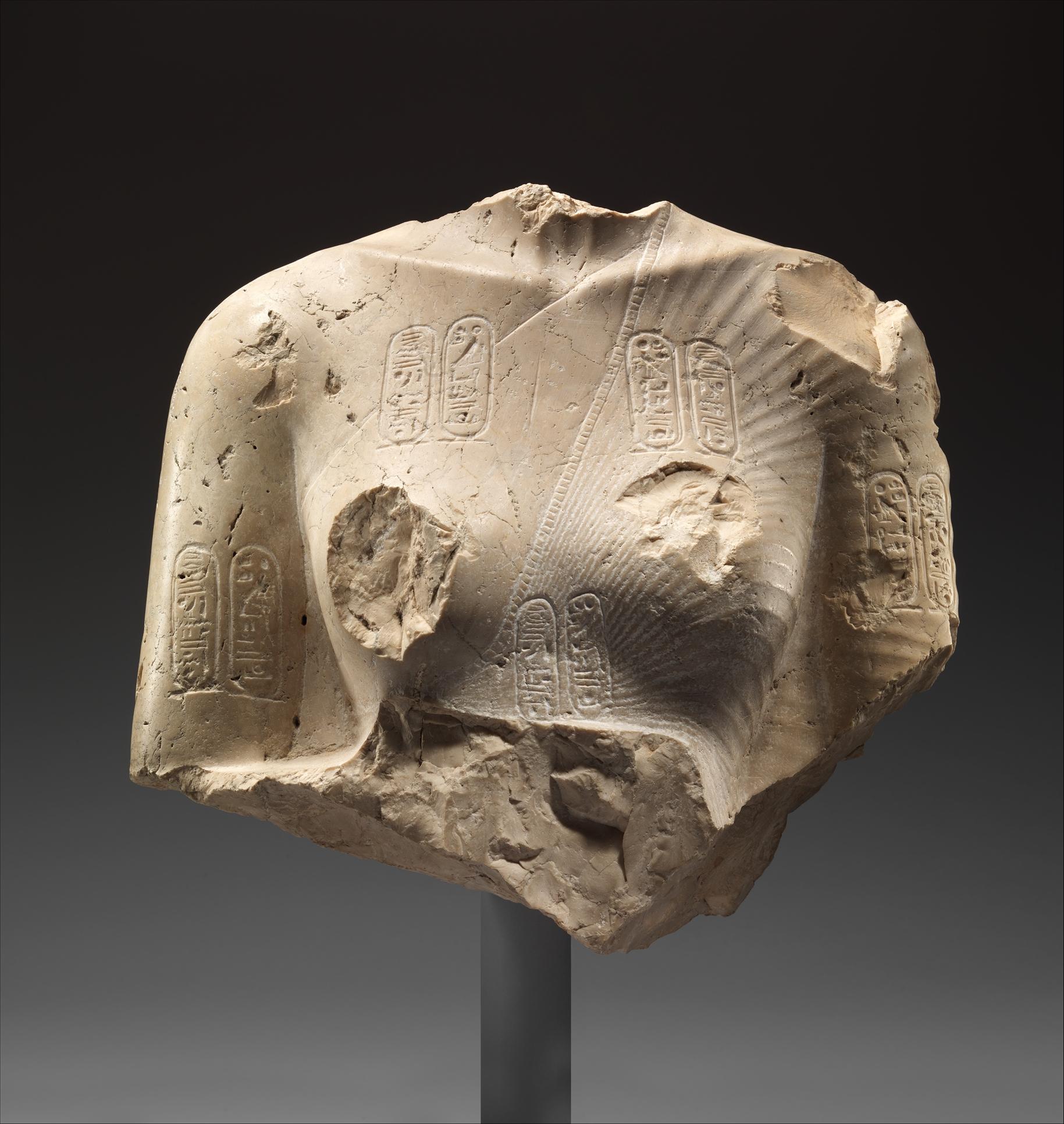
Torso of Nefertiti from a dyad holding a stela in front of the bodies, ca. 1352–1336 BCE. From Egypt, Great Temple of the Aten, pit outside southern wall. Indurated limestone, 11 x 11 5/8 x 8 7/16 in (28 x 29.5 x 21.5 cm). The Metropolitan Museum of Art, New York, Gift of Edward S. Harkness, 1921 (21.9.4)
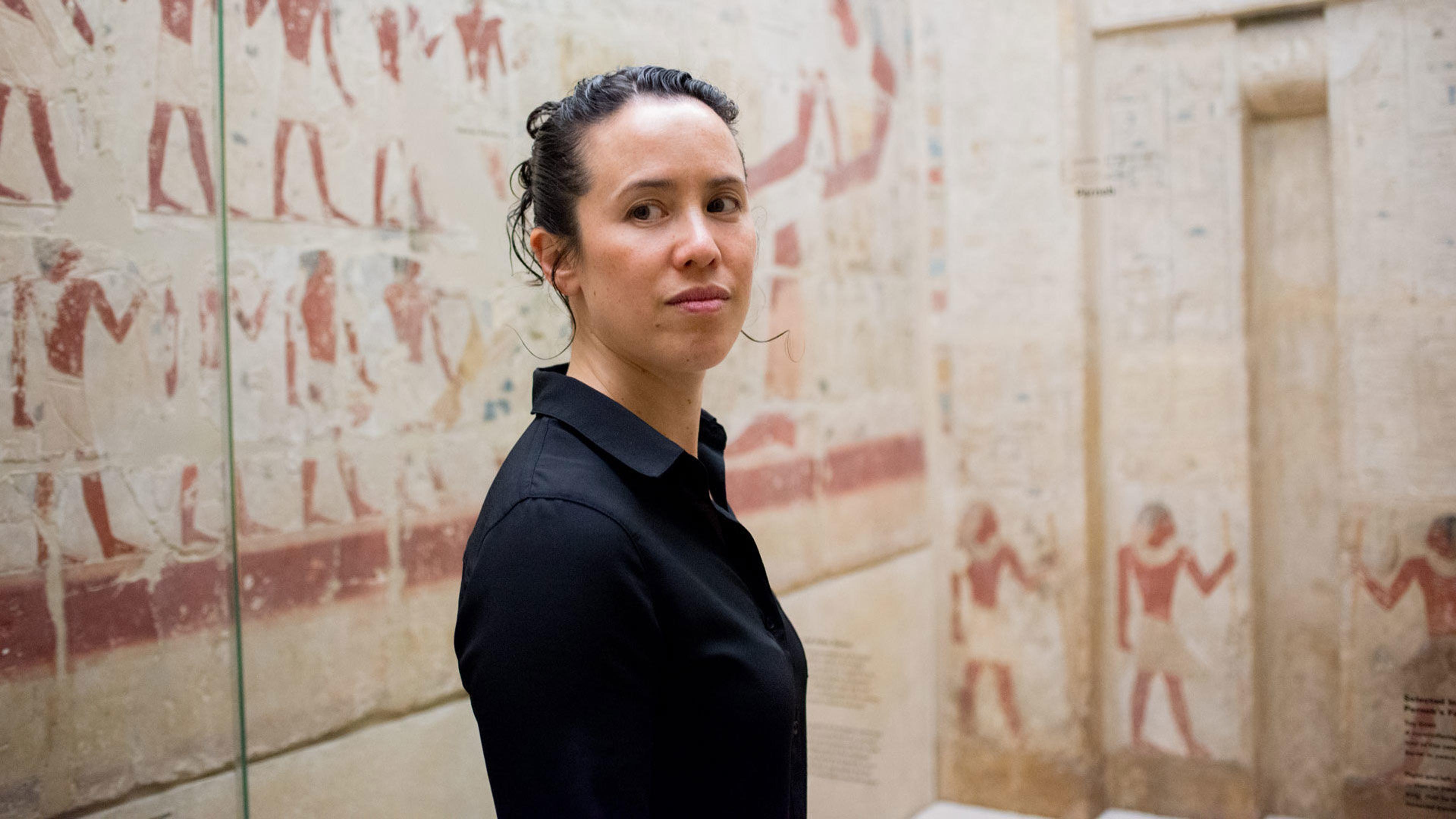
My name is Rona Pondick.
I’m an artist who’s used body fragment in my own work for thirty years now. I grew up in New York and I spent my youth wandering through the Egyptian galleries, not really knowing what my attraction to it was. So it’s been almost like a love affair. And because I encountered it so young it has the resonance of a first love.
There’s no movement in Egyptian art. It’s about a stance. But it’s not like they're dead at all; they feel very alive. They’re not frozen, but they’re not moving. It’s about internal tension, where it feels like it’s going to explode outward.
That fragment case—the way it’s installed—those negative spaces between the fragments are energized, and the whole thing becomes choreographed like a dance.
The fragment is so resonant and powerful. What’s not there informs what is there. The head, the disembodied hands, the torsos become more monumental by not being complete. Your imagination is activated; you become more engaged as a viewer.
I dissect it. I look at the fragments in the case, and I see the forms repeat over and over and over again. If I compare just the lips, they feel as though they’re the same set of lips. It’s not about likeness: it’s about capturing the essence of the form. It’s so simple that it conveys so much so quickly. There’s incredible refinement of form.
Maybe the fact that you focus on the fragment with such concentration makes it more powerful. It’s poetic. The head is very worn away—I just accept it as a very beautiful thing. The winds, rain will affect a stone that’s sitting outside. It’s inevitable. We all want everything to never change, but it’s not possible.
And I know I look very differently than an art historian does. I’m a maker, so the first thing I ask myself is, “How was this made? If I had to make this now, how would I make it?”
I look at the fractures as though they were intentionally made that way, like this didn’t happen by a force of nature, someone didn’t just lop off its nose. It really was made and it always looked like this. It looks perfect. It looks so strong and believable and magical.