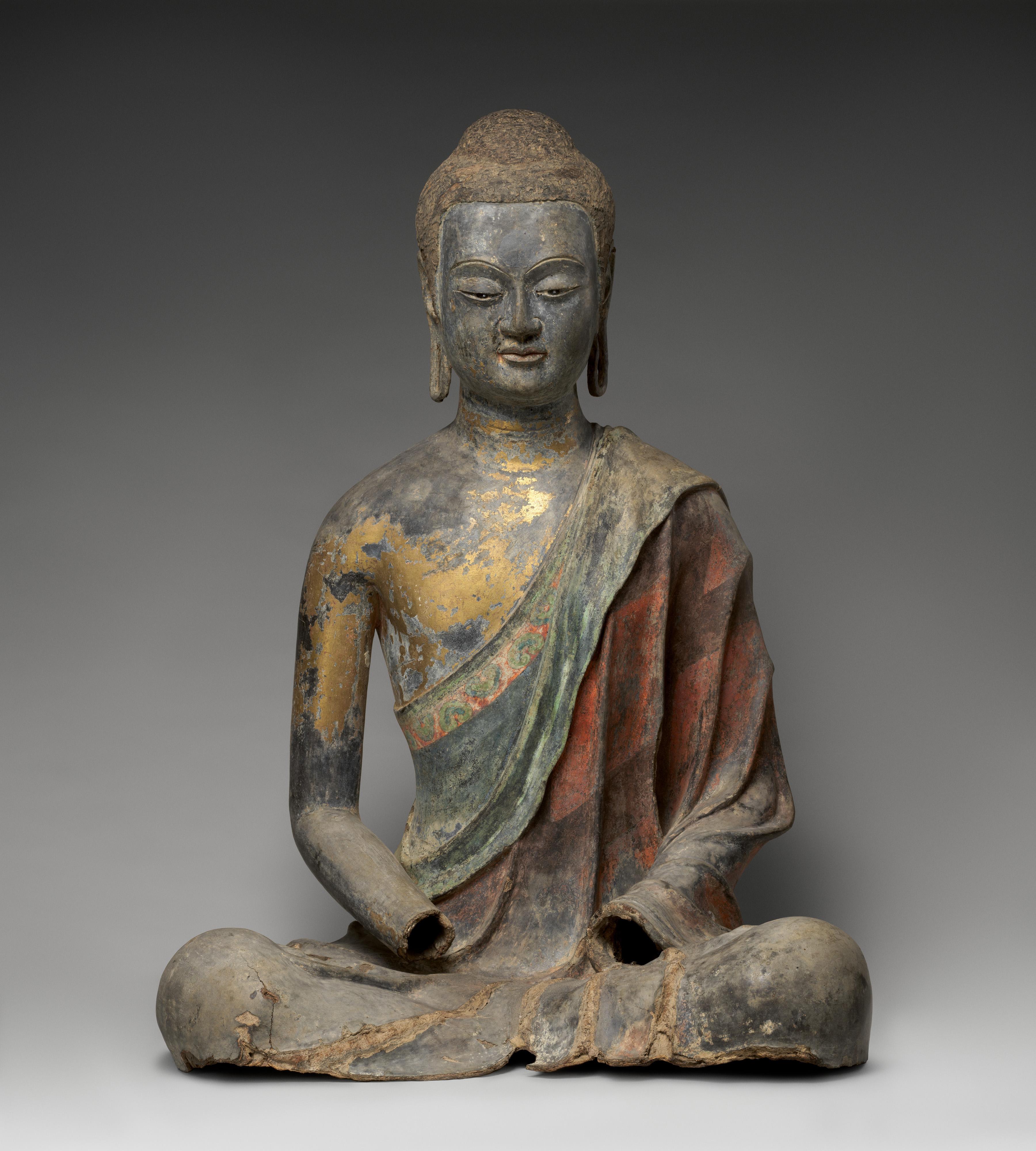
Buddha, probably Amitabha, early 7th century. Chinese, Tang dynasty (618–907). Dry lacquer with polychrome pigment and gilding, 38 x 27 x 22 1/2 in. (96.5 x 68.6 x 57.1 cm). The Metropolitan Museum of Art, New York, Rogers Fund, 1919 (19.186)
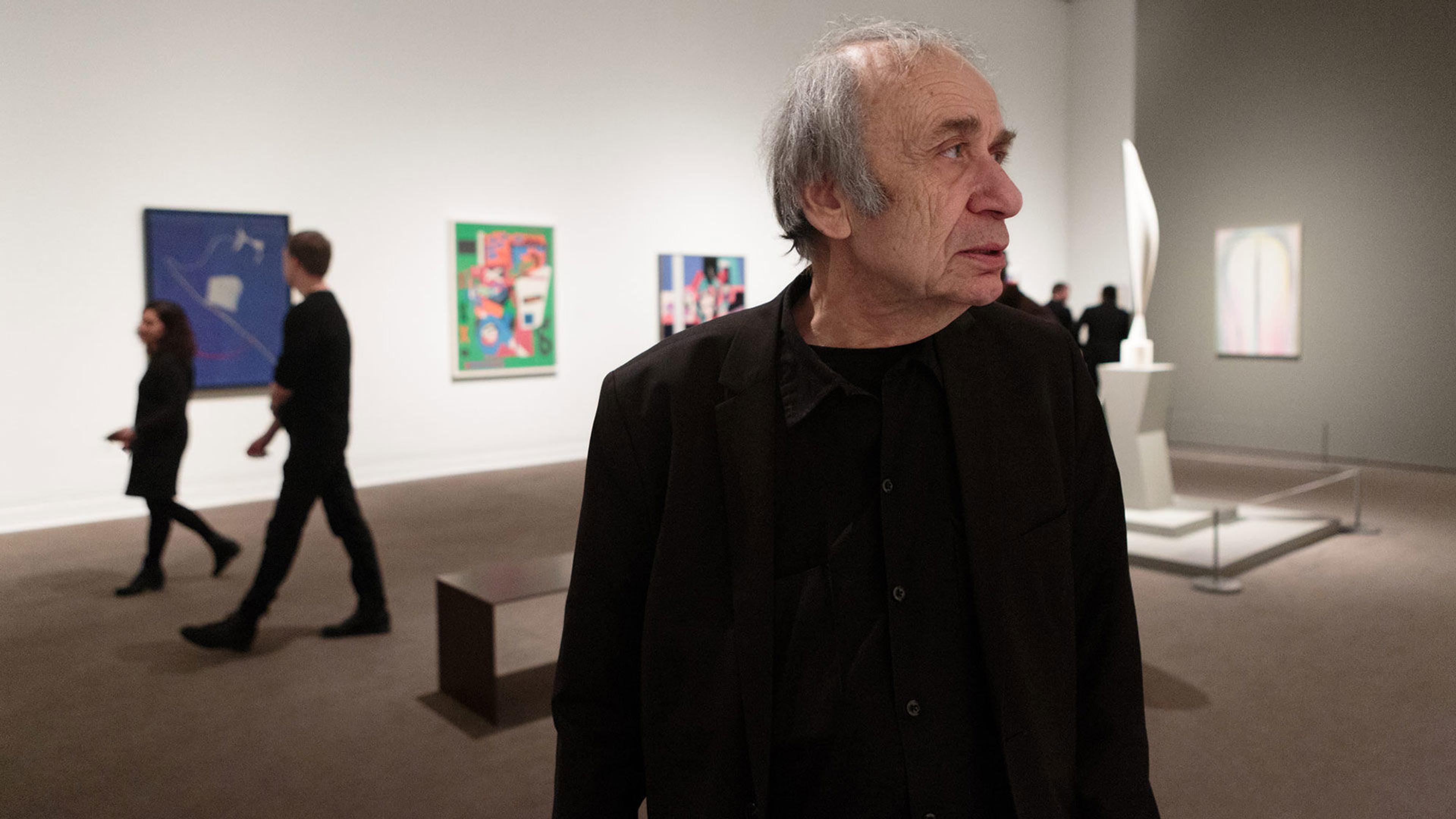
I'm Thomas Struth. I'm a photographer.
Manhattan is so much like a city of dreams—the dreams that people had present in the architecture of the city. To find a silent place in this city is not so easy. And I find that Gallery 208 is like an oasis in the museum because it's a space of silence. You maybe come to terms with your observations.
It's a little bit like a typology of Chinese Buddhist sculpture. The way the pieces are installed is quite minimalist—these five pieces on either side—and you see them in perspective, lined up, facing the space. That's super beautiful.
I grew up as a Christian. I'm not a believer anymore, but I'm still attracted to spirituality. It seems to be much easier to identify with this moment of stillness than with Jesus on the cross. It has a lot to do with the gaze: the eyelids are half open, a little bit down. The figure is both looking outside but also looking inside.
It's interesting to see how differently they are dealt with, to read what the sculptor wanted to depict. There's one piece—it's almost like the face of an emperor. It's a little authoritarian. And there's one where the expression is extremely mild and inward. And there's one, which seems to depict a child that smiles and turns it's head around on the side and seems to be playing.
These sculptures are almost life-size and they're old. You could say that you see the human figure, aged and humble. I think I'm interested in this notion of humbleness. Can we afford humbleness these days?
These pieces were certainly made for temples—a sign of meditation. It's also what happens in a museum. You both look at the artwork but also going inside, trying to figure out what does it mean. Can it change my life? Can it transform my opinion or my existence in some small or larger way? Does it clarify anything? But in general today artworks don't have a defined purpose—it's a kind of open field.
Whatever people believe in is debatable. I'm not a Buddhist, but this contemplative space of silence I find—in the times we live in—more attractive and more recommendable. It's an extremely beautiful gallery.