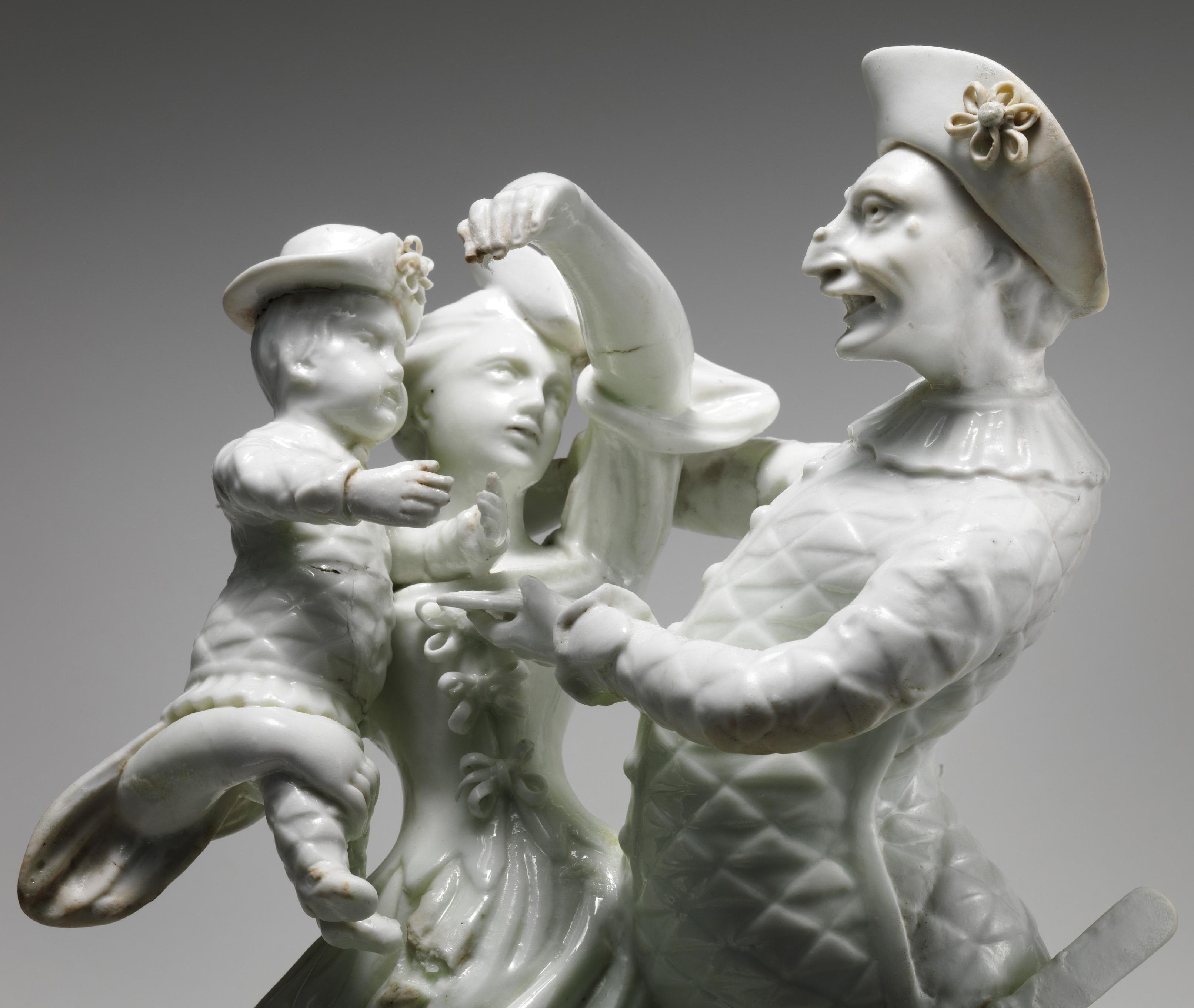
Harlequin family (detail), ca. 1740–45. Factory Villeroy (French, 1734/37–1748). Tin-glazed soft-paste porcelain, 14 3/8 × 8 1/4 × 6 3/8 in. (36.4 × 20.8 × 16.2 cm). The Metropolitan Museum of Art, New York, The Jack and Belle Linsky Collection, 1982 (1982.60.255)
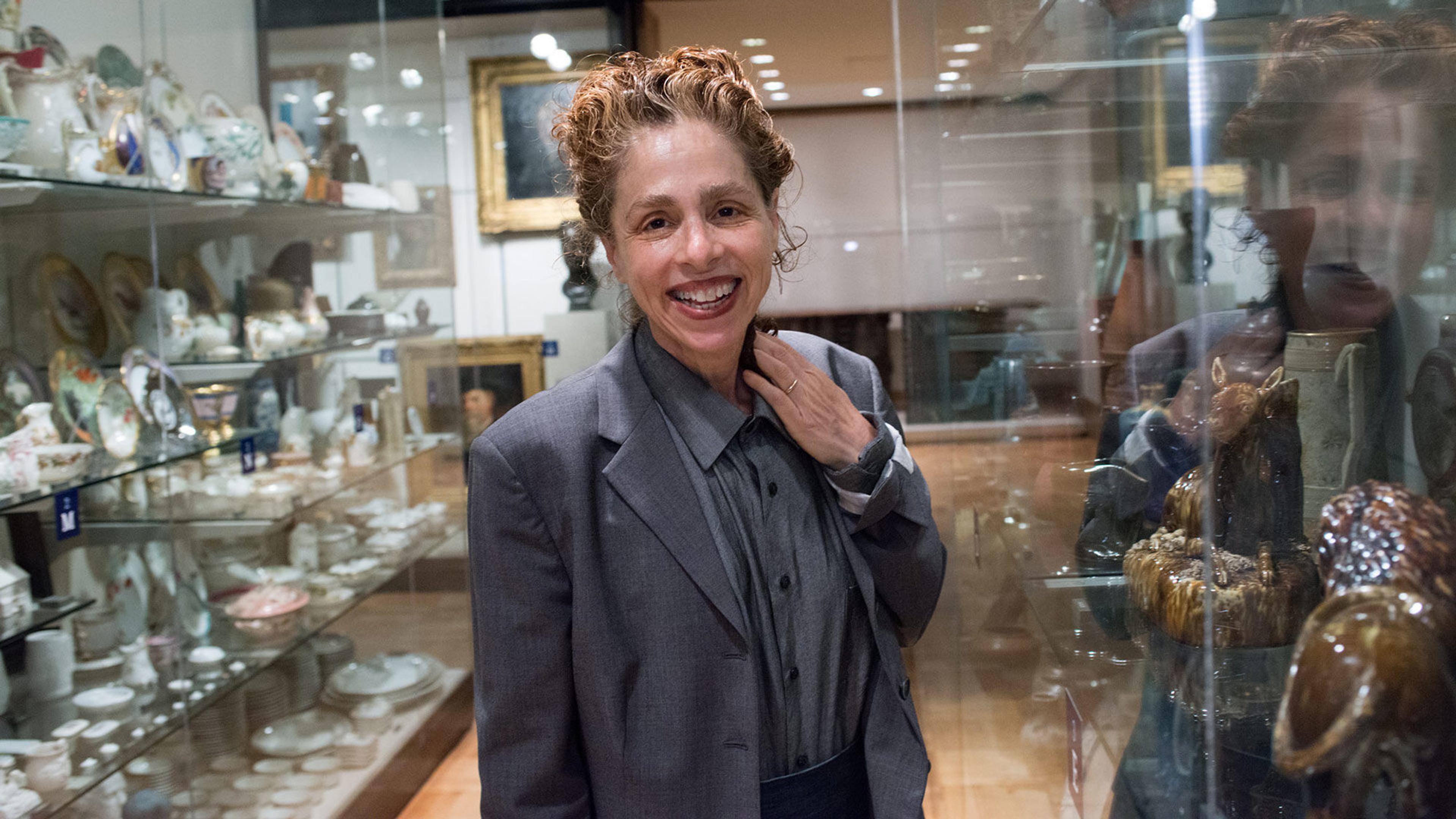
I’m Ann Agee.
I studied painting. I was in school where everybody was showing their paintings. And it just became a bit boring after a while that the status of the object was already art—whether it was good or bad, it was already serious.
I became smitten with ceramic objects after realizing that if you put your painting onto a functional object, then it dropped in status. And, I liked that challenge.
I actually didn’t like figurines when I first saw them—I was kind of horrified by them. I learned that they would not have been sitting like this. They were made originally for the dessert table and taken away with the dishes. When I heard that, I just thought, “They’re not sculpture—they’re functional objects.” And that made them very interesting to me.
And the Met is an interesting place, because everything’s all mixed up here. You see paintings and sculpture and functional objects—I love that.
I think having a figurine in a room is rather surreal. The scale shift is a little bit like Alice in Wonderland. That man’s smiling, laughing face draws you right over to him, and then you’re wrapped up in that piece.
The man is so odd. He’s got a couple of moles on him and this wonderful nose. Her face is a little bit more of a stock character popped out of the mold. She’s delicate and beautiful, but he’s really hilarious. These are street theater characters. They’re sort of like hippies, I think. They’re bohemian, they’re jokey, and they’re lighthearted and sweet.
I see it as slightly subversive in the room itself. I don’t think they are the inhabitants of this room, so I think that the piece being there is slightly twisted and a great relief. They’re who you want to be, but maybe you can’t be because you’re too stuffy. They represent total fun and lively embrace of life and a kind of resilience.
There is such a desire in our time to have an author of an artwork, and this is authorless. The Met is full of wonderful models of lost form. It’s of its period, but as an artist I’m inspired by it. This is like a Bernini sculpture to me.
They’re joined at the hips, and then all these parts are moving around. There’s this incredible flow—they’re flying. There’s so much movement and openness. It’s just this spinning top over there in the room—it’s really alive.