狮子
Artwork Details
- 标题: 狮子
- 创作日期: 1200年以后
- 地域: 卡斯蒂利亚-莱昂,来自布尔戈斯附近圣佩罗德阿兰萨修道院中的会堂
- 文化: 西班牙
- 材料: 从湿壁画转移到帆布上
- 尺寸: 10英尺11英寸 x 11英尺 (3.3 x 3.4米)
- 来源信息: 修道院分馆收藏,1931年
- 藏品编号: 31.38.1a, b
- Curatorial Department: Medieval Art and The Cloisters
Audio
11. Lion
Gallery 1
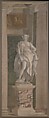
NARRATOR #2/JANNIE WOLF: This early thirteenth-century fresco and the one on the other side of the doorway are superb examples of Romanesque wall painting. Originally, they adorned the walls of the chapter house of the monastery at San Pedro de Arlanza in northern Spain. There, the fresco on the left—a threatening lion with the face of an angry mustachioed man—faced a second lion on the other side of the entrance. The winged, horned, dragon on the right similarly faced off against a griffin. The border strip under the lion includes an aquatic motif, while the one under the dragon represents fanciful scenes of unknown origin: a pair of bird sirens or harpies argues between themselves; a lyre-playing donkey entertains a fox and a goat. The style of these frescoes is comparable to that of Spanish manuscript illuminations of the time. This style was also probably influenced by Islamic textiles. Much of Southern Spain was Islamic at this time, and much of Spanish Romanesque art shows the effects of the cross-fertilization of Christian and Islamic cultures. The room for which these frescoes were painted was about thirty-four feet square, with twelve-foot ceilings, and covered from floor to ceiling with frescoes. The monastery fell into ruin in the nineteenth century and these frescoes were removed from their original location in the early twentieth century.
More Artwork
Related Content
 Free to download
Research Resources
The Met provides unparalleled resources for research and welcomes an international community of students and scholars. The Met's Open Access API is where creators and researchers can connect to the The Met collection. Open Access data and public domain images are available for unrestricted commercial and noncommercial use without permission or fee.
To request images under copyright and other restrictions, please use this Image Request form.
Feedback
We continue to research and examine historical and cultural context for objects in The Met collection. If you have comments or questions about this object record, please contact us using the form below. The Museum looks forward to receiving your comments.
Content Notice
The Metropolitan Museum of Art presents over 5,000 years of art from around the world, and our online collection reflects ongoing work conducted over the course of our more than 150-year history. You may encounter objects or images that may be inappropriate for some viewers or information that may be outdated.