Petticoat panel
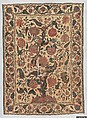
Experts at customizing exports, Indian chintz makers had manufactured specific designs for their earlier trading partners in the Near East, Africa, and Asia. Similarly, designs were developed to meet the needs of individual European markets and to appeal to regional tastes. This type of pattern, with lively and anecdotal figural compositions—from a semimilitary parade to couples visiting and dining—was intended for the Dutch market. It found particular favor in the northern Netherlands province of Friesland and especially in the town of Hindelopen, where it would most likely have been everyday wear for a wealthy farmer's wife.
Artwork Details
- Title: Petticoat panel
- Date: third quarter 18th century
- Culture: Indian, Coromandel Coast, for Dutch market
- Medium: Cotton, painted resist and mordant, dyed
- Dimensions: 33 5/8 x 67 1/2 in. (85.4 x 171.5 cm)
- Classification: Textiles-Painted and Printed
- Credit Line: Purchase, Friends of European Sculpture and Decorative Arts Gifts, 1992
- Object Number: 1992.82
- Curatorial Department: European Sculpture and Decorative Arts
More Artwork
Related Content
 Free to download
Research Resources
The Met provides unparalleled resources for research and welcomes an international community of students and scholars. The Met's Open Access API is where creators and researchers can connect to the The Met collection. Open Access data and public domain images are available for unrestricted commercial and noncommercial use without permission or fee.
To request images under copyright and other restrictions, please use this Image Request form.
Feedback
We continue to research and examine historical and cultural context for objects in The Met collection. If you have comments or questions about this object record, please contact us using the form below. The Museum looks forward to receiving your comments.
Content Notice
The Metropolitan Museum of Art presents over 5,000 years of art from around the world, and our online collection reflects ongoing work conducted over the course of our more than 150-year history. You may encounter objects or images that may be inappropriate for some viewers or information that may be outdated.