English
DonateMembershipTickets

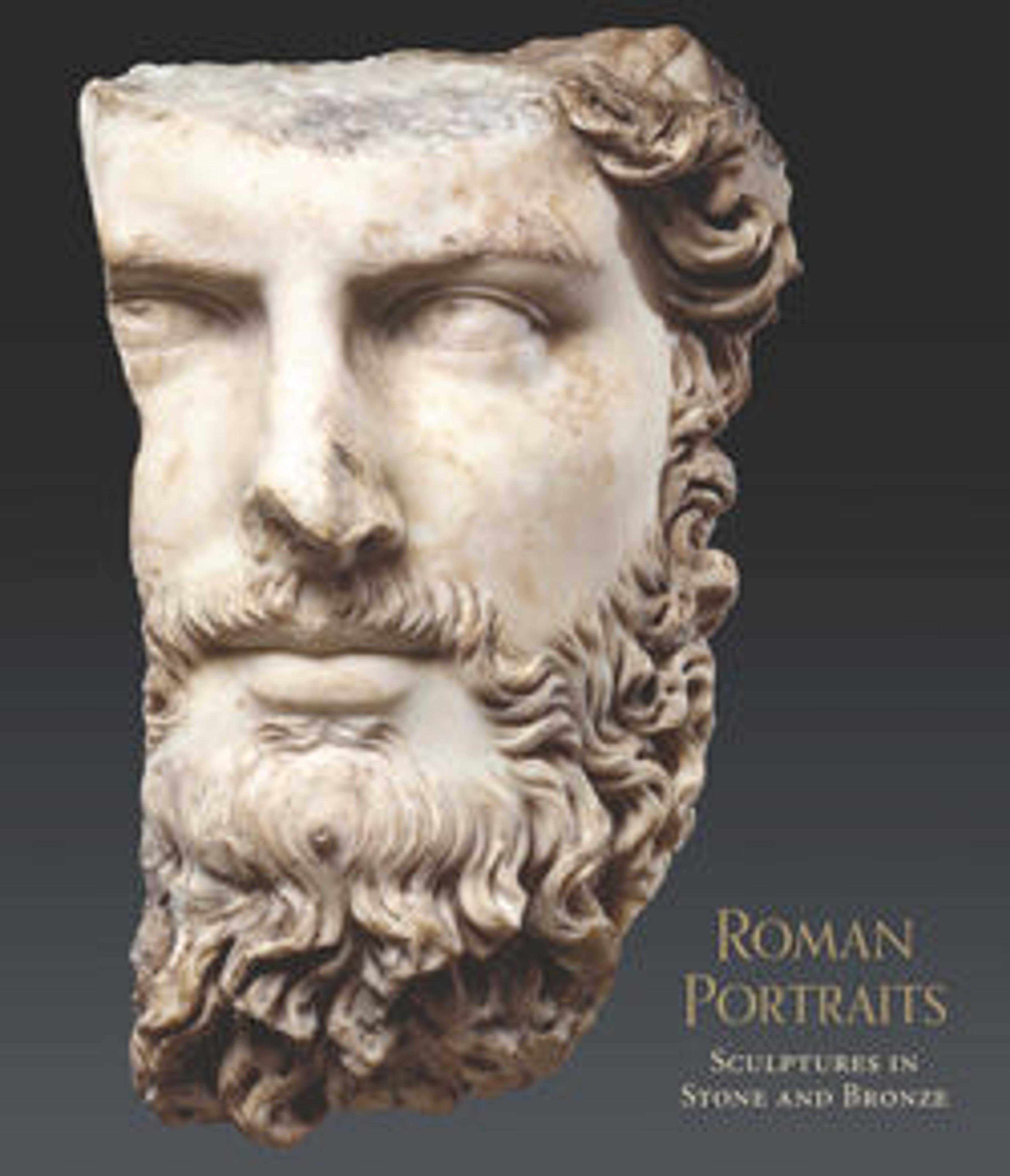
Marble portrait head of Antinoos

ca. 130–138 CE
On view at The Met Fifth Avenue in Gallery 162
Antinoos, the young beloved of the Roman emperor Hadrian, drowned in the River Nile during an imperial visit to Egypt in A.D. 130. In accordance with Egyptian custom, the distraught emperor initiated a cult venerating the dead youth, for the Egyptians believed that those who met such a death became assimilated to Osiris, god of the Underworld. Outside Egypt, numerous statues of Antinoos were erected that represented him as a beautiful youth, often in the guise of Dionysos, a Greek god closely related to Osiris. This head is a good example of the sophisticated portrait type created by imperial sculptors to incorporate what must have been actual features of the boy in an idealized image that conveys a god-like beauty. The ovoid face with a straight brow, almond-shaped eyes, smooth cheeks, and fleshy lips is surrounded by abundant tousled curls. The ivy wreath encircling his head associates him with Dionysos, a guarantor of renewal and good fortune.

Artwork Details

Object Information
  • Title: Marble portrait head of Antinoos
  • Period: Late Hadrianic
  • Date: ca. 130–138 CE
  • Culture: Roman
  • Medium: Marble
  • Dimensions: Overall: 9 1/2 x 8 1/4 in. (24.1 x 21 cm)
  • Classification: Stone Sculpture
  • Credit Line: Gift of Bronson Pinchot, in recognition of his mother Rosina Asta Pinchot, 1996
  • Object Number: 1996.401
  • Curatorial Department: Greek and Roman Art
More Artwork
The Farnese Table, Jacopo [Giacomo] Barozzi da Vignola  Italian, Marble of different colors, semiprecious stones, Egyptian alabaster, residue of paint of different colors on the piers, Italian, Rome
Designer Designed by Jacopo [Giacomo] Barozzi da Vignola
Marble piers carved by Guglielmo della Porta
Pietre Dure top attributed to Giovanni Mynardo (Jean Ménard)
ca. 1565–73
Statue of Dionysos leaning on a female figure ("Hope Dionysos"), Pacetti, Vincenzo, Marble, Roman
Restored by Pacetti, Vincenzo
27 BCE–68 CE
Marble female figure, Marble, Cycladic
Cycladic
4500–4000 BCE
Marble sarcophagus with the Triumph of Dionysos and the Seasons, Marble, Roman
Roman
ca. 260–270 CE
Marble grave stele of a young woman and servant, Marble, Pentelic, Greek, Attic
Greek, Attic
ca. 400–390 BCE

Research Resources

The Met provides unparalleled resources for research and welcomes an international community of students and scholars. The Met's Open Access API is where creators and researchers can connect to the The Met collection. Open Access data and public domain images are available for unrestricted commercial and noncommercial use without permission or fee.

To request images under copyright and other restrictions, please use this Image Request form.

Feedback

We continue to research and examine historical and cultural context for objects in The Met collection. If you have comments or questions about this object record, please contact us using the form below. The Museum looks forward to receiving your comments.

Send feedback

Content Notice

The Metropolitan Museum of Art presents over 5,000 years of art from around the world, and our online collection reflects ongoing work conducted over the course of our more than 150-year history. You may encounter objects or images that may be inappropriate for some viewers or information that may be outdated.