Walking-Stick Flute/Oboe
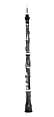
Georg Henrich Scherer was the last and most important member of a well-known eighteenth-century family of German woodwind makers. Among his clients was Frederick the Great, who played and owned a small collection of flutes. The king pursued a scientific interest in testing the acoustical attributes of different materials, which may account in part for the use of narwhal tusk. This instrument is said to have been a gift from Frederick to his finance minister, Friedrich von der Horst. Only two walking-stick instruments made of an undivided narwhal tusk are known to survive, this example and one at the Hessiche Landesmuseum in Darmstadt. Both instruments bear the stamp of Georg Henrich Scherer.
Artwork Details
- Title: Walking-Stick Flute/Oboe
- Maker: Georg Henrich Scherer (German, Butzbach 1703–1778)
- Date: ca. 1750–57
- Geography: Butzbach, Germany
- Culture: German
- Medium: Narwhal (narwhahl) tusk, ivory, gilt brass
- Dimensions: 1 3/8 × 42 1/4 × 1 3/8 in. (3.5 × 107.3 × 3.5 cm)
- Classification: Aerophone
- Credit Line: Purchase, Amati Gifts, 2006
- Object Number: 2006.86a–c
- Curatorial Department: Musical Instruments
More Artwork
Related Content

Research Resources
The Met provides unparalleled resources for research and welcomes an international community of students and scholars. The Met's Open Access API is where creators and researchers can connect to the The Met collection. Open Access data and public domain images are available for unrestricted commercial and noncommercial use without permission or fee.
To request images under copyright and other restrictions, please use this Image Request form.
Feedback
We continue to research and examine historical and cultural context for objects in The Met collection. If you have comments or questions about this object record, please contact us using the form below. The Museum looks forward to receiving your comments.
Content Notice
The Metropolitan Museum of Art presents over 5,000 years of art from around the world, and our online collection reflects ongoing work conducted over the course of our more than 150-year history. You may encounter objects or images that may be inappropriate for some viewers or information that may be outdated.