丹铎神庙将于4月26日(星期日)至5月8日(星期五)关闭。大都会艺术博物馆第五大道馆将于5月4日(星期一)关闭。

规划您的参观
我们正在努力尽快翻译此页面。感谢您的理解。

Search for Art

1-42 of 463,097 results for the Hunt of the Unicorn Tapestry
Sort by:
Show only
Images
Date
For BCE dates, enter a negative number. E.g. For 2000 BCE, enter -2000.
Object type / material
Geographic location
Department
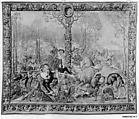
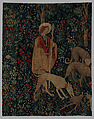
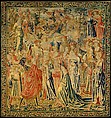
The Unicorn Purifies Water (from the Unicorn Tapestries), Wool warp with wool, silk, silver, and gilt wefts, French (cartoon)/South Netherlandish (woven)
French (cartoon)/South Netherlandish (woven)
1495–1505
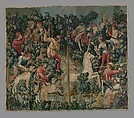
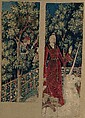
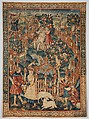
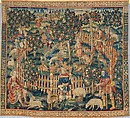
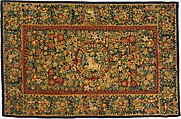
The Unicorn Rests in a Garden (from the Unicorn Tapestries), Wool warp with wool, silk, silver, and gilt wefts, French (cartoon)/South Netherlandish (woven)
French (cartoon)/South Netherlandish (woven)
1495–1505
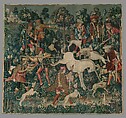
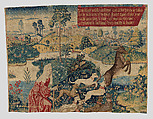
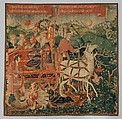
The Unicorn Crosses a Stream (from the Unicorn Tapestries), Wool warp with wool, silk, silver, and gilt wefts, French (cartoon)/South Netherlandish (woven)
French (cartoon)/South Netherlandish (woven)
1495–1505
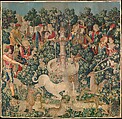
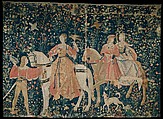
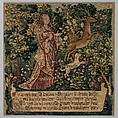
The Unicorn Surrenders to a Maiden (from the Unicorn Tapestries), Wool warp with wool, silk, silver, and gilt wefts, French (cartoon)/South Netherlandish (woven)
French (cartoon)/South Netherlandish (woven)
1495–1505
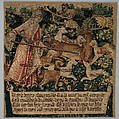
The Unicorn Surrenders to a Maiden (from the Unicorn Tapestries), Wool warp with wool, silk, silver, and gilt wefts, South Netherlandish
South Netherlandish
1495–1505
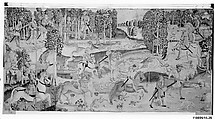
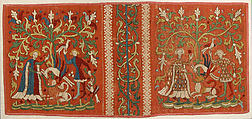
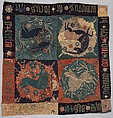
The Falcon Hunt, Wool, and silk in slit tapestry weave with some non-horizontal or eccentric wefts., Southern Netherlands
Southern Netherlands
ca. 1500–1530
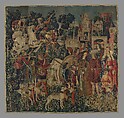
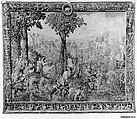
The Hunters Enter the Woods (from the Unicorn Tapestries), Wool warp, wool, silk, silver, and gilt wefts, French (cartoon)/South Netherlandish (woven)
French (cartoon)/South Netherlandish (woven)
1495–1505
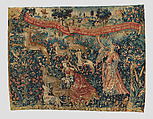
The Unicorn Defends Himself (from the Unicorn Tapestries), Wool warp with wool, silk, silver, and gilt wefts, French (cartoon)/South Netherlandish (woven)
French (cartoon)/South Netherlandish (woven)
1495–1505
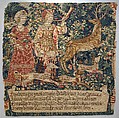
Bowl with The Virgin and the Unicorn and arms of Matthias Corvinus and Beatrice of Aragon, Maiolica (tin-glazed earthenware), Italian, Pesaro
Italian, Pesaro
probably ca. 1486–88
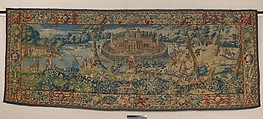
The Hunters Return to the Castle (from the Unicorn Tapestries), Wool warp with wool, silk, silver, and gilt wefts, French (cartoon)/South Netherlandish (woven)
French (cartoon)/South Netherlandish (woven)
1495–1505
Tapestry Room from Croome Court, Robert Adam  British, Scottish, Plaster, pine, mahogany, bronze-gilt, marble, lapis lazuli, steel; wool and silk (22-24 warps per inch, 9-10 per centimeter), British, Worcestershire with French, Paris (Gobelins) tapestry
Multiple artists/makers
1763–71
Aquamanile in the Form of a Unicorn, Copper alloy, German
German
ca. 1425–50
Unicorn Doorway, Volcanic stone, French
French
early 16th century
Mystic Chase of the Unicorn, Brass, German
German
late 15th century
After the Hunt, Gustave Courbet  French, Oil on canvas
Gustave Courbet
ca. 1859
Halt of the Hunt, Carle (Charles André) Vanloo  French, Oil on canvas
Carle (Charles André) Vanloo
ca. 1737
The Return from the Hunt, Piero di Cosimo (Piero di Lorenzo di Piero d'Antonio)  Italian, Tempera and oil on wood
Piero di Cosimo (Piero di Lorenzo di Piero d'Antonio)
ca. 1494–1500
The Thomas Hunt and the America, James Bard , American (1815-1897) American, Oil on canvas, American
James Bard
1852
Tapestry with Dragons and Flowers, Silk tapestry (kesi), Eastern Central Asia
Eastern Central Asia
11th–12th century
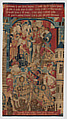
Tapestry with the Annunciation, Wool warp, wool with a few metallic wefts, South Netherlandish
South Netherlandish
ca. 1410–20
Woodwork and ceiling from the Tapestry Room from Croome Court, Robert Adam  British, Scottish, Plaster, wood, tapestry, British
Multiple artists/makers
ca. 1760–69
Hunt of the Caledonian Boar, Auguste Bretoneau, Gold, painted enamel, French, Paris or Blois
Auguste Bretoneau
Antonio Tempesta
ca. 1645–50
Hunt Scene, Three Wolves Attacking a Horse, Wilhelm Hunt Diederich  American, born Hungary, Wrought iron
Wilhelm Hunt Diederich
ca. 1920
"Diana, Goddess of the Hunt", Folio from the Davis Album, 'Ali Quli Jabbadar  Iranian, Ink, opaque watercolor, and gold on paper
'Ali Quli Jabbadar
early 17th century
Still Hunt, Edward Kemeys  American, Bronze, American
Edward Kemeys
1894
Tapestry Tunic, Camelid wool, Wari
Wari
7th–9th century
The Rajah Starting on a Hunt, Edwin Lord Weeks  American, Oil on canvas., American
Edwin Lord Weeks
ca. 1895
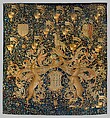
Fragment of a Tapestry or Wall Hanging, Wool and linen, Upper Rhenish
Upper Rhenish
ca. 1420–30
The Horses of Anahita or The Flight of Night, William Morris Hunt  American, Plaster, tinted, American
William Morris Hunt
ca. 1848–50, cast by 1880
Bear Hunt, Flanders (Brussels?), Pen and brown ink, Flemish
Flanders (Brussels?)
ca. 1470–90
Pendant with a Triton Riding a Unicorn-like Sea Creature, Reinhold Vasters  German, Baroque pearl mounted with enameled gold set with pearls, emeralds and rubies and with pendent pearls, probably German or French
Reinhold Vasters
ca. 1870–95
Girl at the Fountain, William Morris Hunt  American, Oil on canvas, American
William Morris Hunt
1852–54
Part of Khety's desert hunt scene, Limestone, paint
ca. 2051–2000 B.C.
Chimneypiece from the Tapestry Room from Croome Court, Joseph Wilton  British, Marble, lapis lazuli, British
Joseph Wilton
John Wildsmith
1760
Pleasures of the Hunt, Ink, opaque watercolor, gold and silver on paper, North India, Punjab Hills, Kangra
North India, Punjab Hills, Kangra
ca. 1800
Lion Hunt, Moderno (Galeazzo Mondella)  Italian, Bronze, Italian
Moderno (Galeazzo Mondella)
16th century
Scarab with the Name of Amenemhat III and a Hippopotamus Hunt, Glazed steatite
ca. 1859–1749 B.C.
Box with Unicorn, Wood with iron mounts, Northern European
Northern European
15th century
The Hunt, Raoul Dufy  French, Printed linen
Raoul Dufy
Bianchini-Férier
ca. 1920
Terracotta bowl fragment depicting a boar hunt, Terracotta, Roman
Roman
1st half of 1st century CE
Sea Lion Hunt Bottle, Ceramic, Moche
Moche
6th–7th century
The Abduction of Cassandra by Ajax from a set of The Horses, Frans Cleyn  German, Wool, silk (16-19 warps per inch, 6-7 per cm.), British, probably Mortlake
Multiple artists/makers
designed early 1630s, woven ca. 1650–70