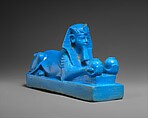
Sphinx von Sesostris III.
Artwork Details
- Titel: Sphinx von Sesostris III.
- Zeitraum: Mittleres Reich, 12. Dynastie
- Datum: ca. 1878–1840 v. Chr.
- Geografie: Theben, Karnak
- Medium: Gneis
- Dimensionen: 42,5 x 29,3 x 73 cm
- Anerkennung: Schenkung von Edward S. Harkness, 1917
- Akzession Nr.: 17.9.2
- Curatorial Department: Egyptian Art
Audio
804. Kids: Sphinx of King Senwosret III
If you wanted to know what someone was like, you might look at his or her face. You can learn a lot about people from looking at their expression, noticing the look in their eyes. Do they look stern or kind? Happy or sad? This statue shows Senwosret III, who ruled Egypt almost four thousand years ago. If you had to describe the expression on his face, what would you say? He looks serious, even grim, as if he might be thinking about all his responsibilities. The statue of Senwosret has the head of man, but the body of a lion. Do you know what that kind of figure is called? It’s a sphinx. Crouching sphinxes like this one often guarded sacred places, and pairs of sphinxes guarded entrances to important buildings. As you walk through these galleries, see how many other sphinxes you can find.
More Artwork
Related Content
Research Resources
The Met provides unparalleled resources for research and welcomes an international community of students and scholars. The Met's Open Access API is where creators and researchers can connect to the The Met collection. Open Access data and public domain images are available for unrestricted commercial and noncommercial use without permission or fee.
To request images under copyright and other restrictions, please use this Image Request form.
Feedback
We continue to research and examine historical and cultural context for objects in The Met collection. If you have comments or questions about this object record, please contact us using the form below. The Museum looks forward to receiving your comments.
Content Notice
The Metropolitan Museum of Art presents over 5,000 years of art from around the world, and our online collection reflects ongoing work conducted over the course of our more than 150-year history. You may encounter objects or images that may be inappropriate for some viewers or information that may be outdated.