
Introduction
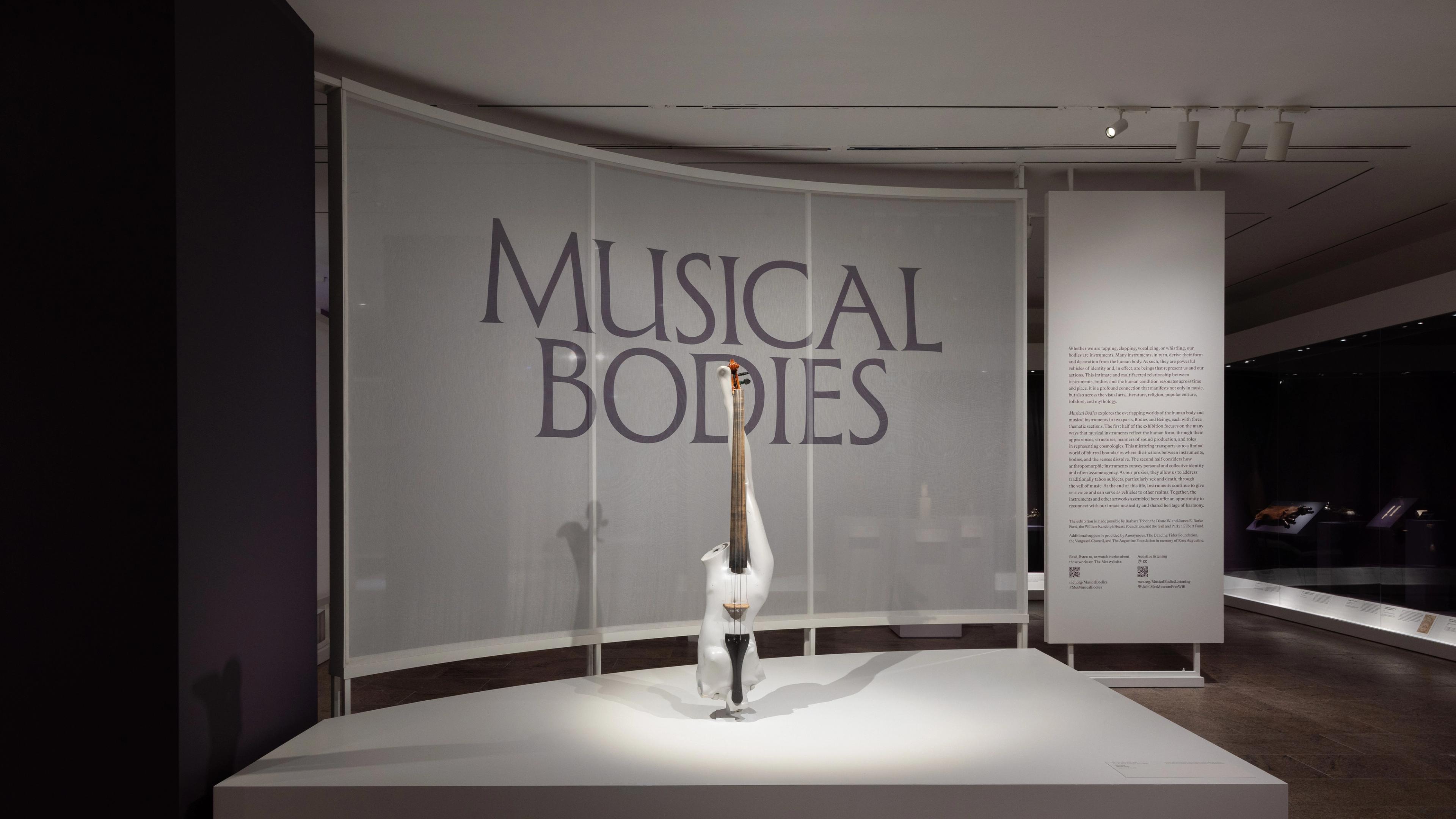
Whether we are tapping, clapping, vocalizing, or whistling, our bodies are instruments. Many instruments, in turn, derive their form and decoration from the human body. As such, they are powerful vehicles of identity and, in effect, are beings that represent us and our actions. This intimate and multifaceted relationship between instruments, bodies, and the human condition resonates across time and place. It is a profound connection that manifests not only in music, but also across the visual arts, literature, religion, popular culture, folklore, and mythology.
Musical Bodies explores the overlapping worlds of the human body and musical instruments in two parts, Bodies and Beings, each with three thematic sections. The first half of the exhibition focuses on the many ways that musical instruments reflect the human form, through their appearances, structures, manners of sound production, and roles in representing cosmologies. This mirroring transports us to a liminal world of blurred boundaries where distinctions between instruments, bodies, and the senses dissolve. The second half considers how anthropomorphic instruments convey personal and collective identity and often assume agency. As our proxies, they allow us to address traditionally taboo subjects, particularly sex and death, through the veil of music. At the end of this life, instruments continue to give us a voice and can serve as vehicles to other realms. Together, the instruments and other artworks assembled here offer an opportunity to reconnect with our innate musicality and shared heritage of harmony.
Selected Artworks
Instrument / Body
Body as Template • From Head to Toe • Viscera
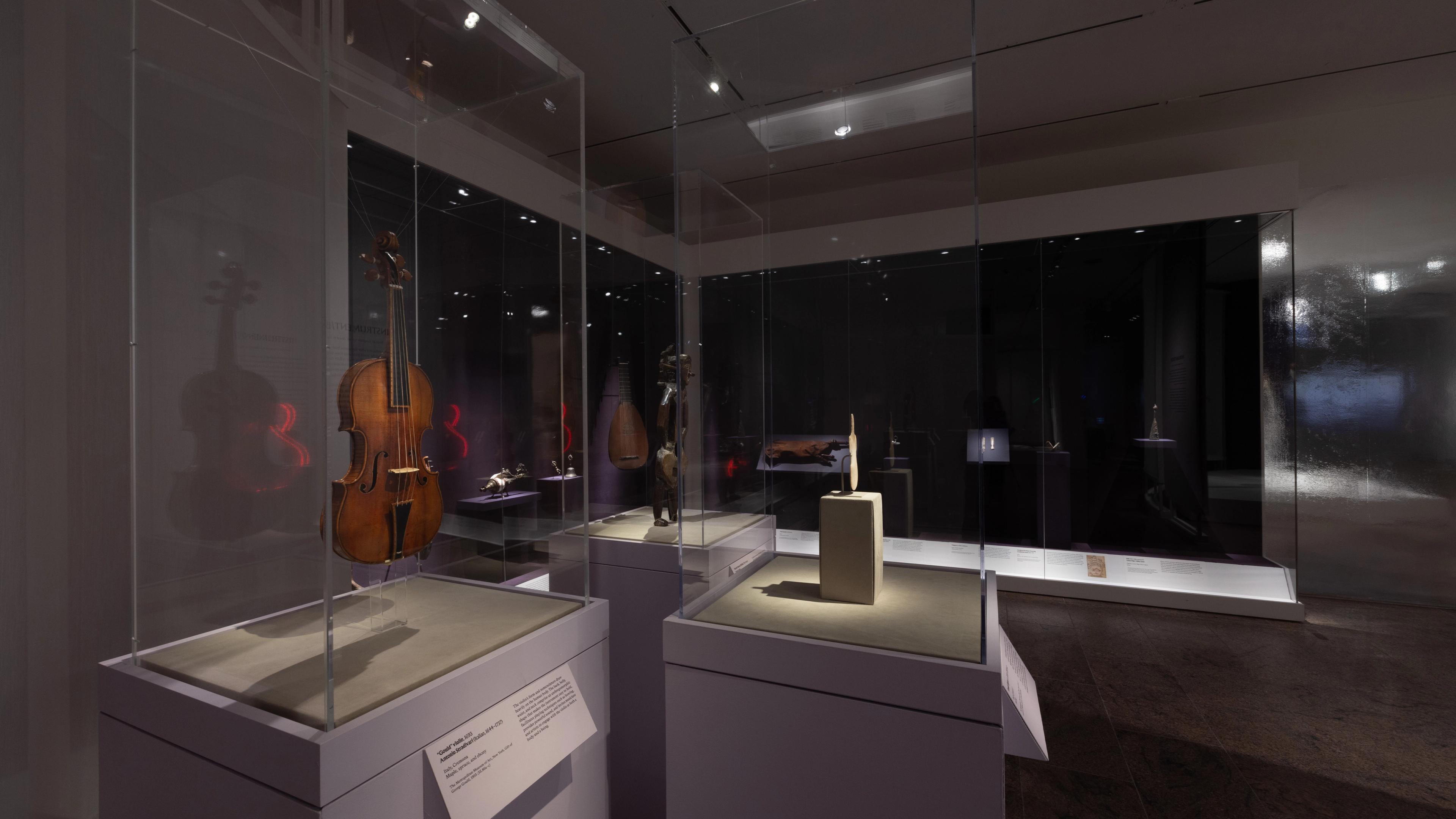
Instruments patterned after the human body and its parts can be found around the world and across time. While they may appear whimsical at first glance, they often reflect the origin stories, cosmologies, and belief systems of their makers. In many cultures, the sacredness of the human form makes its imagery, geometry, and proportions a template for instrument design.
Anthropomorphic instruments also underscore the centrality of the body to our worldviews, concerns, and lived experiences. From head to toe, every region of the human form has inspired their design and decoration. This extends even to bodily systems and internal organs, a biomimicry that speaks both to the mechanical efficiency of anatomy and to historical perceptions of the body as a machine. The wide-ranging works seen here remind us that the human form itself was our first music maker and that bodies and instruments are two sides of the same coin.
Selected Artworks
Body / Instrument
Breath • Flesh
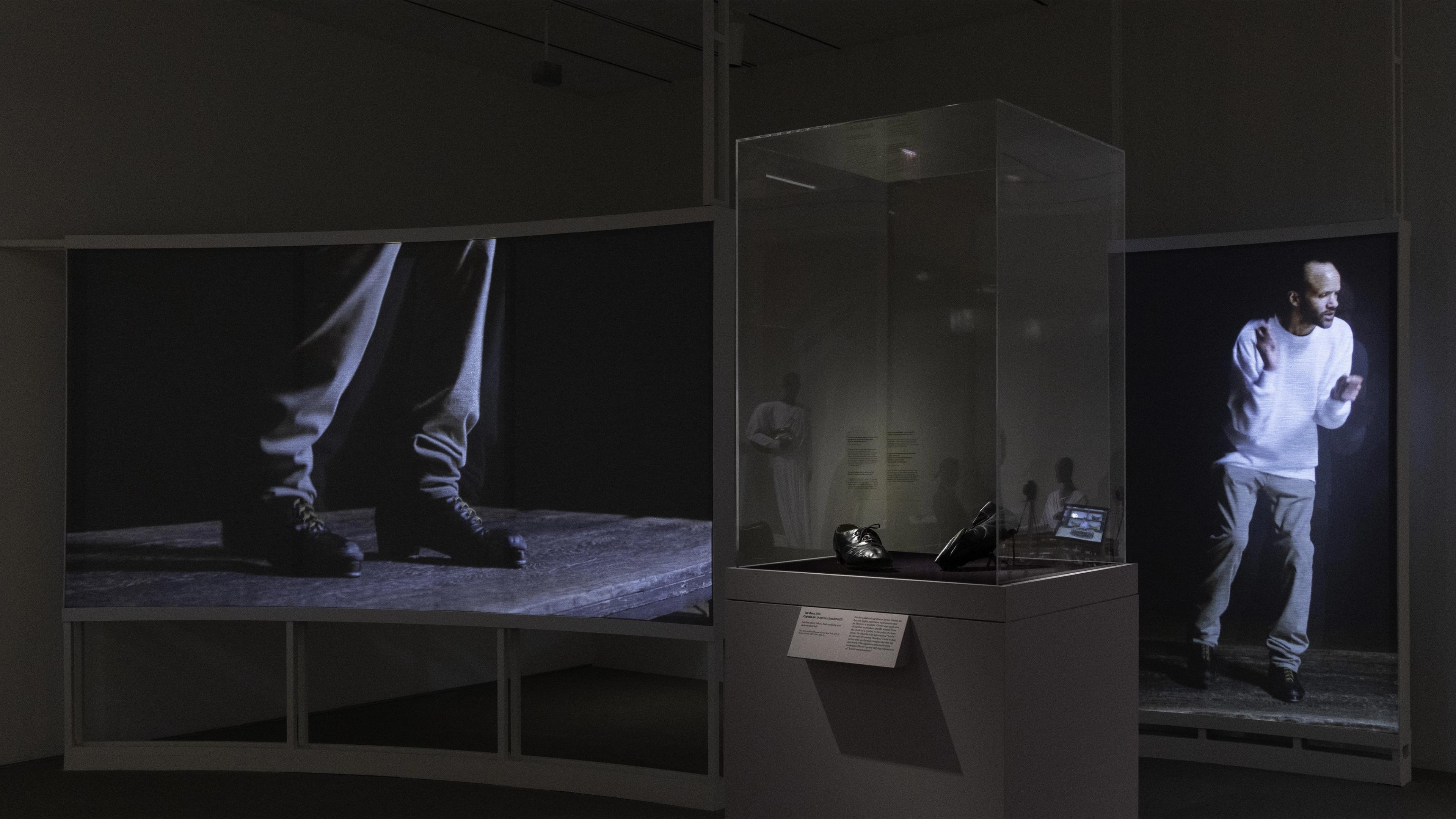
The human body is our oldest and most fundamental musical instrument. It is a sophisticated system capable of producing an infinite range of sonic expression. We are alive with rhythm, from our beating hearts to the timing of our steps. Melody is carried on our breath as we sigh, sing, whistle, and cry. Because the body is an instrument possessed by everyone, making music is a shared and deeply human experience.
Across cultures, this innate musicality has been central to survival, communication, ritual, and art. In the face of adversity, poverty, enslavement, or injustice, when other instruments are unobtainable or forbidden, the body is a living instrument imbued with the capacity for artistry and musical expression. Stepping, tap, body percussion, and beatboxing have all been forged in this crucible. The instruments and other artworks in this section echo and reference the supreme versatility of the body as a music maker.
Selected Artworks
Superhuman
Blurred Boundaries • Ergonomics • Healing Bodies
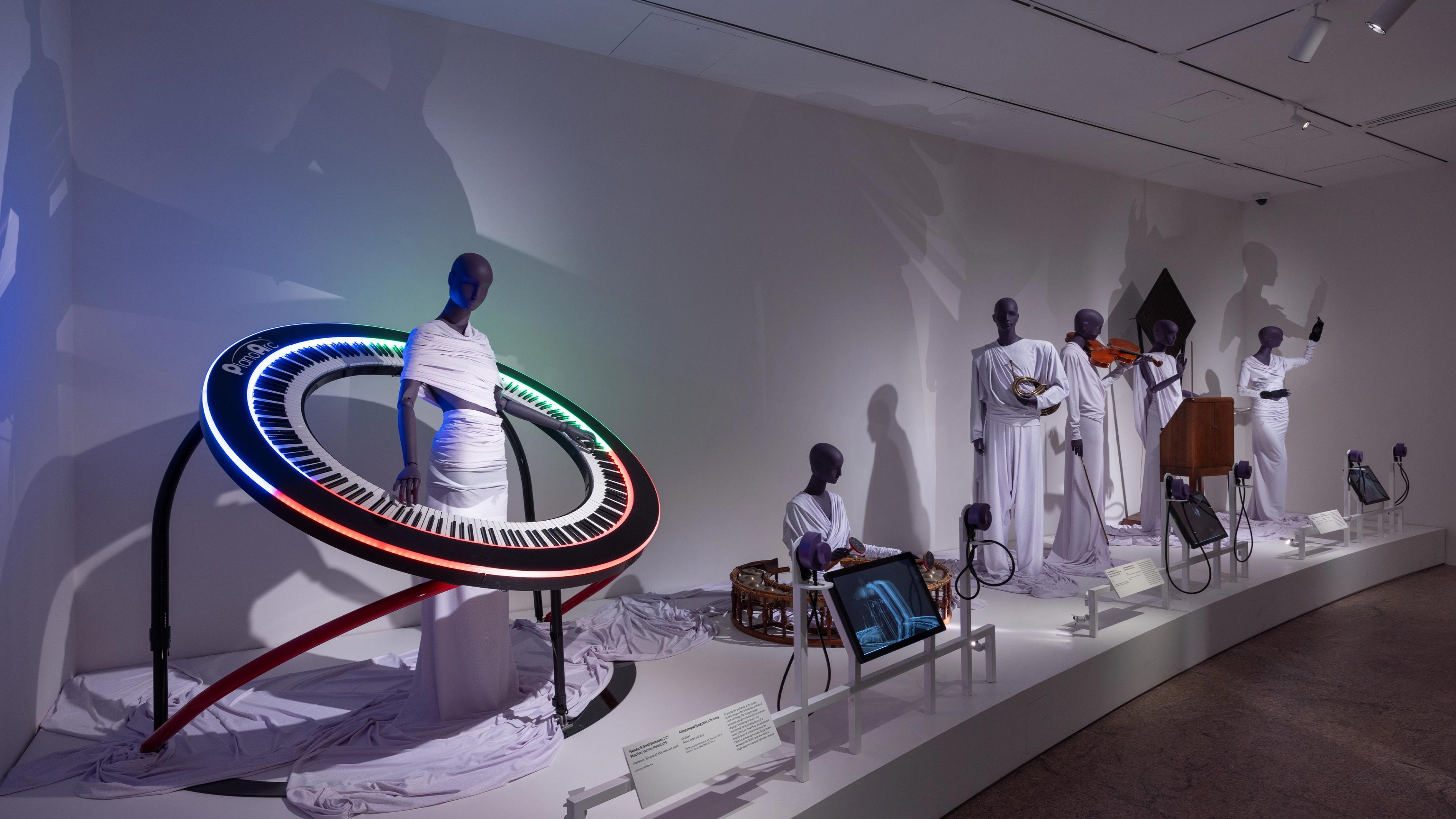
Boundaries are blurred when instruments and bodies merge to create a superhuman whole. This union becomes a means of entering worlds in which the realms of sound and sight; instrument, body, and machine; and music, dance, and visual art blend and amplify each other.
At its most fundamental level, this amalgamation is fueled by musicians who view the tools of music making as extensions of their bodies. Makers meet this demand by creating instruments that are ergonomic and intuitive to play. Drawing on ancient and modern precepts, they embark on visual and technological departures from the mainstream. The results expand and redefine the ways in which we perceive music and how it is made. Senses work together in new ways. Instruments assume human capabilities such as speech or the aesthetic qualities of sculpture. And music heals and confers superhuman powers upon those who produce and experience it.
Selected Artworks
Engaging the Musical Body
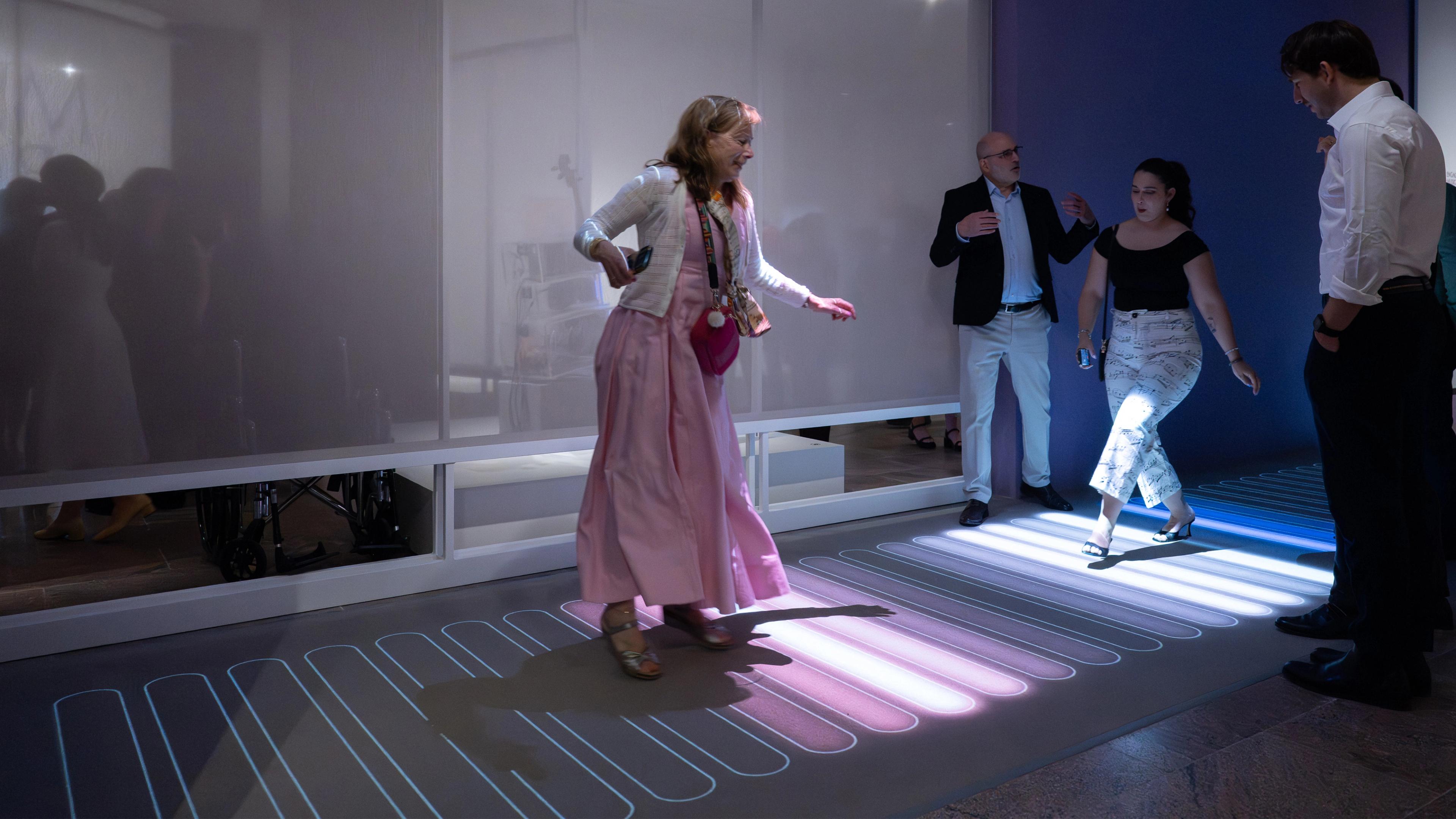
Image credit: Filip Wolak, June 2026
Where does the body end and the instrument begin? Can we see sound? Do we hear color? Is dance music? Questions like these have long fascinated artists, musicians, and thinkers. By using movements and gestures to summon sound and light in this gallery space, visitors can experience these overlapping realms and become part of the exhibition.For centuries, cross-sensory explorations have expanded how we experience and perceive music. In the 1670s, Isaac Newton mapped the colors of the rainbow onto the musical scale. In the twentieth century, Alexander Scriabin composed works to evoke color, and Vasily Kandinsky envisioned painting as a form of synesthetic harmony. The “terpsitone,” developed by Lev Theremin in the 1930s, is played through dance. Imogen Heap brings these ideas into the twenty-first century through MiMU gloves, which enable her to control synthesizers and audio effects using intuitive gestures. Today, emerging technologies continue to blur boundaries, making music increasingly multisensory and inclusive
Diverse Beings
Who are we? What do we value? Where do we come from? What do we believe?
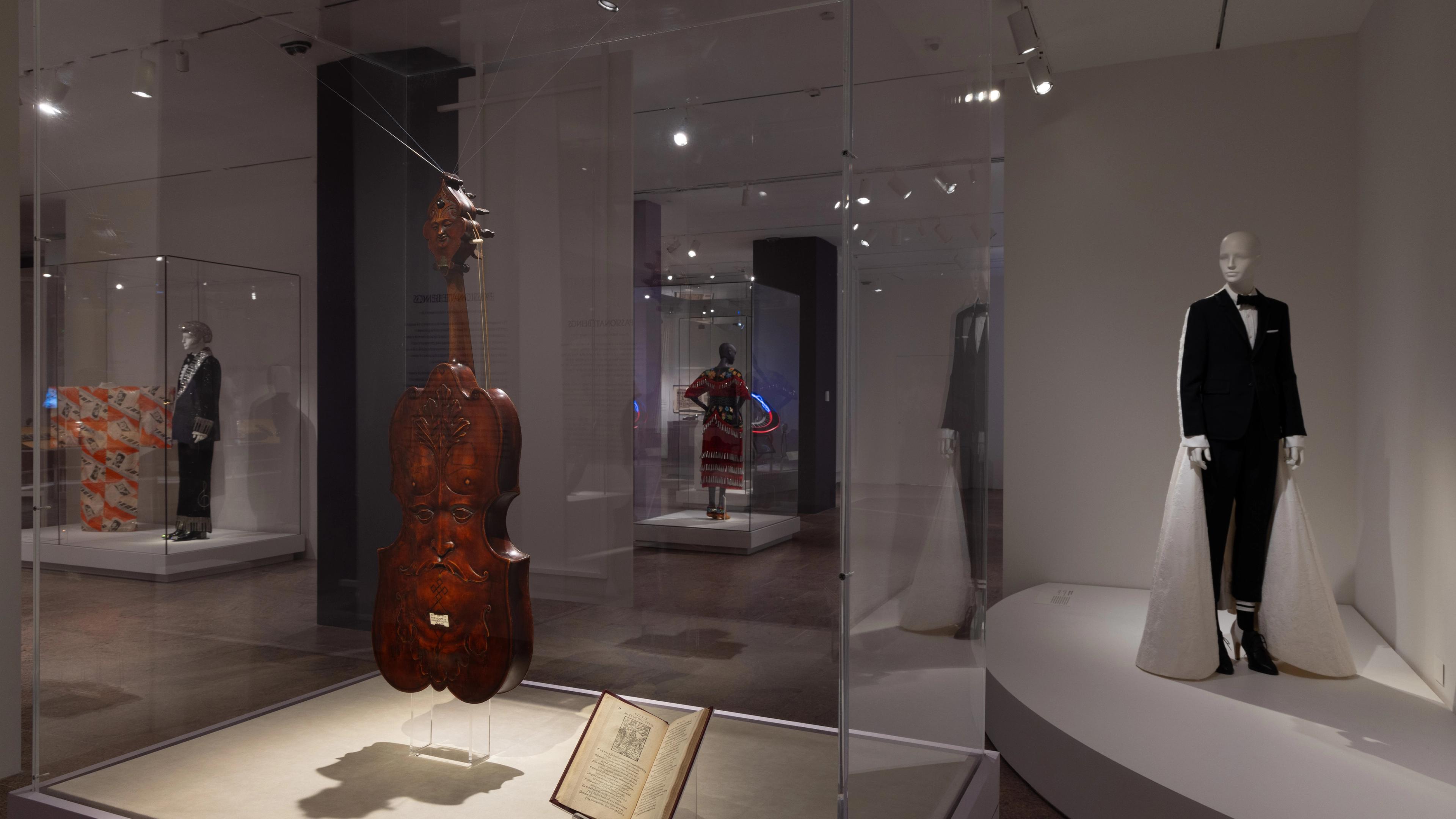
Anthropomorphic instruments are often created to explore questions about who we are. Capable of expressing identity on many different levels, these instruments in effect become beings, from mothers and warriors to androgynes and deities. We hold a mirror to ourselves when we make instruments in our images, real or imagined. Through playing, we grant them agency to speak for us, broadcasting who we are and declaring our desires and intentions. This reflection becomes recursive when we use words and appearances to become instruments ourselves.
Throughout history, artists have depicted peoples outside their own kith and kin—perceived enemies, those from distant lands and cultures, enslaved individuals—in ways that reflect and reveal biases and hierarchies. When such likenesses take the form of musical instruments that can be performed upon, controlled, and made to speak, those dynamics are literally amplified. Conversely, musical harmony and the instruments that produce it can be artistic or literary metaphors for cooperation, shared achievement, and equanimity.
Selected Artworks
Passionate Beings
Sensual Bodies • Seduction • Matrimony • Sex
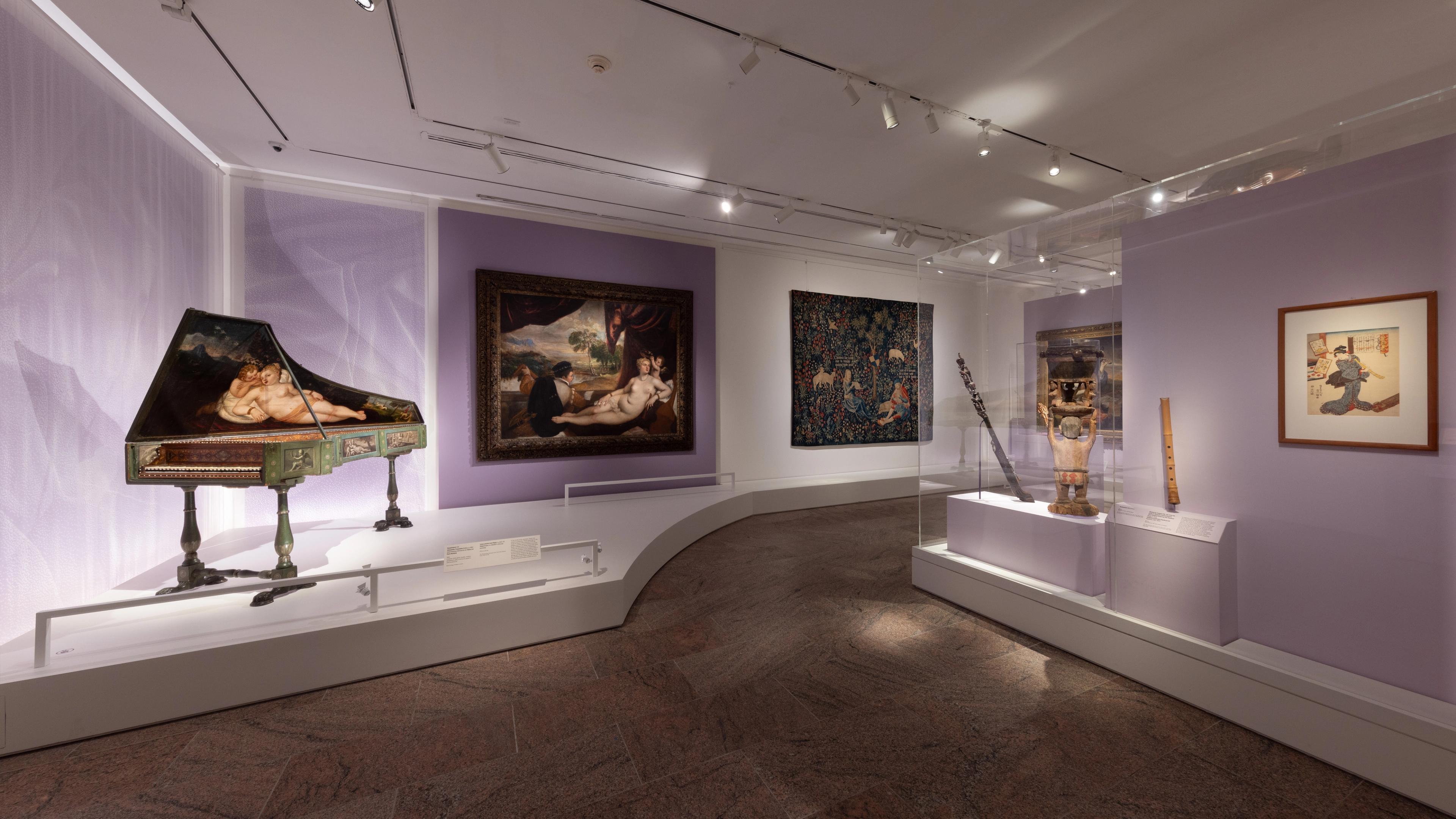
The suggestive bodies of instruments and the intensity of musical performance evoke acts of passion. Music making presents a platform for physical intimacy and risqué display, from the close proximity of piano duets to the thrusting and gyrating of rock guitarists. In sound, art, and language, instruments stand in for our bodies and enable us to address sex through the guise of music—rendering that which is veiled even more alluring.
Music has long been central to seduction. Charles Darwin viewed it as an aspect of sexual selection, akin to birdsong or displays of peacock plumage. Musical accomplishment distinguished a potential partner. Playing together was often held up as a metaphor for domestic harmony and order, and the decoration of instruments sometimes alludes to marital expectations.
Like lovers, instruments ask us to engage with them: stroking, strumming, plucking, tickling, bowing, blowing. To play an instrument is to play a body, which results in a web of complex power dynamics to be navigated. Yet these flexible bodies can evoke multiple expressions of human sexuality. When musicians animate them, instruments become vehicles for exploring, negotiating, and expressing the gamut of human passion.
Selected Artworks
Transient Beings
Memento Mori • Paradise and Perdition • Proxies • Between Worlds
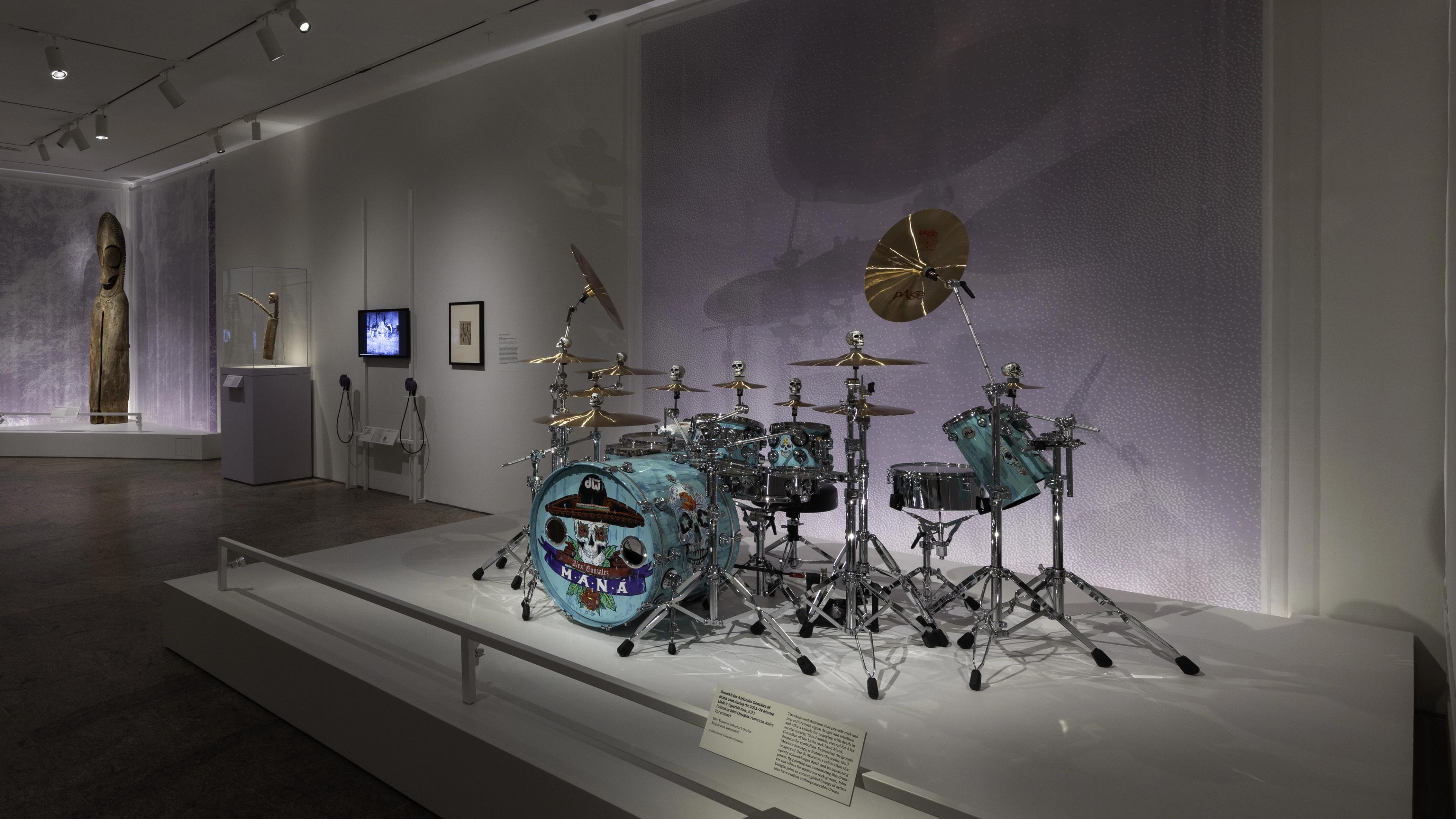
We all must die, and the fleeting sound of music is a memento mori—a reminder of the transience of life. Across cultures and centuries, instruments have offered solace and played a central role in mourning. In secular society, where death is one of the few remaining taboos, instruments that evoke the macabre offer a means for exploring our innate curiosity about mortality.
Many traditions understand death as a journey from one state of being to another. Music and instruments have long accompanied moments of passage and transformation. In rituals, they can transport the living to a liminal state that affords connection with the dead. Instruments linked to the human body—whether through form, sound, or as a dwelling place for spirits—may stand in for ancestors.
Instruments reverberate with the message that even in death there is life. This idea is expressed in a motto beloved by harpsichord makers, which gives voice to the wood that forms the instrument’s body: “While I lived, I was silent. Now that I am dead, I sing sweetly.”