Мы работаем над переводом этой страницы как можно скорее. Спасибо за понимание.
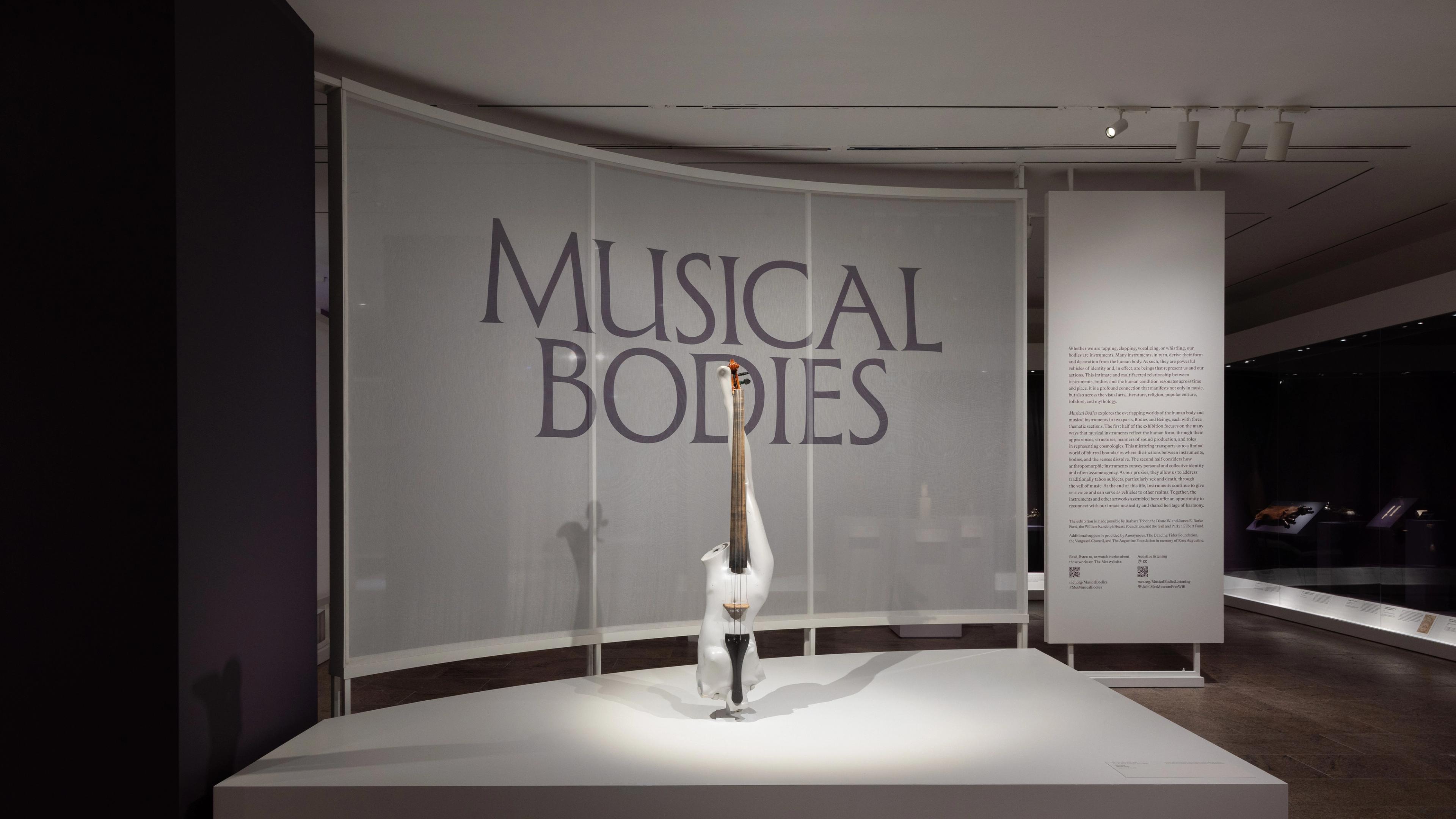
Graphic, designed on a dark purple background, with a uniquely shaped bowed string instrument, with text that reads "Musical Bodies"
Exhibition

Musical Bodies

Introduction

tk

Whether we are tapping, clapping, vocalizing, or whistling, our bodies are instruments. Many instruments, in turn, derive their form and decoration from the human body. As such, they are powerful vehicles of identity and, in effect, are beings that represent us and our actions. This intimate and multifaceted relationship between instruments, bodies, and the human condition resonates across time and place. It is a profound connection that manifests not only in music, but also across the visual arts, literature, religion, popular culture, folklore, and mythology.

Musical Bodies explores the overlapping worlds of the human body and musical instruments in two parts, Bodies and Beings, each with three thematic sections. The first half of the exhibition focuses on the many ways that musical instruments reflect the human form, through their appearances, structures, manners of sound production, and roles in representing cosmologies. This mirroring transports us to a liminal world of blurred boundaries where distinctions between instruments, bodies, and the senses dissolve. The second half considers how anthropomorphic instruments convey personal and collective identity and often assume agency. As our proxies, they allow us to address traditionally taboo subjects, particularly sex and death, through the veil of music. At the end of this life, instruments continue to give us a voice and can serve as vehicles to other realms. Together, the instruments and other artworks assembled here offer an opportunity to reconnect with our innate musicality and shared heritage of harmony.

A slider containing 1 items.
Press the down key to skip to the last item.
Mannequin Bass, Kenneth Lee Butler  American, Mixed media
On loan to The Met
Kenneth Lee Butler
2012

Instrument / Body

Body as Template • From Head to Toe • Viscera
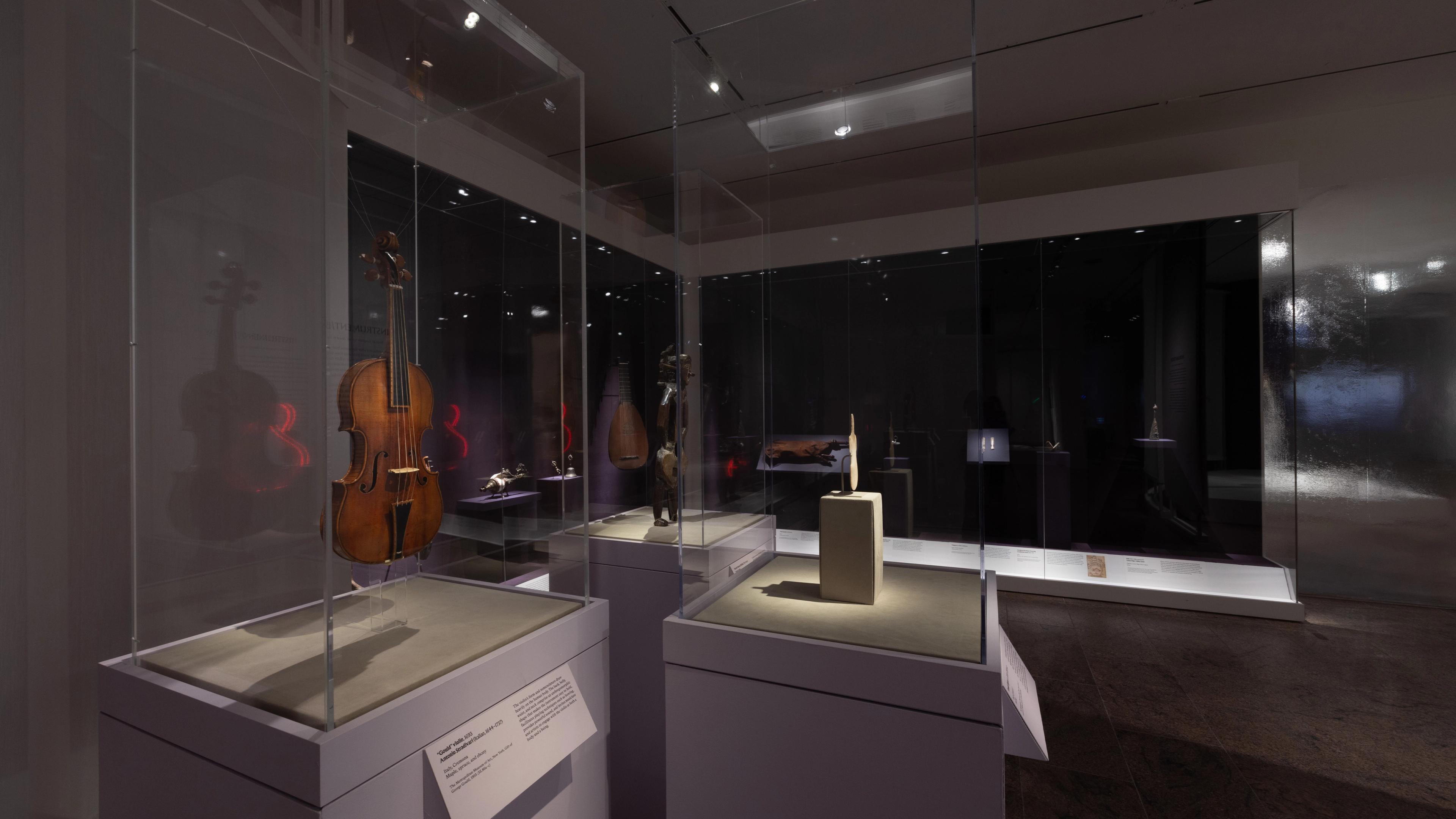
Gallery views of musical instuments.

Instruments patterned after the human body and its parts can be found around the world and across time. While they may appear whimsical at first glance, they often reflect the origin stories, cosmologies, and belief systems of their makers. In many cultures, the sacredness of the human form makes its imagery, geometry, and proportions a template for instrument design.

Anthropomorphic instruments also underscore the centrality of the body to our worldviews, concerns, and lived experiences. From head to toe, every region of the human form has inspired their design and decoration. This extends even to bodily systems and internal organs, a biomimicry that speaks both to the mechanical efficiency of anatomy and to historical perceptions of the body as a machine. The wide-ranging works seen here remind us that the human form itself was our first music maker and that bodies and instruments are two sides of the same coin.

A slider containing 16 items.
Press the down key to skip to the last item.
Marble female figure, Marble, Cycladic
Cycladic
ca. 3200–2700 BCE
"Gould" Violin, Antonio Stradivari  Italian, Maple, spruce, ebony, Italian (Cremona)
Antonio Stradivari
1693
A Santal Fiddle (Dhodro Banam), Wood and hide, Eastern India, probably Jharkhand
Eastern India, probably Jharkhand
19th Century
Dril-Bu and Dorje, bronze, Tibetan
Tibetan
19th century
Zitty (Bagpipe), Leather, wood, skin, Indian
Indian
19th century
Pair of clappers, Hippopotamus ivory
ca. 1900–1640 B.C.
Bell: Face, Lower Niger Valley caster, Brass, Lower Niger Bronze Industries
Lower Niger Valley caster
19th–20th century (?)
Śankh, Shell (Turbinella pyrum), brass, wax, Indian
Indian
19th century
Singanga, Wood, hide, Makonde people
Makonde people
early 20th century
Violin sabot, Antoine C. Freze, Maple, beech, spruce, French
On loan to The Met
Antoine C. Freze
19th century
Penis whistle keyring with orb charm, Vivienne Westwood  British, Brass and rhodium
On loan to The Met
Vivienne Westwood
2016
Liturgical miscellany featuring a Guidonian hand, Brown, red, and blue ink on parchment, Italy
On loan to The Met
Italy
Between 1450 and 1499
Thirteen-course lute, Thomas Edlinger  German, Spruce, hardwood, yew, maple, ebony, bone, possibly fruitwood, paper
On loan to The Met
Thomas Edlinger
Wendelin Tieffenbrucker
ca. 1548-1612 and 1724
Bass Clarinet in C, Nicola Papalini  Italian, Olive wood, brass, Italian
Nicola Papalini
ca. 1810
Stroh Violin, George Evans & Co.  English, Mahogany and aluminum, British
George Evans & Co.
first quarter 20th century
Ridgewing Guitar, Serial No. 4, Ridgewing Inc.  American, Investment-cast aluminum body frames; carbon-fiber grilles; rosewood fingerboard; composite neck; self-tuning headstock; under-saddle piezo pickup; integrated preamp; LED light-show system
On loan to The Met
Ridgewing Inc.
2015

Body / Instrument

Breath • Flesh

tk

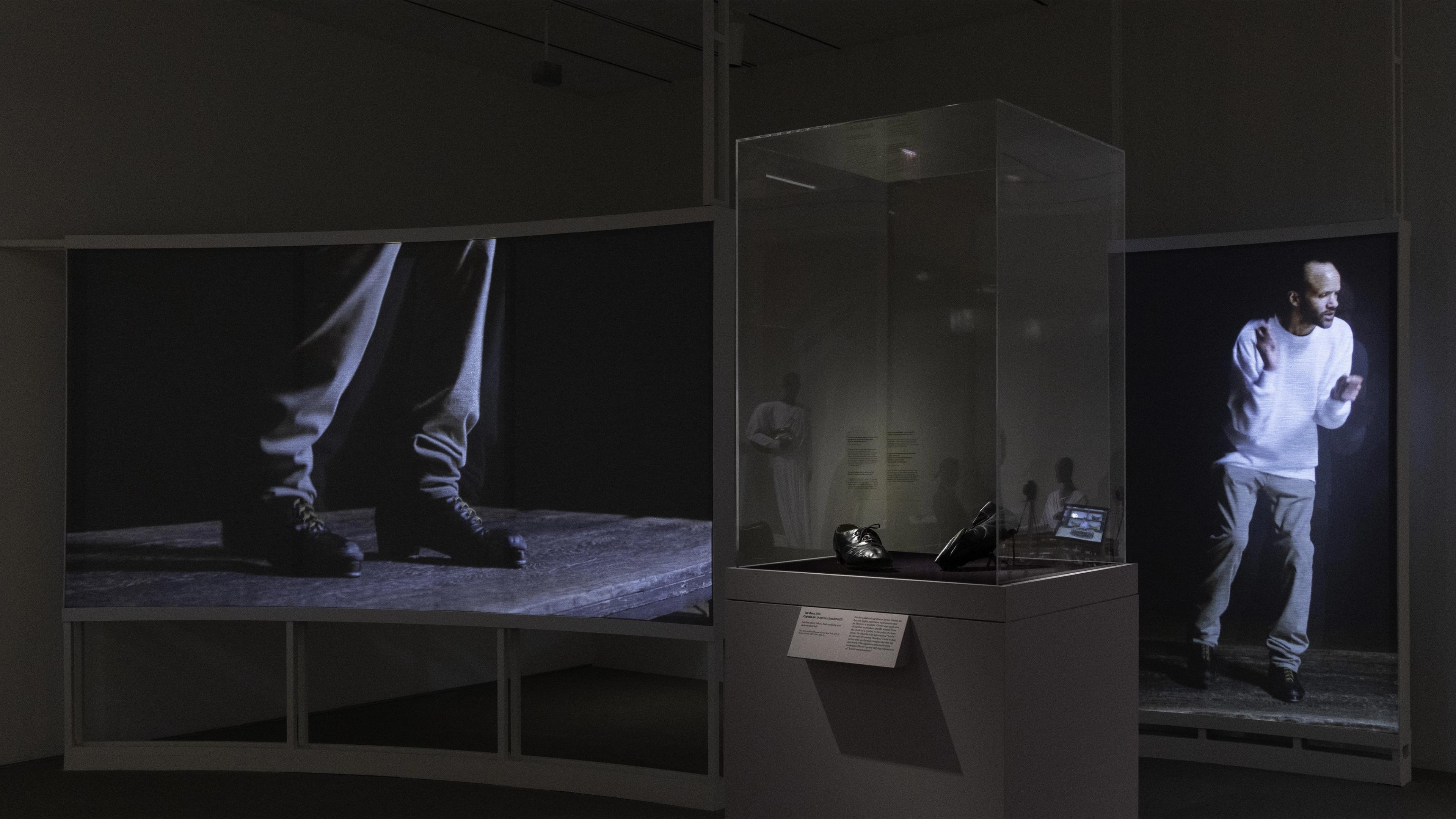
The human body is our oldest and most fundamental musical instrument. It is a sophisticated system capable of producing an infinite range of sonic expression. We are alive with rhythm, from our beating hearts to the timing of our steps. Melody is carried on our breath as we sigh, sing, whistle, and cry. Because the body is an instrument possessed by everyone, making music is a shared and deeply human experience.

Across cultures, this innate musicality has been central to survival, communication, ritual, and art. In the face of adversity, poverty, enslavement, or injustice, when other instruments are unobtainable or forbidden, the body is a living instrument imbued with the capacity for artistry and musical expression. Stepping, tap, body percussion, and beatboxing have all been forged in this crucible. The instruments and other artworks in this section echo and reference the supreme versatility of the body as a music maker.

A slider containing 11 items.
Press the down key to skip to the last item.
The Singer in Green, Edgar Degas  French, Pastel on light blue laid paper
Edgar Degas
ca. 1884
Poster for the Organophonic Band, Letterpress and lithograph
On loan to The Met
1853
Announcement for the Organophonic Band, Letterpress and lithograph
On loan to The Met
ca. 1850
The Whistlers, Tip Toland  American, Stoneware, paint, pastel, synthetic hair
Tip Toland
2005
Tap Shoes, Capezio Inc.  American, Leather, steel, velcro, form padding, various materials, American
Capezio Inc.
1996
Drum, Wood, hide, metal, Luba
Luba
early 20th century
Ehecachichtli, Clay, Mexican
Mexican
ca. 1200–1521
Whistle, Bobo Fing or Samo tribe  Burkinabe, Wood, Burkinabe
Bobo Fing or Samo tribe
late 19th century
Ocarina, Ceramic, Tairona People; Gayraca style
Tairona People; Gayraca style
1300–1500
Kasengosengo (whistle), Wood, Chokwe
Chokwe
1950
Whistle, Wood, Kuba
Kuba
early 20th century

Superhuman

Blurred Boundaries • Ergonomics • Healing Bodies
tk

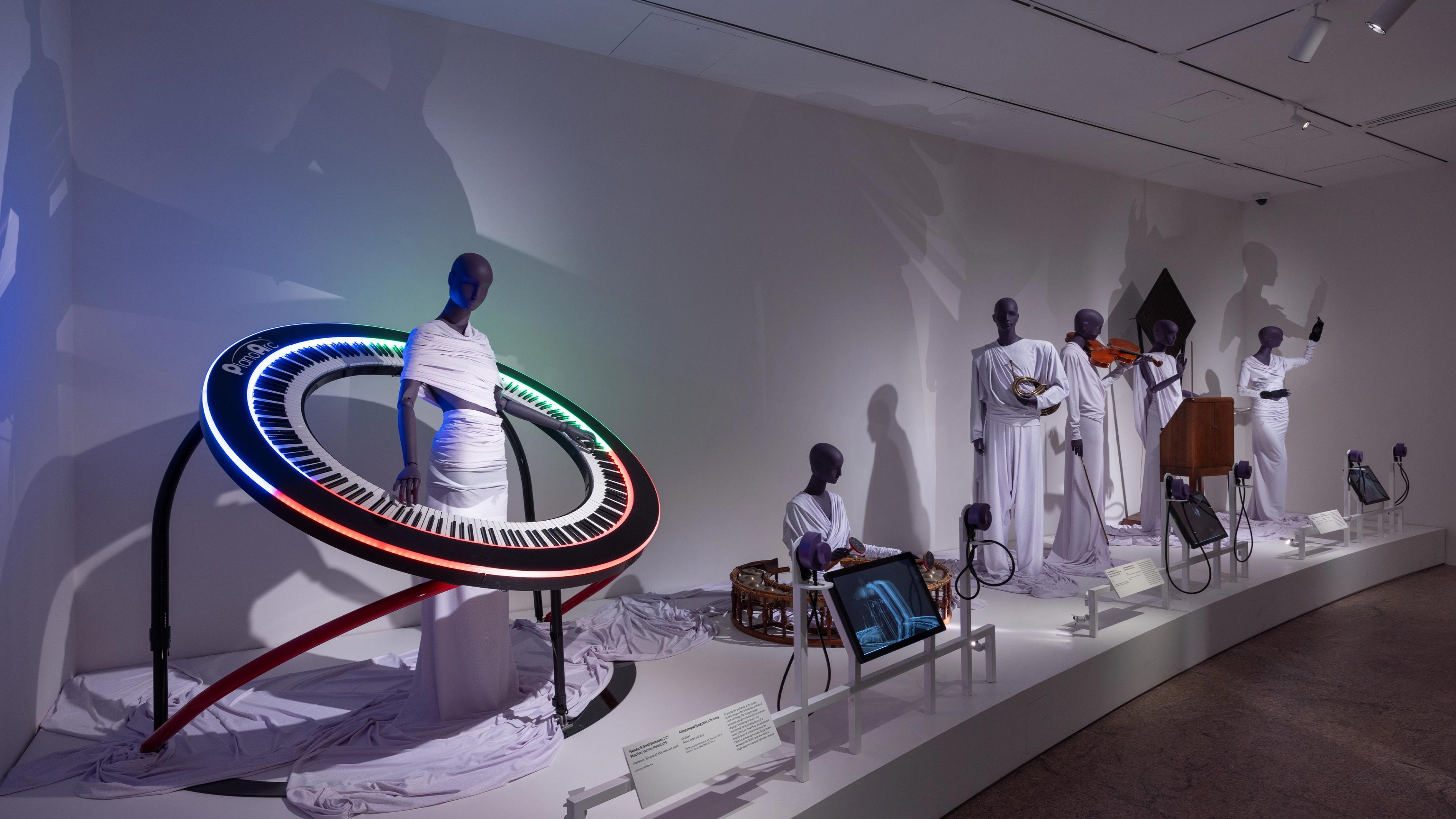
Boundaries are blurred when instruments and bodies merge to create a superhuman whole. This union becomes a means of entering worlds in which the realms of sound and sight; instrument, body, and machine; and music, dance, and visual art blend and amplify each other.

At its most fundamental level, this amalgamation is fueled by musicians who view the tools of music making as extensions of their bodies. Makers meet this demand by creating instruments that are ergonomic and intuitive to play. Drawing on ancient and modern precepts, they embark on visual and technological departures from the mainstream. The results expand and redefine the ways in which we perceive music and how it is made. Senses work together in new ways. Instruments assume human capabilities such as speech or the aesthetic qualities of sculpture. And music heals and confers superhuman powers upon those who produce and experience it.

A slider containing 15 items.
Press the down key to skip to the last item.
“The Bag” Talk Box Guitar Effect, Kustom, Velvet, metal, plastic, American
Kustom
1969
TV Cello, Nam June Paik  American, born Korea, Cathode-ray tube monitors, acrylic, neon, string, wood, and other mixed media, American
On loan to The Met
Nam June Paik
1995
Untitled preliminary study, Robert Cook (American, 1921-2017)  American, Watercolor
On loan to The Met
Robert Cook (American, 1921-2017)
20th century
Kustom Electronics "The Bag" Poster, Offset lithograph
1969
"Apocalypse Suite" cover art pencil study, Gabriel Bá  Brazilian, Graphite pencil
On loan to The Met
Gabriel Bá
2008
"Apocalypse Suite" cover art shade, Gabriel Bá  Brazilian, India ink
On loan to The Met
Gabriel Bá
2008
Cellist, Robert Cook (American, 1921-2017)  American, Bronze
On loan to The Met
Robert Cook (American, 1921-2017)
1950
Cornet-trompe in D, Alphonse (Antoine) Sax  Belgian, Brass, French
Attributed to Alphonse (Antoine) Sax
ca. 1862
Khong Wong Yai, Wood, metal, cord, Thai
Thai
20th century
Theremin, Radio Corporation of America (RCA)  American, Wood, vacuum tubes, electrical wiring, American
Radio Corporation of America (RCA)
1929
Violino Harpa Forma Maxima, Thomas Zach  Austrian, Wood (spruce, maple, ebony), metal strings, Austrian
On loan to The Met
Thomas Zach
1874
MiMU MIDI Gloves, MiMU Gloves Limited  British, Yulex, cotton, and other high-performance technical fabrics
On loan to The Met
MiMU Gloves Limited
2025
PianoArc 360 with Sumo Stand, PianoArc  American, Aluminum, 3D-printed ABS, steel, and acrylic
On loan to The Met
Manufacturer PianoArc
2025
Santal or Munda Fiddle (Huka Banam), Wood and hide, Eastern India, Probably Jharkhand
Eastern India, Probably Jharkhand
19th century
Electric Hawaiian Guitar, Semie Moseley  American, Wood, rubber, brass, and chrome
On loan to The Met
Semie Moseley
1984

Engaging the Musical Body

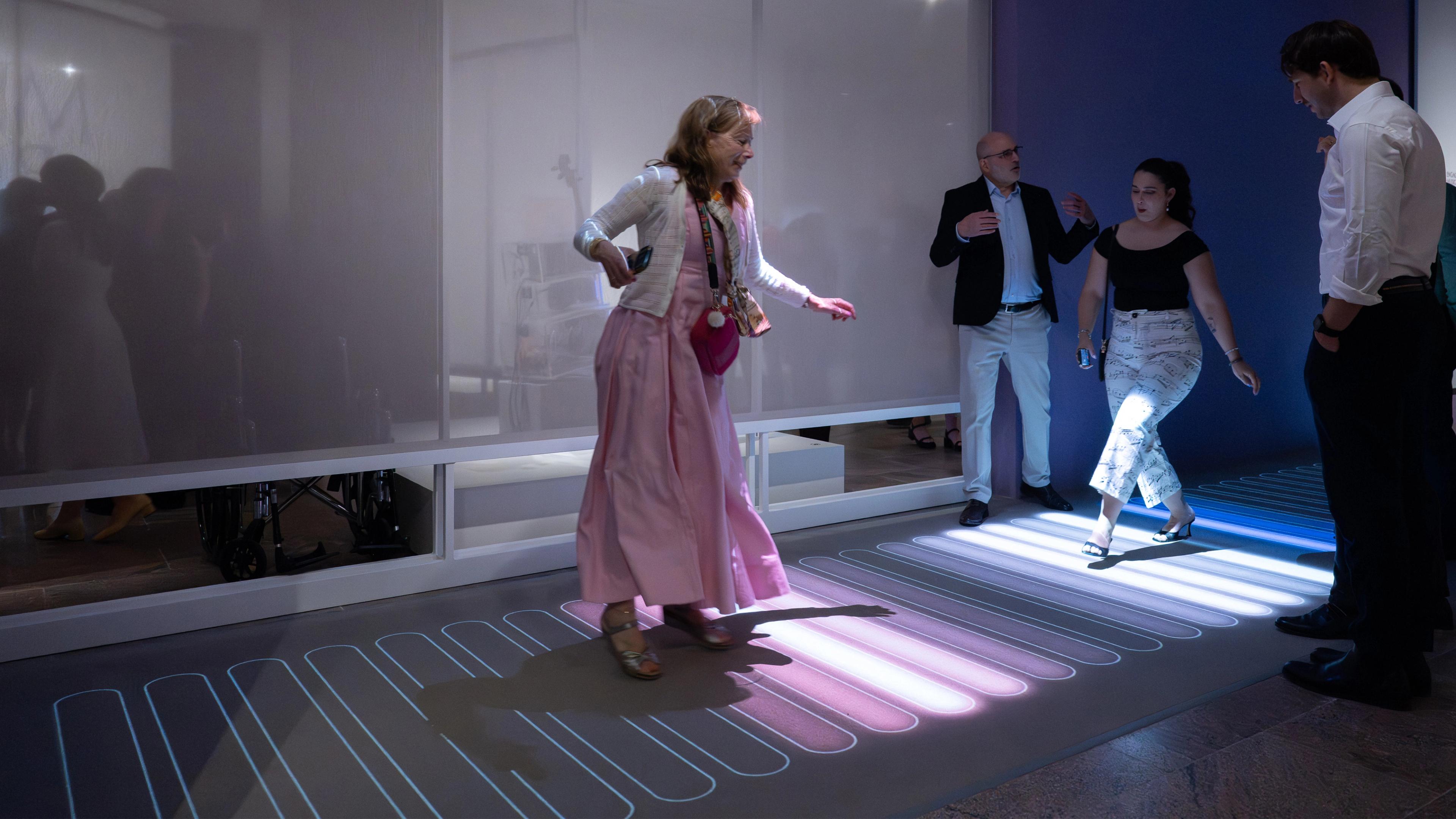
A woman in a pink dress interacts playfully on a glowing, colored floor panel, surrounded by people in a dimly lit room

Image credit: Filip Wolak, June 2026


Where does the body end and the instrument begin? Can we see sound? Do we hear color? Is dance music? Questions like these have long fascinated artists, musicians, and thinkers. By using movements and gestures to summon sound and light in this gallery space, visitors can experience these overlapping realms and become part of the exhibition.For centuries, cross-sensory explorations have expanded how we experience and perceive music. In the 1670s, Isaac Newton mapped the colors of the rainbow onto the musical scale. In the twentieth century, Alexander Scriabin composed works to evoke color, and Vasily Kandinsky envisioned painting as a form of synesthetic harmony. The “terpsitone,” developed by Lev Theremin in the 1930s, is played through dance. Imogen Heap brings these ideas into the twenty-first century through MiMU gloves, which enable her to control synthesizers and audio effects using intuitive gestures. Today, emerging technologies continue to blur boundaries, making music increasingly multisensory and inclusive

Diverse Beings

Who are we? What do we value? Where do we come from? What do we believe?
tk

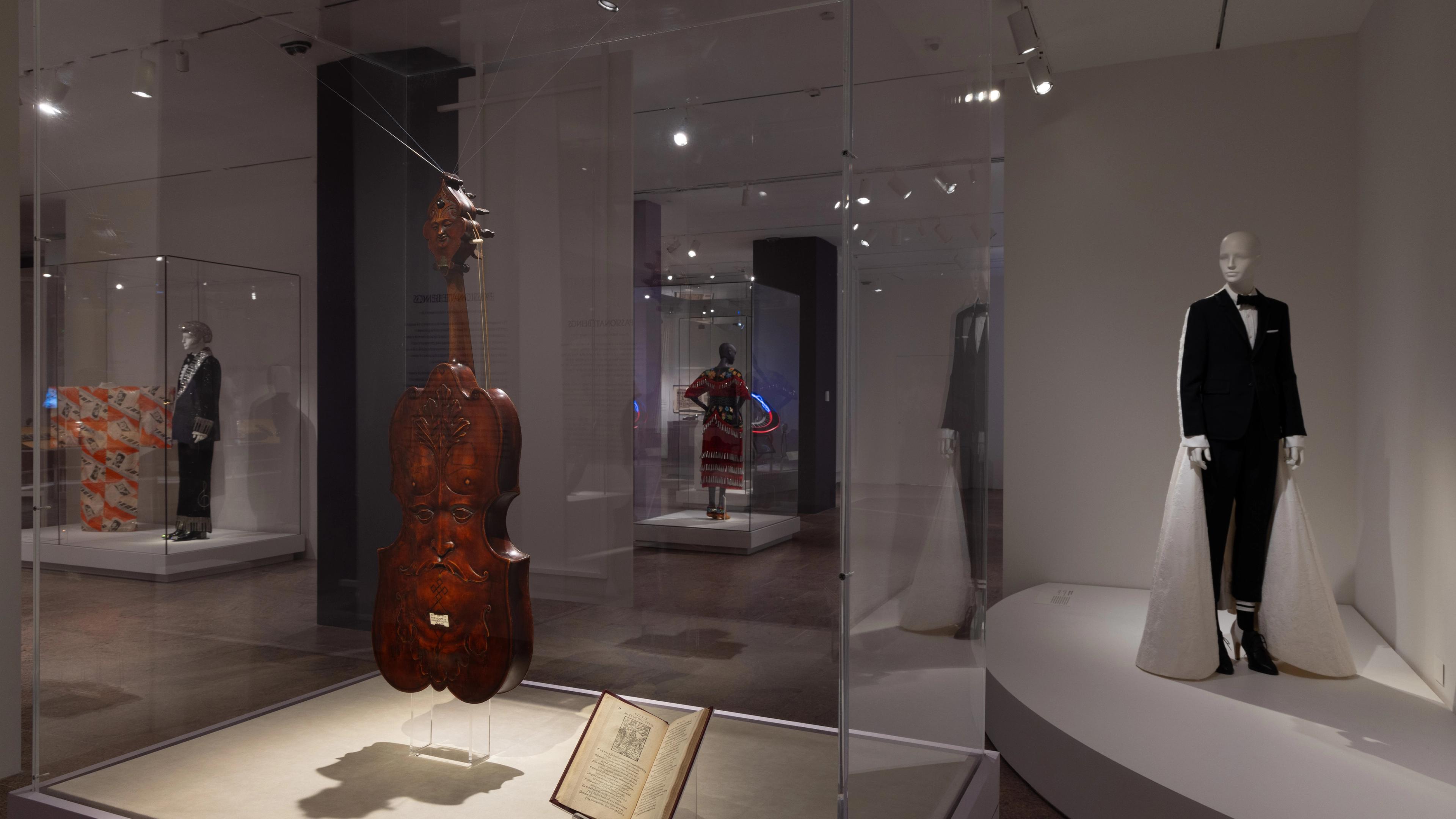
Anthropomorphic instruments are often created to explore questions about who we are. Capable of expressing identity on many different levels, these instruments in effect become beings, from mothers and warriors to androgynes and deities. We hold a mirror to ourselves when we make instruments in our images, real or imagined. Through playing, we grant them agency to speak for us, broadcasting who we are and declaring our desires and intentions. This reflection becomes recursive when we use words and appearances to become instruments ourselves.

Throughout history, artists have depicted peoples outside their own kith and kin—perceived enemies, those from distant lands and cultures, enslaved individuals—in ways that reflect and reveal biases and hierarchies. When such likenesses take the form of musical instruments that can be performed upon, controlled, and made to speak, those dynamics are literally amplified. Conversely, musical harmony and the instruments that produce it can be artistic or literary metaphors for cooperation, shared achievement, and equanimity.

A slider containing 26 items.
Press the down key to skip to the last item.
Ensemble, Thom Browne  American, (a) wool, cotton, silk, synthetic; (b) wool, metal; (c) cotton, silk; (d) wool, cotton, cupro; (e, f) cotton, nylon, silk; (g, h) leather, silk, American
Designer Thom Browne
spring/summer 2018
Drum, Wood, polychrome, skin, trade beads, plastic, Akan Ashanti people
Akan Ashanti people
early 20th century
Drum, wood, hide, Kuba (Shoowa)
Kuba (Shoowa)
late 19th–early 20th century
Lira da braccio, Giovanni d'Andrea, Varnished softwood and maple, ivory, ebony, bone, parchment, brass, gut strings, Italian
On loan to The Met
Giovanni d'Andrea
1511
Symbol Guitar, Wood, metal, plastic
On loan to The Met
Late 1990's-Early 2000's
Repatriation of Tipu’s Tiger, Saba Qizilbash  Pakistani, Graphite, water soluable graphite, Suminagashi ink on mylar
On loan to The Met
Saba Qizilbash
2022
Banjo, Wood, various materials, British
British
mid-19th century
Lift Every Voice and Sing (The Harp), Augusta Savage  American, Cast metal with dark patina, American
On loan to The Met
Augusta Savage
1939
Pochette with sympathetic strings, Wood, ebony, ivory, French
French
ca. 19th century
Pochette, wood, ivory, French
French
ca. 19th century
Pochette, Wood, ivory, German
German
17th or early 18th century
Pochette, Wood, ebony, metal, Probably European
Probably European
ca. 1800–1900
Pochette, Wood, mother-of-pearl, possibly Italian
possibly Italian
late 18th century?
Pochette (Kit), Wood, ivory, European
European
19th century
Breasted Drum, Wood, skin, paint, Akan, Ashanti
Akan, Ashanti
ca. 1940
Portable Irish harp, John Egan  Irish, Spruce, walnut, maple, lime wood, brass, ivory
On loan to The Met
John Egan
ca. 1821
“Le Royaume de Harmonie,”  (The Kingdom of Harmony) from the theater production of La Poule aux Oeufs d’Or , (The Goose that Laid the Golden Eggs) in the Galerie Dramatique, Hand colored lithograph
On loan to The Met
1848
Woman’s Under-Kimono (Nagajuban) with Piano Keys and Libretti from Two Songbooks

, Silk with printed design, Japan
Japan
ca. 1930s
"Piano Keys" suit, Jim Lapidus, Velvet, sequins, bugle beads, glass, crystal, rhinestones
On loan to The Met
Designer Jim Lapidus
Manufacturer JC Costume Company
1973
For a Musician, Paa Joe in 2025 Ghanaian, Emele, enamel, cloth, Ghanaian
On loan to The Met
Made by the artist Paa Joe
2025
Rockford "Little Dick" Guitar, Hamer Guitars, Mahogany and ebony, American
On loan to The Met
Manufacturer Hamer Guitars
2008
Costume Bell, metal, Possibly French
Possibly French
19th century
Shrine sistrum of King Apries, Faience
589–570 BCE
Double-chambered bottle, Wari artist(s), Ceramic, slip, Wari artist(s)
Wari artist(s)
800–900 CE
Bell and Beater, Wood, iron, cotton, Baule people
Baule people
20th century
Bell Mallet (Lawle), Baule artist  Baoulé, Wood, Baulé people
Baule artist
mid-20th century

Passionate Beings

Sensual Bodies • Seduction • Matrimony • Sex
tk

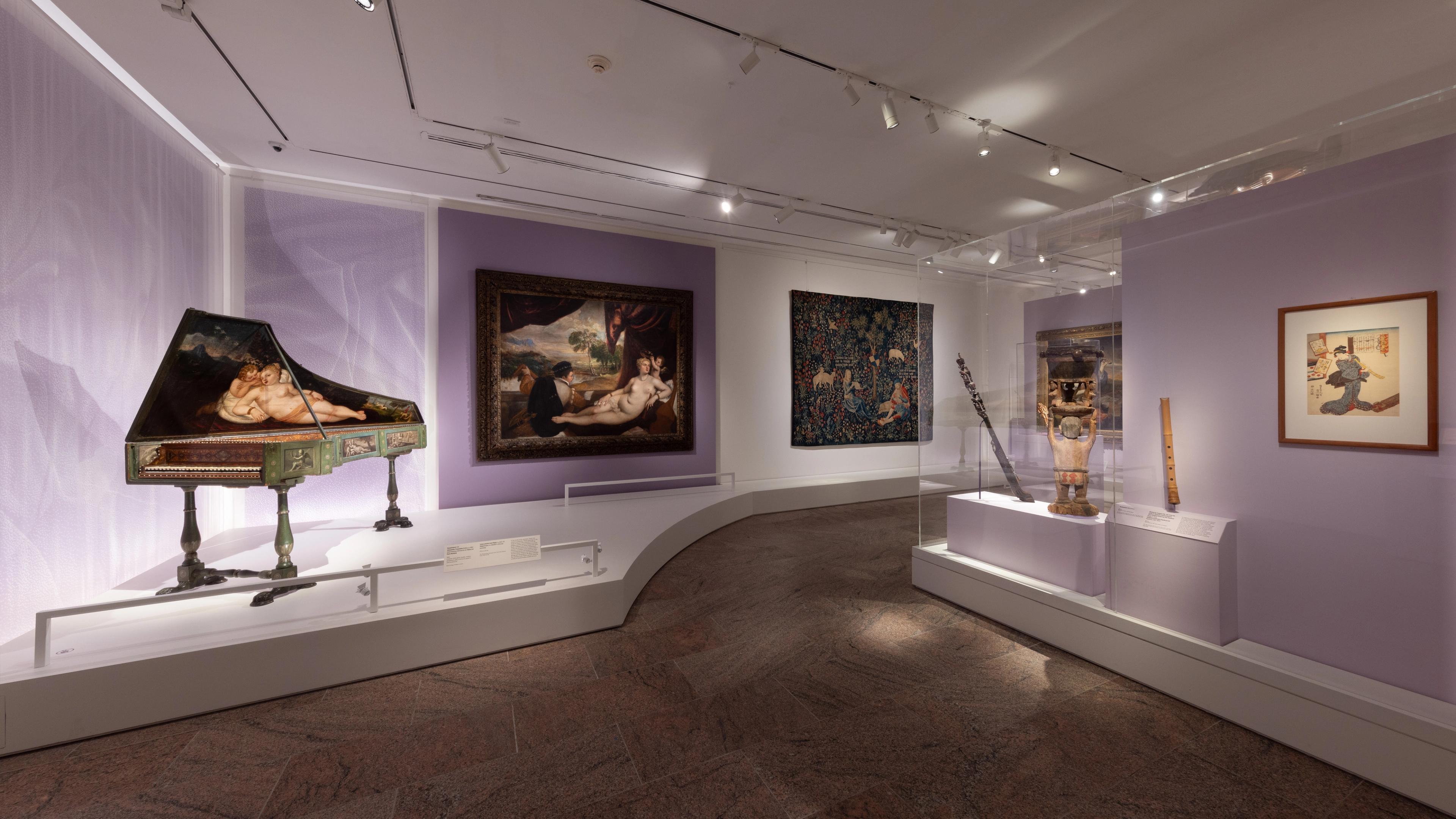
The suggestive bodies of instruments and the intensity of musical performance evoke acts of passion. Music making presents a platform for physical intimacy and risqué display, from the close proximity of piano duets to the thrusting and gyrating of rock guitarists. In sound, art, and language, instruments stand in for our bodies and enable us to address sex through the guise of music—rendering that which is veiled even more alluring.

Music has long been central to seduction. Charles Darwin viewed it as an aspect of sexual selection, akin to birdsong or displays of peacock plumage. Musical accomplishment distinguished a potential partner. Playing together was often held up as a metaphor for domestic harmony and order, and the decoration of instruments sometimes alludes to marital expectations.

Like lovers, instruments ask us to engage with them: stroking, strumming, plucking, tickling, bowing, blowing. To play an instrument is to play a body, which results in a web of complex power dynamics to be navigated. Yet these flexible bodies can evoke multiple expressions of human sexuality. When musicians animate them, instruments become vehicles for exploring, negotiating, and expressing the gamut of human passion.

A slider containing 24 items.
Press the down key to skip to the last item.
The Musician, Bartholomeus van der Helst  Dutch, Oil on canvas
Bartholomeus van der Helst
1662
Violon d'Ingres, Man Ray  American, Gelatin silver print
On loan to The Met
Man Ray
1924
Il Merlo Maschio poster, Offset lithograph
On loan to The Met
1971
English violet (Viola d'Amore), Paulus Alletsee  German, Spruce, maple, German
Paulus Alletsee
1726
Division Viol, Richard Meares  British, Spruce, ebony, maple, British
labeled Richard Meares
ca. 1680
Venus and the Lute Player, Titian and Workshop Italian, Oil on canvas
Titian
ca. 1565–70
Courtesan and the blind cupid, Pietro Bertelli  Italian, Engraving
Publisher Pietro Bertelli
ca. 1588
Harpsichord, Alessandro Trasuntino, Cypress, ivory covers, gesso, poplar, walnut, parchment, gold, fruitwood (apple?), beechwood, Italian
On loan to The Met
Alessandro Trasuntino
1531
Rebecchino, Pearwood, Italy
On loan to The Met
Italy
15th century
Shakuhachi, Bamboo, horn, lacquer, Japanese
Japanese
19th century
The Music Lesson, Chelsea Porcelain Manufactory  British, Soft-paste porcelain, British, Chelsea
Factory Chelsea Porcelain Manufactory
Modeler Joseph Willems
After two engravings by François Boucher
ca. 1765
Bun’ya no Asayasu (no. 36), from the series  A Pictorial Commentary on One Hundred Poems by One Hundred Poets (Hyakunin isshu eshō: Bun'ya no Asayasu), Utagawa Kunisada  Japanese, Woodblock print (nishiki-e);  vertical ōban; ink and color on paper, Japan
Utagawa Kunisada
ca. 1844
Rebecchino, Boxwood, rosewood, ebony, Italian
Italian
ca. 1420
The Music Lesson, John George Brown  American, born England, Oil on canvas, American
John George Brown
1870
Hasapi, Wood, bone, wire, Indonesia (Sumatra, Toba Batak people)
Indonesia (Sumatra, Toba Batak people)
ca. 1930
A-ndëf, Wood, hide, Baga people
Baga people
late 19th century
Shepherd and Shepherdess Making Music, Wool warp;  wool and silk wefts, South Netherlandish
South Netherlandish
ca. 1500–1530
Poster design for the 1992 Berlin Jazz Fest, Günther Kieser, Offset lithograph
Günther Kieser
1992
Alto saxophone (E-flat), C.G. Conn Ltd., Gold plated brass, mother-of-pearl, clear-glass jewels
On loan to The Met
C.G. Conn Ltd.
ca. 1922
Hurdy gurdy, Ivory, paste, tortoise shell, brass, silver, lacquer, carving, purfling, eding, turning<br/>Sycamore body, carved and turned ivory, other parts of turtle shell inlaid with silver and brass piqué work (some turtle shell lacquered with silver and brass piqué work), silver roses, and partly silvered brass keys inset with faceted rock crystal and engraved mother-of-pearl, French
On loan to The Met
French
ca. 1770-1785
Front to Back, Vinyl, paper, American
American
2013
Women, Vinyl, paper, Guadeloupe
Guadeloupe
1985
Custom-made "legs" guitar, Art Department, New Line Cinema  American, Wood, metal, polyvinyl chloride, polyurethane, and polyester paint, American
On loan to The Met
Art Department, New Line Cinema
2005
Tomi Ungerer
1969

Transient Beings

Memento Mori • Paradise and Perdition • Proxies • Between Worlds
tk

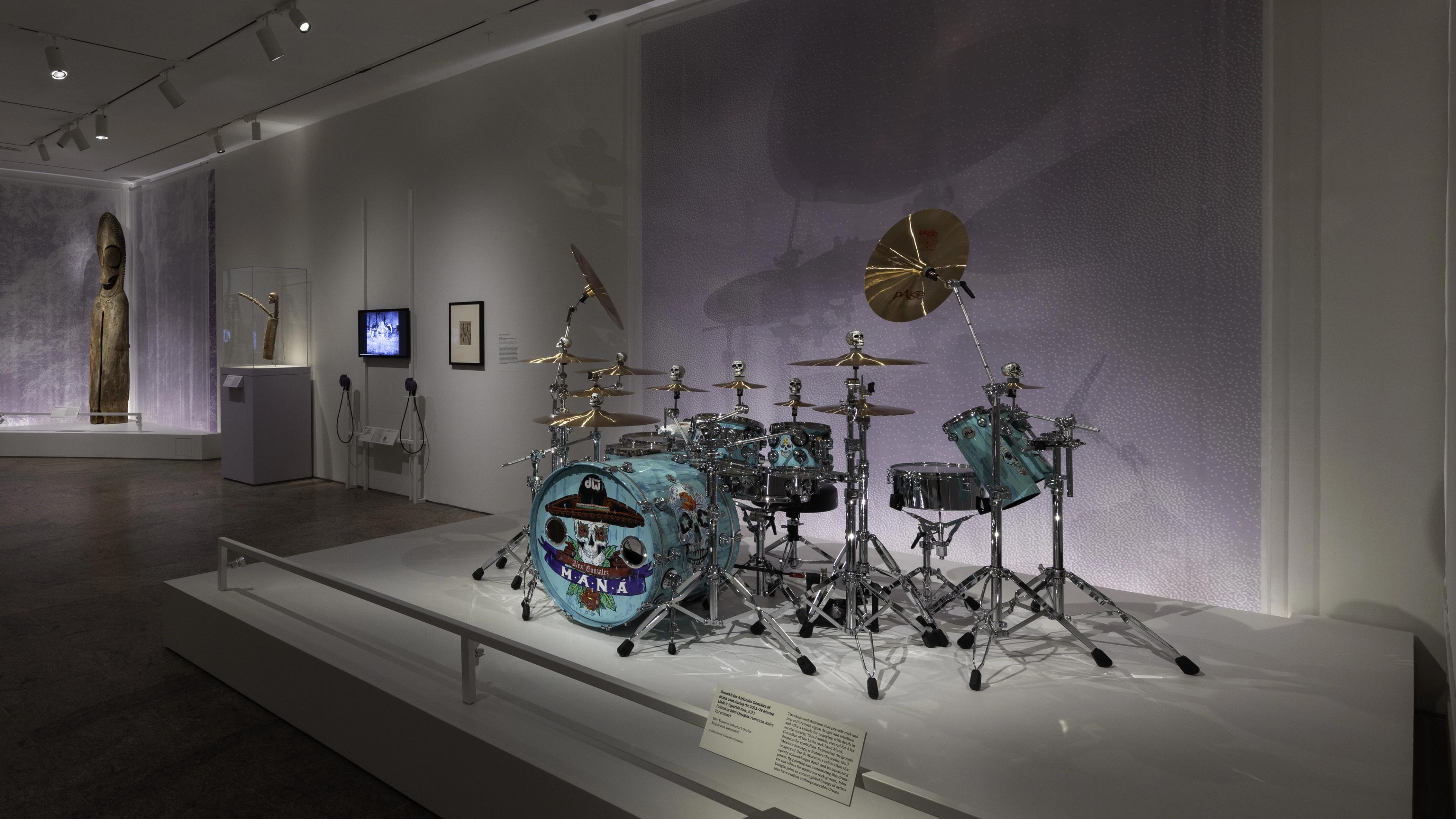
We all must die, and the fleeting sound of music is a memento mori—a reminder of the transience of life. Across cultures and centuries, instruments have offered solace and played a central role in mourning. In secular society, where death is one of the few remaining taboos, instruments that evoke the macabre offer a means for exploring our innate curiosity about mortality.

Many traditions understand death as a journey from one state of being to another. Music and instruments have long accompanied moments of passage and transformation. In rituals, they can transport the living to a liminal state that affords connection with the dead. Instruments linked to the human body—whether through form, sound, or as a dwelling place for spirits—may stand in for ancestors.

Instruments reverberate with the message that even in death there is life. This idea is expressed in a motto beloved by harpsichord makers, which gives voice to the wood that forms the instrument’s body: “While I lived, I was silent. Now that I am dead, I sing sweetly.”

A slider containing 15 items.
Press the down key to skip to the last item.
Drumkit for Alex González of Maná used during the 2023-2024 México Lindo y Querido tour, John Douglas  American, Maple and aluminum
On loan to The Met
John Douglas
Manufacturer Drum Workshop Inc.
2023
The Dance of Death, Anonymous, German, 16th century  German, Pen and brown ink, brush and brown ink, watercolor, gouache, gold paint
Anonymous, German, 16th century
16th century
Damaru, Wood, skin, cloth, shell, Tibetan
Tibetan
19th century
Rkangling (end-blown trumpet), Copper alloy, brass, stone, and paint, Tibetan
On loan to The Met
Tibetan
ca. 1960
Six-armed Mahakala, Gilt copper alloy with semi-precious stones, Mongolia
On loan to The Met
Mongolia
18th century
Hairwork wreath in the form of a lyre, Human hair, paper, wire, and wood
ca. 1870
Reconstruction of a medieval psaltery, Auguste Tolbecque  French, Softwood (spruce, walnut, pearwood), gut strings, paper, French
On loan to The Met
Auguste Tolbecque
1896
Speculum humanae salvationis, Vellum
On loan to The Met
ca. 1400
Sermon, Terry Adkins  American, Manipulated steel, drum, ribbons, buttons
On loan to The Met
Terry Adkins
2002
Gaita de boto (bagpipe), Jordi Aixalà Basora  Spanish, Boxwood, pewter, textile, Gore-Tex®, synthetic polymer, cork
Jordi Aixalà Basora
2023
On loan to The Met
Man Ray
1963
Atingting kon (slit gong), Wood, Ambrym
On loan to The Met
Ambrym
early 20th century
Ngombi, Wood, nylon, hide, fiber, Tsogo
Tsogo
mid-20th century
Teponaztli (slit-drum), Wood, Mixtec
On loan to The Met
Mixtec
1200 - 1521
Pixar's "Coco" edition Guitar, German Vazquez Rubio  Mexican, Wood, abalone shell, 24k gold inlay
On loan to The Met
German Vazquez Rubio
Córdoba Guitars
2017