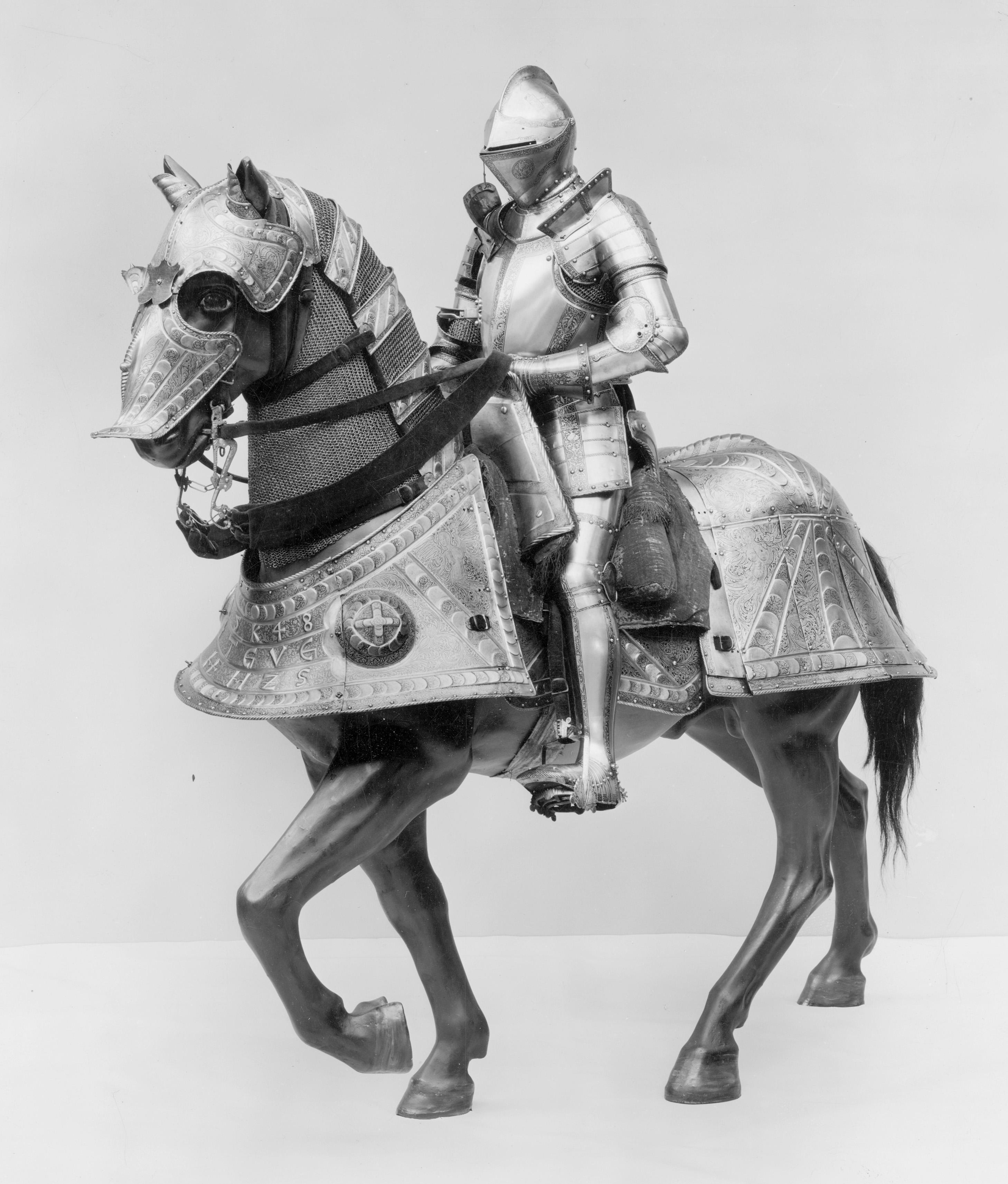
Kunz Lochner (German, Nuremberg, 1510–1567). Armor for Man and Horse, dated 1548, with later restorations. Steel, leather, copper alloy, textile, man's armor: approx. 56 lb. (25.4 kg); horse armor with saddle: 92 lb. (41.7 kg). The Metropolitan Museum of Art, New York, man's armor: Bashford Dean Memorial Collection, Gift of Mrs. Bashford Dean, 1929; mail sleeves: Bashford Dean Memorial Collection, Funds from various donors, 1929; horse armor: Rogers Fund, 1932 (29.151.2a–s; 29.158.183–.184; 32.69a–q)
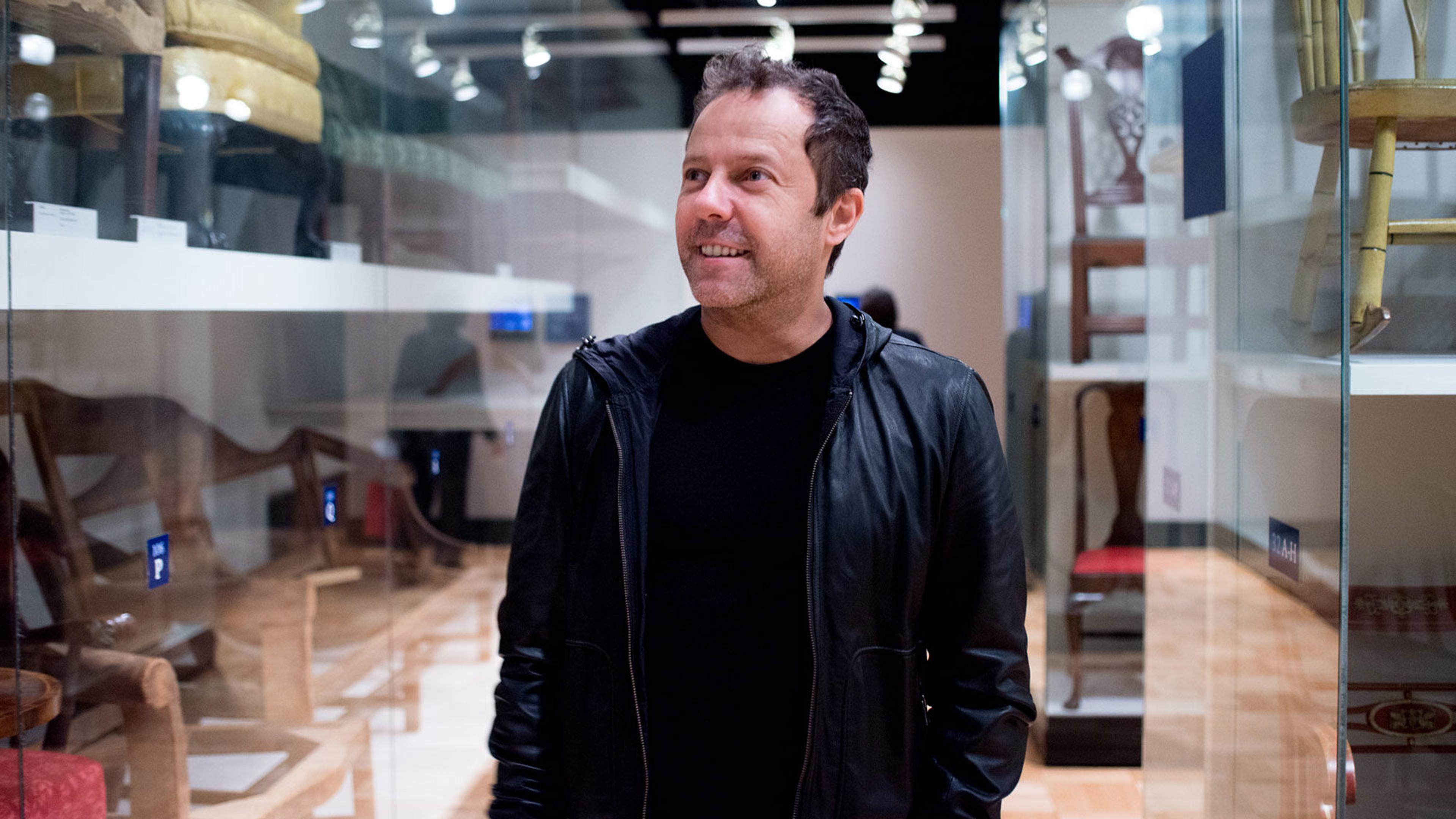
My name is Sheila Pepe and I'm an artist.
For the past fifteen years I've been crocheting and knitting monumental installations, most of which were ephemeral. This gallery in particular is not a logical place for me. It's the antithesis of my work in so many ways: it's hard, it's made with a lot of fire, it's about battle.
But, you know, when I was younger, knights in shining armor had a kind of popular appeal. And I, as a child, had this obsession with Walt Disney's Sword in the Stone. I would literally project myself into the space inside of that form. And then as a young adult after coming out, they become a kind of perfect place of—for me—gender identification. I can't avoid that being a part of my own kind of fantasy life about these things.
As a maker of things I adore the metalwork, the engineering, the forms. It is a kind of fashion as well as a protective device, you know, and the later they get in their evolution the more fashionable, the more exciting the fashion is. The forms, especially the Germanic forms—the widening toe, some of the helmets—they look like crazy animals.
Since I came to New York it's my default location to go and draw because it really articulates a moving body. It gives you all these kind of machine parts to draw. It puts all of that skeletal stuff on the outside, even though it's a different kind of skeleton: something that's both machine, animal, and human, and a kind of cyborg.
But it also has taken the form, for me, of following the stories of how things get made and craft. And the little gestures that the makers put in to talk to each other that most wouldn't see, and the way they would handle a hinge, or the way that one thing gets to attach to another. And there's a certain kind of handling of the metal that is just so lovely and loving, you know, in a way that somebody might follow the brushstroke on the surface of a painting. I'm looking for, even in the hardest edges, a craftsman's relationship to the object that they're making.
It's not a logical place for me. You know, the feminist would say this is a really good sign of how men fetishize war, but I'm also aware that I can fetishize it too.