Thank you for being a Member of The Met! At the center of all we do here is the ever-inspiring Met collection, featuring works of art from across the globe that exhilarate visitors every day.
This Member Appreciation Week, we have curated a self-guided tour featuring the Membership team’s favorite artworks at the Museum. As a Member, some works in the tour may be familiar to you while others may not. I hope you discover—or rediscover—new favorites through this tour.
We’re incredibly appreciative of your support, which helps conserve and further the study of this very collection. Follow along to hear from our team members about the artworks at The Met that inspire them the most.
—Amanda Riley, Chief Membership Officer
Tour stops
Terracotta stirrup jar with octopus
Starting in the Greek and Roman galleries (Gallery 151), you’ll find a hidden treasure with an aquatic twist.
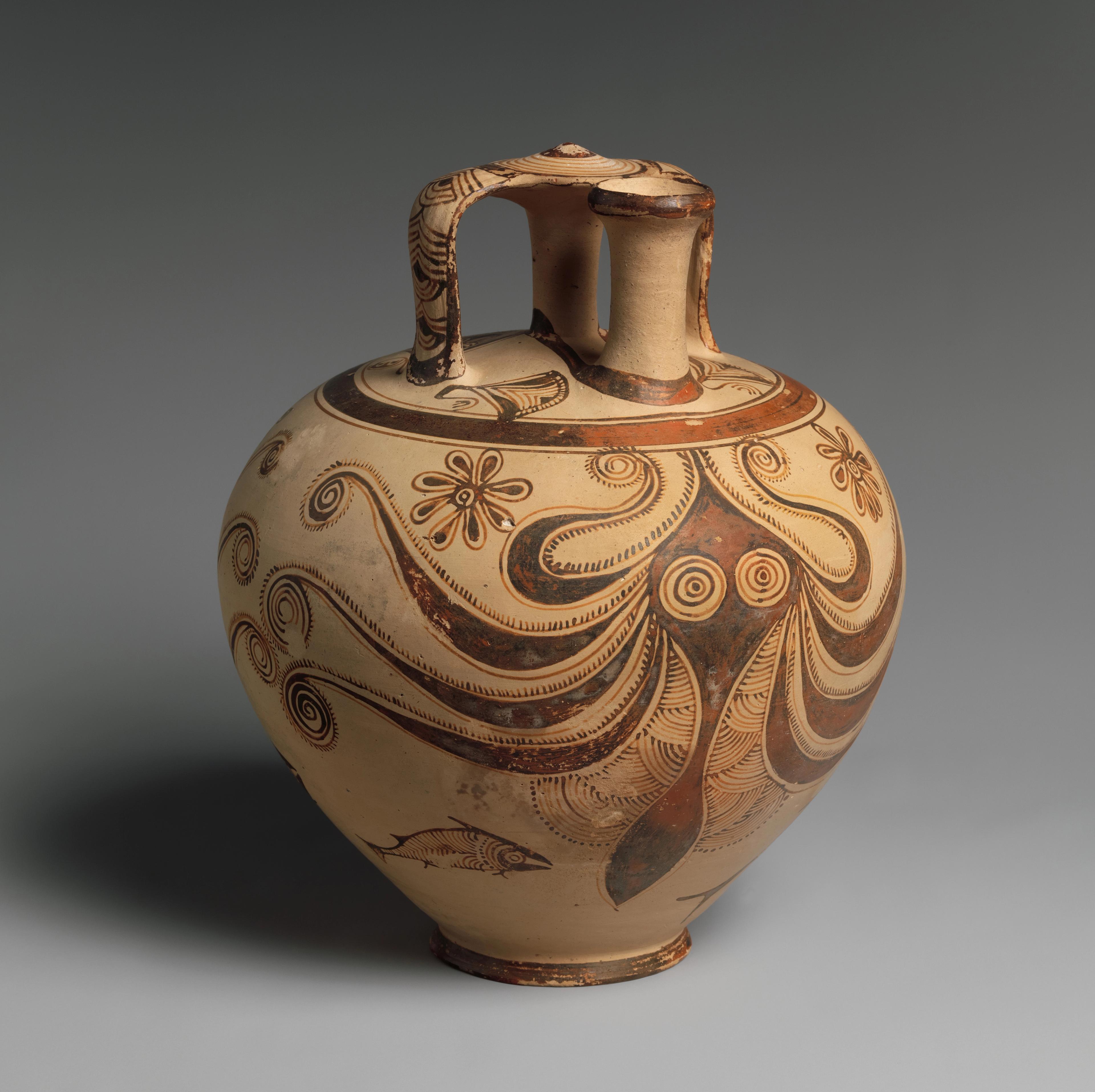
Terracotta stirrup jar with octopus, ca. 1200–1100 BCE. Helladic, Mycenaean. Terracotta, 10 1/4 x 8 1/2 in. (26 x 21.5 cm). The Metropolitan Museum of Art, New York, Purchase, Louise Eldridge McBurney Gift, 1953 (53.11.6)
In college, I took a fascinating course on Greek art and archaeology, during which we spent a significant portion of the semester exploring Minoan and Mycenaean pottery. It was another piece—similarly decorated with a Mycenaean octopus—that inspired me to pursue my studies in an archaeological field school in Greece. Whenever I spot this jar in the galleries, it always reminds me of this formative experience.
—Emily, Membership Marketing
Pre-Columbian mask
From there, head to the Michael C. Rockefeller Wing (Gallery 360) to discover the wonders of Pre-Columbian gold in the Ancient Americas, including this standout favorite.
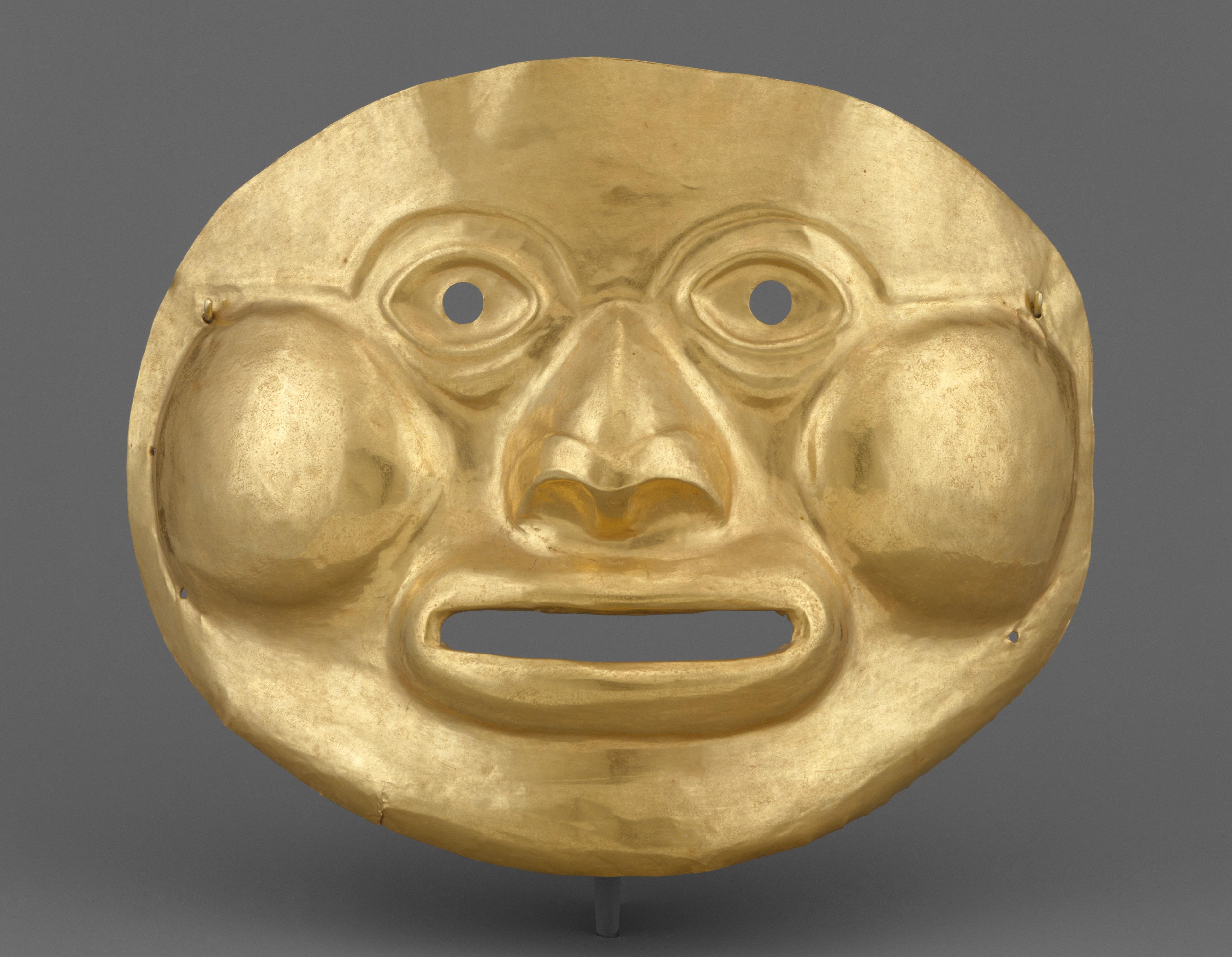
Calima (Ilama) artist. Mask, 1000–100 BCE. Gold, 7 1/2 x 9 3/8 x 3 3/4 in. (19.1 x 23.8 x 9.5 cm). The Metropolitan Museum of Art, New York, Jan Mitchell and Sons Collection, Gift of Jan Mitchell, 1991 (1991.419.39)
It’s hard to pick just one favorite object, but this is in my top five. This mask captivates me because of its individualized expression. The robust cheeks give the face fullness and vitality that make me feel joyful when I see it or walk by. In the former galleries, I often passed it on my way up to the office. It made my heart sing.
—Allison, Membership Events & Engagement
Work box in the form of a peacock
In European Sculpture and Decorative Arts (Gallery 554), you’ll find a furniture piece that exemplifies the skillfulness and whimsy of nineteenth-century German craftsmanship.
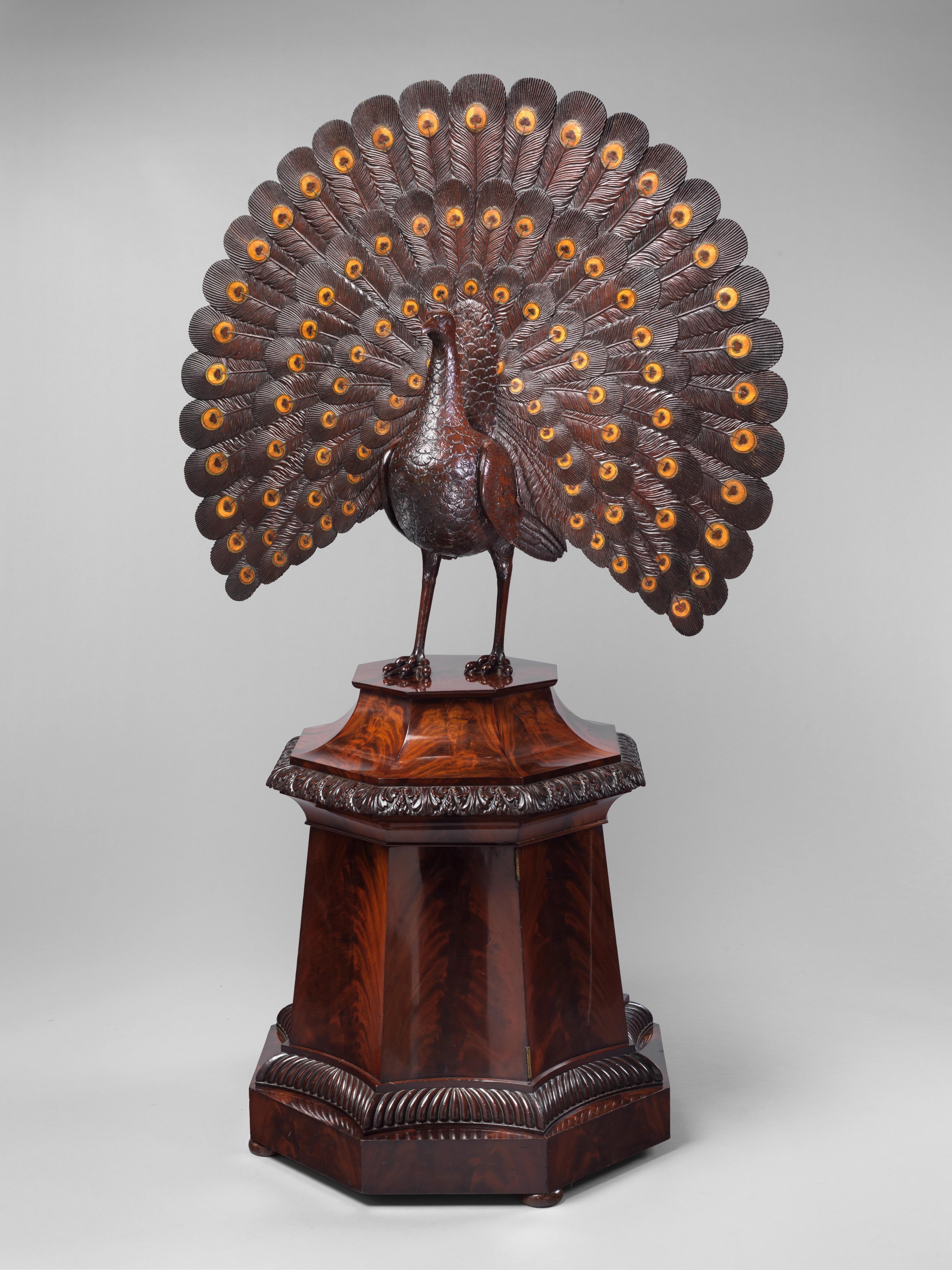
Work box in the form of a peacock, ca. 1830. German, probably Berlin. Mahogany, coniferous wood (pine?), oak; birch, boxwood, ebonized wood; inlay of sycamore, green stained holly, mahogany; bone, silver-gilt, blued steel, brass, velvet, printed paper, 67 3/8 × 40 1/4 × 28 1/8 in. (171 × 102 × 71.5 cm). The Metropolitan Museum of Art, New York, Purchase, Anna-Maria and Stephen Kellen Acquisitions Fund, 2023 (2023.25a–cc)
One of my favorite pieces in the collection is this amazing sewing box in the shape of a peacock. If you look closely, you can see that the head and neck open up to reveal a small drawer containing thimbles, scissors, and other sewing materials. The base also contains storage, including a drawer for spools of thread and a small built-in pincushion. The exemplary condition of this piece speaks to the quality of both the materials used, and of the cabinetmaker who created this striking and practical piece of furniture.
—Audra, Membership Events & Engagement
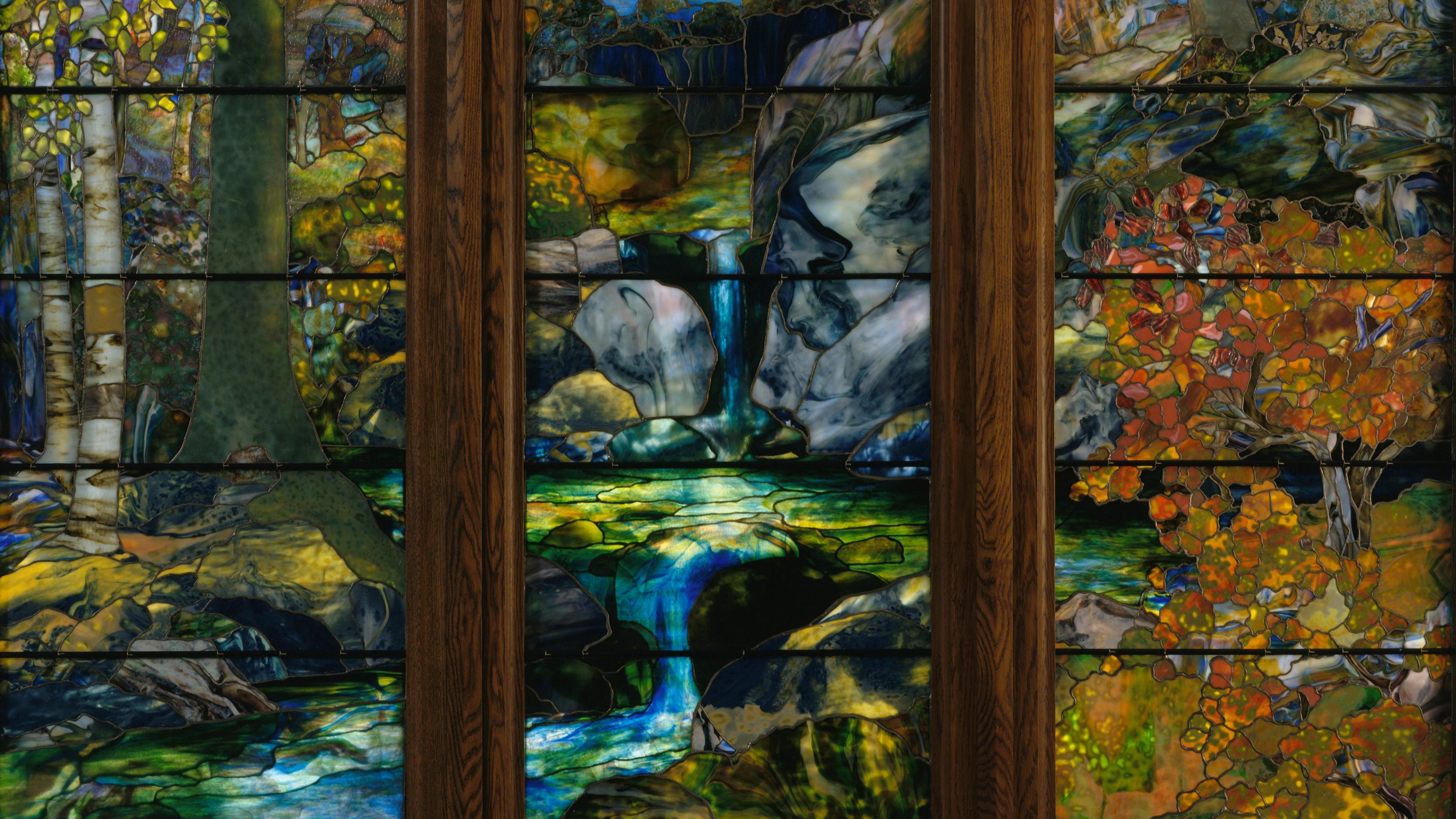
Tiffany Studios’s Autumn Landscape
Stroll through Medieval Art and enter the sun-drenched American Wing for a breathtaking stained-glass masterpiece in the Engelhard Court (Gallery 700).
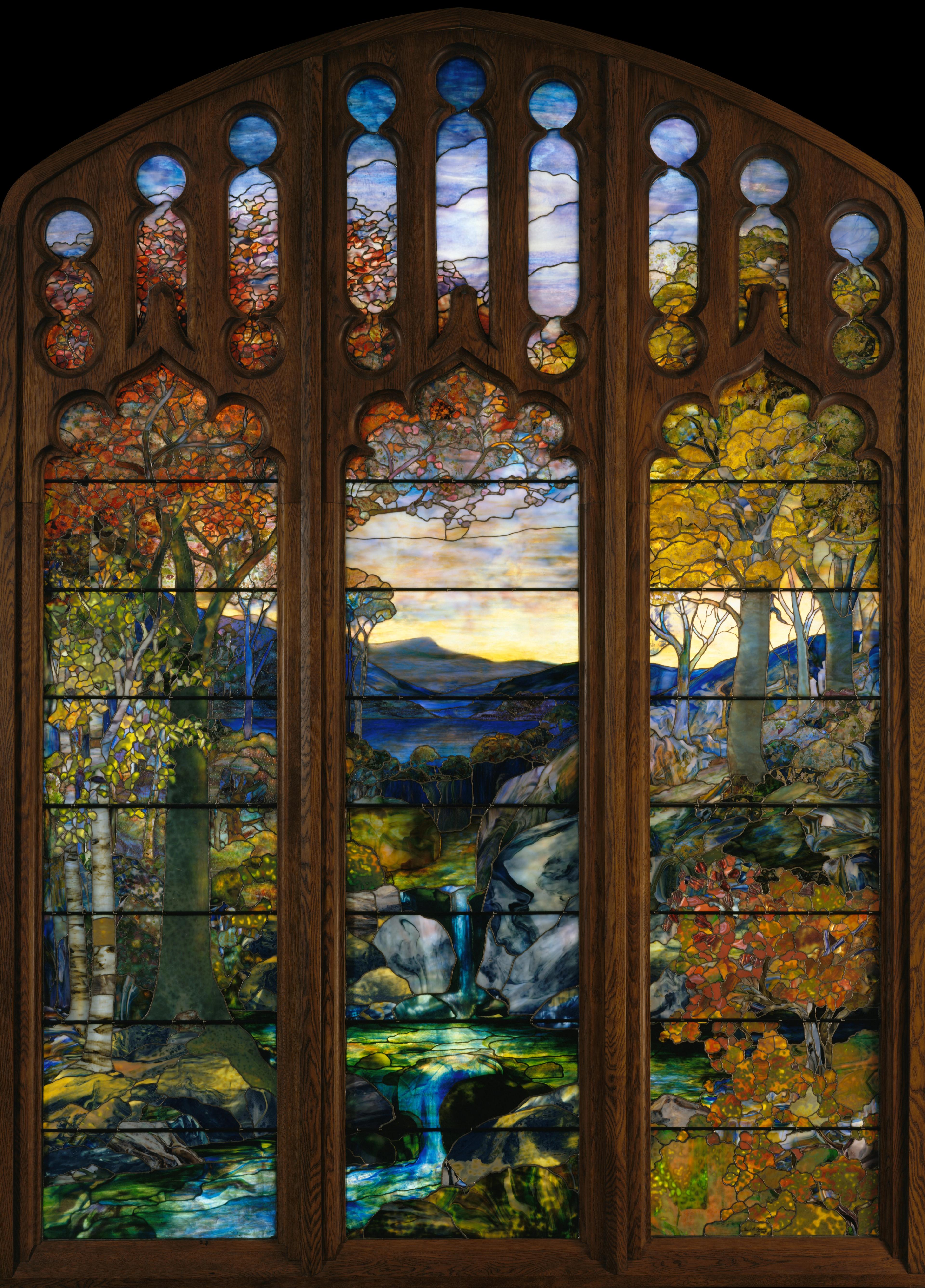
Attributed to Agnes F. Northrop (American, 1857–1953). Autumn Landscape, 1923–24. Leaded Favrile glass, 11 ft. x 8 ft. 6 in. (335.3 x 259.1 cm). The Metropolitan Museum of Art, New York, Gift of Robert W. de Forest, 1925 (25.173a–o)
I love visiting this stained-glass window created by Tiffany Studios designer Agnes Northrop, who is known for her landscapes and floral motifs. The piece is a gorgeous celebration of nature’s beauty and is absolutely breathtaking in person. The entire window is composed solely of glass—no paint was used in its creation!
—Jenn, Membership Marketing
Mary Cassatt’s Young Mother Sewing
Dive further into the American Wing for more thought-provoking finds. Take the stairs or glass elevator up to the second floor for our next stop (Gallery 768).
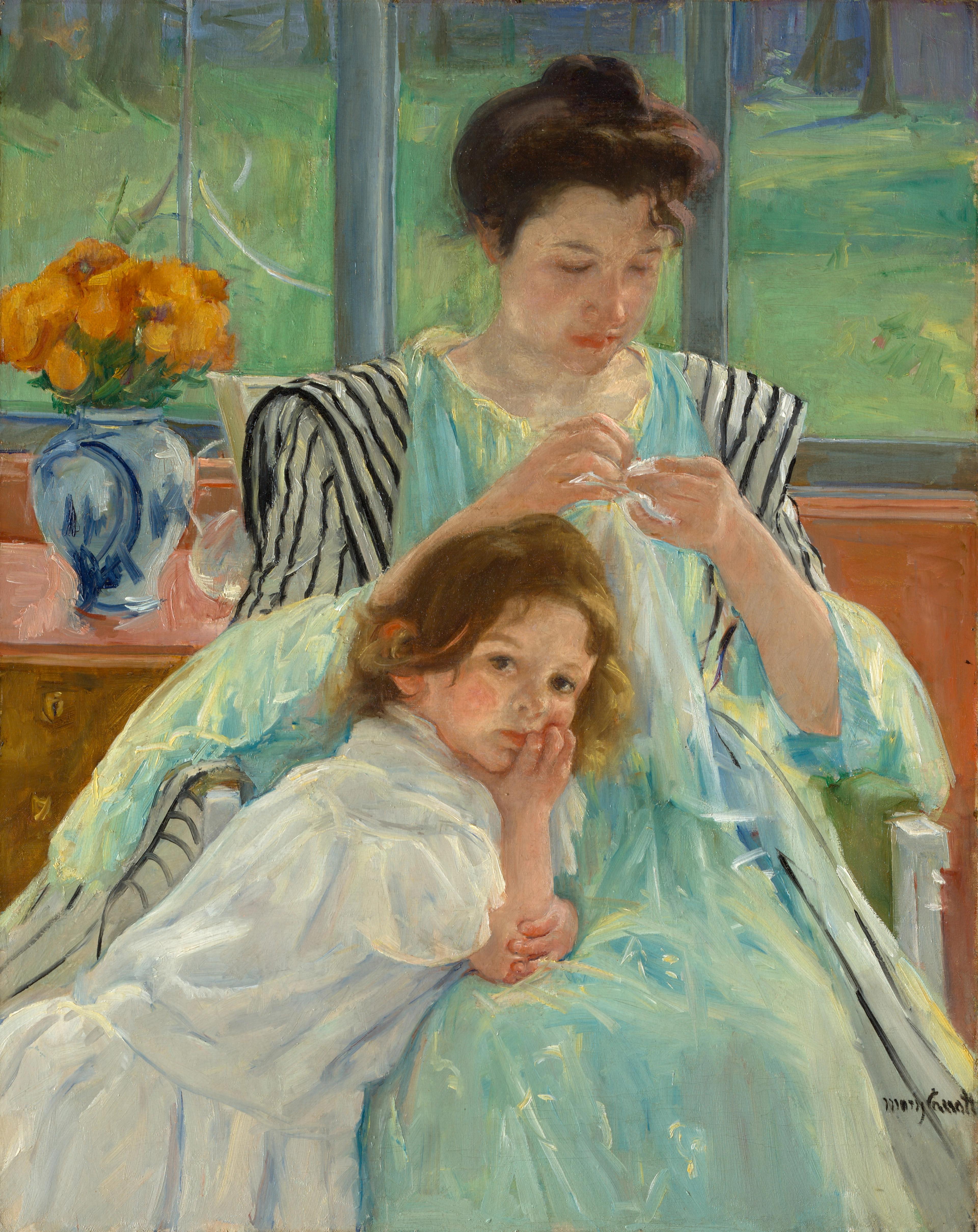
Mary Cassat (American, 1844–1926). Young Mother Sewing, 1900. Oil on canvas, 36 3/8 x 29 in. (92.4 x 73.7 cm). The Metropolitan Museum of Art, New York, H.O. Havemeyer Collection, Bequest of Mrs. H.O. Havemeyer, 1929 (29.100.48)
This simple, domestic scene by female artist Mary Cassatt is a favorite of mine. The depiction of light and color always makes me feel at ease—like I’m back to the quiet, sunny days of my childhood.
—Julianne, Membership Marketing
Augusto Merciano da Costa’s Rajão
Head back toward the glass elevators to reach the Engelhard Court Balcony, where you can enter the galleries for Musical Instruments (Gallery 681). Here you’ll find a one-of-a-kind instrument with a unique backstory.
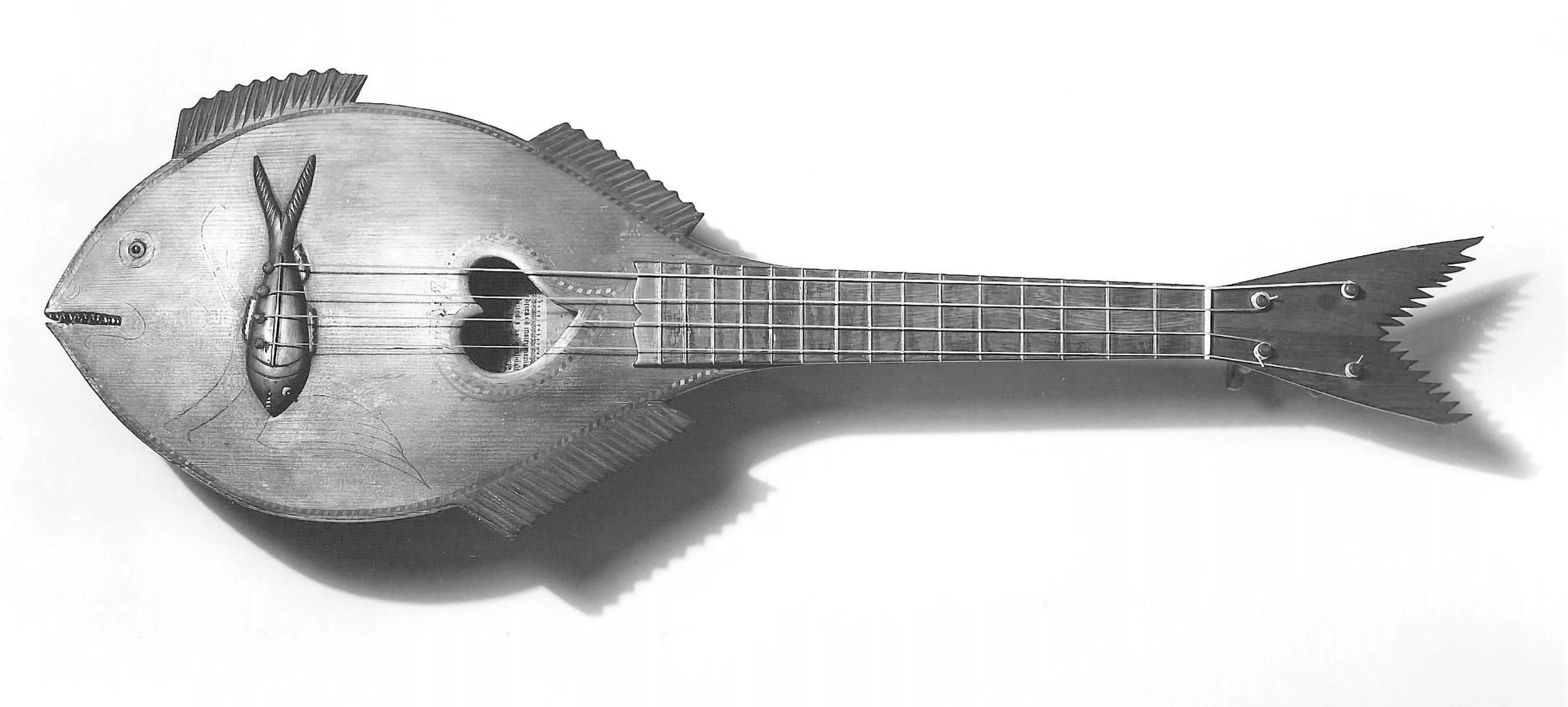
Augusto Merciano da Costa (Portuguese). Rajão, late 19th century. Wood, gut, 26 3/4 x 7 7/8 in. (68 x 20 cm). The Metropolitan Museum of Art, New York, The Crosby Brown Collection of Musical Instruments, 1889 (89.4.2234)
The rajão is a folk instrument that originated on the Portuguese island of Madeira. In the late nineteenth century, thousands of Madeirans immigrated to Hawai’i for work opportunities. They introduced the rajão to Native Hawaiians, who refashioned it to invent the ukulele. This fish-shaped rajão in The Met collection symbolizes that unique moment of cultural exchange and reminds us that we are all connected.
—Brooke, Membership Events & Engagement
El Greco’s View of Toledo
Next, head to European Paintings (Gallery 619) for a masterful landscape that stands out from the rest.
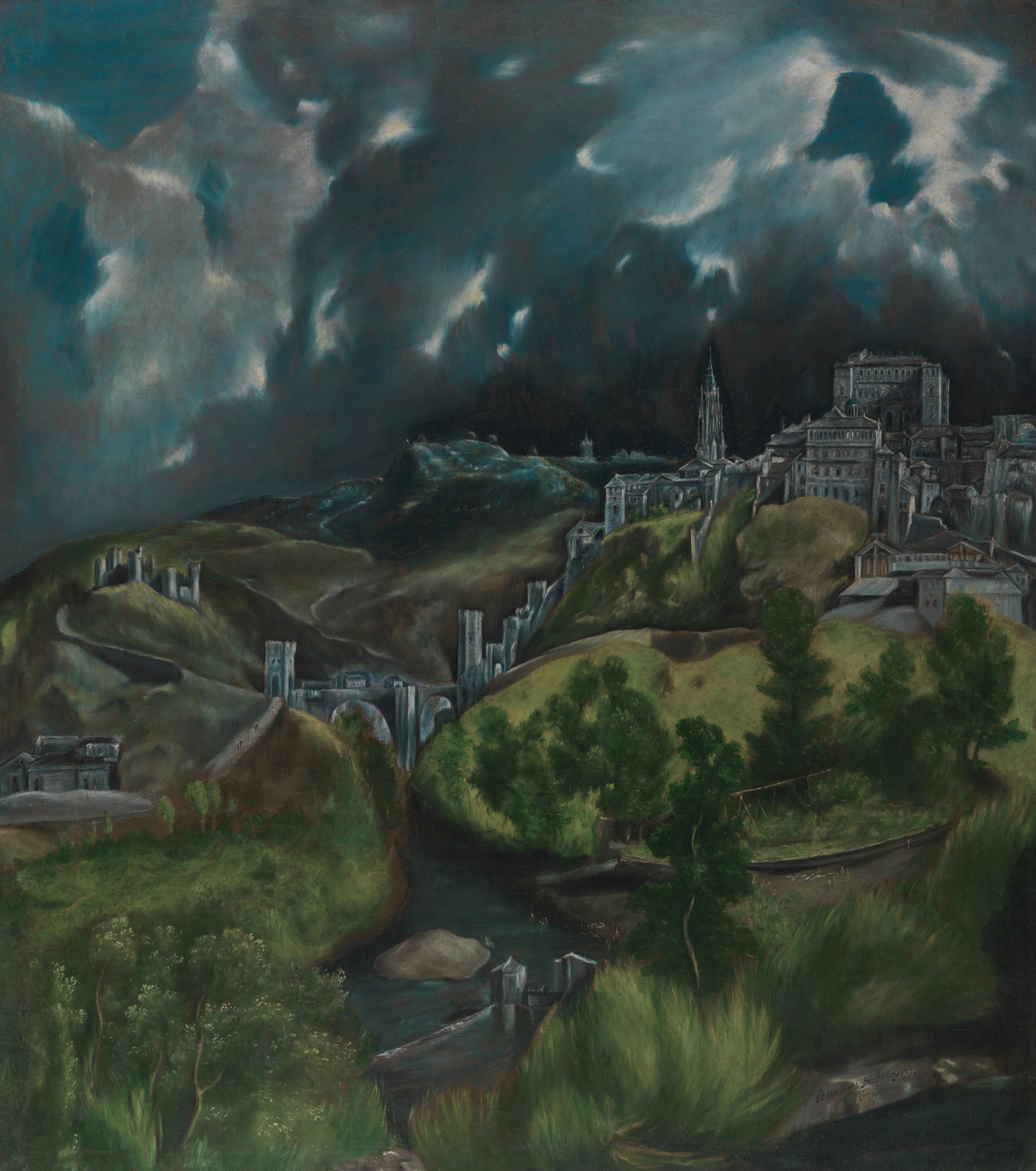
El Greco (Domenikos Theotokopoulos) (Greek, 1541–1614). View of Toledo, ca. 1599–1600. Oil on canvas, 47 3/4 x 42 3/4 in. (121.3 x 108.6 cm). The Metropolitan Museum of Art, New York, H. O. Havemeyer Collection, Bequest of Mrs. H. O. Havemeyer, 1929 (29.100.6)
I chose this painting by El Greco because each time I sit on the bench in front of it, I am transported back to a college class trip to Spain when we stayed in the hotel next to the El Greco Museum in Toledo, near where he lived most of his life. El Greco’s depiction of this view over the Tagus River and the city of Toledo allows me to revisit one of my favorite places any time I pop down to the galleries. I also love how this gallery was reimagined as part of Look Again: European Paintings, 1300–1800 in November 2023—hanging El Greco, Picasso, Cézanne, and Beckmann together to show visitors the direct influence El Greco’s style had on these later artists.
—Rita, Membership Marketing
Set of twelve zodiac animals
Swing by Asian Art (Gallery 207) to view an ancient set of Chinese figurines that plays an important role in commemorating Chinese New Year at The Met each year.
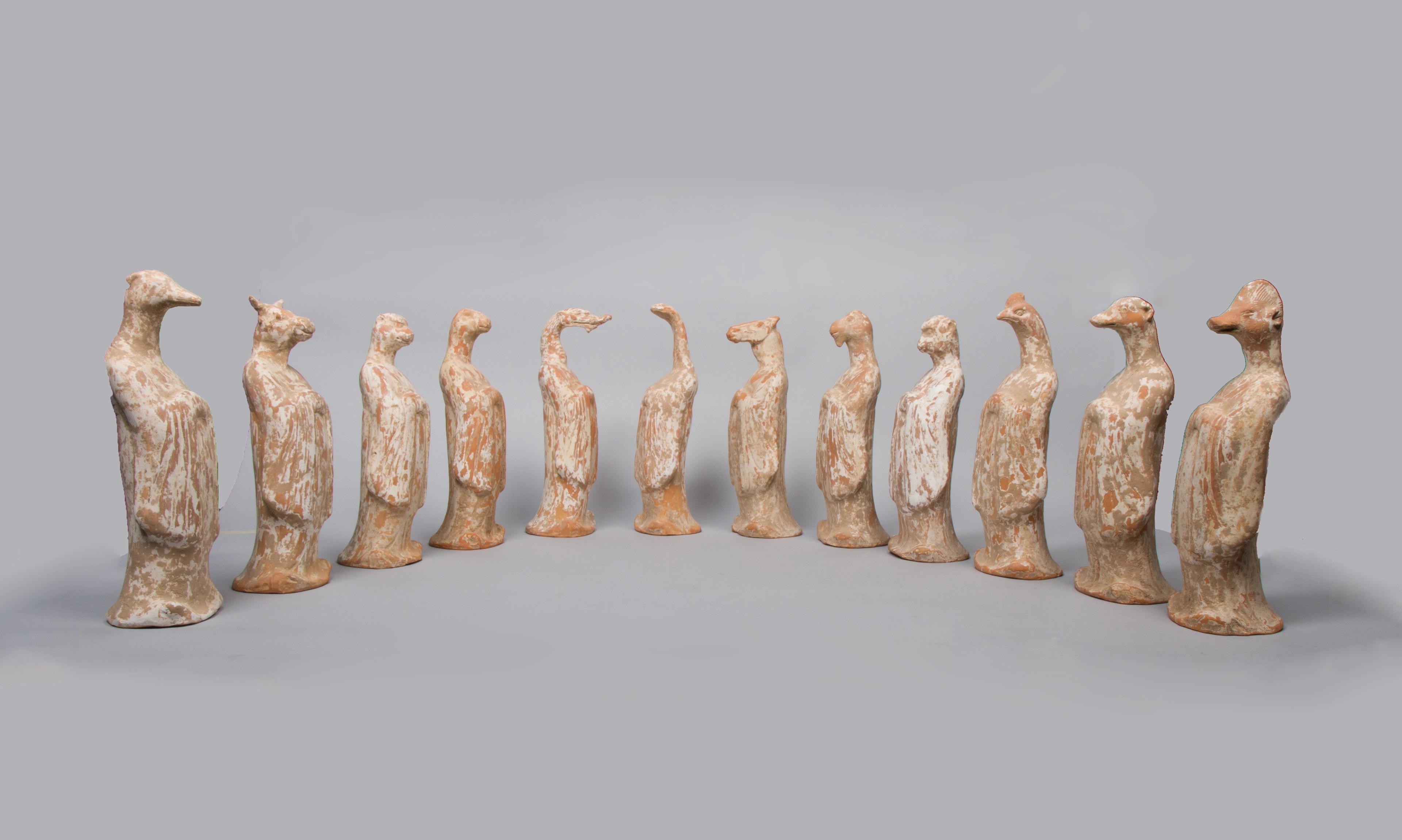
Set of twelve zodiac animals, 8th century. China. Tang dynasty. Earthenware with white slip, each 12 x 4 in. (30.5 x 10.2 cm). The Metropolitan Museum of Art, New York, Gift of Charlotte C. Weber, 2000 (2000.662.7a–l)
For my pick, I’ve chosen this set of twelve zodiac animals from our Asian art collection. Originally painted in vibrant colors, only the white slip—the base layer—remains today. At the start of each Chinese New Year, a member of the Department of Asian Art advances the zodiac animal for the new year. One of my colleagues and I have made it a tradition to visit this collection annually to see the newly positioned figure.
—Mackenzie, Membership Events & Engagement
Gustave Moreau’s Oedipus and the Sphinx
For more European masterpieces, continue to 19th and Early 20th Century European Paintings and Sculpture (Gallery 800) for two more striking paintings hand-picked by our staff.
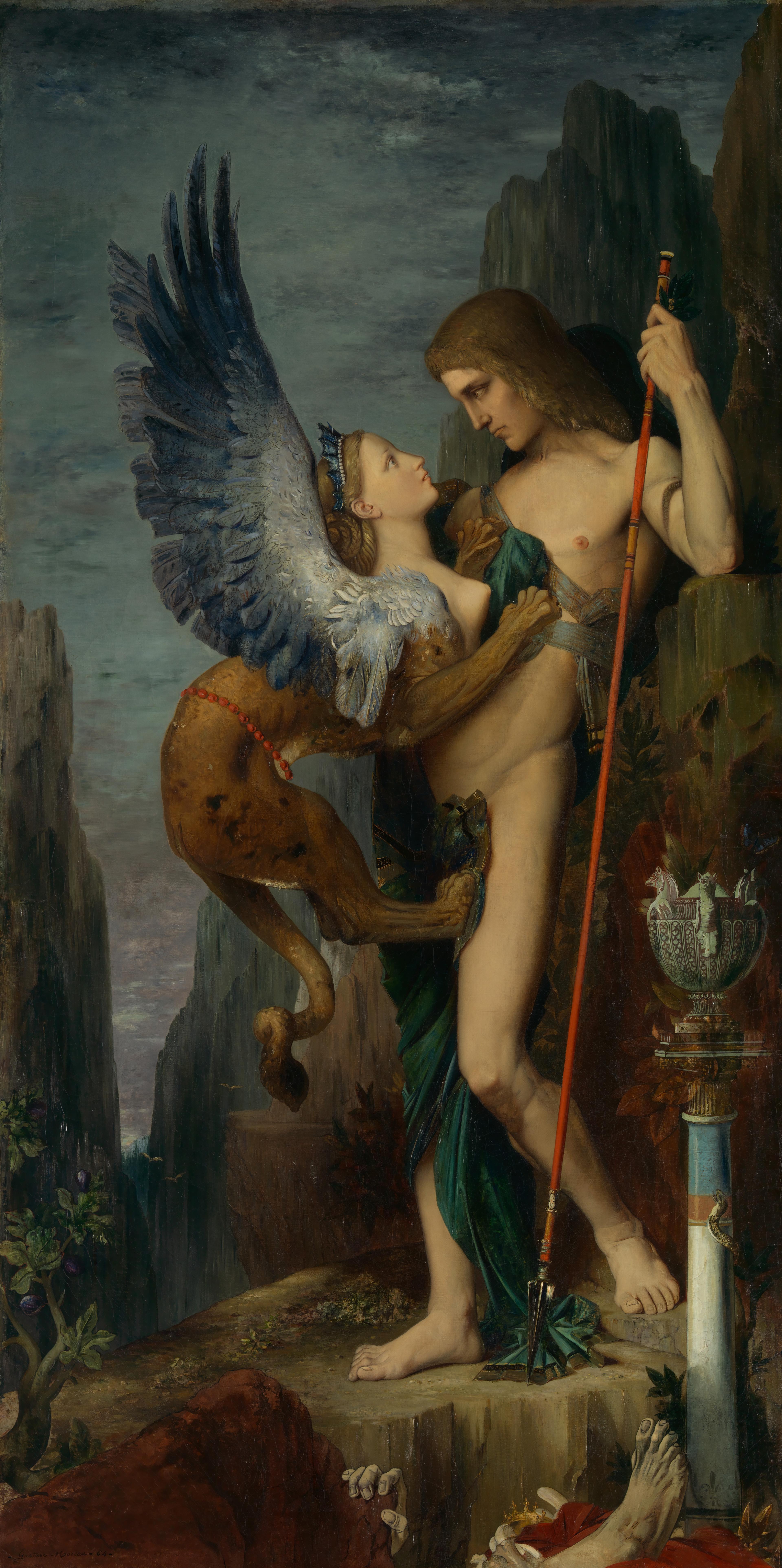
Gustave Moreau (French, 1826–1898). Oedipus and the Sphinx, 1864. Oil on canvas, 81 1/4 × 41 1/4 in. (206.4 × 104.8 cm). The Metropolitan Museum of Art, New York, Bequest of William H. Herriman, 1920 (21.134.1
I pass this painting often, and it still feels magnetic each time. Moreau’s ability to fuse opulence with psychological tension makes this mythic standoff endlessly compelling. It’s a work that reveals something new every time you look.
—Jeremiah, Membership
Carpet with Palm Trees, Ibexes, and Birds
Finally, make your way to Art of the Arab Lands, Turkey, Iran, Central Asia, and Later South Asia (Gallery 462) for a monumental, 27-foot work of textile mastery.
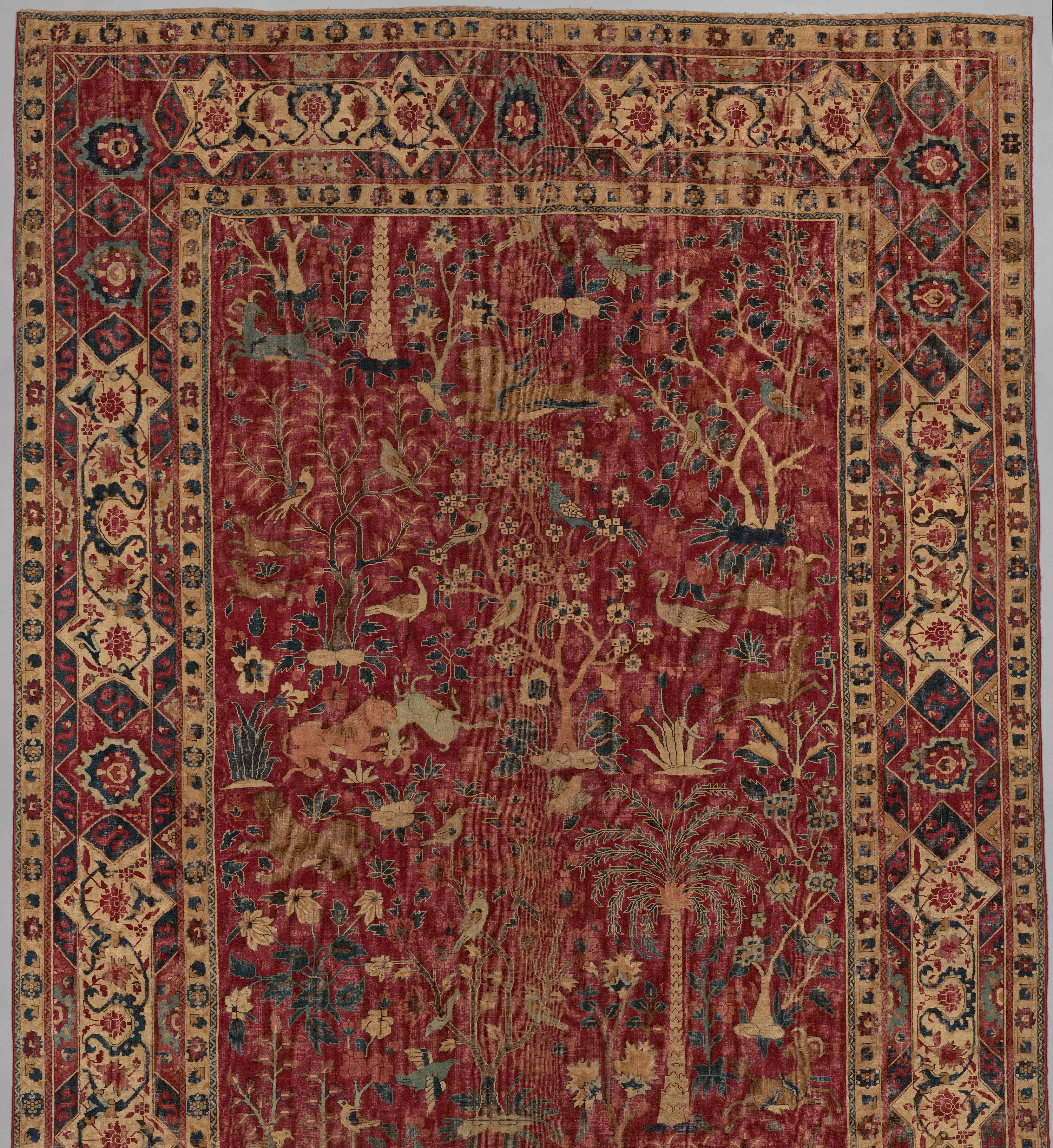
Carpet with Palm Trees, Ibexes, and Birds (detail), late 16th–early 17th century. Probably made in present-day Pakistan, Lahore. Cotton (warp and weft), wool (pile); asymmetrically knotted pile, 27 ft. 4 in. x 9 ft. (833.1 x 274.3 cm). The Metropolitan Museum of Art, New York, Gift of J. Pierpont Morgan, 1917 (17.190.858)
This monumental piece, hanging from floor to ceiling in our Islamic art galleries, is worth a closer look—you can imagine falling right into its lush landscape and walking among its vibrant variety of flowers, animals, and trees. With its brilliant color and sense of movement, this carpet feels as if it’s bursting with life, inviting you to join in its revelry.
—Gabrielle, Membership Communications
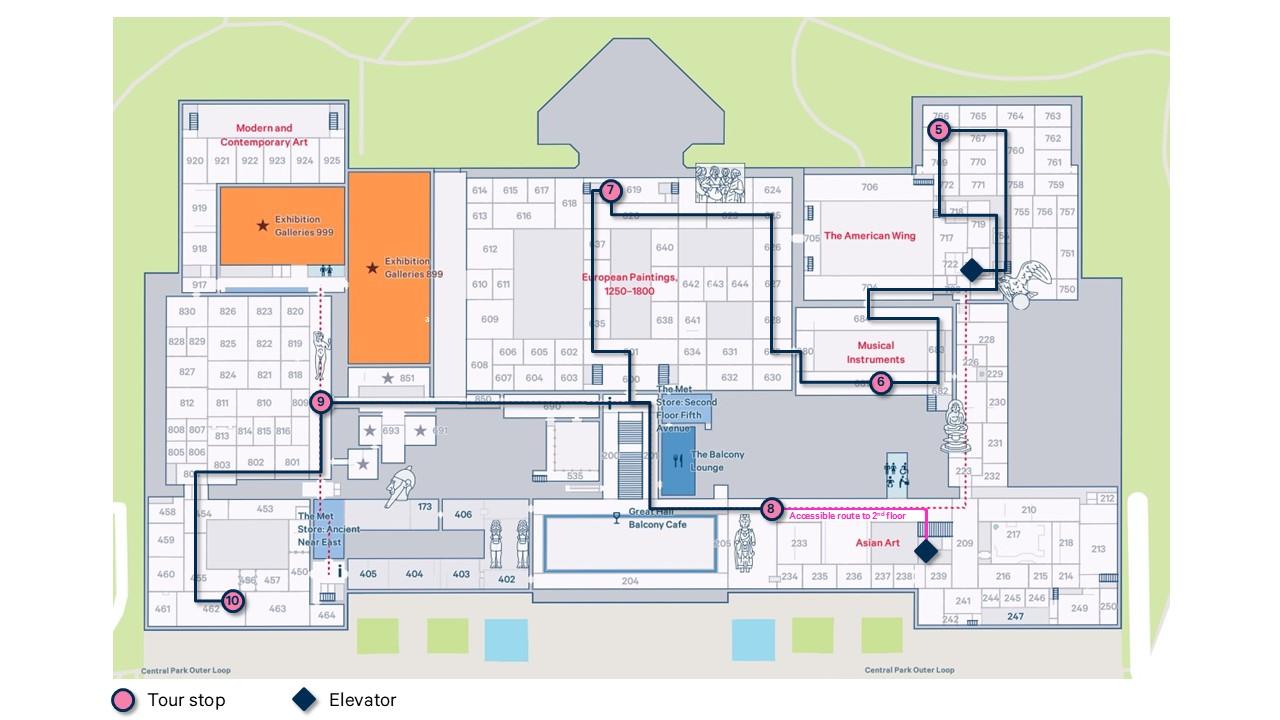
Recommended route
Ahead of your tour, please visit our website for a list of current gallery closures, and note that this list is updated regularly and may change throughout the day.
Floor 1
Begin the tour in the galleries adjacent to the Great Hall.
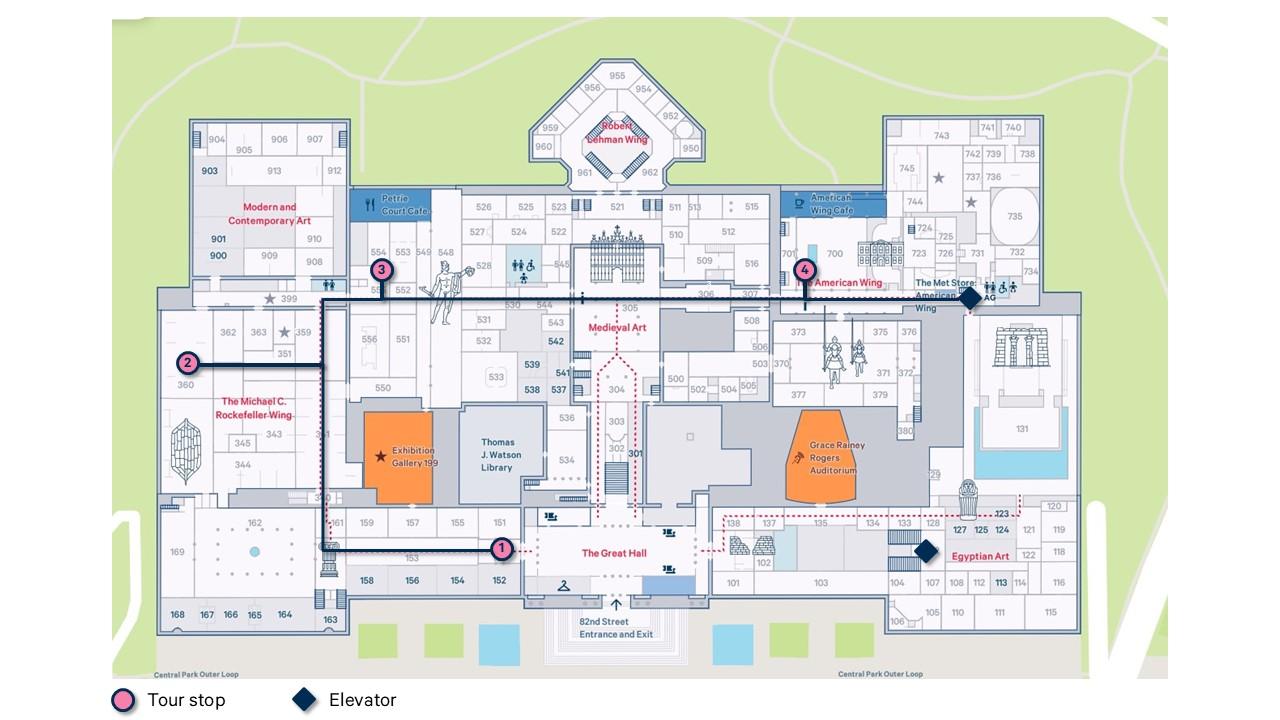
Floor 2
Take the elevator in the American Wing to the second floor to continue exploring. An accessible route to the second floor is available from the Egyptian Art galleries.