Relieve de Asurnasirpal II
Artwork Details
- Título: Relieve de Asurnasirpal II
- Periodo: Periodo neoasirio, reinado de Asurnasirpal II
- Fecha: ca. 883–859 a. C.
- Geografía: Mesopotamia, excavado en Kalhu (actual Nimrud)
- Material: Yeso de alabastro
- Dimensiones: a. 234,3 cm
- Crédito: Donación de John D. Rockefeller Jr., 1932
- Número de inventario: 32.143.4
- Curatorial Department: Ancient West Asian Art
Audio
128. The Director's Tour, Second Floor: Reliefs from the Palace of Ashurnasirpal II, Part 1
Gallery 401
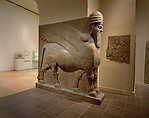
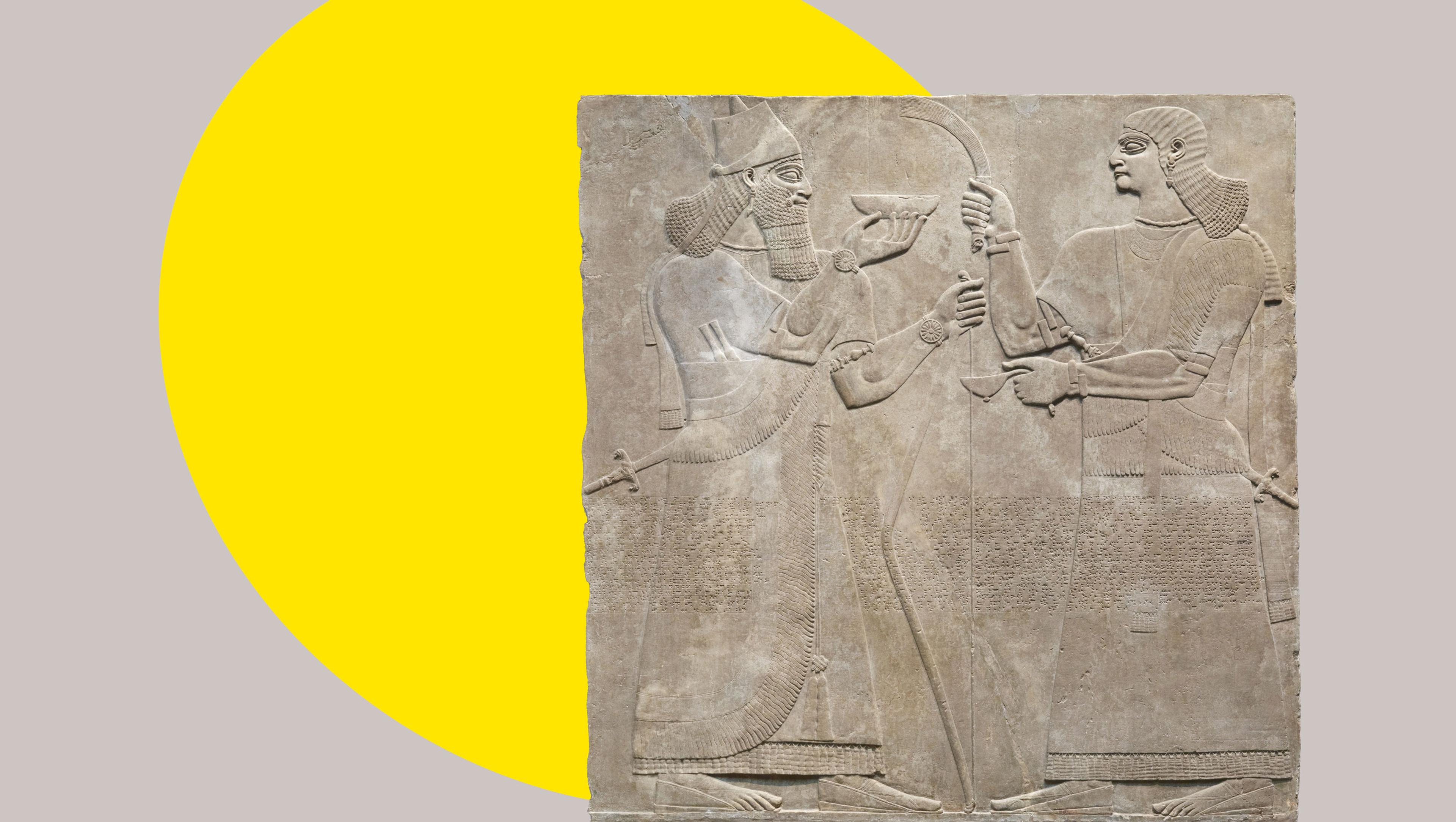
Your walk from the European painting galleries to this extraordinary room has carried you 2,500 years back in time, and thousands of miles eastward. The reliefs here were carved for a royal palace at Nimrud, in what is now Iraq. In the ninth century BCE, when the palace was constructed, Nimrud became the capital of the formidable Assyrian empire. This decoration is intended to reflect the majesty and divine right of the king, Ashurnasirpal the Second. Here you see the co-mingling of the supernatural and the natural and in this way the king appeased the gods and protected his people.
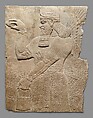
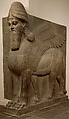
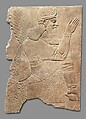
On either side of the arched doorway, there are especially impressive creatures: each has a human’s head, and a divinity’s horned cap. The body integrates parts of a bird of prey, with a bull, or a lion. Let’s look at the reliefs on the wall. The king is shown with signs of his authority: distinctive headgear, ritual vessel, and weapons. He is depicted with members of his entourage; the beardless human figures are eunuchs in the king’s service. And you also see divine protectors; they are the figures with wings and other animal features.
The band of text cutting across the images repeats again and again the titles of the king and his accomplishments—as a builder of palaces and a conqueror of peoples. The system of writing is called cuneiform; it was invented more than five thousand years ago here in Mesopotamia, the land between the Tigris and Euphrates Rivers. Beyond the arched doorway is a map you may find helpful. It shows you where Assyria is within the greater region. Mesopotamia is sometimes called the cradle of civilization. To hear why, press play.
Listen to more about this artwork
More Artwork
Related Content

Research Resources
The Met provides unparalleled resources for research and welcomes an international community of students and scholars. The Met's Open Access API is where creators and researchers can connect to the The Met collection. Open Access data and public domain images are available for unrestricted commercial and noncommercial use without permission or fee.
To request images under copyright and other restrictions, please use this Image Request form.
Feedback
We continue to research and examine historical and cultural context for objects in The Met collection. If you have comments or questions about this object record, please contact us using the form below. The Museum looks forward to receiving your comments.
Content Notice
The Metropolitan Museum of Art presents over 5,000 years of art from around the world, and our online collection reflects ongoing work conducted over the course of our more than 150-year history. You may encounter objects or images that may be inappropriate for some viewers or information that may be outdated.