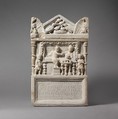
Stèle magique
Artwork Details
- Titre: Stèle magique
- Période: Basse époque, XXXe dynastie, règne de Nectanebo II
- Date: 360–343 av. J.-C.
- Aire géographique: Alexandrie
- Technique: Méta-grauwacke
- Dimensions: H. globale 83,5 cm
- Crédits: Fonds Fletcher, 1950
- Accession Number: 50.85
- Curatorial Department: Egyptian Art
Audio
1159. Kids: Magical Stela, Part 1
Magic and religion were part of medicine in ancient Egypt, and this carved stone, called a “stela,” was believed to hold healing powers. The stone once stood in the public part of a temple. If you had been bitten by a poisonous snake or a scorpion, you could come to the stone to be healed.
Carved onto the stone are various texts ands images, including thirteen magical spells, for example, a “spell against poison.” The magical power of all these texts and images was activated when the texts were read out loud. But there was another way to be healed. Water could be poured over the stela and it would run over the images and words and magically absorb their healing powers. The victim could then drink this water that could cure him from the inside.
Now, look for the figure standing in the very middle of the stone, looking out at you. We can tell he’s a young boy from the long curl of hair on the side. But this can’t be just any boy. He’s holding snakes and scorpions in his hands even a small lion! And look under his feet. He’s standing on two deadly crocodiles.
This is the Egyptian god Horus when he was a little boy. To the right of Horus is a god with long curving bird beak. This is Thoth, the god of wisdom and writing, who also holds healing power! To the left of Horus are two more gods, on the very left is his mother, the goddess Isis. Horus was once cured of a poisonous bite. His story is written on the bottom part of this stone.
Do you want to hear the story? Just press PLAY, now.
Listen to more about this artwork
More Artwork
Related Content


Research Resources
The Met provides unparalleled resources for research and welcomes an international community of students and scholars. The Met's Open Access API is where creators and researchers can connect to the The Met collection. Open Access data and public domain images are available for unrestricted commercial and noncommercial use without permission or fee.
To request images under copyright and other restrictions, please use this Image Request form.
Feedback
We continue to research and examine historical and cultural context for objects in The Met collection. If you have comments or questions about this object record, please contact us using the form below. The Museum looks forward to receiving your comments.
Content Notice
The Metropolitan Museum of Art presents over 5,000 years of art from around the world, and our online collection reflects ongoing work conducted over the course of our more than 150-year history. You may encounter objects or images that may be inappropriate for some viewers or information that may be outdated.